
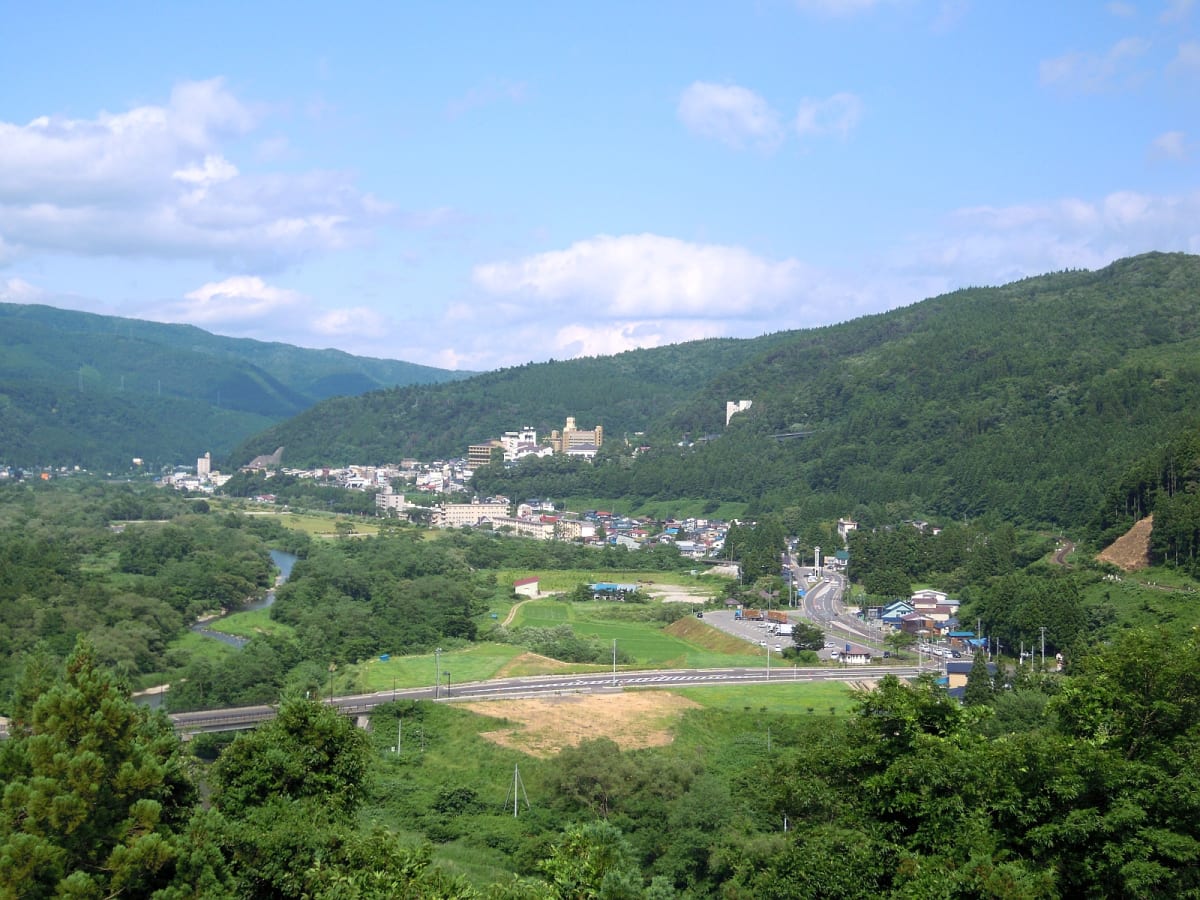
Naruko Onsen
鳴子温泉
4.2 · 1400 reviews · via Google
Naruko Onsen
sulfur · Tohoku
Hotter than 65% of Japan springs (n=122).
More acidic than 31% of Japan springs (n=121).
Mineral profile
Bar width reflects listing order, not measured concentration.
Suitability
At a glance
Getting there
Easy — under 1km from a station
Cost
Low
Crowd level
Moderate
About this spring
A quiet gorge-side onsen town in Miyagi Prefecture with nine distinct spring types, the famous Naruko Gorge, and a deep tradition of kokeshi doll making. The sulfurous waters and unhurried Tohoku atmosphere make this a favourite for those who want something more authentic than the well-worn tourist circuit.
Highlights
History
A government chronicle from 837 AD records that a volcanic eruption sent hot water gushing across this highland area.
That event, documented in one of Japan's six classical national histories, marks the beginning of Naruko as a bathing destination. The gorge carved by the Naruko River became as celebrated as the waters: sheer tuff walls dropping nearly 100 meters, with maple forest blazing in autumn. During the Edo period it was also in these mountains that the kokeshi doll tradition took root. Woodturners known as kijishi, using water-powered lathes, began crafting the simple cylindrical dolls as souvenirs for spring visitors. In 1939 the All-Japan Kokeshi Exhibition, held here at Naruko, formally adopted the unified spelling of the doll's name, confirming this town as the spiritual home of the craft.
Local guide
The JR Rikuu East Line leaves Sendai heading northwest, and for the first hour it rolls through paddy fields and small industrial towns that feel entirely ordinary. Then the land starts to rise and the river beside the track cuts down into a gorge with walls of maple and oak that, in mid-October, turn the Naruko canyon into something that stops conversations on the train. The Oyori River carved this valley over hundreds of thousands of years to a depth of about a hundred meters, and the colors that fill it in autumn are the kind that appear in photographs and look like the saturation has been pushed too far. Naruko-Onsen Station sits at the rim of the gorge, and you step off the train into a town that smells of sulfur and cedar shavings.
Naruko holds something remarkable: nine of Japan's eleven recognized hot spring water types flow within this single town. That is not a marketing claim, it is a geological fact produced by the complex volcanic activity that formed the gorge. Within a few blocks of each other you can find sulfur baths that run a milky white, simple thermal springs that are perfectly clear, and sodium bicarbonate springs that feel almost soapy on the skin. The main public bath at Naruko Onsen Hotel is one of the oldest operating bathhouses in the region, and the water there is a pale milky sulfur at around 70 degrees at source, cooled to a usable temperature. It settles on the skin with a clean, dry feeling, and the sulfur smell, though strong in the bath room, fades entirely once you dress and go outside.
The town is also where the Naruko style of kokeshi doll originated. These wooden cylinders with painted chrysanthemum patterns are made specifically to squeak when you turn the head, the sound produced by the friction of the wood joint, and Naruko kokeshi craftspeople have been making them here since the Edo period. Nearly every shop in the main street sells them at various price points, and a few workshops allow visitors to watch production or try painting a blank doll. This combination of the craft and the springs feels natural rather than contrived, both of them shaped by the same forested, mineral-rich landscape.
If you walk to the Narukokyo observation deck just south of the station in the late afternoon of a clear October day, the gorge is lit from the west and the maples are at full color. Steam rises from the bathhouse rooftops in the village behind you and the sound of the Oyori River comes up from 100 meters below. This is not a hidden secret. It appears in every autumn foliage guide to Tohoku. But arriving there after the train from Sendai, smelling the sulfur in the air, and understanding that this specific combination of geology, craft, and forest has been here in this form for centuries, makes the observation deck feel like more than a photo opportunity.
Mineral chemistry
Sulfuric hot springs are among the most studied in balneology worldwide. The sulfur compounds, primarily hydrogen sulfide and thiosulfate, have documented antimicrobial and anti-inflammatory properties. Regular bathing is associated with relief from chronic skin conditions including eczema and psoriasis, as well as joint inflammation and muscle soreness. Sulfuric waters have been used therapeutically across Asia and Europe for centuries.
The distinctive rotten-egg smell dissipates quickly after leaving the bath. Avoid if you have a sulfur allergy, very sensitive skin, or respiratory conditions. Remove silver jewellery before entering — sulfur will blacken it permanently.
Simple thermal springs have lower dissolved mineral content but are valued for the pure therapeutic effect of heat immersion itself — easing muscle tension and improving circulation. Considered the gentlest introduction to hot spring bathing.
Standard precautions apply: avoid bathing within 30 minutes of eating, keep soaks to 10–15 minutes for first-timers, and hydrate before and after.
Sodium chloride springs, essentially natural saltwater baths, are celebrated for their warming and moisturising effects. The salt forms a thin film on the skin that slows moisture evaporation, keeping skin hydrated longer than a freshwater bath.
Those with high blood pressure or heart conditions should consult a doctor before bathing, as the warming effect increases circulation. Avoid immersing open wounds.
Similar springs
 FREE
FREEThe valley occupies the center of Noboribetsu Onsen in Hokkaido. Jigokudani translates as Hell Valley. The crater covers 11 hectares and releases roughly 10,000 tonnes of hot spring water each day. Fumaroles vent steam across the floor of the valley, boiling pools bubble at the surface, and the surrounding cliffs carry heavy mineral staining. A walking path winds through the area in about 20 minutes and is open to all visitors at no cost. It ranks among the most striking landscapes accessible on foot anywhere in Japan.

Set deep in the Hakkoda Mountains of Aomori Prefecture, Sukayu Onsen is a historic bathhouse best known for its cavernous mixed-bathing hall, the Sen-nin-buro, which translates as the Bath of a Thousand Bathers. The waters are strongly acidic, the setting is rustic and unhurried, and winter brings extraordinary snowfall to the surrounding mountains.
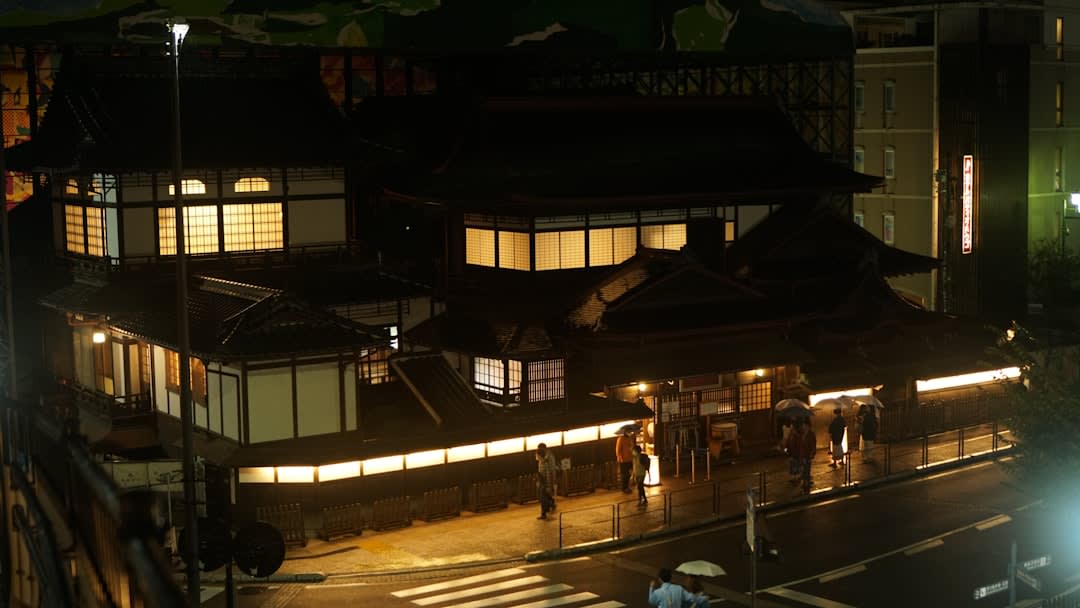
Dogo Onsen ranks among the oldest hot springs in Japan, with written records documenting its use for more than 1,300 years and oral traditions pointing back considerably further. The landmark Dogo Onsen Honkan is a three-storey wooden bathhouse finished in 1894, widely credited as the inspiration for the bathhouse depicted in Studio Ghibli's Spirited Away. The spring water is mildly alkaline and has long been valued for its ability to soften and smooth the skin.

Beppu is the most geothermally active city in Japan, with more than 2,900 hot spring vents located within the city limits and eight distinct thermal spring zones collectively known as the Beppu Hatto. The variety on offer is wide, ranging from grand hotel bathhouses to modest neighborhood public facilities to the celebrated Hells, a collection of brilliantly colored boiling pools scattered across the city. The Hells run far too hot for bathing, but they draw visitors who come to walk among them and take in the spectacle.
Amenities
Getting there
From Tokyo: Tohoku Shinkansen + Rikuu East Line
Gateway: Naruko-Onsen (150 min)
Walk to bathhouse
Total journey: 155 min
Take the JR Rikuu East Line from Sendai to Naruko-Onsen Station. The journey takes about 70 minutes.
Location & nearby
Naruko Onsen, Osaki City, Miyagi 989-6823
Make a day of it
Pair your soak with these nearby spots.
Attraction
Bentenkaku
0.5km away
Attraction
Kannanayu
0.6km away
Attraction
Morinoyu
0.7km away
Attraction
Todoroki Onsen Todoroki Ryokan
0.8km away
Attraction
Tanaka Onsen
1.0km away
Attraction
ene cafe Methane
1.5km away
More springs in Tohoku
Set deep in the Hakkoda Mountains of Aomori Prefecture, Sukayu Onsen is a historic bathhouse best known for its cavernous mixed-bathing hall, the Sen-nin-buro, which translates as the Bath of a Thousand Bathers. The waters are strongly acidic, the setting is rustic and unhurried, and winter brings extraordinary snowfall to the surrounding mountains.

Tsuru-no-yu is the oldest of the seven inns at Nyuto, set deep in a beech forest in Akita Prefecture. The main draw is a large outdoor mixed-bathing pool fed by opaque, milky-white sulfurous water. Many regard it as the most beautiful onsen setting in Japan. People come here to put some distance between themselves and the rest of the world for a while.
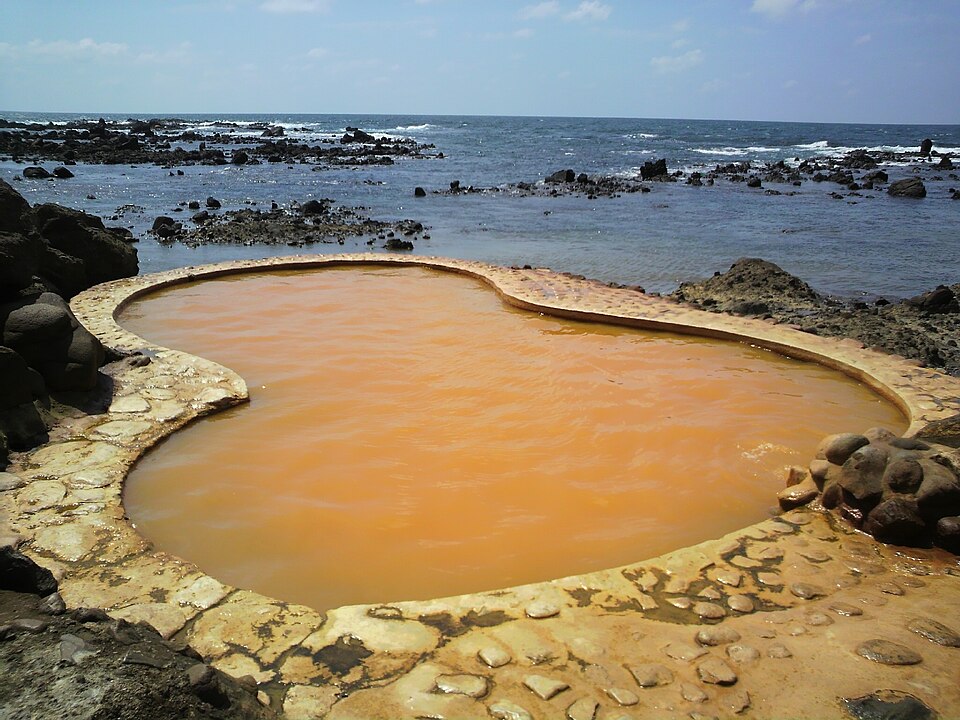
Furofushi Onsen occupies a rocky cape in Fukaura, Aomori Prefecture, with outdoor bathing pools positioned at the edge of the Sea of Japan cliffs. The spring water runs a deep reddish-brown from its high iron and sodium chloride content. The main open-air bath and a dedicated women's pool both use fully undiluted water drawn straight from the source. Sunsets over the water are a particular draw. Once day visitors depart in the late afternoon, overnight guests have the pools to themselves.
Common questions
What is the water temperature at Naruko Onsen?▾
The water temperature at Naruko Onsen ranges up to 70°C (minimum around 38°C).
Is Naruko Onsen free to visit?▾
Naruko Onsen charges an entrance fee in JPY.
Is Naruko Onsen a public or private bath?▾
Naruko Onsen is a public bathing spring.
Are tattoos allowed at Naruko Onsen?▾
Tattoo policy varies at Naruko Onsen. Check ahead of your visit.
What is the nearest station to Naruko Onsen?▾
The nearest station to Naruko Onsen is Naruko Sogo Shisho, about 0.8km away.