
Akinomiya Hot Springs
秋の宮温泉郷
4.1 · 165 reviews · via Google
Akinomiya Hot Springs
simple-alkaline · Tohoku
Hotter than 67% of Japan springs (n=122).
More acidic than 19% of Japan springs (n=121).
Mineral profile
Bar width reflects listing order, not measured concentration.
Suitability
At a glance
Getting there
Easy — under 1km from a station
Cost
High
Crowd level
Quiet
About this spring
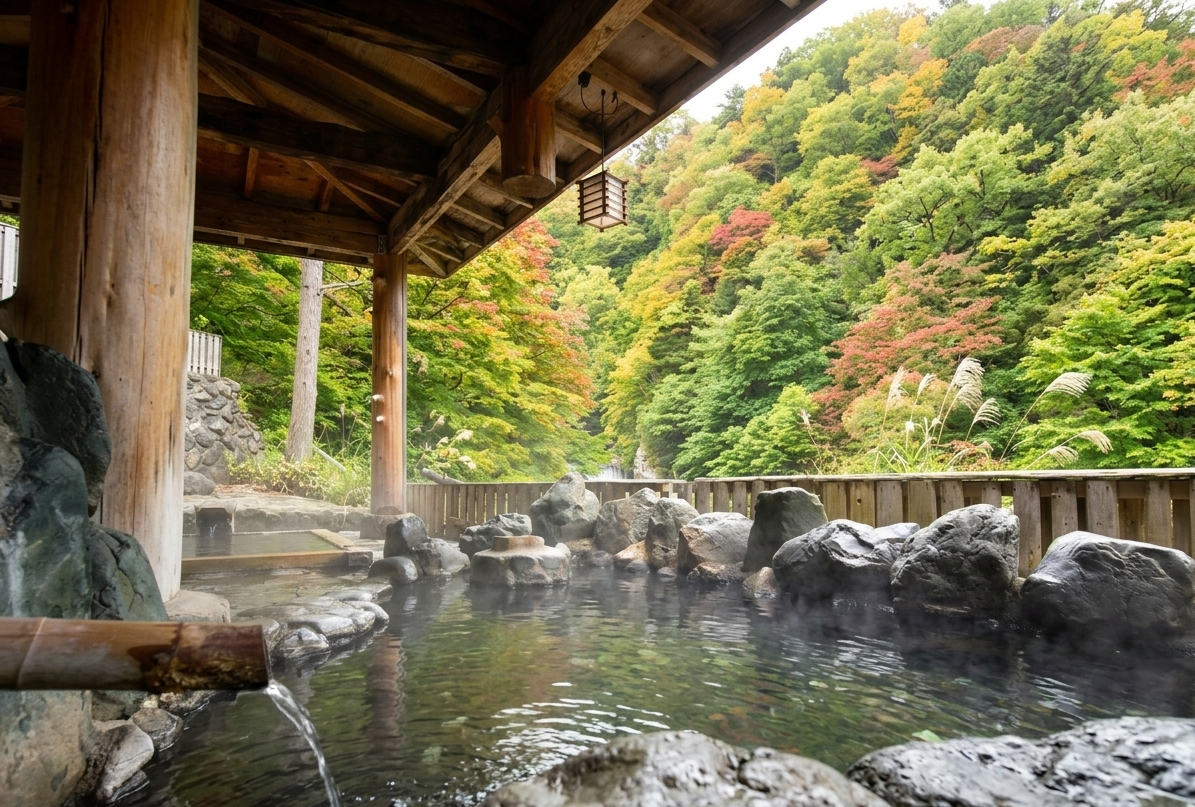
Akinomiya Hot Springs is a cluster of mountain springs situated along the Yakunai River at the western foot of Mount Kurikoma in Akita Prefecture, widely regarded as the prefecture's oldest spring resort. The geothermal area has been catalogued as containing more than 50 individual springs and fumaroles. The innermost of these, Takanoyu, is both the most remote and the most celebrated.
Highlights
History
According to tradition, the springs were first encountered during the Nara period by the itinerant monk Gyoki.
The origin story attached to Takanoyu centers on a falconer who noticed his injured hawk regaining its health after soaking in a steaming pool among the rocks. Official standing came in 1702 when the Akita Domain formally designated Akinomiya Onsenkyo as a resort under domain authority, making it the earliest resort of its kind with documented recognition in the prefecture. In the modern era, the novelist Saneatsu Mushanokoji visited the springs as a place of retreat.
Local guide
Highway Route 108 climbs west out of Yuzawa City and follows the Omono River upstream into the foothills of Mount Kurikoma. The road is not dramatic, but the landscape grows quieter mile by mile until you arrive at Akinomiya Hot Springs, a village of scattered inns and fumaroles tucked along the Yakunai River. The mountain behind it sends steam up through cracks in the ground at over fifty points across the geothermal field, which means that even in summer there is always something venting somewhere, some thin white plume rising without ceremony from a patch of bare earth beside the road.
The spring chemistry here is simple alkaline, the kind of water that is not trying to impress you with color or drama. It flows clear, feels faintly silky on the skin, and comes out of the earth at temperatures up to seventy-two degrees Celsius before being cooled to a reasonable bathing level. Because the pH sits on the alkaline side, regular bathers claim the water leaves their skin noticeably smoother, the same effect you get at many alkaline springs in northern Japan but delivered here with a mountain quiet that is harder to find at the better-known resort towns.
The experience that makes Akinomiya genuinely worth the drive is the Kawara-no-Yukko. Along the stony bed of the Yakunai River, hot spring water seeps directly up through the riverbed. Staff at a small nearby building hand you a shovel, and you wade out onto the stones and dig your own shallow pool between the rocks, diverting the hot water into a hollow you have made yourself. It is a little absurd and completely enjoyable. Once you have your pool dug to a depth that feels right, you sit in the warm water with the cold river current eddying around you, ordering food from the nearby kitchen and eating while your feet stay submerged.
The legendary age of Akinomiya adds a certain weight to the place. According to local history, the springs were known here for twelve hundred years, and the Akita Clan formally recognized them during the Edo period. The writer Saneatsu Mushanokoji visited and wrote about the valley in the early twentieth century, which elevated the springs' reputation among literary travelers. None of this is much advertised. The village does not push its history, it just continues doing what it has done for a very long time, heating water and letting people sit in it.
Mineral chemistry
Water character inferred from mineral type — verify on site.
Alkaline springs (pH above 8) are known for their skin-softening effect, sometimes called "beauty water" in bathing cultures across Asia. The high pH saponifies skin oils, producing a characteristic silky feel on the skin surface.
The slippery feeling underfoot in highly alkaline springs is normal — take care when standing and walking in the bath. Avoid prolonged soaking if you have dry or sensitive skin.
Similar springs
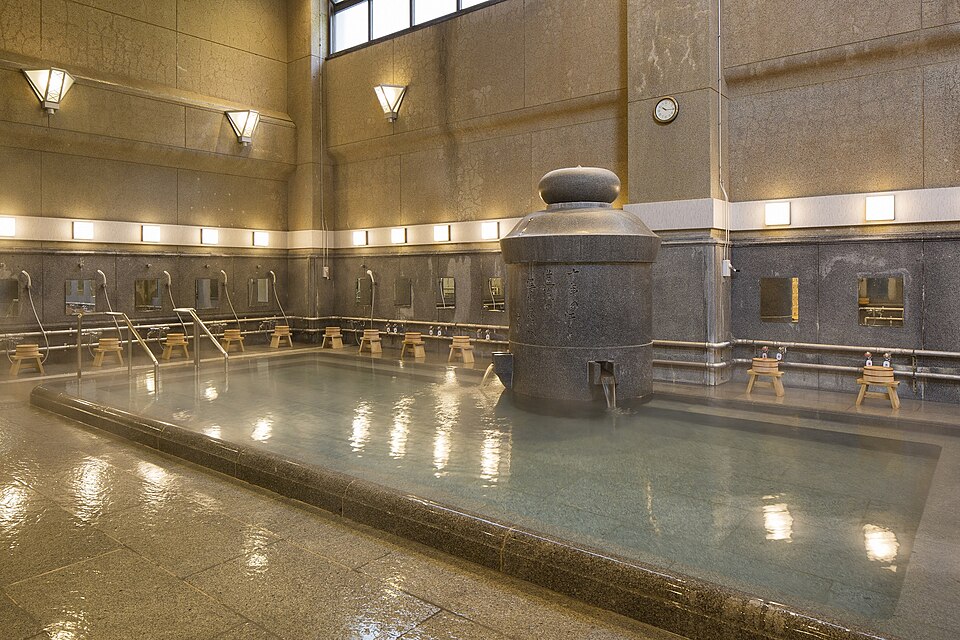
Tsubaki Onsen occupies a single large bathhouse on the Kii Peninsula in Wakayama Prefecture, surrounded by forest and roughly 2.5 hours from Osaka by train. The spring registers pH 9.9, placing it among the most alkaline waters in Japan. The facility is straightforward and well-maintained, attracting visitors from the Kumano region as well as day-trippers traveling in from the coast.
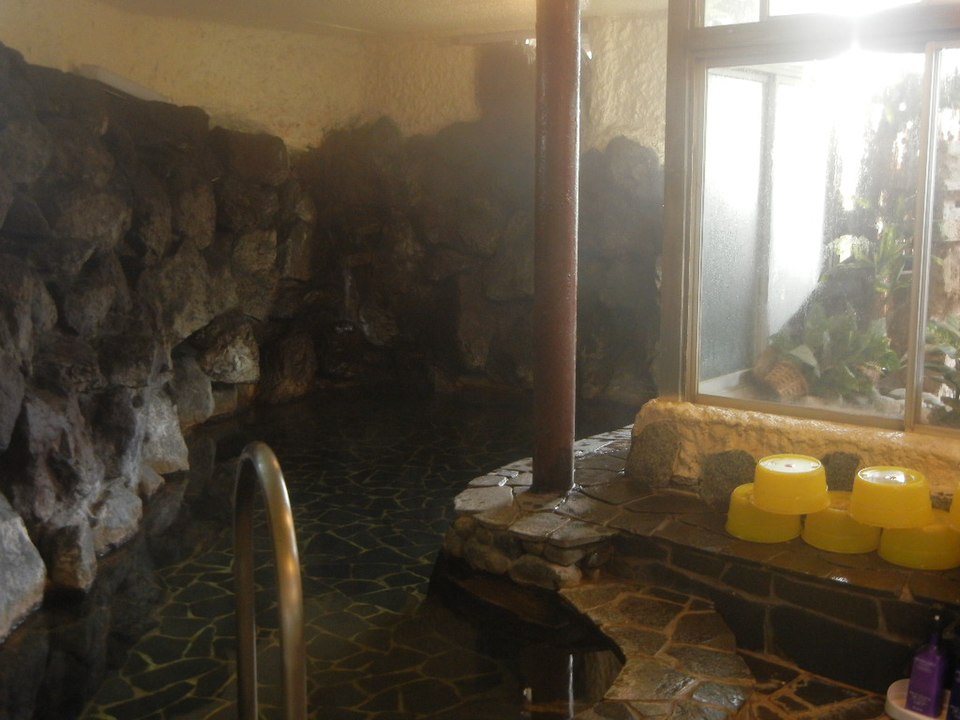
Iiyama Onsen sits in northern Nagano Prefecture near the Nozawa Onsen highlands and produces water with a pH of 11.3, placing it among the most alkaline natural hot springs anywhere in Japan. The soft, high-alkaline water has long been sought out as a beauty spring, widely praised for the way it smooths and softens the skin. The Hokuriku Shinkansen now stops at Iiyama Station, cutting travel time from Tokyo considerably.
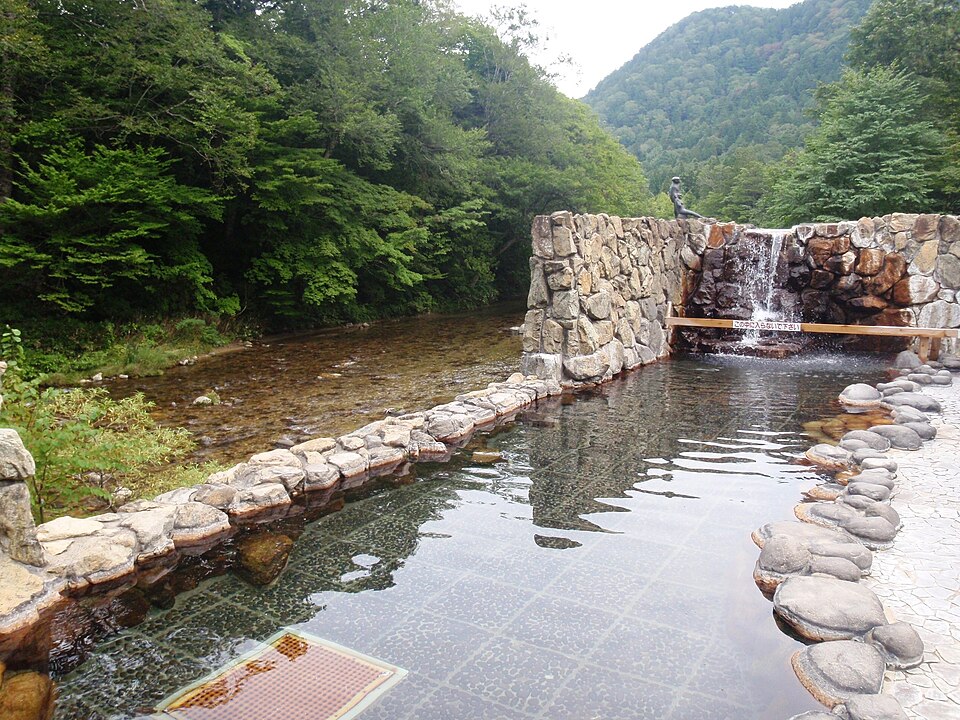 FREE
FREEKappa-no-yu is a free, open-air bathing spot tucked into Yagen Valley on the Shimokita Peninsula in Aomori Prefecture, roughly 2 kilometers up the slope from the central Yagen Onsen cluster. Two separate baths rest beside a clear mountain stream, surrounded by old-growth beech and cypress trees. The water temperature holds at 46 degrees Celsius. Visitors are not permitted to bring soap or shampoo. The baths are open from April through November and charge no entry fee.
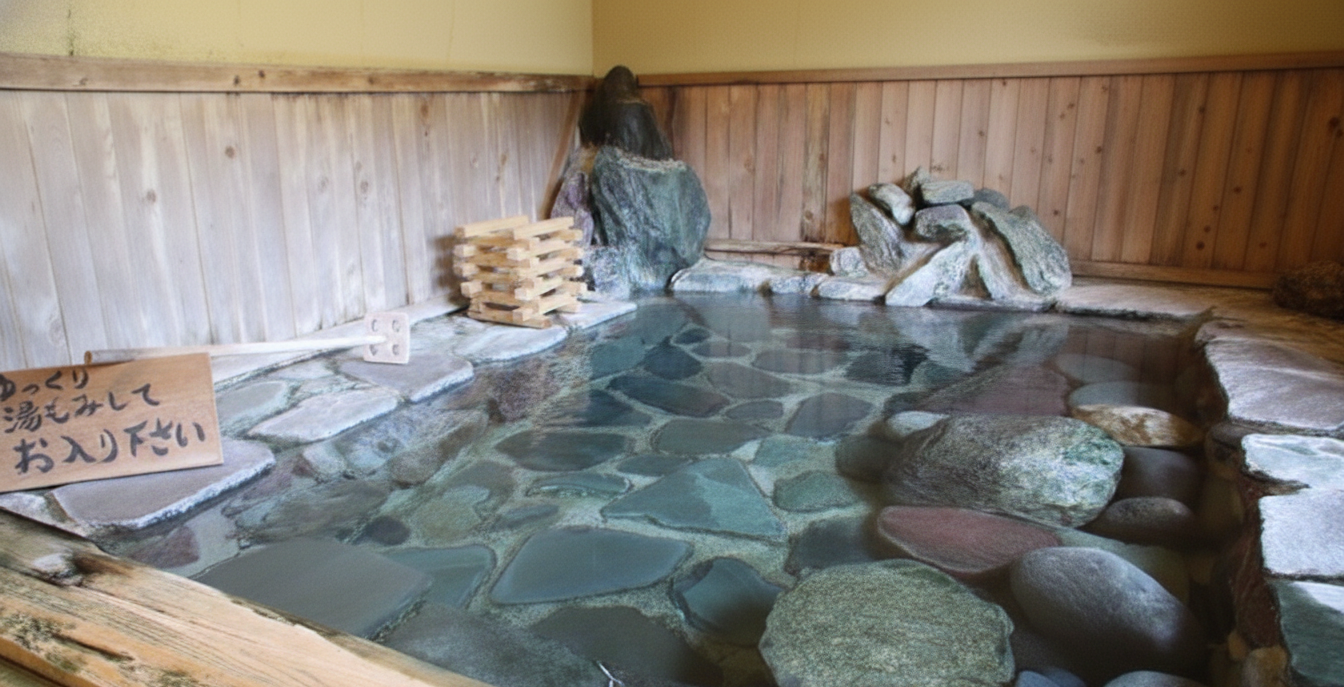
Tokigawa Onsen sits in Hiki District, Saitama Prefecture, roughly 90 minutes from central Tokyo. The water rises from Chichibu Paleozoic strata at a depth of 1,700 meters and registers pH 10, placing it firmly in the highly alkaline range. Bathers consistently note the silky feel it leaves on the skin. The facility has held onto its Showa-era bathhouse character rather than updating it.
Amenities
Getting there
Take the Shinkansen to Akita Station, then a local train toward Kakunodate and then a bus toward Akinomiya. The journey involves at least one bus connection and takes about 2 hours from Akita.
Location & nearby
Denjō-1 Akinomiya, Yuzawa, Akita 019-0321
Make a day of it
Pair your soak with these nearby spots.
Attraction
Takanoyu Onsen
0.0km away
Attraction
Takanoyuonsen
0.1km away
Attraction
Akinomiyasansō
0.3km away
Attraction
InejūOnsen
0.4km away
Attraction
Akinomiyaonsenkyō
0.5km away
Attraction
Kawaranoyutsuko
0.9km away
More springs in Tohoku
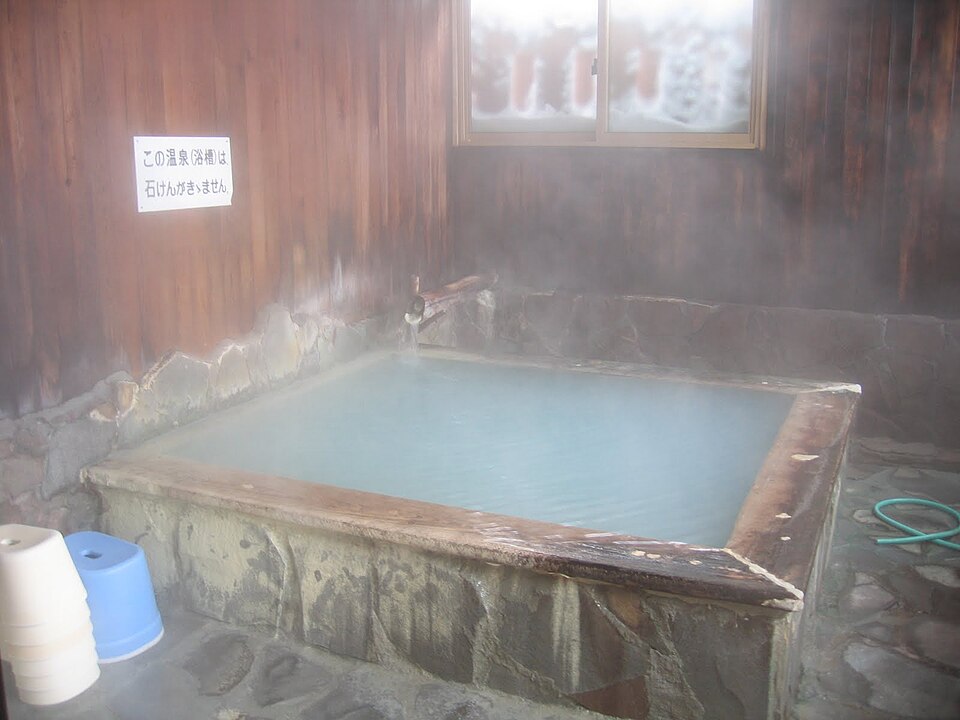
Set deep in the Hakkoda Mountains of Aomori Prefecture, Sukayu Onsen is a historic bathhouse best known for its cavernous mixed-bathing hall, the Sen-nin-buro, which translates as the Bath of a Thousand Bathers. The waters are strongly acidic, the setting is rustic and unhurried, and winter brings extraordinary snowfall to the surrounding mountains.
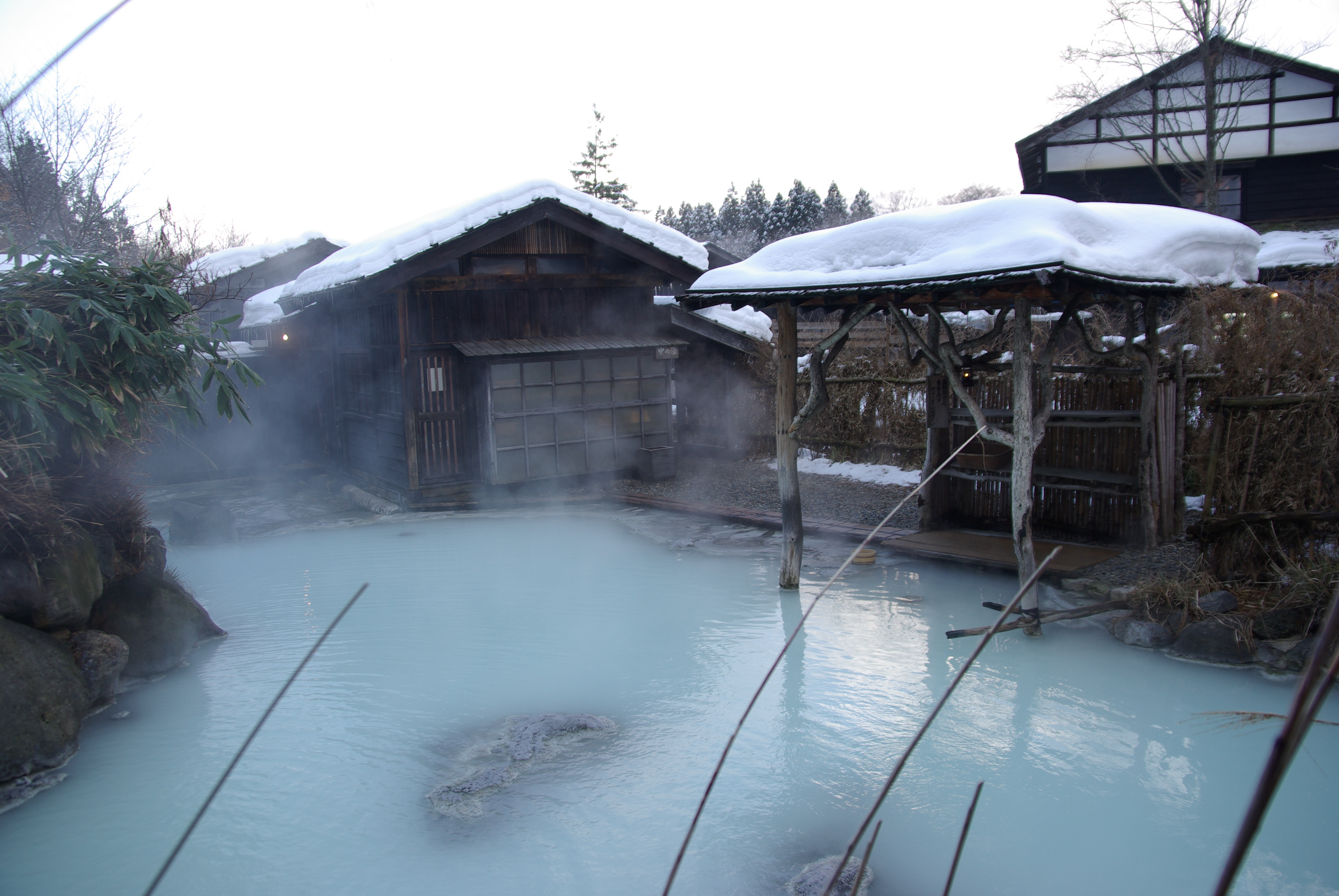
Tsuru-no-yu is the oldest of the seven inns at Nyuto, set deep in a beech forest in Akita Prefecture. The main draw is a large outdoor mixed-bathing pool fed by opaque, milky-white sulfurous water. Many regard it as the most beautiful onsen setting in Japan. People come here to put some distance between themselves and the rest of the world for a while.
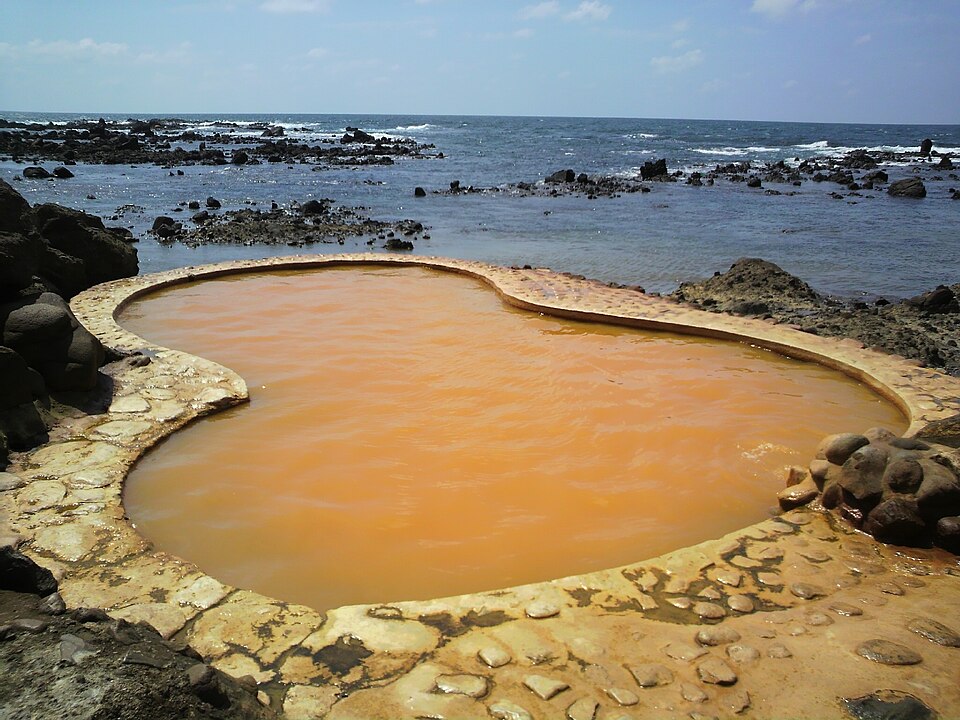
Furofushi Onsen occupies a rocky cape in Fukaura, Aomori Prefecture, with outdoor bathing pools positioned at the edge of the Sea of Japan cliffs. The spring water runs a deep reddish-brown from its high iron and sodium chloride content. The main open-air bath and a dedicated women's pool both use fully undiluted water drawn straight from the source. Sunsets over the water are a particular draw. Once day visitors depart in the late afternoon, overnight guests have the pools to themselves.
Common questions
What is the water temperature at Akinomiya Hot Springs?▾
The water temperature at Akinomiya Hot Springs ranges up to 72°C (minimum around 40°C).
Is Akinomiya Hot Springs free to visit?▾
Akinomiya Hot Springs charges an entrance fee in JPY.
Is Akinomiya Hot Springs a public or private bath?▾
Akinomiya Hot Springs is a footbath bathing spring.
Are tattoos allowed at Akinomiya Hot Springs?▾
No, Akinomiya Hot Springs does not permit visible tattoos.
What is the nearest station to Akinomiya Hot Springs?▾
The nearest station to Akinomiya Hot Springs is Takanoyu-onsen, about 0.2km away.