
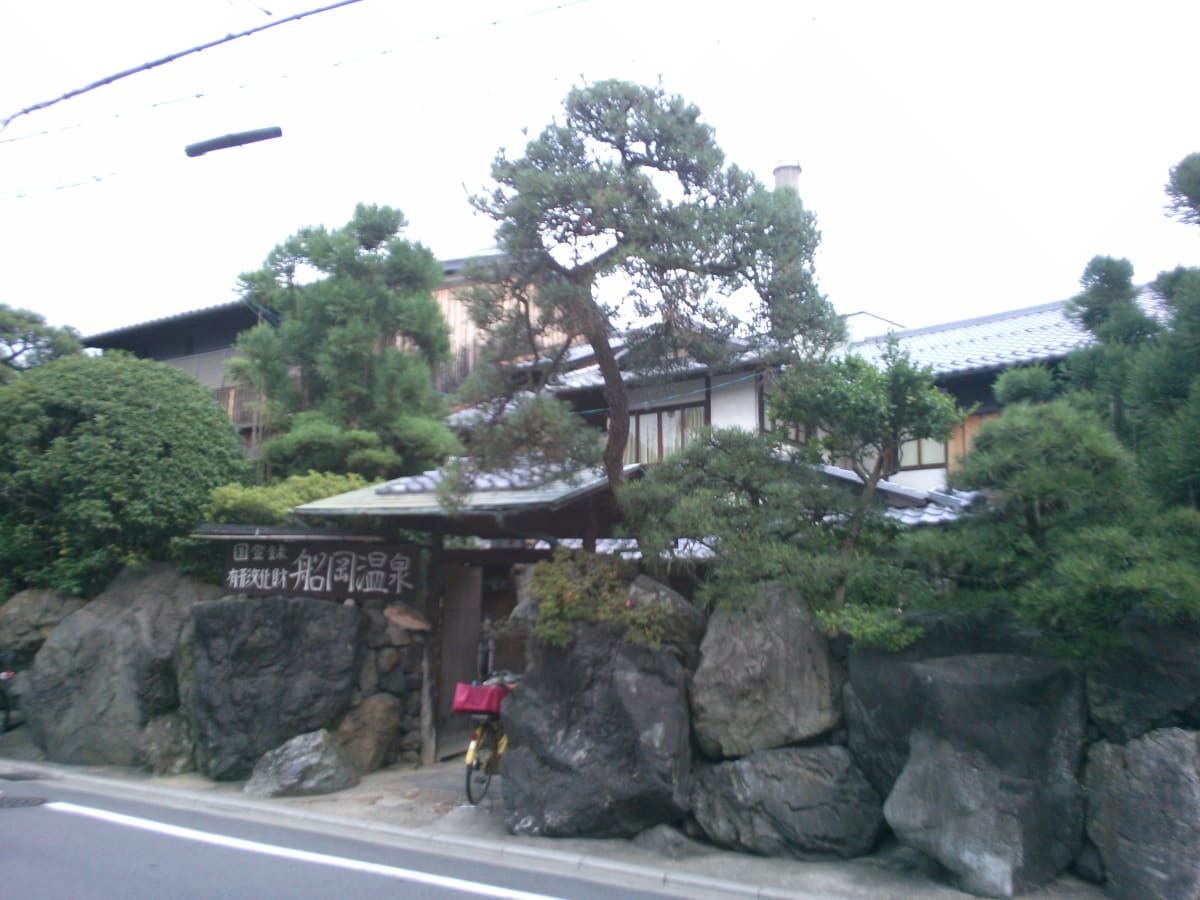
Funaoka Onsen
船岡温泉
4.3 · 1435 reviews · via Google
Funaoka Onsen
sento · Kansai
Hotter than 16% of Japan springs (n=122).
More acidic than 31% of Japan springs (n=121).
Mineral profile
Bar width reflects listing order, not measured concentration.
Suitability
At a glance
Getting there
Easy — under 1km from a station
Cost
Low
Crowd level
Moderate
About this spring
Funaoka Onsen is a public bathhouse dating to 1923 in the Funaoka district of northern Kyoto, now registered as a Tangible Cultural Property. The front gate is framed by a karahafu gable, a curved pediment style associated with Japanese castle construction. The interior walls are lined with carved wooden panels depicting mythological scenes, the work of artists connected to the Imperial Court over a period of ten years. Bathers can choose between indoor and outdoor pools.
Highlights
History
Funaoka Onsen opened in 1923 and has since received formal recognition as a Tangible Cultural Property for its architectural merit.
The carved wooden panels covering the interior walls took a decade to complete and were produced by craftspeople working in the Imperial Court tradition, placing this bathhouse among the most ornately finished public baths in Kyoto.
Local guide
Bus number 206 from Kyoto Station runs north through the Nishijin weaving district and stops at Senbon-Kuramaguchi, where a five-minute walk west along narrow residential streets leads to the entrance of Funaoka Onsen. You smell the bath water before you see the building, a faint warm mineral note that floats out from the ventilation grates. Then the entrance gate appears, and it stops you. The karahafu gable, that undulating curve of gilded wood normally reserved for temple gates and castle doorways, rises above the entrance of what is, by all practical measures, a neighborhood public bathhouse. Nothing in the surrounding streets prepared you for it.
The bathhouse was built in 1923 and is registered as a national Tangible Cultural Property. Inside the changing room, carved wooden panels run above the lockers depicting the Aoi Festival procession, the horse race at Kamigamo Shrine, and the Imamiya Shrine ceremony, the work of artisans from the Imperial Court who spent a decade on them. The carved figure of Kurama Tengu and the young Ushiwakamaru looks down from the keyaki wood transom above the entrance to the bathing hall. It is an extraordinary amount of craft applied to a room where people undress before getting in a tub, and that disjunction between the grandeur of the architecture and the absolute ordinariness of the activity is what makes Funaoka genuinely unusual rather than merely historic.
The baths are real neighborhood baths. Funaoka was among the first public bathhouses in Japan to install electric baths, and that tank, with its mild electrical current running through the water, still operates today. There is also an outdoor hinoki wood and stone bath in a small garden courtyard, the indoor tubs, a sauna, and a cold plunge. The water itself is heated tap water rather than a natural hot spring source, so there is no dramatic chemistry to report. What the water delivers is what any well-maintained neighborhood sento delivers: clean, consistently hot water in a space where the regulars have been coming for decades.
Funaoka sits at the foot of Mount Funaoka, a small hill that preserves one of Kyoto's surviving sections of earthwork from the Oda Nobunaga era. The surrounding Nishijin district is where traditional silk weaving has been practiced since the fifteenth century, and on quiet weekday mornings you can still hear the mechanical looms through the walls of the narrow machiya townhouses nearby. The bathhouse itself is busiest in the evenings, when people come after work the way people have been coming here since the building opened. The Tengu faces carved into the latticed transoms look down at all of it with the same expression they have held for a hundred years.
Mineral chemistry
Water character inferred from mineral type — verify on site.
Amenities
Getting there
From Kyoto Station, take the Karasuma subway line to Kuramaguchi Station, then walk about 10 minutes northwest toward Funaoka. Alternatively, take a Kyoto City Bus to the Funaoka Higashi-machi stop.
Location & nearby
82-1 Murasakino Minamifunaokachō, Kita Ward, Kyoto, 603-8225
Make a day of it
Pair your soak with these nearby spots.
Attraction
Funaoka Onsen
0.0km away
Attraction
Meijiyu
0.2km away
Attraction
Akishiyu
0.2km away
Attraction
Funaokayamashiro Horiato
0.3km away
Park
FuneokayamakōEn
0.3km away
Attraction
RafīNeashiyamadera
0.3km away
More springs in Kansai
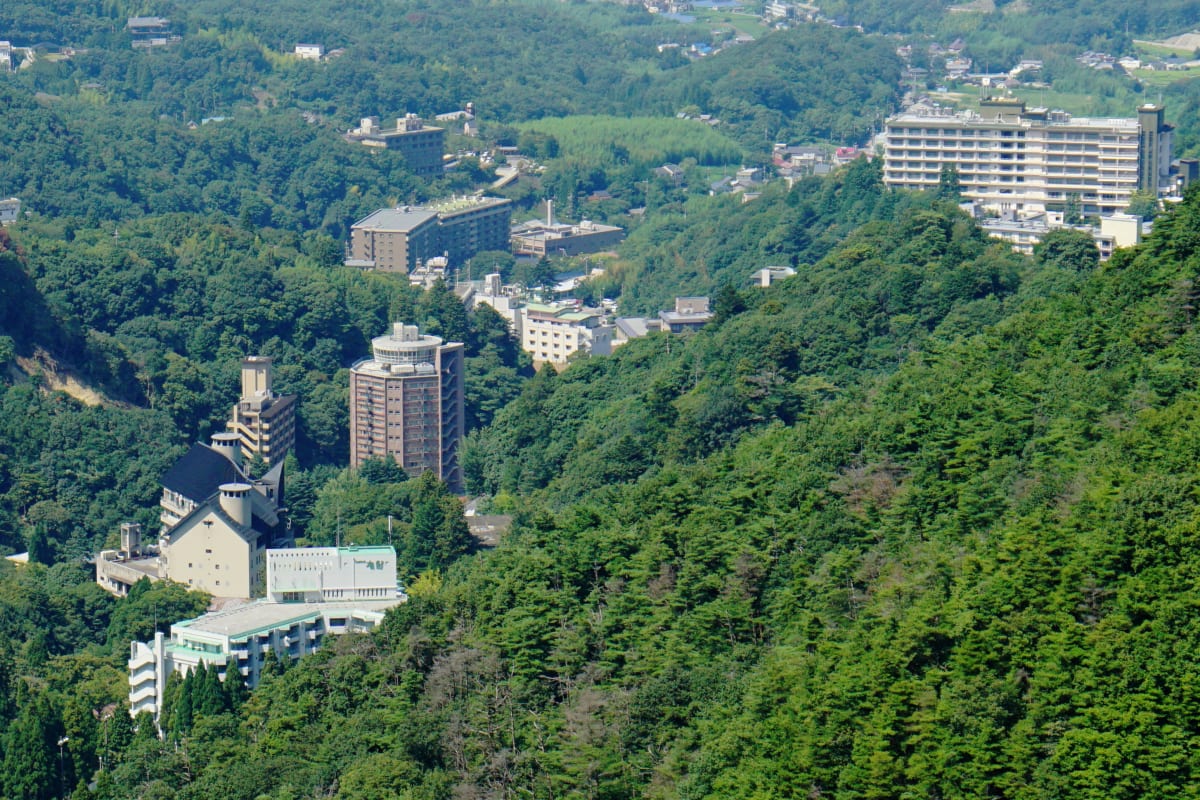
Arima Onsen sits in the hills above Kobe, close to Mount Rokko, and ranks among the oldest hot spring towns in Japan. The town draws visitors for two entirely different spring types that coexist within its compact footprint. Kinsen is the iron-rich golden water that stains surrounding rocks a rusty orange, while ginsen runs clear and carries both carbonation and mild radioactivity. Few other onsen destinations in Japan bring together two such distinct water types within a single small town.
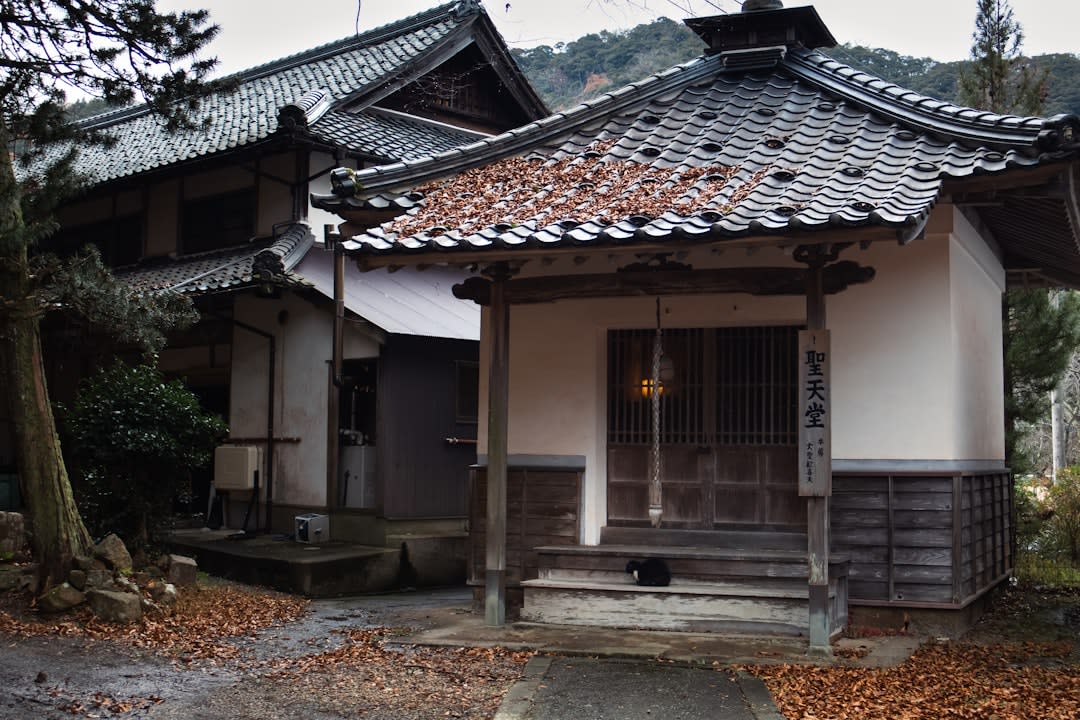
One of Japan's most beloved onsen towns. Visitors put on a yukata and wooden sandals and stroll between seven public bathhouses along a willow-lined canal. The wooden bridges, stone walkways, and traditional inn facades have barely changed in a century. The town is built for wandering.
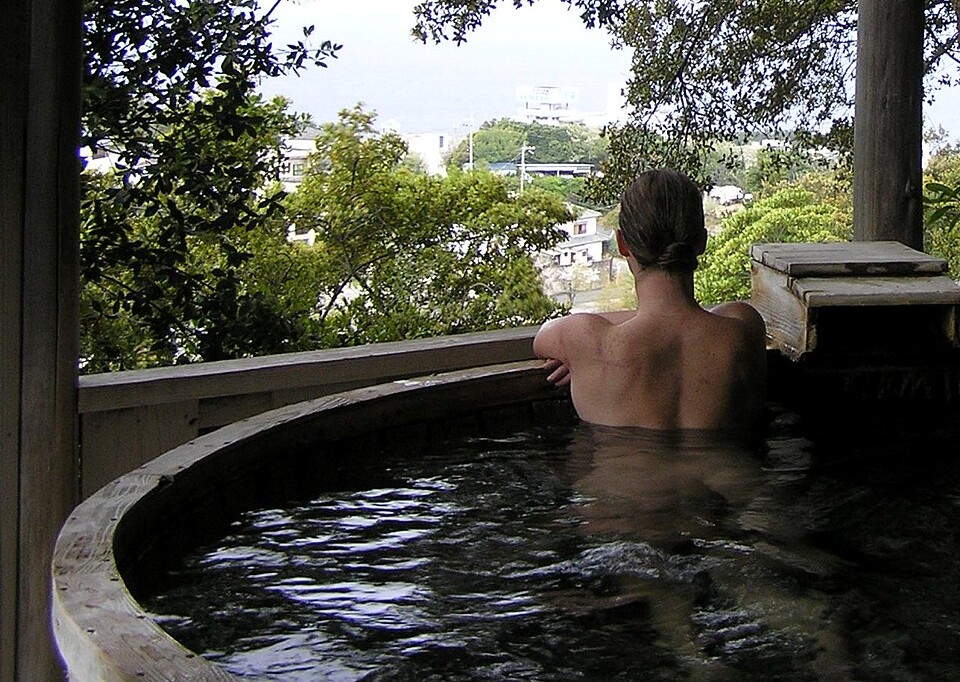
An old coastal resort town where hot springs meet the Pacific. The white-sand beach and dramatic rock formations create a setting unlike most onsen destinations. The ancient outdoor baths of Saki-no-Yu sit directly above the ocean. You soak while watching the waves crash below you.
Common questions
What is the water temperature at Funaoka Onsen?▾
The water temperature at Funaoka Onsen ranges up to 44°C (minimum around 44°C).
Is Funaoka Onsen free to visit?▾
Funaoka Onsen charges an entrance fee in JPY.
Is Funaoka Onsen a public or private bath?▾
Funaoka Onsen is a public bathing spring.
Are tattoos allowed at Funaoka Onsen?▾
Yes, Funaoka Onsen welcomes visitors with tattoos.
What is the nearest station to Funaoka Onsen?▾
The nearest station to Funaoka Onsen is Senbon Kuramaguchi, about 0.4km away.