Nanki-Shirahama Onsen
南紀白浜温泉
Nanki-Shirahama Onsen
sodium-chloride · Kansai
Hotter than 77% of Japan springs (n=122).
More acidic than 31% of Japan springs (n=121).
Mineral profile
Bar width reflects listing order, not measured concentration.
Suitability
At a glance
Getting there
Easy — under 1km from a station
Cost
High
About this spring
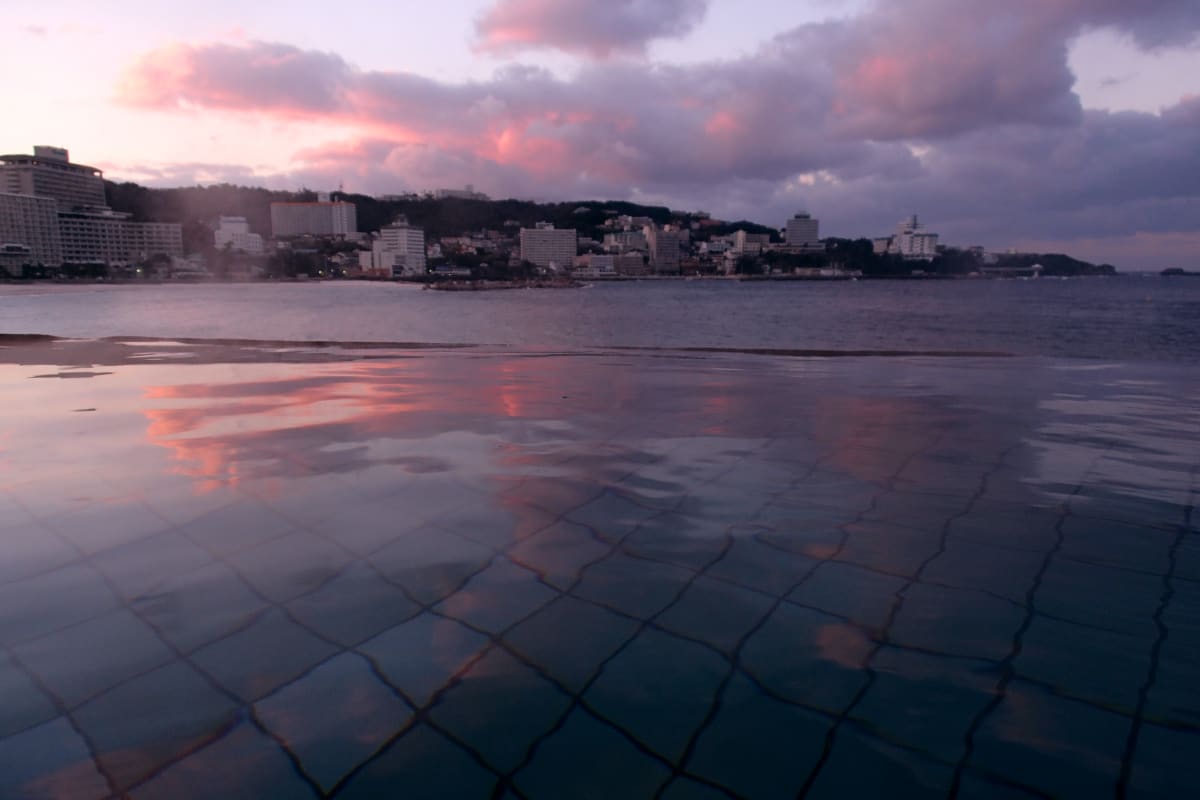
Nanki-Shirahama is a coastal resort town on the Kii Peninsula where hot springs have drawn emperors since the seventh century. The geography is unusual for a resort: a broad white-sand beach fronts the Pacific, and hot spring hotels fill the ground behind it. The old outdoor rock baths of Saki-no-Yu are built directly above the ocean.
Highlights
History
These springs have been in continuous use for more than 1,300 years.
The Nihon Shoki, a chronicle compiled in 720 AD, records that Emperor Saimei arrived here in 658, and a number of emperors made the same journey in the centuries that followed. The springs also appear in the Man'yoshu, Japan's oldest poetry anthology. The site was known at that time as Muronoyu, a name meaning the hot water of the hollow. For generations it served as an imperial retreat on the Kii Peninsula, drawing the aristocracy of the court. Rail access reached the Kii coast in 1919, which marks the beginning of the modern resort. Emperor Showa paid an official visit in 1929. The outdoor baths at Saki-no-Yu today look much as they do in old engravings, with spring water meeting salt water at the cliff edge and the ocean directly below.
Local guide
Shirahama sits at the tip of a low headland on the Kii Peninsula, and the fastest way to grasp what kind of place it is requires only one image. Walk from the JR Shirahama Station down to the beach, and you will find 620 meters of white sand that is so pale and fine it looks like it was imported. It was, actually, at least in part: the town has periodically replenished the beach with sand shipped from Australia to maintain the color and texture that made Shirarahama Beach famous. The Pacific presses up against it, blue and warm in summer, and behind the beach the hotels stack up the hillside in layers. Then notice the steam rising from places that have nothing to do with the hotels. Shirahama has been a hot spring town for approximately 1,350 years, making it one of the oldest onsen resorts in Japan along with Arima and Dogo.
The water is a sodium chloride and sodium bicarbonate spring, neutral at pH 7, and it flows from the earth at temperatures between 40 and 83 degrees depending on the source. The salt content gives it a mild brine quality on the skin, slightly dense and warm in a way that differs from freshwater baths. At the source spring Miyuki-gensen, the water comes out at 78 degrees and is piped to the outdoor baths called Saki no Yu, which sit on a flat rock shelf at the southern point of the headland. The pools are built directly on the rock, open to the sky, and the Pacific Ocean is right there: not visible in the distance but present, audible, occasionally spraying your face when the swell is up. Saki no Yu is the only surviving bath from Yuzaki's Seven Onsen, a group of springs mentioned in the Man'yoshu, an anthology of Japanese poetry compiled around the year 750.
The overlap of beach and spring creates a town with two moods depending on the season. In August, Shirahama is loud with summer crowds and the beach is packed with umbrellas. In late autumn or winter, the place quiets entirely and what remains is the rock, the water, the old spring sources steaming into the cold air, and the Pacific doing its work on the headland. It is in those quieter months that Saki no Yu is most itself: the rocks slick from sea spray, the water hot, the steam mixing with the salt wind.
The outdoor bath at Saki no Yu charges a small entry fee and provides nothing beyond the pool and the view. There are no gardens, no attendants in uniform, no gift shop visible from the water. You pay, change, walk out onto the rock shelf, lower yourself into the hot sodium spring, and the ocean is in front of you. This is what 1,350 years of knowing what a hot spring is for looks like.
Mineral chemistry
Water character inferred from mineral type — verify on site.
Sodium chloride springs, essentially natural saltwater baths, are celebrated for their warming and moisturising effects. The salt forms a thin film on the skin that slows moisture evaporation, keeping skin hydrated longer than a freshwater bath.
Those with high blood pressure or heart conditions should consult a doctor before bathing, as the warming effect increases circulation. Avoid immersing open wounds.
Bicarbonate springs cleanse and soften the skin surface, removing excess sebum without stripping the skin's acid mantle. Traditionally recommended for acne-prone skin and sensitive skin types.
Bicarbonate springs are generally among the most gentle and well-tolerated onsen types.
Similar springs
 FREE
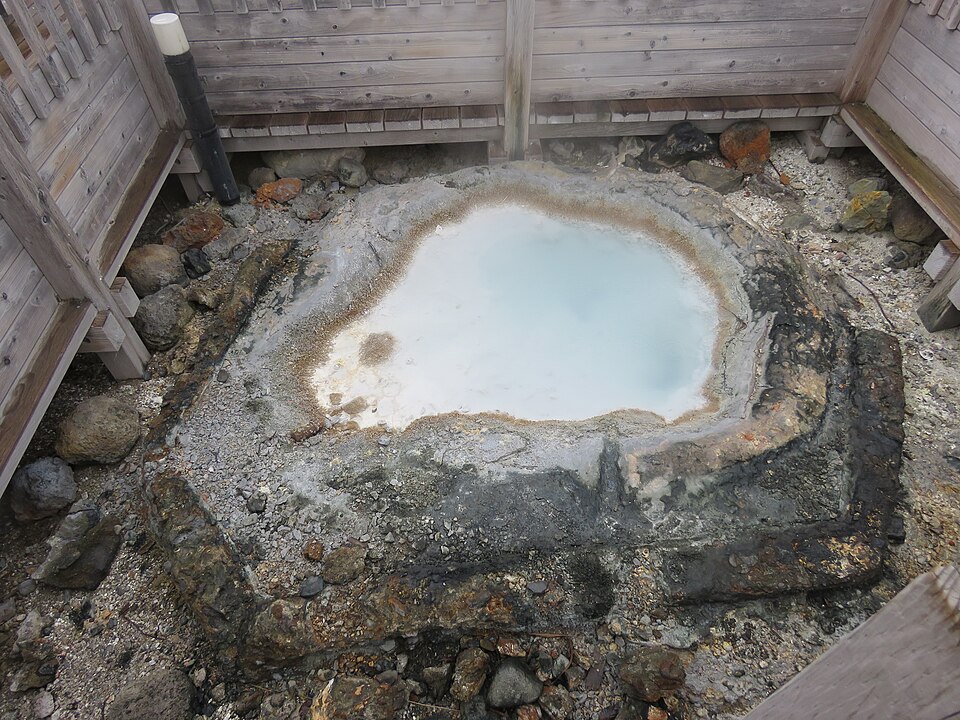
FREEThe valley occupies the center of Noboribetsu Onsen in Hokkaido. Jigokudani translates as Hell Valley. The crater covers 11 hectares and releases roughly 10,000 tonnes of hot spring water each day. Fumaroles vent steam across the floor of the valley, boiling pools bubble at the surface, and the surrounding cliffs carry heavy mineral staining. A walking path winds through the area in about 20 minutes and is open to all visitors at no cost. It ranks among the most striking landscapes accessible on foot anywhere in Japan.
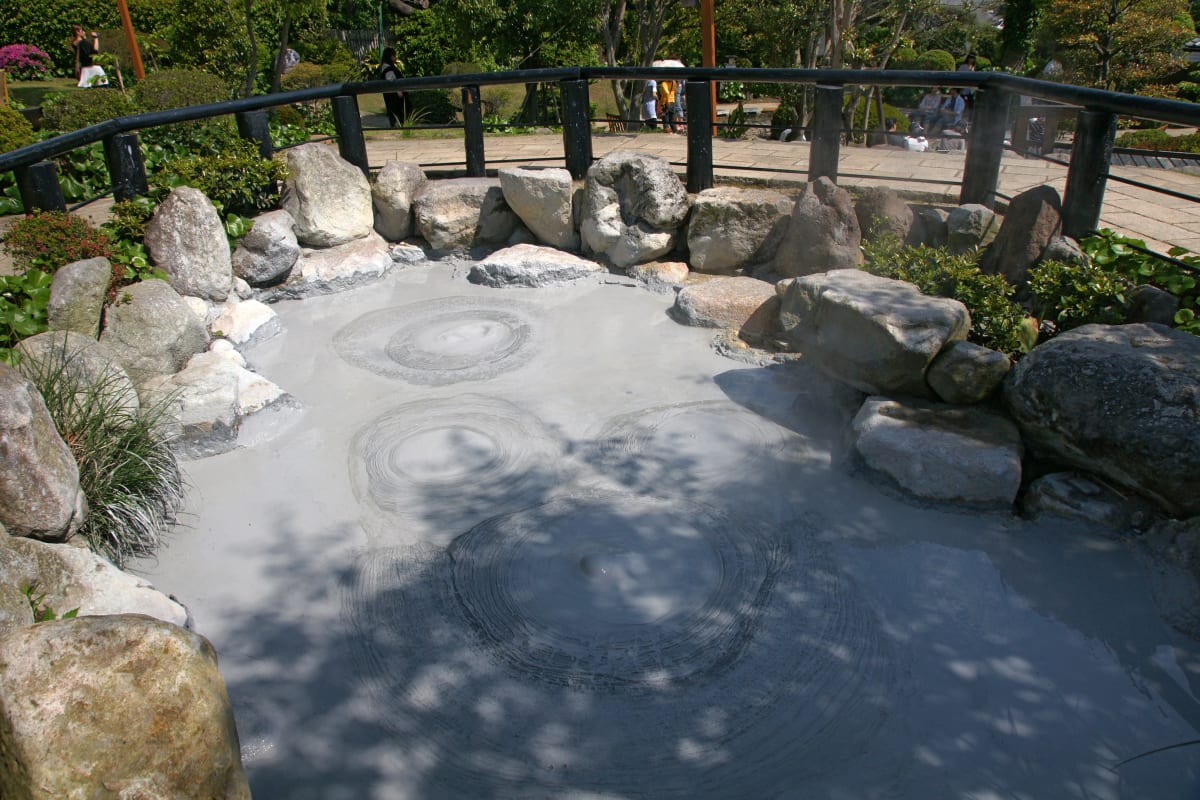
Beppu is the most geothermally active city in Japan, with more than 2,900 hot spring vents located within the city limits and eight distinct thermal spring zones collectively known as the Beppu Hatto. The variety on offer is wide, ranging from grand hotel bathhouses to modest neighborhood public facilities to the celebrated Hells, a collection of brilliantly colored boiling pools scattered across the city. The Hells run far too hot for bathing, but they draw visitors who come to walk among them and take in the spectacle.
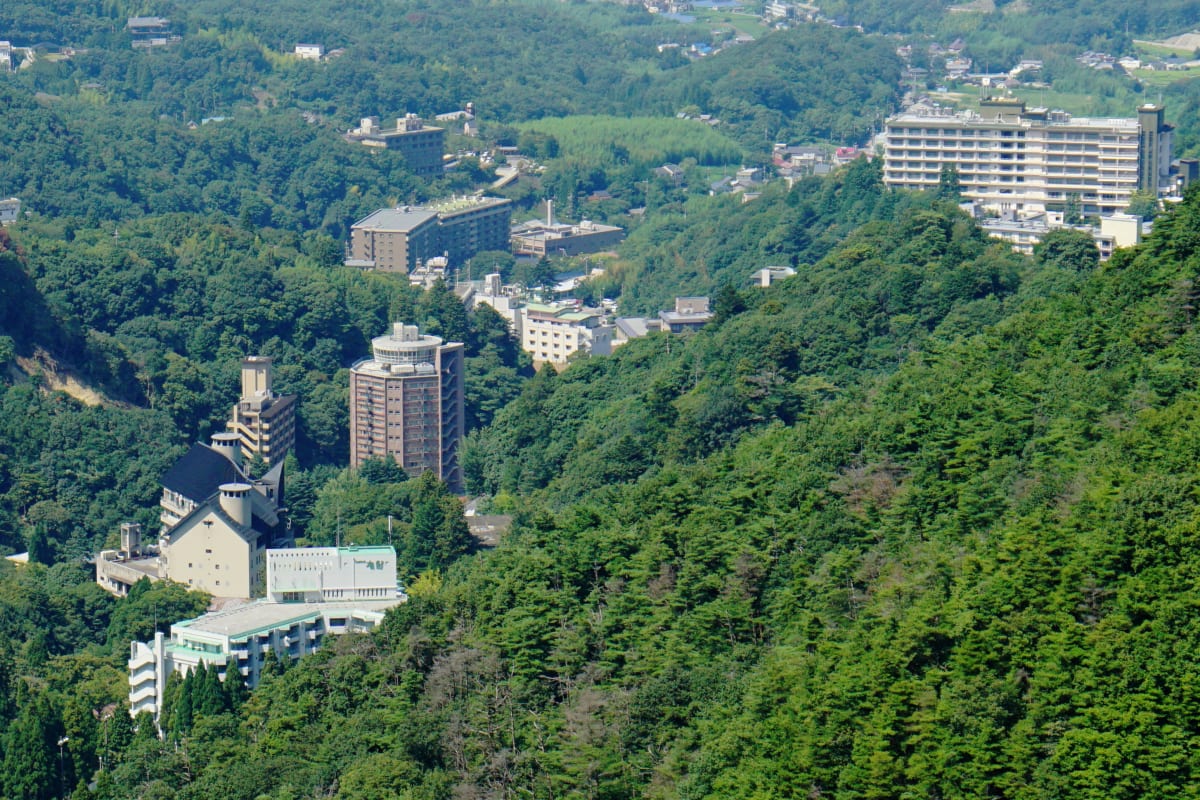
Arima Onsen sits in the hills above Kobe, close to Mount Rokko, and ranks among the oldest hot spring towns in Japan. The town draws visitors for two entirely different spring types that coexist within its compact footprint. Kinsen is the iron-rich golden water that stains surrounding rocks a rusty orange, while ginsen runs clear and carries both carbonation and mild radioactivity. Few other onsen destinations in Japan bring together two such distinct water types within a single small town.
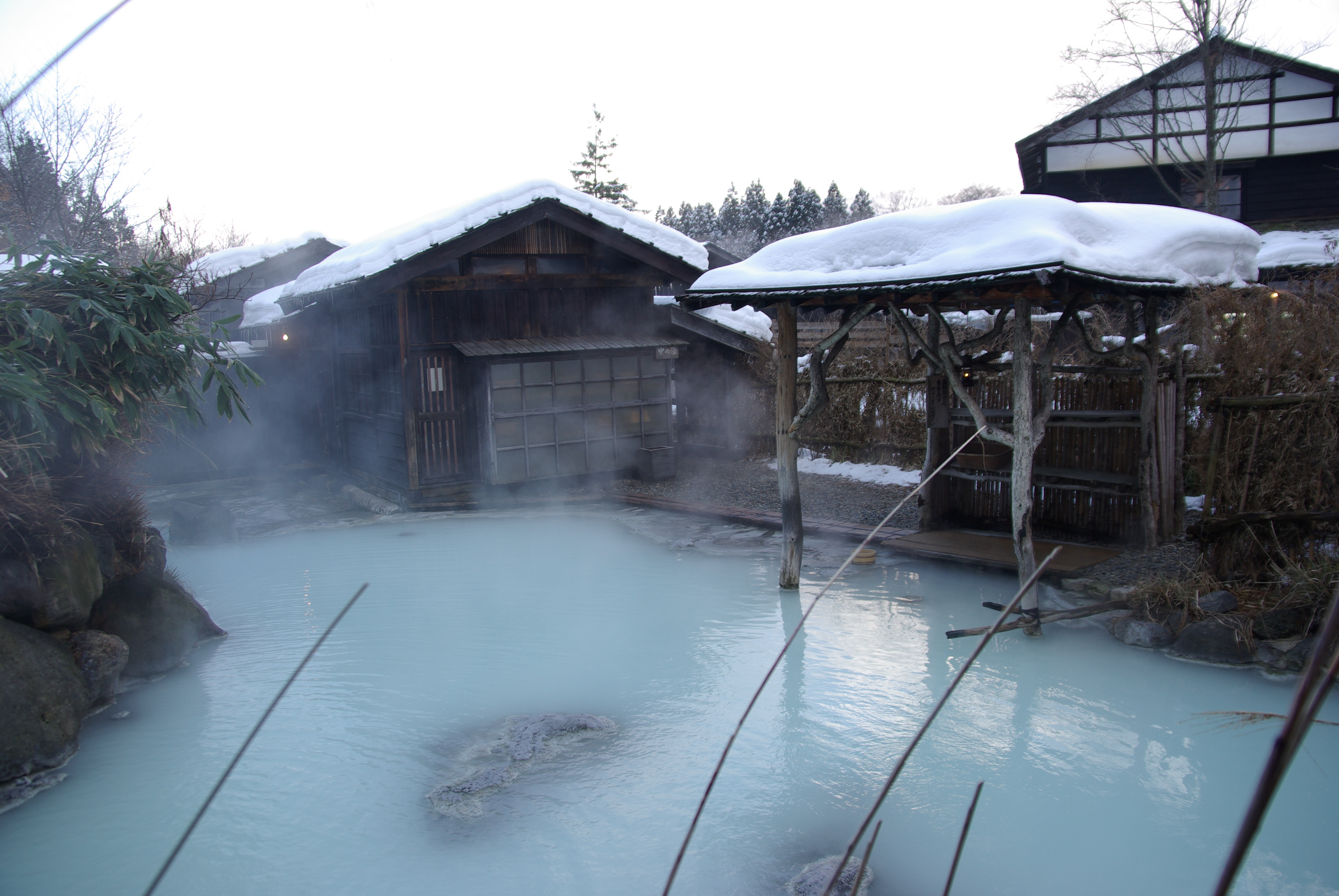
Tsuru-no-yu is the oldest of the seven inns at Nyuto, set deep in a beech forest in Akita Prefecture. The main draw is a large outdoor mixed-bathing pool fed by opaque, milky-white sulfurous water. Many regard it as the most beautiful onsen setting in Japan. People come here to put some distance between themselves and the rest of the world for a while.
Amenities
Getting there
From Osaka, take the JR Kuroshio limited express to Shirahama Station. The ride takes about 2 hours. Local buses connect to the beach and onsen district. From Tokyo, fly direct to Nanki-Shirahama Airport, then take a 10-minute bus or taxi.
Location & nearby
Nakishirahama Onsen, Wakayama
Make a day of it
Pair your soak with these nearby spots.
Attraction
Shatorehaitsushirahama
0.0km away
Park
Shirahamakaigan Park
0.1km away
Attraction
Dolphin Shower
0.2km away
Attraction
Tsukumotoashiyu
0.2km away
Attraction
Muronoyu
0.3km away
Park
Shirarawamayuu Park
0.3km away
More springs in Kansai
Arima Onsen sits in the hills above Kobe, close to Mount Rokko, and ranks among the oldest hot spring towns in Japan. The town draws visitors for two entirely different spring types that coexist within its compact footprint. Kinsen is the iron-rich golden water that stains surrounding rocks a rusty orange, while ginsen runs clear and carries both carbonation and mild radioactivity. Few other onsen destinations in Japan bring together two such distinct water types within a single small town.
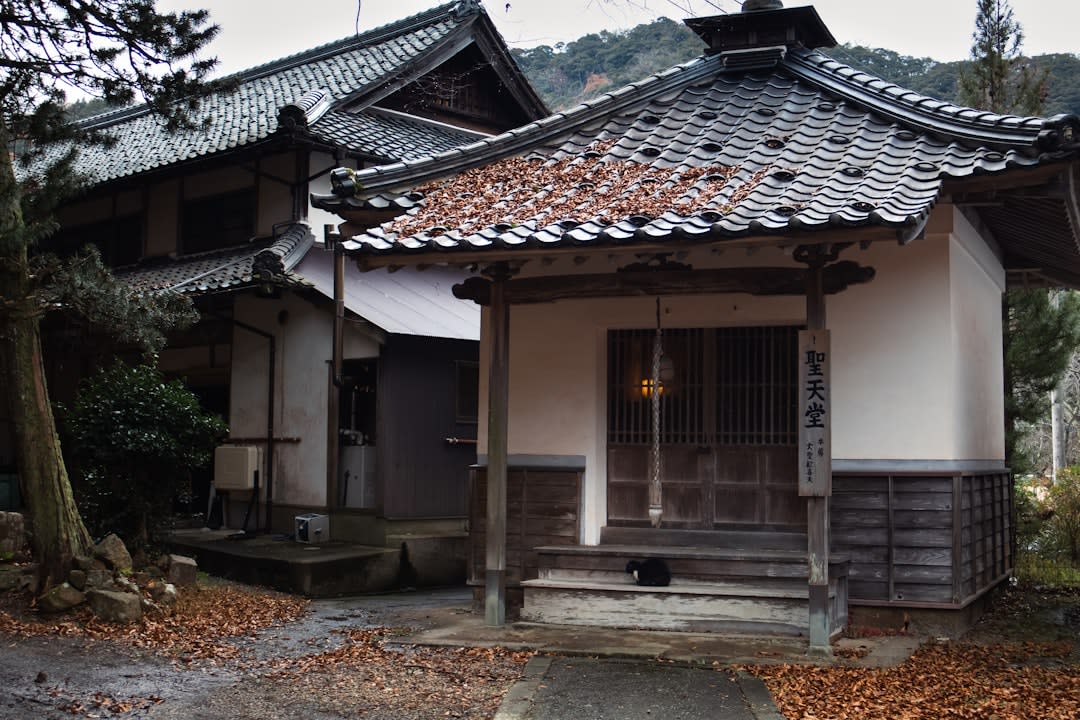
One of Japan's most beloved onsen towns. Visitors put on a yukata and wooden sandals and stroll between seven public bathhouses along a willow-lined canal. The wooden bridges, stone walkways, and traditional inn facades have barely changed in a century. The town is built for wandering.
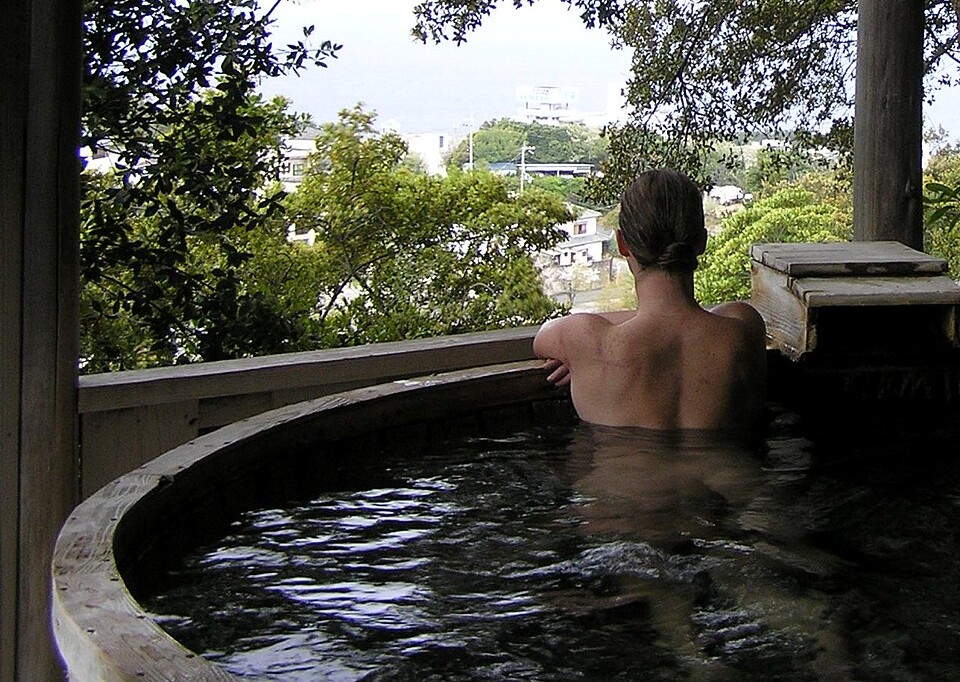
An old coastal resort town where hot springs meet the Pacific. The white-sand beach and dramatic rock formations create a setting unlike most onsen destinations. The ancient outdoor baths of Saki-no-Yu sit directly above the ocean. You soak while watching the waves crash below you.
Common questions
What is the water temperature at Nanki-Shirahama Onsen?▾
The water temperature at Nanki-Shirahama Onsen ranges up to 83°C (minimum around 40°C).
Is Nanki-Shirahama Onsen free to visit?▾
Nanki-Shirahama Onsen charges an entrance fee in JPY.
Is Nanki-Shirahama Onsen a public or private bath?▾
Nanki-Shirahama Onsen is a public bathing spring.
Are tattoos allowed at Nanki-Shirahama Onsen?▾
Tattoo policy varies at Nanki-Shirahama Onsen. Check ahead of your visit.
What is the nearest station to Nanki-Shirahama Onsen?▾
The nearest station to Nanki-Shirahama Onsen is Hashiriyu, about 0.1km away.