
Kaike Onsen
皆生温泉
Kaike Onsen
sodium-chloride · Kansai
Hotter than 77% of Japan springs (n=122).
More acidic than 41% of Japan springs (n=121).
Mineral profile
Bar width reflects listing order, not measured concentration.
Suitability
At a glance
Getting there
Easy — under 1km from a station
Cost
High
About this spring
Kaike Onsen sits along the shore of Miho Bay outside Yonago in Tottori Prefecture and ranks as the largest onsen resort in the San'in region. In 1900, a local fisherman spotted bubbles rising from the seabed roughly 200 meters from shore, which led to the discovery of the springs. The water is rich in sodium chloride and calcium, and visitors have sought it out for more than a century to treat skin conditions and neuralgia.
Highlights
History
Around 1900, a fisherman working the waters off the Kaike coast observed bubbles coming up from the ocean floor.
Testing confirmed the source was geothermal. Developer Matsutaro Arimoto took the lead in constructing the first bathing facilities and lodgings. Over the following decades of the early twentieth century, Kaike expanded into the largest hot spring resort in the San'in region, its coastal sodium chloride waters drawing patients seeking relief from Yonago and Matsue. Today roughly 30 inns operate at the resort, with a combined capacity of around 4,000 guests.
Local guide
The train into Yonago from Osaka takes about three hours on the Yakumo limited express, cutting across Honshu's narrow waist to emerge on the Sea of Japan coast. From Yonago Station, Kaike Onsen is a fifteen-minute drive west along the Yumigahama Peninsula, which is a long, curved sandbar separating the Sea of Japan from Nakaumi Lagoon. When you arrive at Kaike, you are standing on that sandbar. The water in the baths was drilled from beneath Miho Bay, literally pulled from under the sea floor around two hundred meters off the coast. A fisherman first spotted bubbles rising from the ocean bottom in 1900, and the town built itself around what he found.
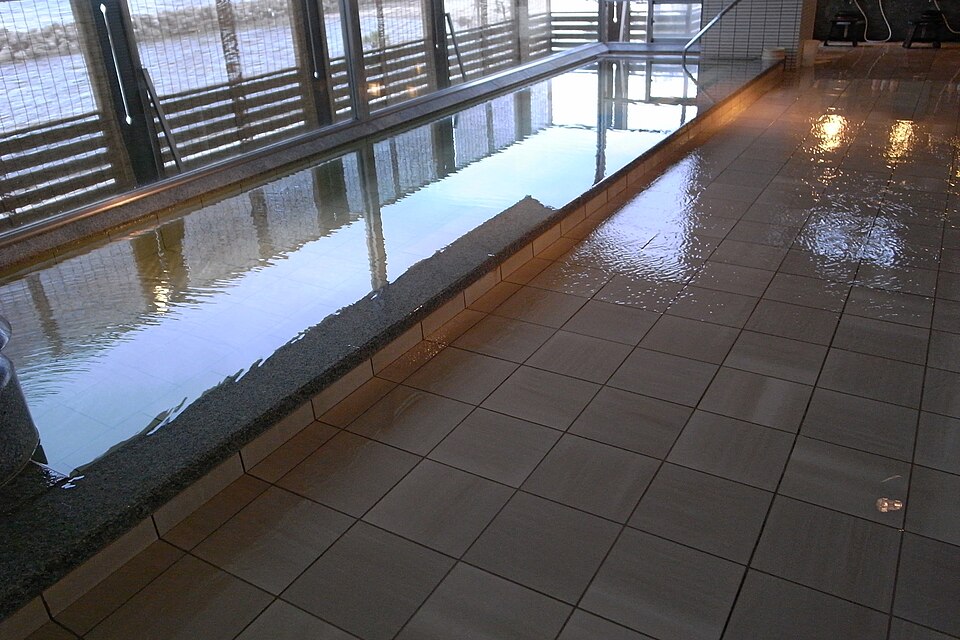
The spring is sodium-calcium chloride, drawn from beneath saltwater, which gives it an unusually high salinity for a hot spring. Source temperature runs between 63 and 83 degrees, and the facility output is over 4,400 liters per minute, making Kaike the largest hot spring operation in the San'in region. The water is clear and odorless in the bath, but heavy-feeling, saline the way ocean water is saline, coating the skin rather than simply washing over it. The heat retention is the specific quality people come back for: the salt layer keeps warmth in long after you leave the water, which in winter, walking from a bathhouse back along the sea-facing street, matters considerably.
The view from any outdoor bath in Kaike works with the geography. To the west and north, Miho Bay catches the light with a calm that this particular section of coastline produces when the wind is still. To the east, Mount Daisen rises to 1,729 meters, a dormant stratovolcano called the Tottori Fuji, its upper slopes holding snow well into May. On a clear winter afternoon, soaking in hot brine drawn from under that bay, with the mountain sharp against a blue sky behind you and the smell of the sea in the steam, is the specific experience Kaike offers that no inland onsen can replicate.
The San'in coast moves slowly. The town has about thirty accommodations, most of them small inns facing the sea, and the pace reflects a place that has been a known destination since 1900 but has never tried to become anything more than what it is: a quiet beach-edge salt bath beside a cold Japanese sea.
Mineral chemistry
Water character inferred from mineral type — verify on site.
Sodium chloride springs, essentially natural saltwater baths, are celebrated for their warming and moisturising effects. The salt forms a thin film on the skin that slows moisture evaporation, keeping skin hydrated longer than a freshwater bath.
Those with high blood pressure or heart conditions should consult a doctor before bathing, as the warming effect increases circulation. Avoid immersing open wounds.
Calcium chloride springs share the heat-retaining property of sodium chloride springs but with a stronger warming effect. Prized for muscle and joint relief.
The strong warming effect means those with cardiovascular conditions, high blood pressure, or pregnancy should limit soak duration and consult a doctor if in doubt.
Similar springs
 FREE
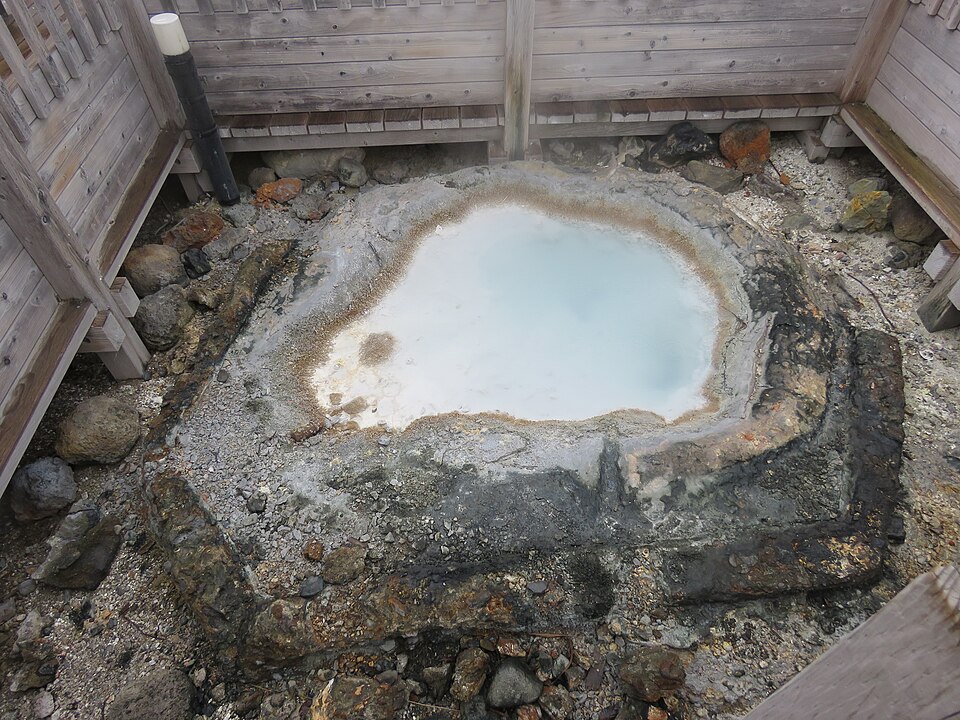
FREEThe valley occupies the center of Noboribetsu Onsen in Hokkaido. Jigokudani translates as Hell Valley. The crater covers 11 hectares and releases roughly 10,000 tonnes of hot spring water each day. Fumaroles vent steam across the floor of the valley, boiling pools bubble at the surface, and the surrounding cliffs carry heavy mineral staining. A walking path winds through the area in about 20 minutes and is open to all visitors at no cost. It ranks among the most striking landscapes accessible on foot anywhere in Japan.
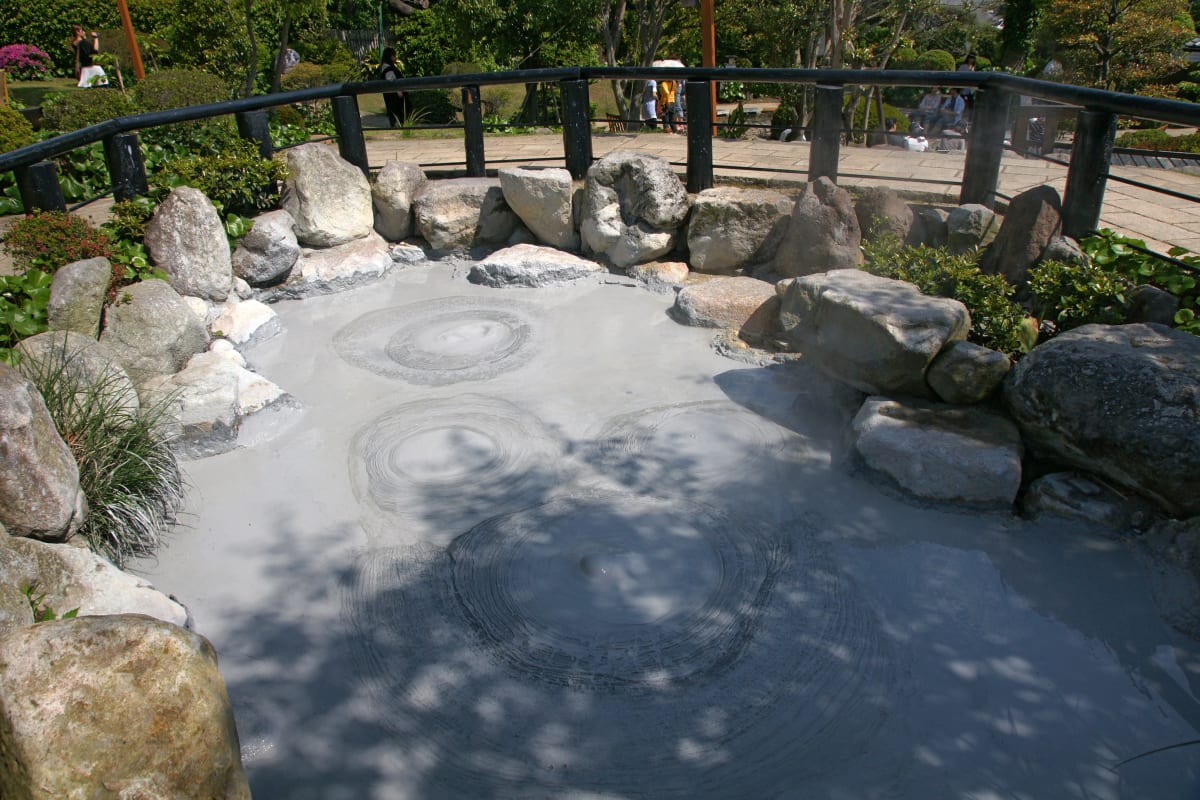
Beppu is the most geothermally active city in Japan, with more than 2,900 hot spring vents located within the city limits and eight distinct thermal spring zones collectively known as the Beppu Hatto. The variety on offer is wide, ranging from grand hotel bathhouses to modest neighborhood public facilities to the celebrated Hells, a collection of brilliantly colored boiling pools scattered across the city. The Hells run far too hot for bathing, but they draw visitors who come to walk among them and take in the spectacle.
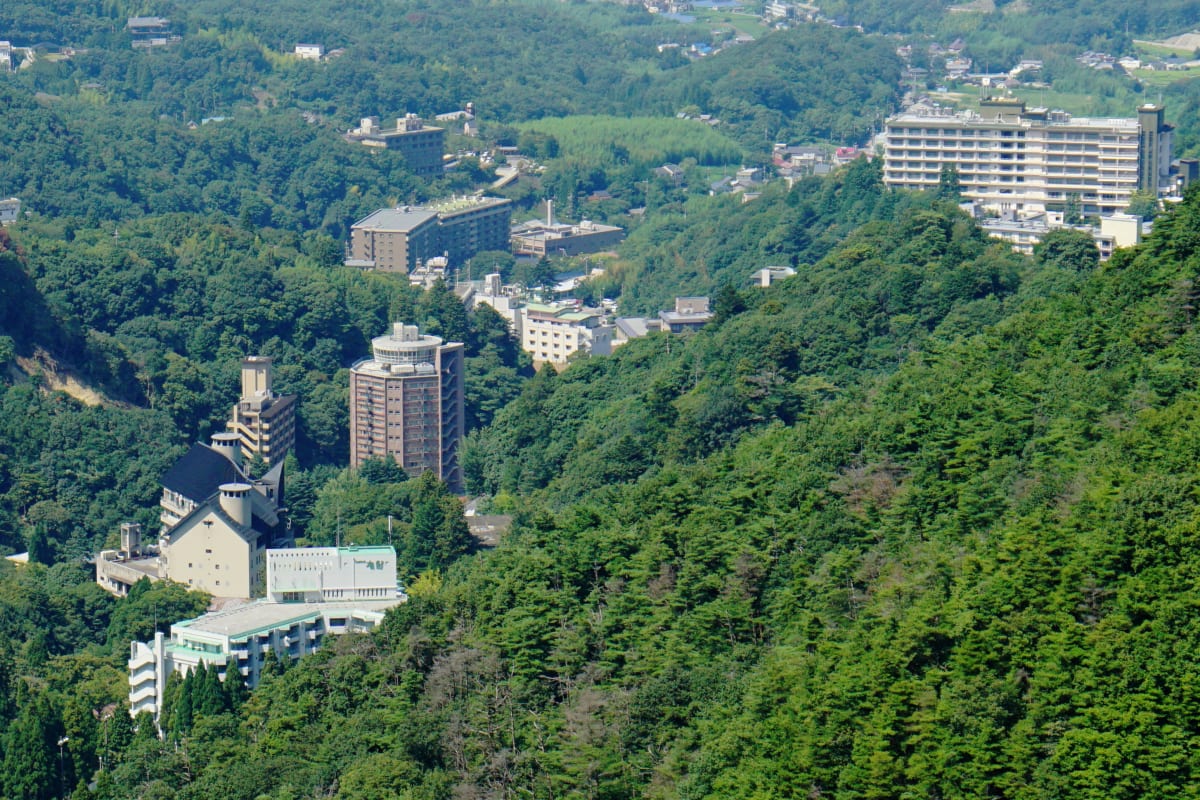
Arima Onsen sits in the hills above Kobe, close to Mount Rokko, and ranks among the oldest hot spring towns in Japan. The town draws visitors for two entirely different spring types that coexist within its compact footprint. Kinsen is the iron-rich golden water that stains surrounding rocks a rusty orange, while ginsen runs clear and carries both carbonation and mild radioactivity. Few other onsen destinations in Japan bring together two such distinct water types within a single small town.
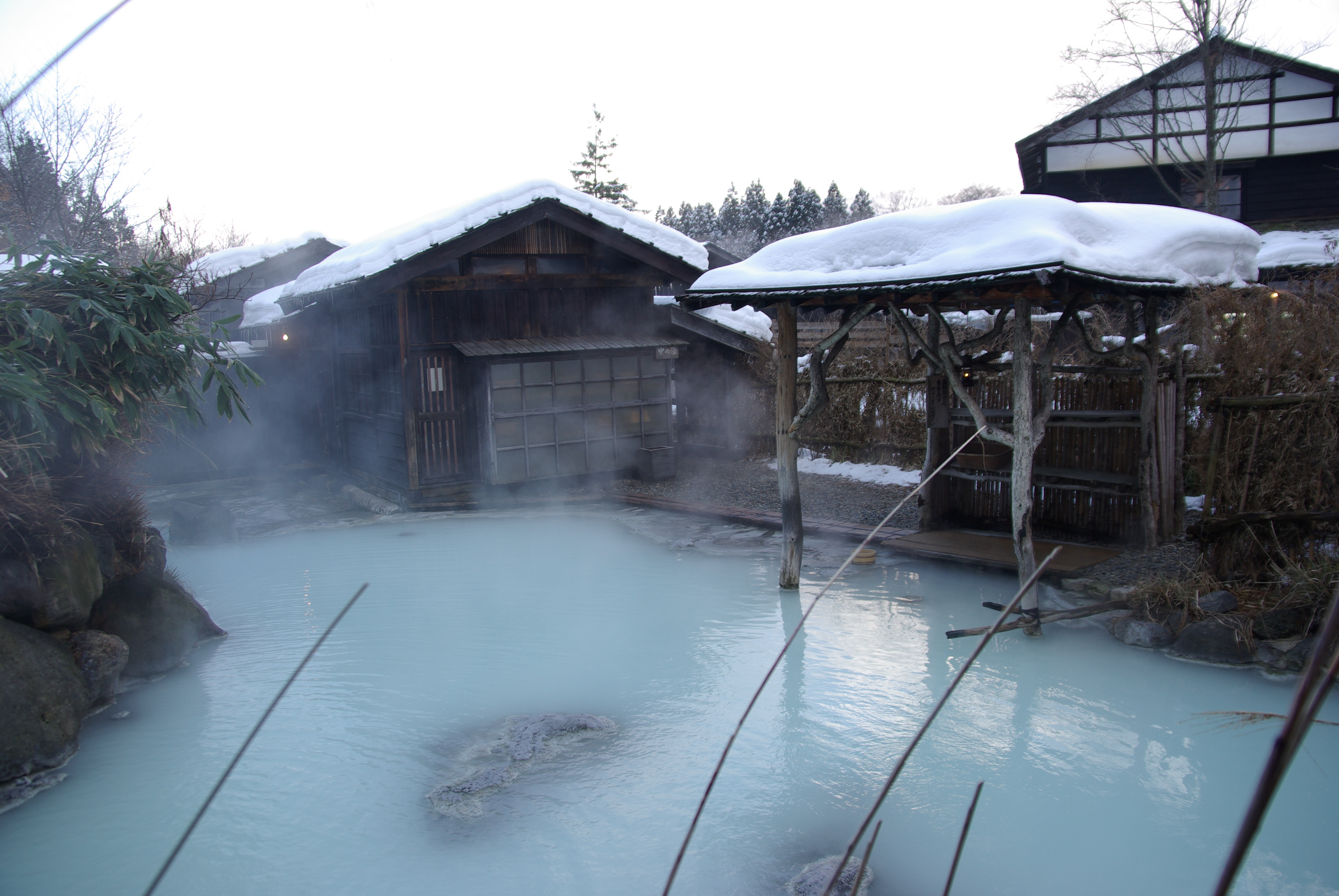
Tsuru-no-yu is the oldest of the seven inns at Nyuto, set deep in a beech forest in Akita Prefecture. The main draw is a large outdoor mixed-bathing pool fed by opaque, milky-white sulfurous water. Many regard it as the most beautiful onsen setting in Japan. People come here to put some distance between themselves and the rest of the world for a while.
Amenities
Getting there
From Yonago Station, take a Hinomaru or Nihon Kotsu bus to the Kaike Onsen Kanko Center terminus. The journey takes about 20 minutes. Yonago Kitaro Airport also receives direct flights from Tokyo Haneda, with Kaike Onsen about 20 minutes by taxi.
Location & nearby
Kaike Onsen, Tottori
Make a day of it
Pair your soak with these nearby spots.
Attraction
Yonagoshikanko Senta
0.0km away
Attraction
Kinaiya
0.2km away
Attraction
Mitsuibekkan
0.2km away
Attraction
Kaike Onsen
0.3km away
Attraction
Rabusuto Ri
0.3km away
Attraction
To Park
0.3km away
More springs in Kansai
Arima Onsen sits in the hills above Kobe, close to Mount Rokko, and ranks among the oldest hot spring towns in Japan. The town draws visitors for two entirely different spring types that coexist within its compact footprint. Kinsen is the iron-rich golden water that stains surrounding rocks a rusty orange, while ginsen runs clear and carries both carbonation and mild radioactivity. Few other onsen destinations in Japan bring together two such distinct water types within a single small town.
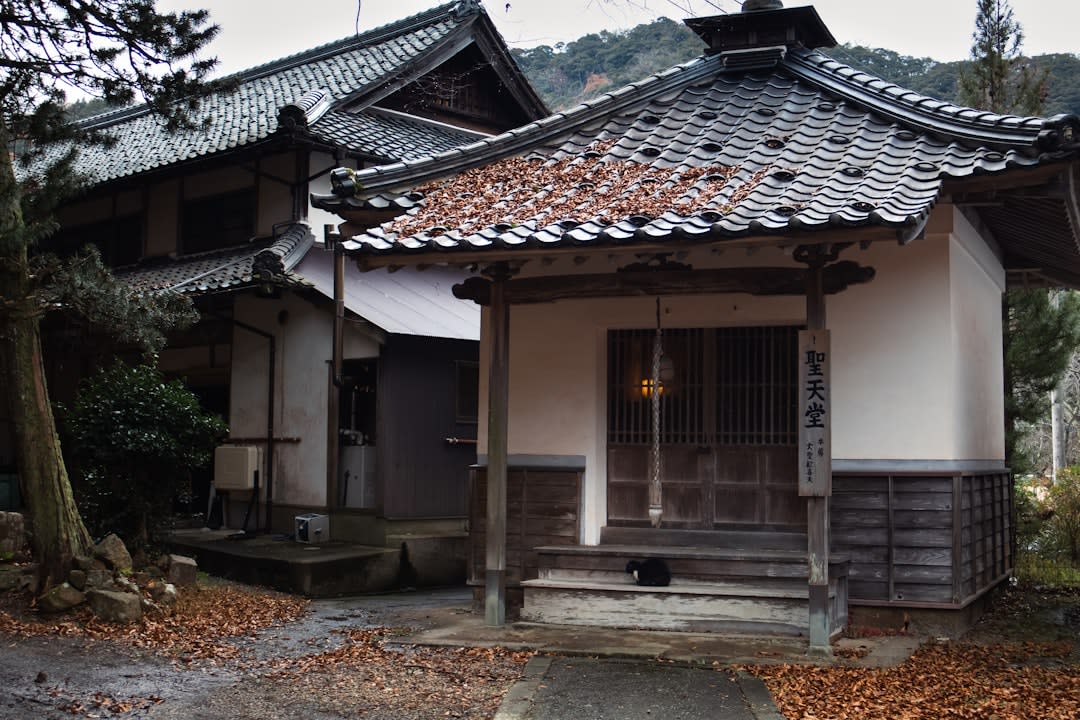
One of Japan's most beloved onsen towns. Visitors put on a yukata and wooden sandals and stroll between seven public bathhouses along a willow-lined canal. The wooden bridges, stone walkways, and traditional inn facades have barely changed in a century. The town is built for wandering.
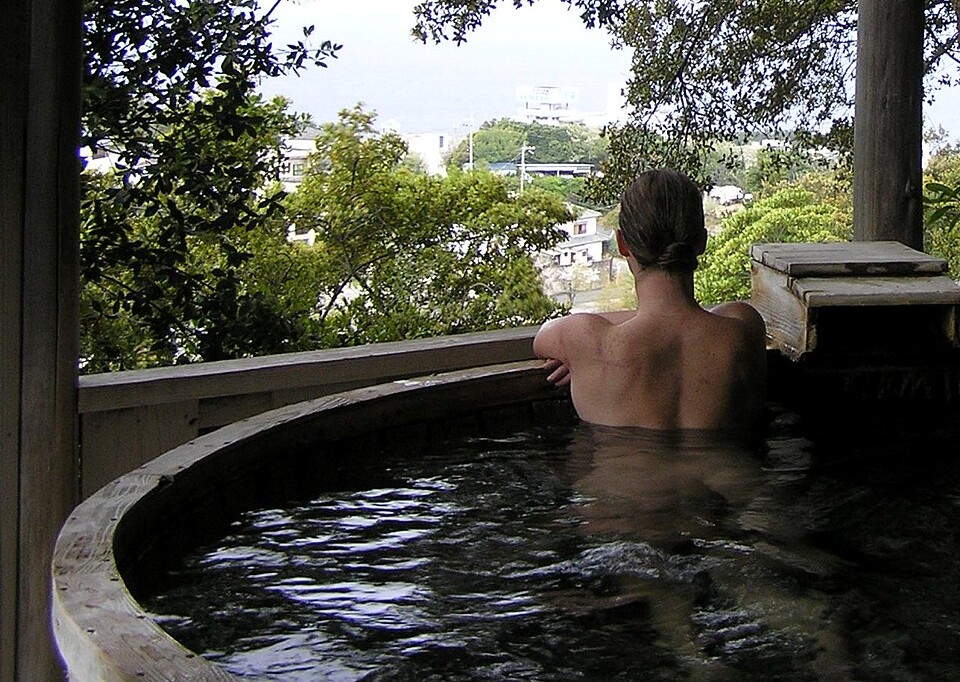
An old coastal resort town where hot springs meet the Pacific. The white-sand beach and dramatic rock formations create a setting unlike most onsen destinations. The ancient outdoor baths of Saki-no-Yu sit directly above the ocean. You soak while watching the waves crash below you.
Common questions
What is the water temperature at Kaike Onsen?▾
The water temperature at Kaike Onsen ranges up to 83°C (minimum around 63°C).
Is Kaike Onsen free to visit?▾
Kaike Onsen charges an entrance fee in JPY.
Is Kaike Onsen a public or private bath?▾
Kaike Onsen is a public bathing spring.
Are tattoos allowed at Kaike Onsen?▾
Tattoo policy varies at Kaike Onsen. Check ahead of your visit.
What is the nearest station to Kaike Onsen?▾
The nearest station to Kaike Onsen is Kaike Onsen Kanko Center, about 0km away.