
Yunomine Onsen
湯の峰温泉
Yunomine Onsen
sodium · Kansai
Hotter than 89% of Japan springs (n=122).
More acidic than 67% of Japan springs (n=121).
Mineral profile
Bar width reflects listing order, not measured concentration.
Suitability
At a glance
Getting there
Easy — under 1km from a station
Cost
Low
About this spring
Tucked into a narrow valley in the Kii Mountains, Yunomine Onsen sits along the Nakahechi Trail of the Kumano Kodo pilgrimage route and ranks among Japan's oldest thermal springs, with origins dating back more than 1,800 years. The water is known to shift color seven times throughout the day as temperature and mineral concentration fluctuate. Tsuboyu, a small stone-lined soaking pool enclosed within a wooden cabin, holds the distinction of being the only bathing facility in the world registered as a UNESCO World Heritage Site.
Highlights
History
Yunomine has served as a waypoint on the Kumano Kodo pilgrimage for more than a thousand years.
Travelers heading to Kumano Hongu Taisha would stop to cleanse themselves in the waters before reaching the shrine. The site is referenced in several kabuki plays. Tsuboyu carries a legend that its hot spring water first surfaced from a stone statue of Yakushi Nyorai, and the pool has remained in use without interruption since ancient times. In 2004, the Kumano Kodo network received UNESCO World Heritage designation, with Tsuboyu recognized as the only World Heritage registered bathing facility anywhere in the world.
Local guide
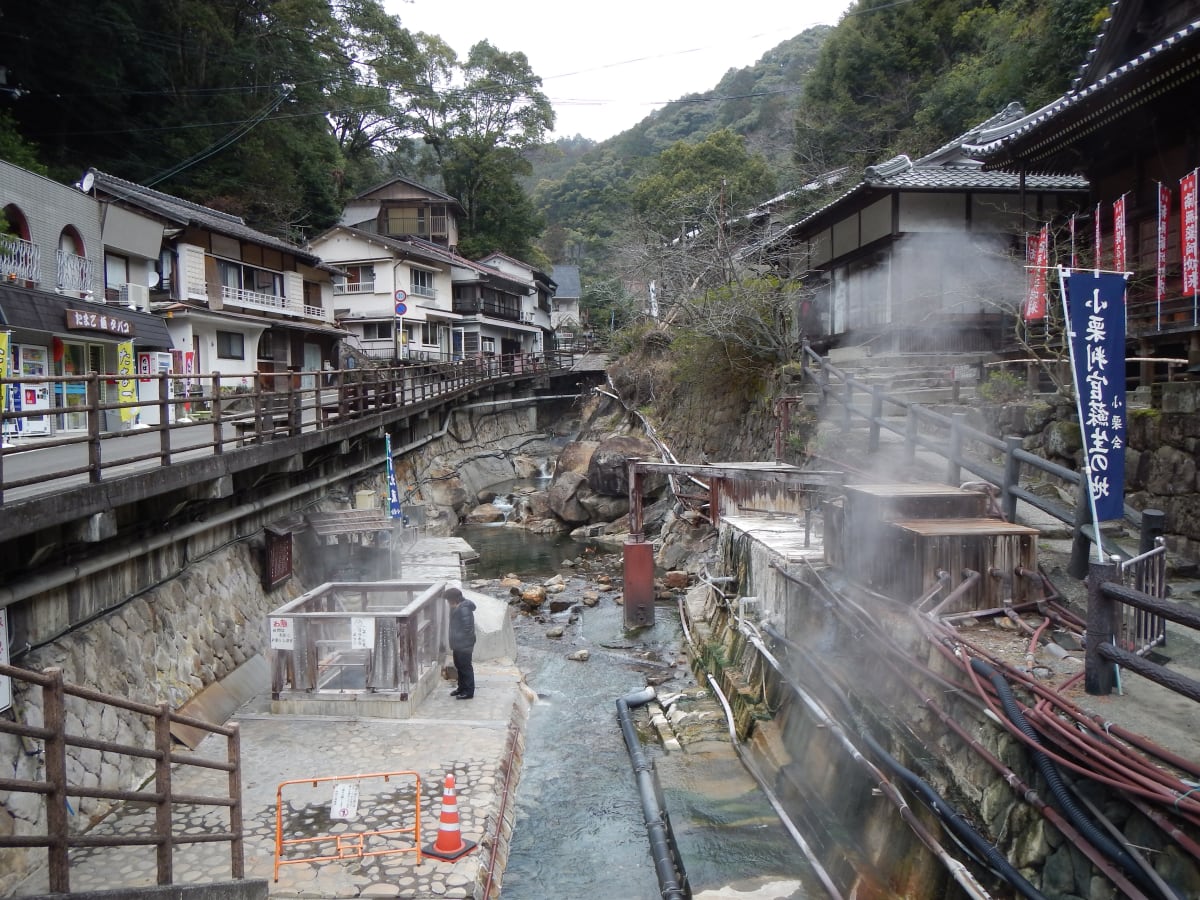
The bus from Hongu Taisha, the most important of the three Kumano shrines, takes about twenty minutes to reach Yunomine Onsen, and by the time you arrive the cedar forest has closed in completely around the narrow valley. The path into the village follows a small, fast creek, and the creek itself is hot. Hot spring water mixes directly into the stream here, and the rocks at the edges are stained orange and white with mineral deposits. Pilgrims on the Kumano Kodo have been stopping at this valley for over a thousand years, using the water to purify themselves before completing the walk to Hongu. The connection between the spring and the pilgrimage is so ancient and so direct that Yunomine was included in the UNESCO World Heritage listing for the Kumano Kodo route itself. Not as a scenic highlight. As an integral part of the site.
The water comes out of the source at 90 to 92 degrees Celsius, which is close to boiling. It is a complex spring, classified as sodium sulfur bicarbonate chloride, and the color changes throughout the day as temperature and air exposure shift the chemical balance. In the morning the water in the public basins looks pale blue-grey. By afternoon it can shift toward a milky white or faintly yellow. If you come back the following morning and the temperature has changed, the color will be different again. Locals say it changes seven times a day, though the reality is more continuous and less dramatic than that. The smell is faintly of sulfur, not overpowering, more like the back of a clean volcanic stone.
Tsuboyu is the experience that makes Yunomine unlike anywhere else in Japan, and possibly anywhere else in the world. It is a small wooden hut built on a flat rock directly above the creek, with a stone-lined bath inside the size of a large bathtub. The bath is fed directly by the hot spring, and the temperature is adjusted by diverting more or less creek water through a small channel. You book a thirty-minute slot at the booking office across the creek, and for that half hour the hut is entirely yours. The door latches from inside. There is no locker room, no changing area, just the hut and the bath and the sound of the water running beneath you. This is the only UNESCO World Heritage site in the world where you can bathe in the listed feature. That distinction is not tourism marketing. It is a fact about what pilgrims have been doing here since the 3rd century.
At the cooking basin near the entrance to the village, a wooden frame hangs over the boiling source water and visitors leave net bags of eggs and vegetables dangling in the 90-degree flow. The eggs cook in about twenty minutes. There is always at least one person sitting on the stone bench beside the basin watching their eggs, and it is one of those scenes that feels like it belongs to another era entirely, except it is happening right now in the same valley where Heian-period aristocrats stopped to wash themselves before meeting the gods.
Mineral chemistry
Sodium chloride springs, essentially natural saltwater baths, are celebrated for their warming and moisturising effects. The salt forms a thin film on the skin that slows moisture evaporation, keeping skin hydrated longer than a freshwater bath.
Those with high blood pressure or heart conditions should consult a doctor before bathing, as the warming effect increases circulation. Avoid immersing open wounds.
Sulfuric hot springs are among the most studied in balneology worldwide. The sulfur compounds, primarily hydrogen sulfide and thiosulfate, have documented antimicrobial and anti-inflammatory properties. Regular bathing is associated with relief from chronic skin conditions including eczema and psoriasis, as well as joint inflammation and muscle soreness. Sulfuric waters have been used therapeutically across Asia and Europe for centuries.
The distinctive rotten-egg smell dissipates quickly after leaving the bath. Avoid if you have a sulfur allergy, very sensitive skin, or respiratory conditions. Remove silver jewellery before entering — sulfur will blacken it permanently.
Bicarbonate springs cleanse and soften the skin surface, removing excess sebum without stripping the skin's acid mantle. Traditionally recommended for acne-prone skin and sensitive skin types.
Bicarbonate springs are generally among the most gentle and well-tolerated onsen types.
Similar springs
 FREE
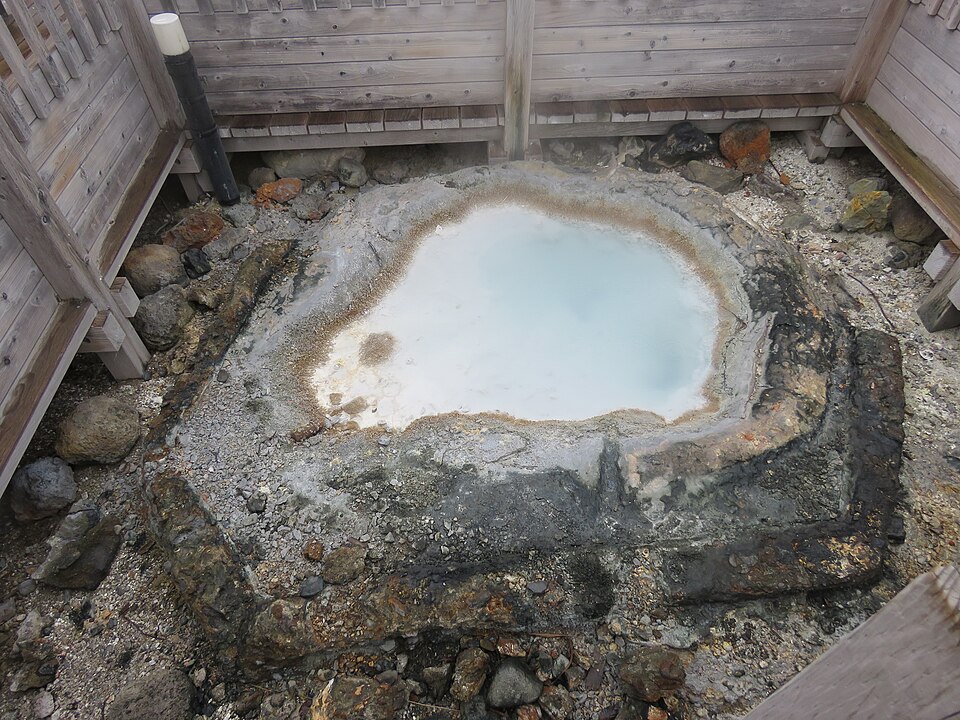
FREEThe valley occupies the center of Noboribetsu Onsen in Hokkaido. Jigokudani translates as Hell Valley. The crater covers 11 hectares and releases roughly 10,000 tonnes of hot spring water each day. Fumaroles vent steam across the floor of the valley, boiling pools bubble at the surface, and the surrounding cliffs carry heavy mineral staining. A walking path winds through the area in about 20 minutes and is open to all visitors at no cost. It ranks among the most striking landscapes accessible on foot anywhere in Japan.
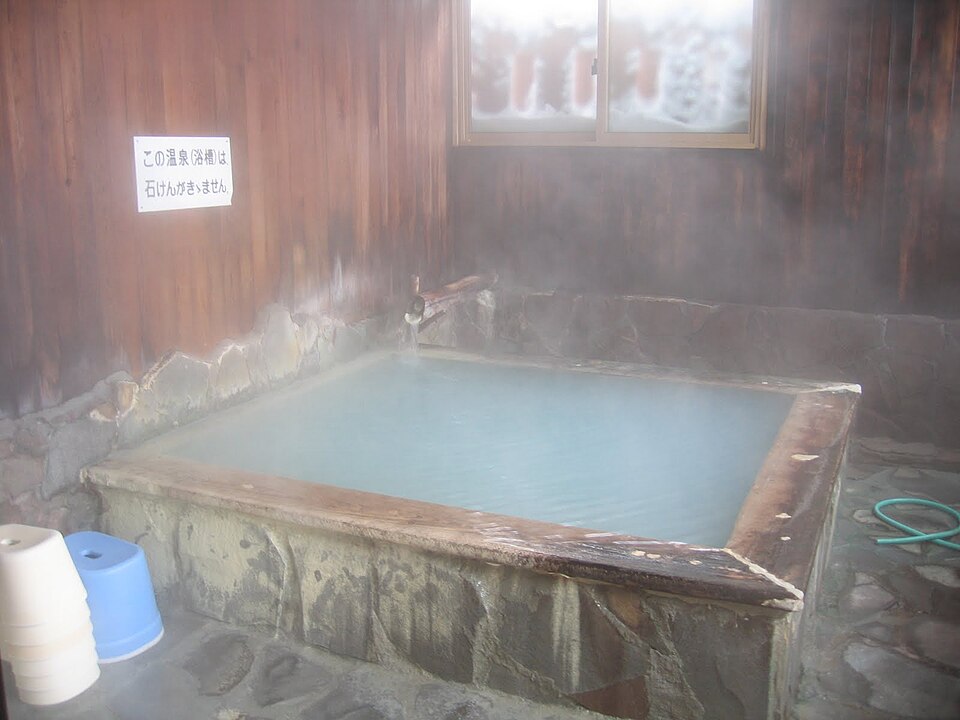
Set deep in the Hakkoda Mountains of Aomori Prefecture, Sukayu Onsen is a historic bathhouse best known for its cavernous mixed-bathing hall, the Sen-nin-buro, which translates as the Bath of a Thousand Bathers. The waters are strongly acidic, the setting is rustic and unhurried, and winter brings extraordinary snowfall to the surrounding mountains.
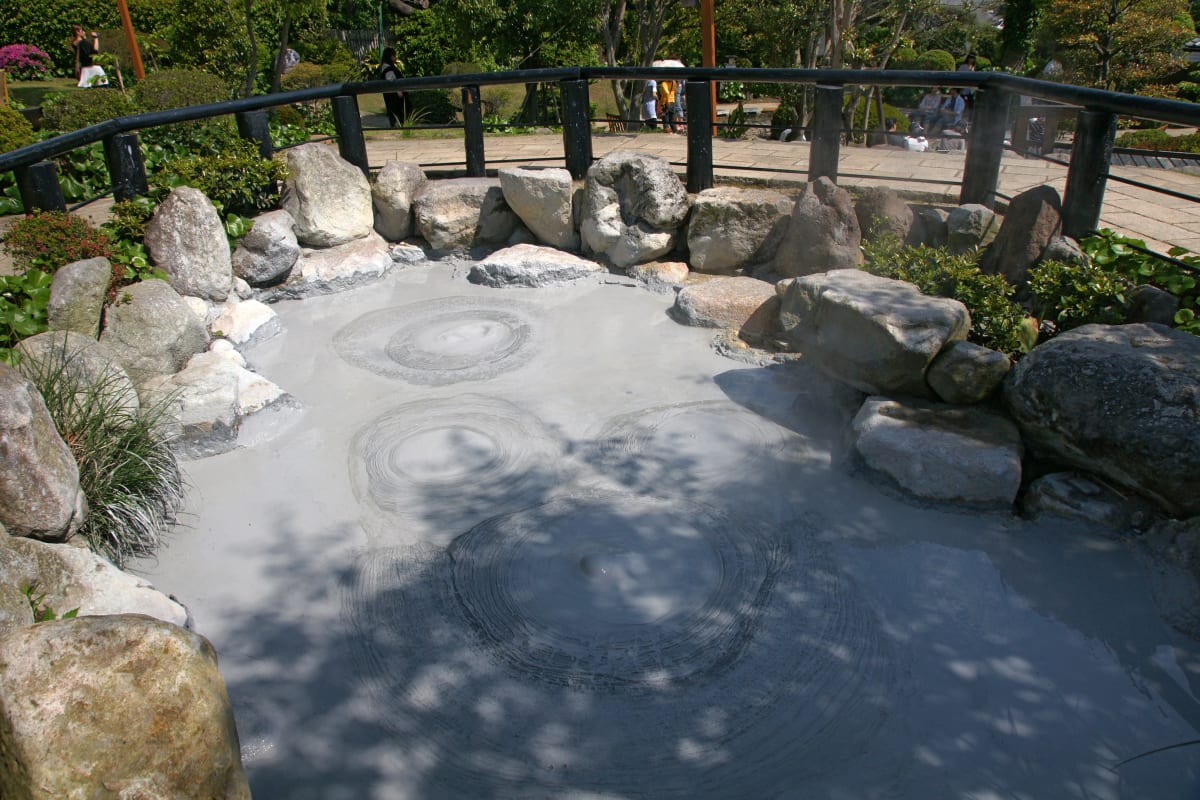
Beppu is the most geothermally active city in Japan, with more than 2,900 hot spring vents located within the city limits and eight distinct thermal spring zones collectively known as the Beppu Hatto. The variety on offer is wide, ranging from grand hotel bathhouses to modest neighborhood public facilities to the celebrated Hells, a collection of brilliantly colored boiling pools scattered across the city. The Hells run far too hot for bathing, but they draw visitors who come to walk among them and take in the spectacle.
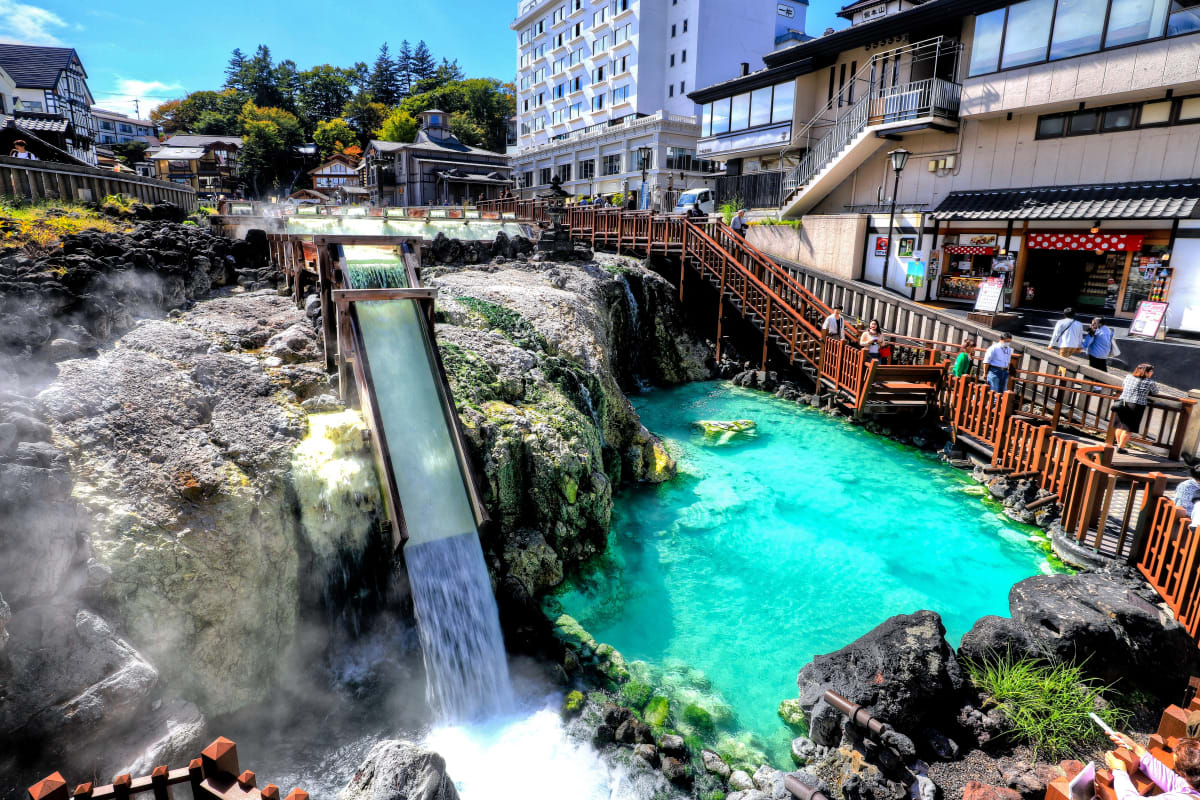 FREE
FREEKusatsu Onsen sits at 1,200 meters in the mountains of Gunma Prefecture and ranks among the most celebrated hot spring towns in Japan. The springs here produce more than 32,000 liters of water per minute, a volume unmatched anywhere else in the country. The water is strongly acidic and sulfurous, and its skin-healing properties have long made it legendary among visitors. Twice each day in the central town square, workers cool the scalding water by pulling long wooden paddles through it in unison while singing traditional songs. This practice is called yumomi.
Amenities
Getting there
From Shin-Osaka, take the JR Kinokuni Line to Kii-Tanabe Station, then transfer to a Ryujin Bus bound for Hongu. Change at Hongu to a local bus for Yunomine Onsen. The total journey takes about 4 hours. Alternatively, take the JR Kuroshio express to Shingu and then a bus to Hongu, connecting to Yunomine.
Location & nearby
Yunomine Onsen, Hongucho Yunomine, Tanabe, Wakayama 647-1732
Make a day of it
Pair your soak with these nearby spots.
Attraction
Yunomine Onsen - Japan
0.0km away
Attraction
Yunomineonsen Tsuboyu
0.1km away
Park
Kumano-Kodou
0.1km away
Attraction
Wataseonsen
0.8km away
Attraction
WataseonsensentāOtonashinosato
0.9km away
Attraction
Wataseonsenshinnoyado Wataraseonsen
0.9km away
More springs in Kansai
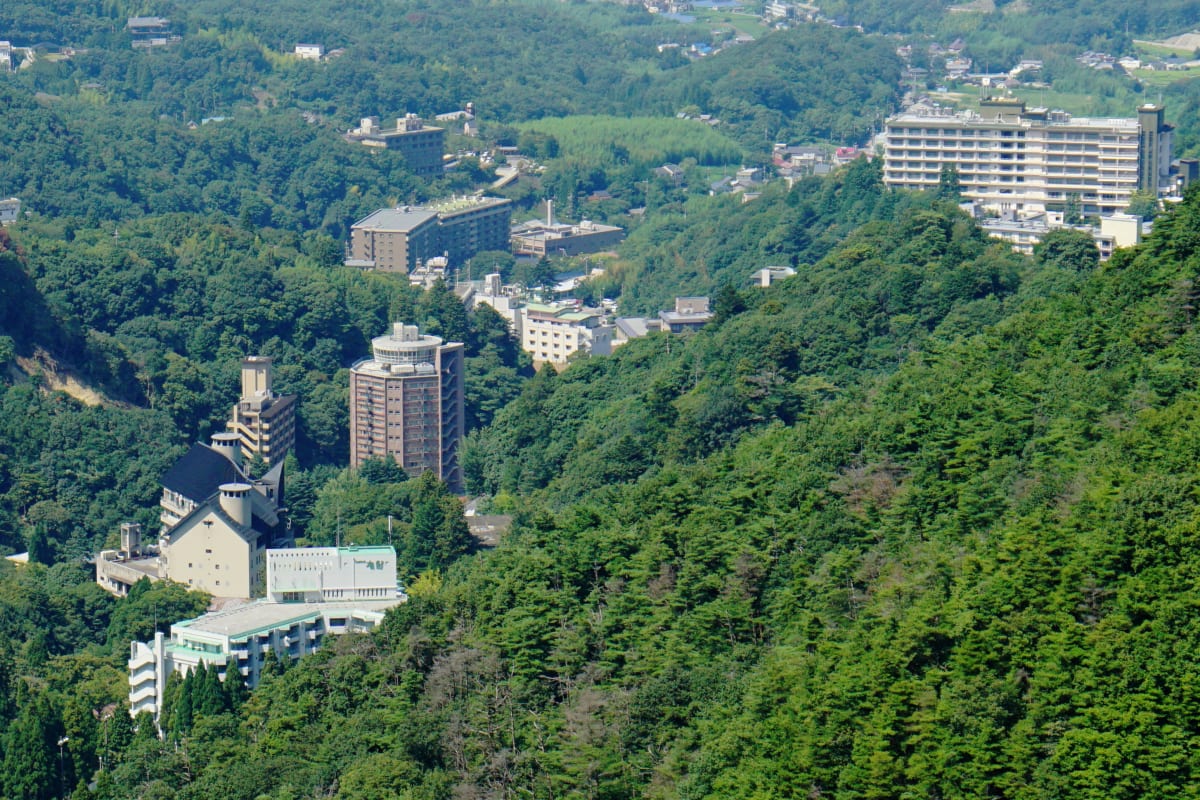
Arima Onsen sits in the hills above Kobe, close to Mount Rokko, and ranks among the oldest hot spring towns in Japan. The town draws visitors for two entirely different spring types that coexist within its compact footprint. Kinsen is the iron-rich golden water that stains surrounding rocks a rusty orange, while ginsen runs clear and carries both carbonation and mild radioactivity. Few other onsen destinations in Japan bring together two such distinct water types within a single small town.
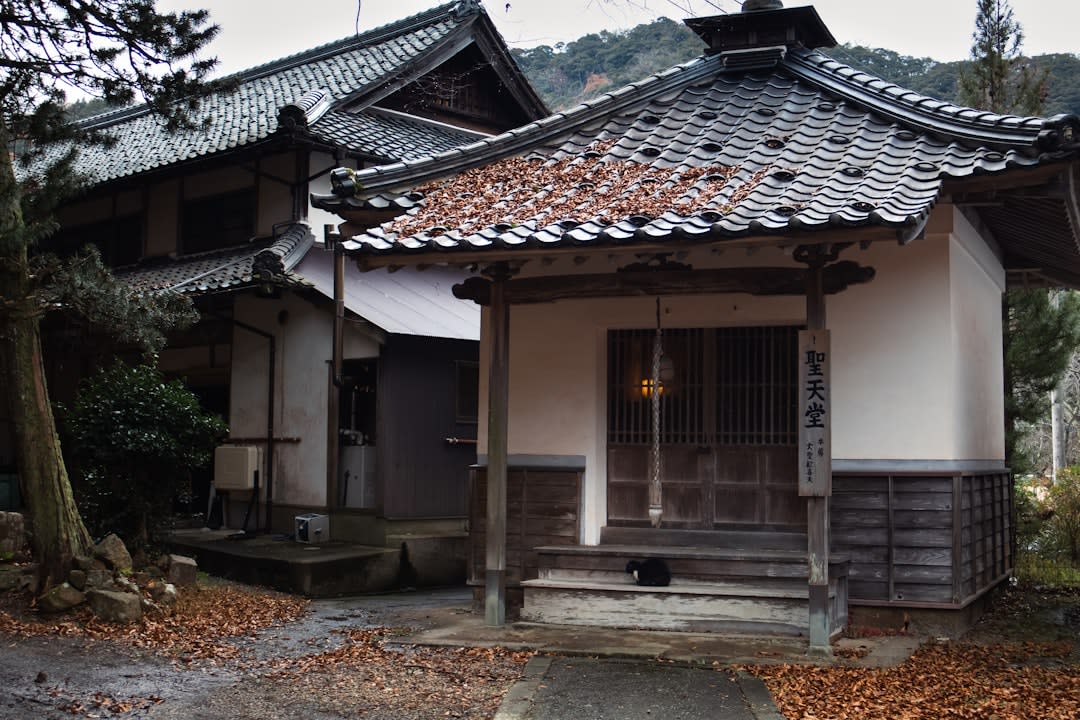
One of Japan's most beloved onsen towns. Visitors put on a yukata and wooden sandals and stroll between seven public bathhouses along a willow-lined canal. The wooden bridges, stone walkways, and traditional inn facades have barely changed in a century. The town is built for wandering.
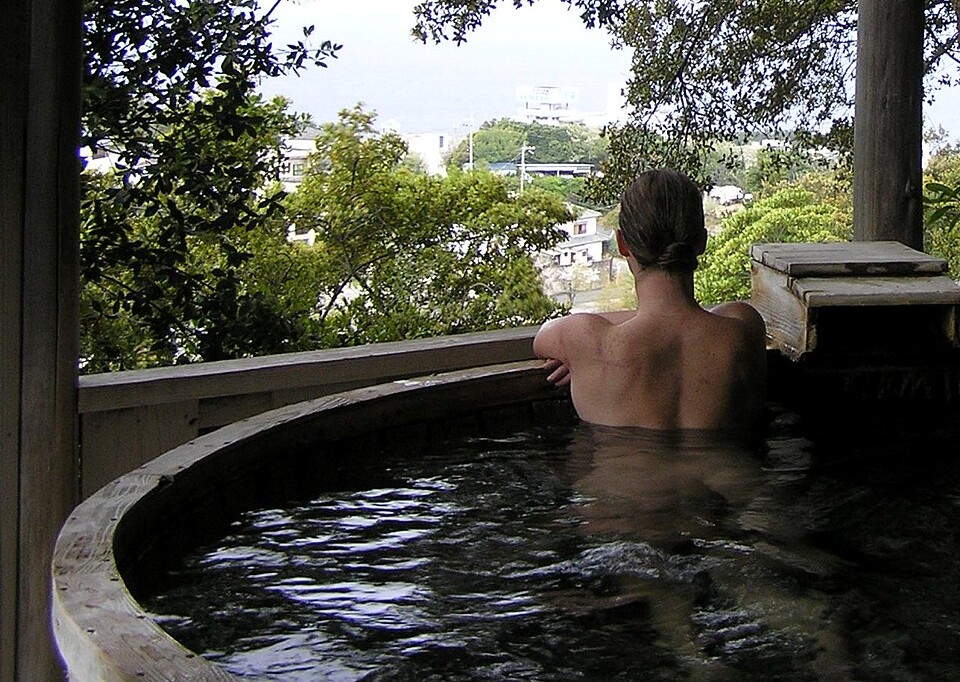
An old coastal resort town where hot springs meet the Pacific. The white-sand beach and dramatic rock formations create a setting unlike most onsen destinations. The ancient outdoor baths of Saki-no-Yu sit directly above the ocean. You soak while watching the waves crash below you.
Common questions
What is the water temperature at Yunomine Onsen?▾
The water temperature at Yunomine Onsen ranges up to 92.5°C (minimum around 90°C).
Is Yunomine Onsen free to visit?▾
Yunomine Onsen charges an entrance fee in JPY.
Is Yunomine Onsen a public or private bath?▾
Yunomine Onsen is a public bathing spring.
Are tattoos allowed at Yunomine Onsen?▾
Yes, Yunomine Onsen welcomes visitors with tattoos.
What is the nearest station to Yunomine Onsen?▾
The nearest station to Yunomine Onsen is Yunomine Onsen, about 0.1km away.