
Yunoyama Onsen
湯の山温泉
Yunoyama Onsen
alkaline · Kansai
Hotter than 2% of Japan springs (n=122).
More acidic than 82% of Japan springs (n=121).
Mineral profile
Bar width reflects listing order, not measured concentration.
Suitability
At a glance
Getting there
Easy — under 1km from a station
Cost
Moderate
About this spring
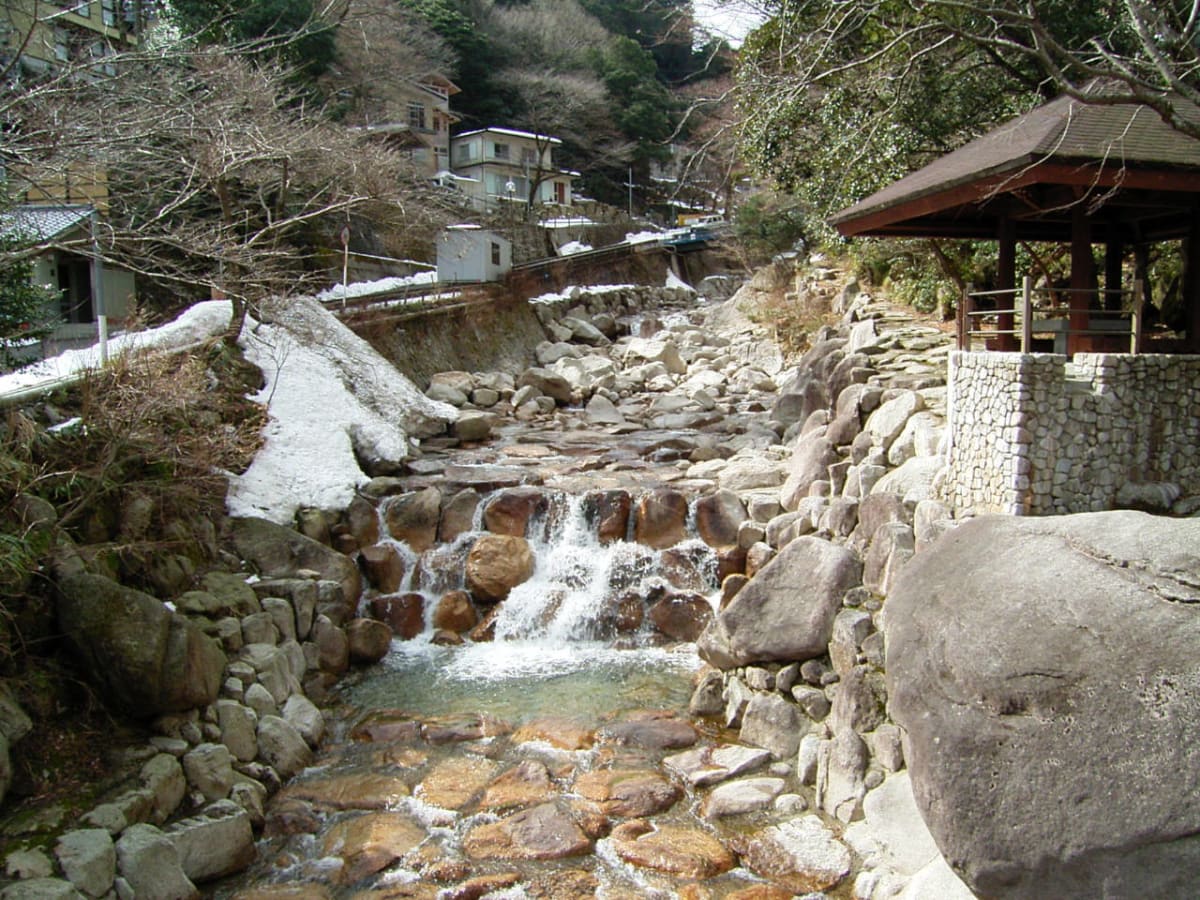
Yunoyama Onsen sits along a river at the base of Mount Gozaisho within Suzuka Quasi-National Park in Mie Prefecture. The Gozaisho Ropeway runs 2,161 meters from the onsen village up to the rocky summit plateau, placing it among the longest ropeways in Japan. The combination of mountain air, a clear river gorge, and traditional ryokan inns draws visitors across all four seasons.
Highlights
History
The spring's origins are traditionally placed in 718 AD, during the Nara period.
Its local name, Shika no Yu, translates as Deer's Hot Spring and traces back to a founding legend in which a wounded deer recovered by soaking in the warm waters. In the sixteenth century, Oda Nobunaga's forces moved through the region and burned down much of the inn quarter. The community rebuilt, and during the Edo period the lodgings along the Mitaki River gorge became a regular resting point for travelers moving between Nagoya and the Ise shrines. The opening of the Gozaisho Ropeway in the modern era turned the town into a destination visited throughout the year.
Local guide
The Kintetsu Yunoyama Line ends at a small station called Yunoyama Onsen, and when you walk out of the turnstile the ropeway station is visible a short walk up the road. Mount Gozaisho rises directly behind it, 1,212 meters of granite and forest that forms the western edge of the Suzuka mountains on the Mie-Shiga border. The ropeway, built in 1959 and supported by what was for many years Japan's tallest pylon tower, takes fifteen minutes to reach the summit. From the bottom, looking up through the cable car window in late October, the entire slope is on fire with maple color: deep red and orange from the konara oaks, pale yellow from the birch stands, still-green patches of cedar that the autumn has not yet touched.
The springs at Yunoyama are alkaline, coming out of the ground at a cool 25 to 32 degrees Celsius, which means all the baths heat the water artificially rather than blending it down. The pH of 8.5 gives the water a clean, slightly slippery feel on the skin that is characteristic of alkaline springs. There is no smell. The water looks completely clear in the bath, though the alkalinity means that after soaking for thirty minutes you step out with a skin surface that is noticeably smoother than when you went in. The original spring here was apparently discovered by a wounded deer bathing in the water, an animal that keeps appearing in Japanese onsen founding stories because it requires no translation: the animal knows where to go, and humans follow.
The best single experience at Yunoyama is riding the ropeway in the early morning on a clear day in peak autumn season, then descending and getting into an outdoor bath at one of the inns along the valley floor while the color-changed slopes are still lit by low-angle morning light. The combination is straightforward and almost embarrassingly good. You sit in hot water at 25 degrees Celsius output, heated to bathing temperature, and look up at a mountain that looks like it is actively burning. The valley has a small river running through it with footbath installations built into the stone ledges beside the water.
The access from Nagoya is about ninety minutes by Kintetsu Limited Express to Kintetsu-Yokkaichi, then a transfer to the Yunoyama Line. Osaka takes about two hours total. This makes Yunoyama a practical day trip from either city in autumn, and the ropeway lines get long on weekends during the first two weeks of November when the color peaks. Going midweek is strongly advisable. The town itself is small, a few dozen inns and a handful of restaurants, but the mountain behind it is large enough that it does not feel like a bottleneck. The scale of Gozaisho dominates everything down here, and that is entirely the point.
Mineral chemistry
Alkaline springs (pH above 8) are known for their skin-softening effect, sometimes called "beauty water" in bathing cultures across Asia. The high pH saponifies skin oils, producing a characteristic silky feel on the skin surface.
The slippery feeling underfoot in highly alkaline springs is normal — take care when standing and walking in the bath. Avoid prolonged soaking if you have dry or sensitive skin.
Similar springs
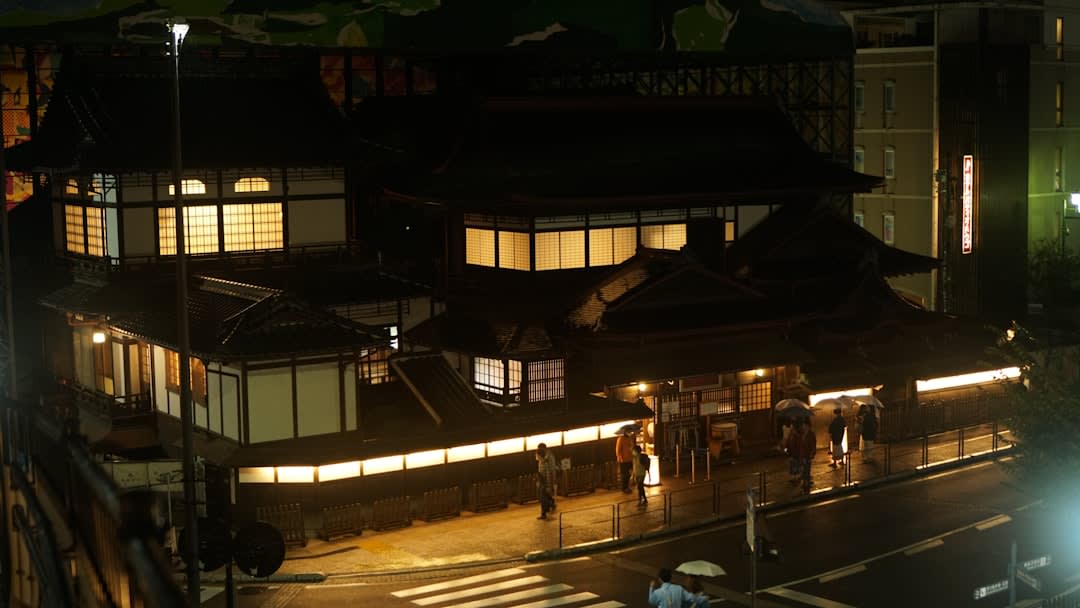
Dogo Onsen ranks among the oldest hot springs in Japan, with written records documenting its use for more than 1,300 years and oral traditions pointing back considerably further. The landmark Dogo Onsen Honkan is a three-storey wooden bathhouse finished in 1894, widely credited as the inspiration for the bathhouse depicted in Studio Ghibli's Spirited Away. The spring water is mildly alkaline and has long been valued for its ability to soften and smooth the skin.
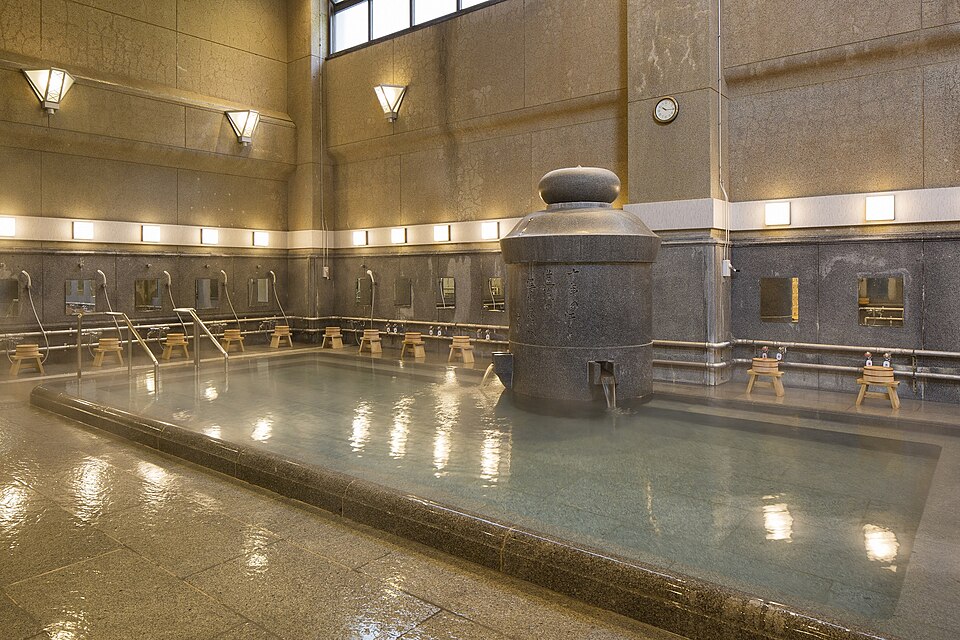
Tsubaki Onsen occupies a single large bathhouse on the Kii Peninsula in Wakayama Prefecture, surrounded by forest and roughly 2.5 hours from Osaka by train. The spring registers pH 9.9, placing it among the most alkaline waters in Japan. The facility is straightforward and well-maintained, attracting visitors from the Kumano region as well as day-trippers traveling in from the coast.
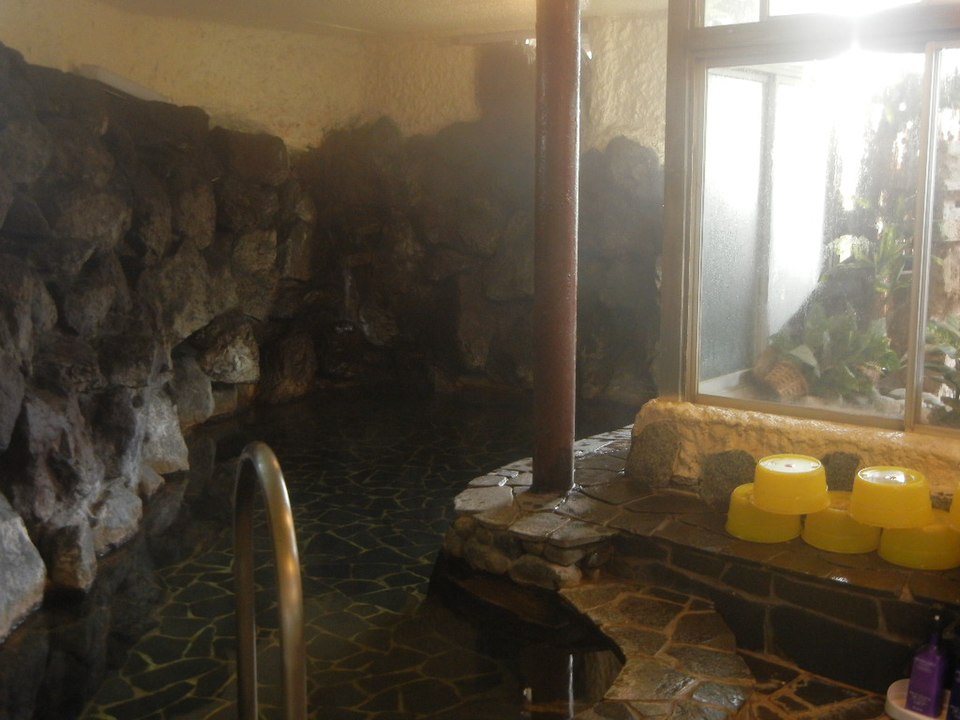
Iiyama Onsen sits in northern Nagano Prefecture near the Nozawa Onsen highlands and produces water with a pH of 11.3, placing it among the most alkaline natural hot springs anywhere in Japan. The soft, high-alkaline water has long been sought out as a beauty spring, widely praised for the way it smooths and softens the skin. The Hokuriku Shinkansen now stops at Iiyama Station, cutting travel time from Tokyo considerably.
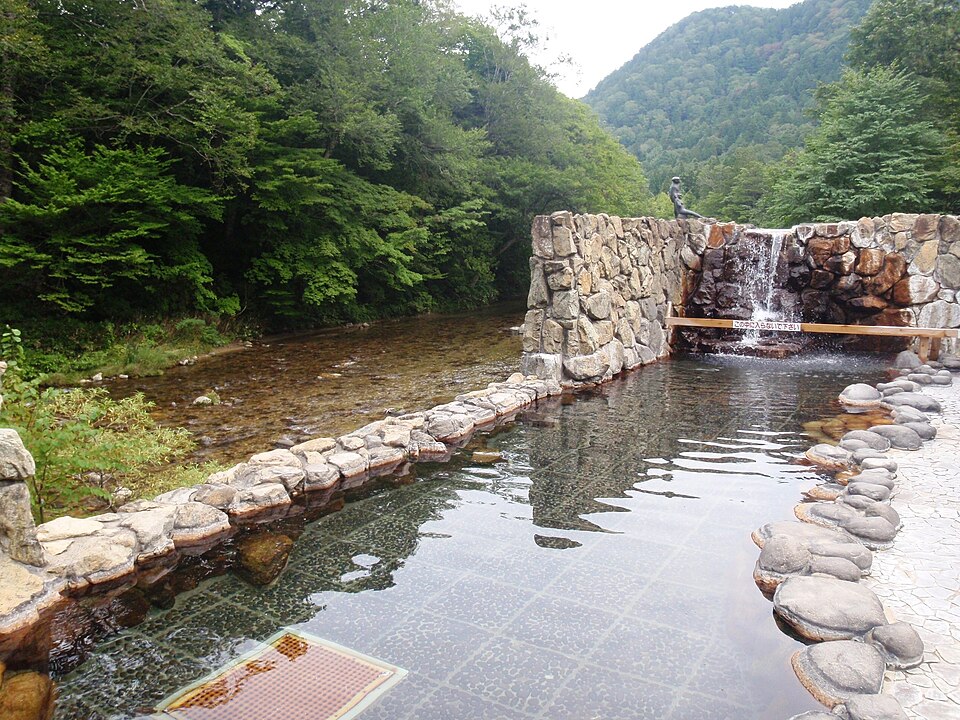 FREE
FREEKappa-no-yu is a free, open-air bathing spot tucked into Yagen Valley on the Shimokita Peninsula in Aomori Prefecture, roughly 2 kilometers up the slope from the central Yagen Onsen cluster. Two separate baths rest beside a clear mountain stream, surrounded by old-growth beech and cypress trees. The water temperature holds at 46 degrees Celsius. Visitors are not permitted to bring soap or shampoo. The baths are open from April through November and charge no entry fee.
Amenities
Getting there
Take the Kintetsu Nagoya Line to Kintetsu-Yunoyama Station, then transfer to the Kintetsu Yunoyama Line and ride to the terminus at Yunoyama Onsen Station. The journey from Nagoya takes about 75 minutes.
Location & nearby
Yunoyama Onsen, Komono, Mie District, Mie
Make a day of it
Pair your soak with these nearby spots.
Park
Gozaishoshizengakko
0.2km away
Attraction
Aoitaki
0.4km away
Attraction
Yunoyama Onsen Keiryu No Inn Kuranosuke
0.5km away
Attraction
Obareiwa
1.2km away
More springs in Kansai
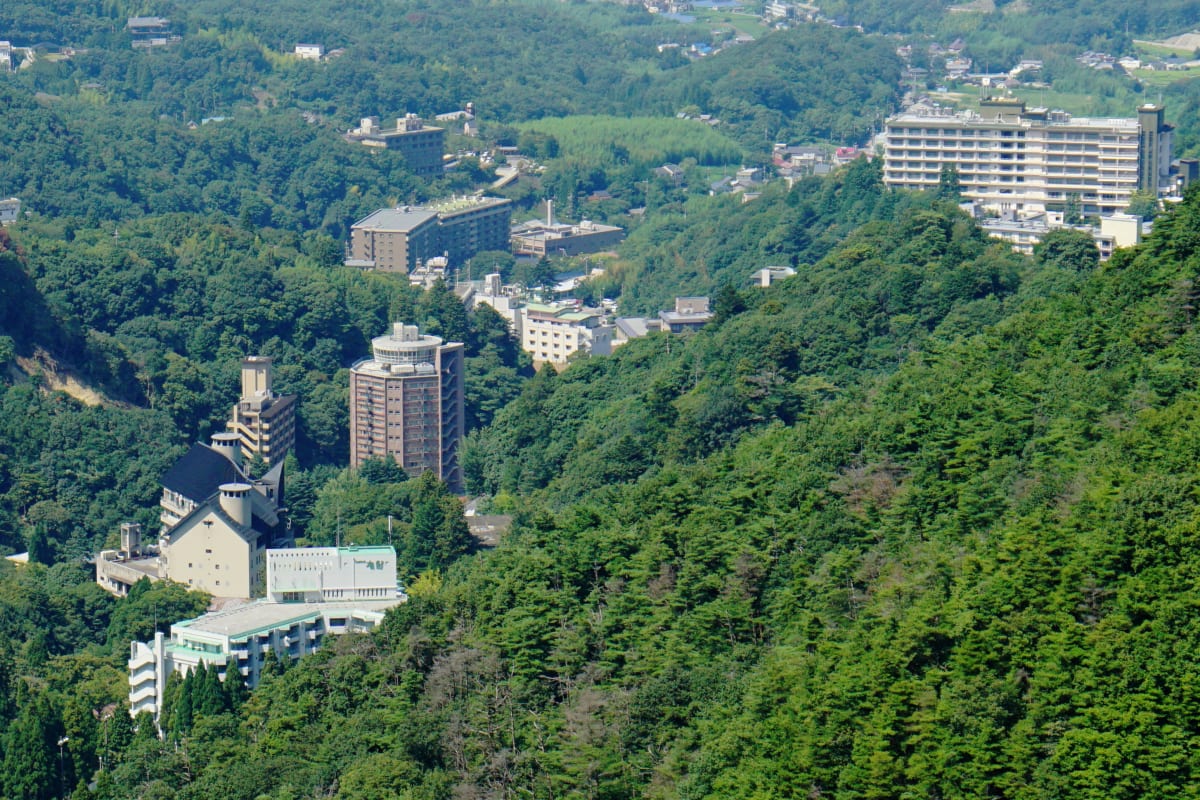
Arima Onsen sits in the hills above Kobe, close to Mount Rokko, and ranks among the oldest hot spring towns in Japan. The town draws visitors for two entirely different spring types that coexist within its compact footprint. Kinsen is the iron-rich golden water that stains surrounding rocks a rusty orange, while ginsen runs clear and carries both carbonation and mild radioactivity. Few other onsen destinations in Japan bring together two such distinct water types within a single small town.
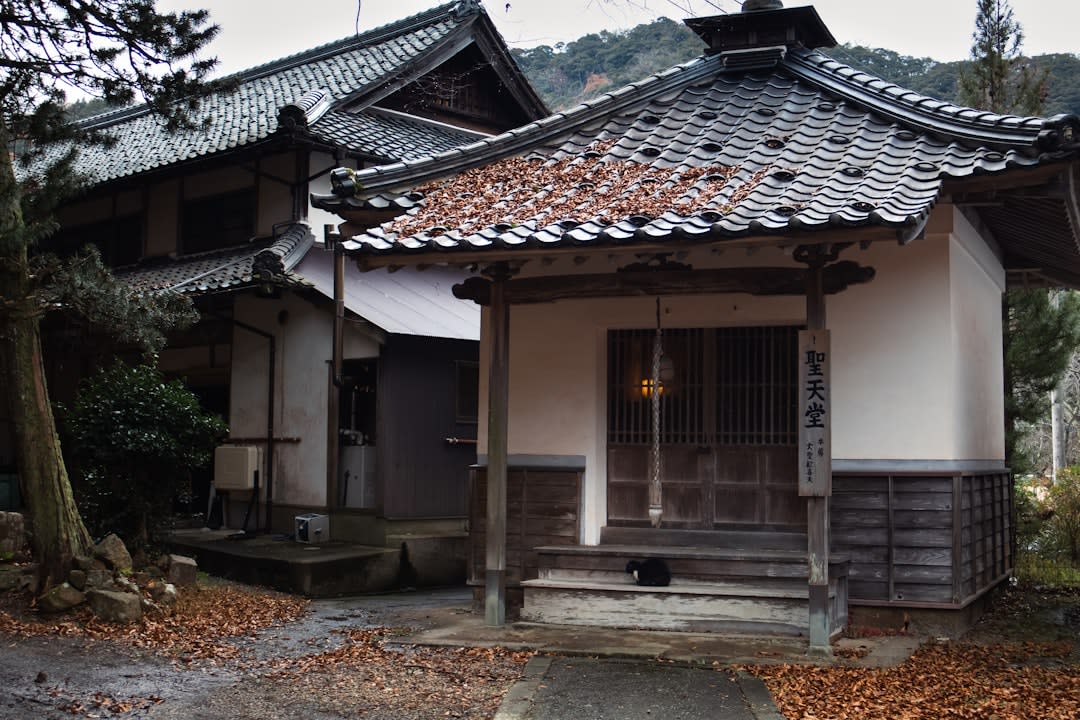
One of Japan's most beloved onsen towns. Visitors put on a yukata and wooden sandals and stroll between seven public bathhouses along a willow-lined canal. The wooden bridges, stone walkways, and traditional inn facades have barely changed in a century. The town is built for wandering.
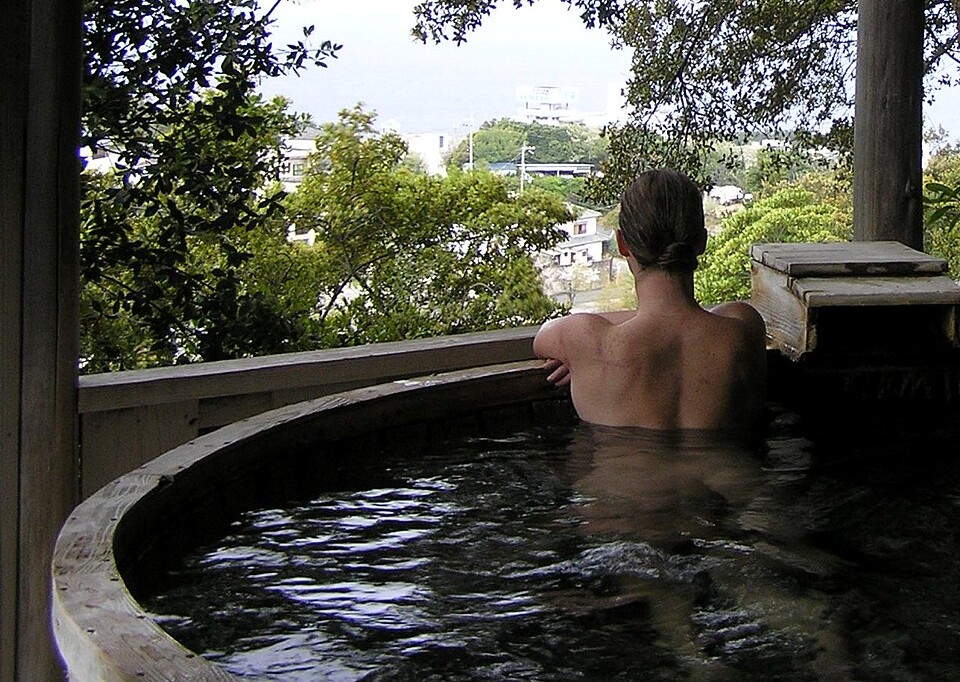
An old coastal resort town where hot springs meet the Pacific. The white-sand beach and dramatic rock formations create a setting unlike most onsen destinations. The ancient outdoor baths of Saki-no-Yu sit directly above the ocean. You soak while watching the waves crash below you.
Common questions
What is the water temperature at Yunoyama Onsen?▾
The water temperature at Yunoyama Onsen ranges up to 32°C (minimum around 25°C).
Is Yunoyama Onsen free to visit?▾
Yunoyama Onsen charges an entrance fee in JPY.
Is Yunoyama Onsen a public or private bath?▾
Yunoyama Onsen is a mixed bathing spring.
Are tattoos allowed at Yunoyama Onsen?▾
Tattoo policy varies at Yunoyama Onsen. Check ahead of your visit.
What is the nearest station to Yunoyama Onsen?▾
The nearest station to Yunoyama Onsen is Yunoyama onsen/Gozaisho ROPEWAY-mae, about 0.2km away.