
Yubara Onsen
湯原温泉
Yubara Onsen
simple-alkaline · Kansai
Hotter than 8% of Japan springs (n=122).
More acidic than 94% of Japan springs (n=121).
Mineral profile
Bar width reflects listing order, not measured concentration.
Suitability
At a glance
Getting there
Easy — under 1km from a station
About this spring
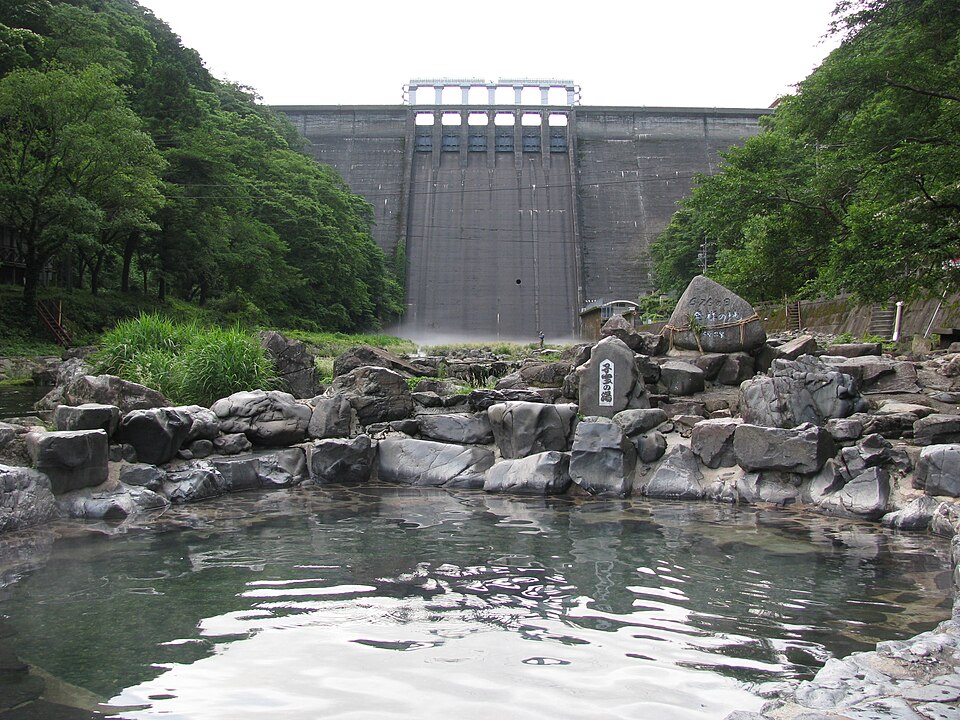
Yubara Onsen sits in a quiet corner of Yubara, Japan, drawing visitors who come for rest and recovery. The waters carry a notable mineral content and have long been credited with healing qualities that ease physical tension and calm the senses. Traditional buildings line the surrounding area, and the grounds are shaded by thick vegetation, giving the place a distinctly Japanese character. Guests can bathe in outdoor pools fed directly by the springs or take meals at the ryokans clustered nearby.
Highlights
History
Yubara Onsen runs along the Asahi River in what is today Maniwa City, in the northern part of Okayama Prefecture, and its reputation as a place of healing reaches back to the late Sengoku period.
The springs drew early attention from powerful figures of the era: Ukita Hideie, counted among Toyotomi Hideyoshi's Five Great Elders, commissioned a hot spring bath at Yubara for his mother Ofuku, a consort of Hideyoshi known for her beauty, after she became ill. That association with the ruling class transformed the springs from a locally known resource into a destination of wider regional note. The Mimasaka region, where Yubara is situated, passed into the hands of the Tsuyama Domain during the Edo period, and under that administration the springs continued to draw travelers along the San'yo road network who sought treatment for neuralgia and poor circulation. The most striking feature of Yubara Onsen today is the Sunayu, an outdoor bath where hot water rises naturally through the sandy bed of the Asahi River directly beneath the Yubara Dam. No pumps or infrastructure are involved. Bathers simply enter water the earth delivers on its own, at no cost, around the clock. The sight of thermal water pushing up through river sand at the foot of a dam has made the Sunayu one of the more remarkable bathing spots in western Japan, and it has ranked first in national surveys of outdoor baths. The Yubara Dam itself was built across the Asahi River in the mid-twentieth century, though the geothermal activity in the riverbed below went on unchanged.
Local guide
The route to Yubara Onsen from Okayama City is a long bus ride north through the Chugoku Mountains that earns its destination. The road follows river valleys through rice terraces and cedar plantations, and by the time you reach Maniwa and start dropping into the Asahi River canyon, the scale of the landscape changes. Yubara Dam sits at the head of a long reservoir, and the onsen town is squeezed onto the bank just downstream, its inns backing up against the canyon wall while the river runs along the front of them. The free outdoor bath, Sunayu, is built right on the riverbank itself, open twenty-four hours, with no roof overhead and the canyon walls rising on both sides.
Sunayu is one of the few rotenburo in Japan where the hot spring water wells up through the actual riverbed sand, which is where it gets its name. Sand bath is a slight mistranslation, since you are bathing in hot water, not sand, but the sand does visibly shift at the bottom of the pool where the water pushes up. The pH here runs at 9.3, which puts Yubara in the upper range of alkaline springs in Japan. At that level the water feels notably slippery, almost coating on the skin, because the high alkalinity softens the top layer of dead skin cells. It does not sting or tingle like acidic springs. It is just very smooth, and the effect lasts noticeably after you dry off.
The experience of bathing in Sunayu at night is something specific to this place. The bath is lit from below and sits at water level against the river, and the Yubara Dam face is visible from the pool in daylight. After dark the canyon walls disappear into black above you, the dam is a pale outline lit by a single lamp, and the sound of the river fills the whole space. Other guests move in and out through the night. There is no staff, no ticket machine, and no fence. The bath has been sitting here for anyone to use at any hour for longer than anyone currently living can remember.
The wider resort has a relaxed, slightly old-fashioned energy. The indoor facilities at the ryokan along the riverbank draw from the same alkaline source and are notably warmer than the free outdoor bath. Lunch sets at the restaurants nearby tend toward local river fish and mountain vegetables. Yubara is classified among the Mimasaka Three Hot Springs alongside Okutsu and Yunogo, but Sunayu on the riverbank is the thing that makes it genuinely distinctive.
Mineral chemistry
Alkaline springs (pH above 8) are known for their skin-softening effect, sometimes called "beauty water" in bathing cultures across Asia. The high pH saponifies skin oils, producing a characteristic silky feel on the skin surface.
The slippery feeling underfoot in highly alkaline springs is normal — take care when standing and walking in the bath. Avoid prolonged soaking if you have dry or sensitive skin.
Similar springs
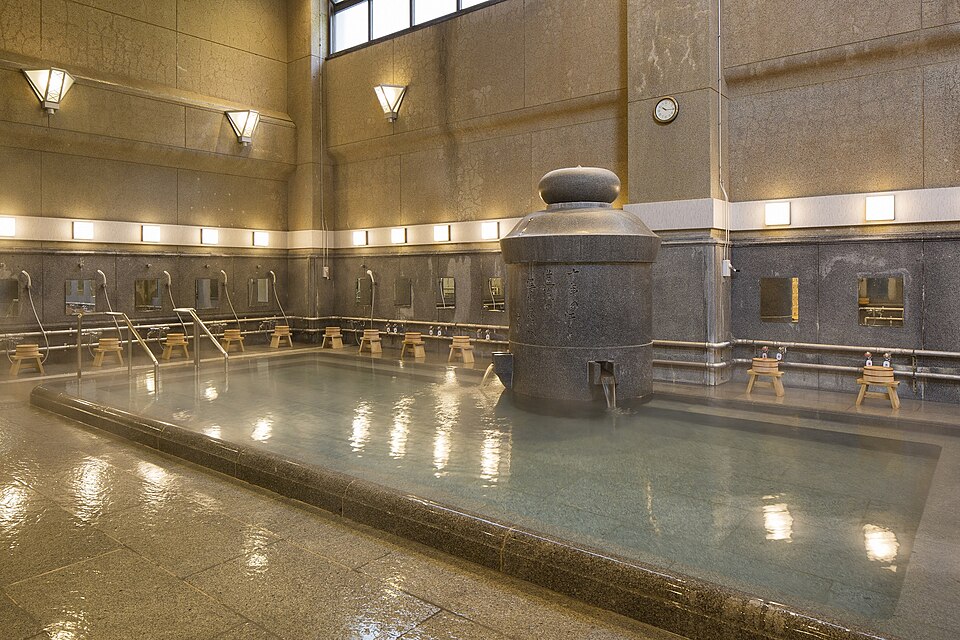
Tsubaki Onsen occupies a single large bathhouse on the Kii Peninsula in Wakayama Prefecture, surrounded by forest and roughly 2.5 hours from Osaka by train. The spring registers pH 9.9, placing it among the most alkaline waters in Japan. The facility is straightforward and well-maintained, attracting visitors from the Kumano region as well as day-trippers traveling in from the coast.
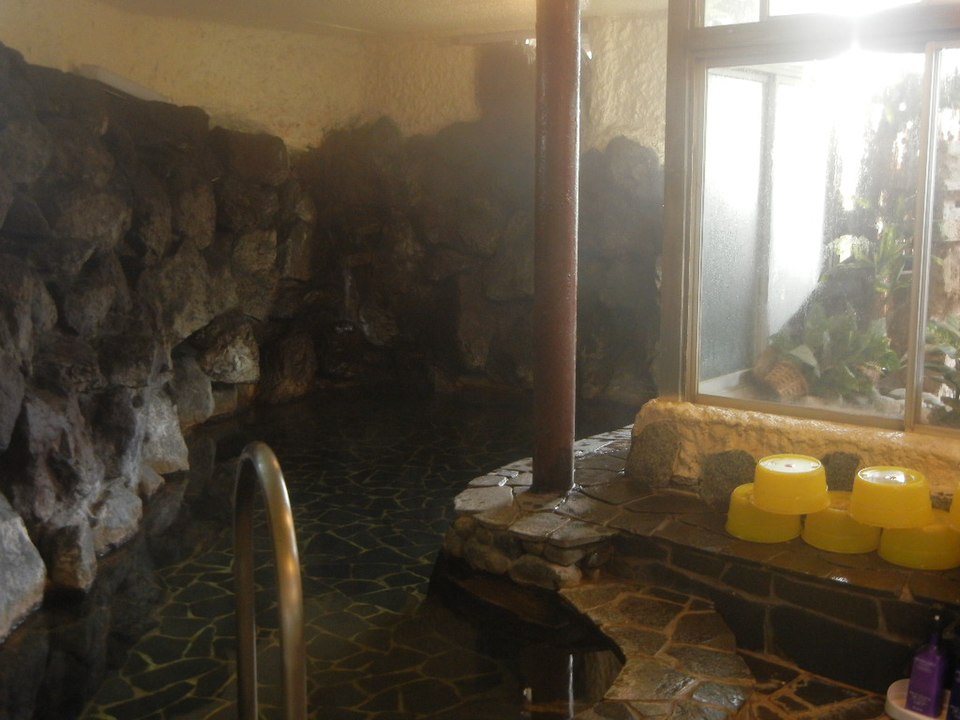
Iiyama Onsen sits in northern Nagano Prefecture near the Nozawa Onsen highlands and produces water with a pH of 11.3, placing it among the most alkaline natural hot springs anywhere in Japan. The soft, high-alkaline water has long been sought out as a beauty spring, widely praised for the way it smooths and softens the skin. The Hokuriku Shinkansen now stops at Iiyama Station, cutting travel time from Tokyo considerably.
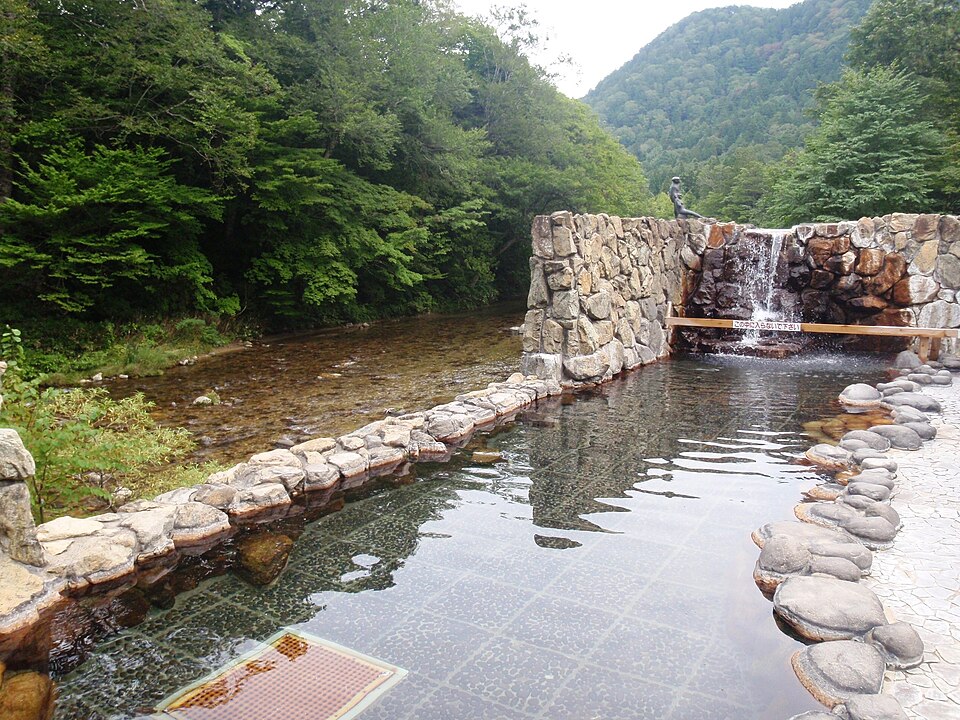 FREE
FREEKappa-no-yu is a free, open-air bathing spot tucked into Yagen Valley on the Shimokita Peninsula in Aomori Prefecture, roughly 2 kilometers up the slope from the central Yagen Onsen cluster. Two separate baths rest beside a clear mountain stream, surrounded by old-growth beech and cypress trees. The water temperature holds at 46 degrees Celsius. Visitors are not permitted to bring soap or shampoo. The baths are open from April through November and charge no entry fee.
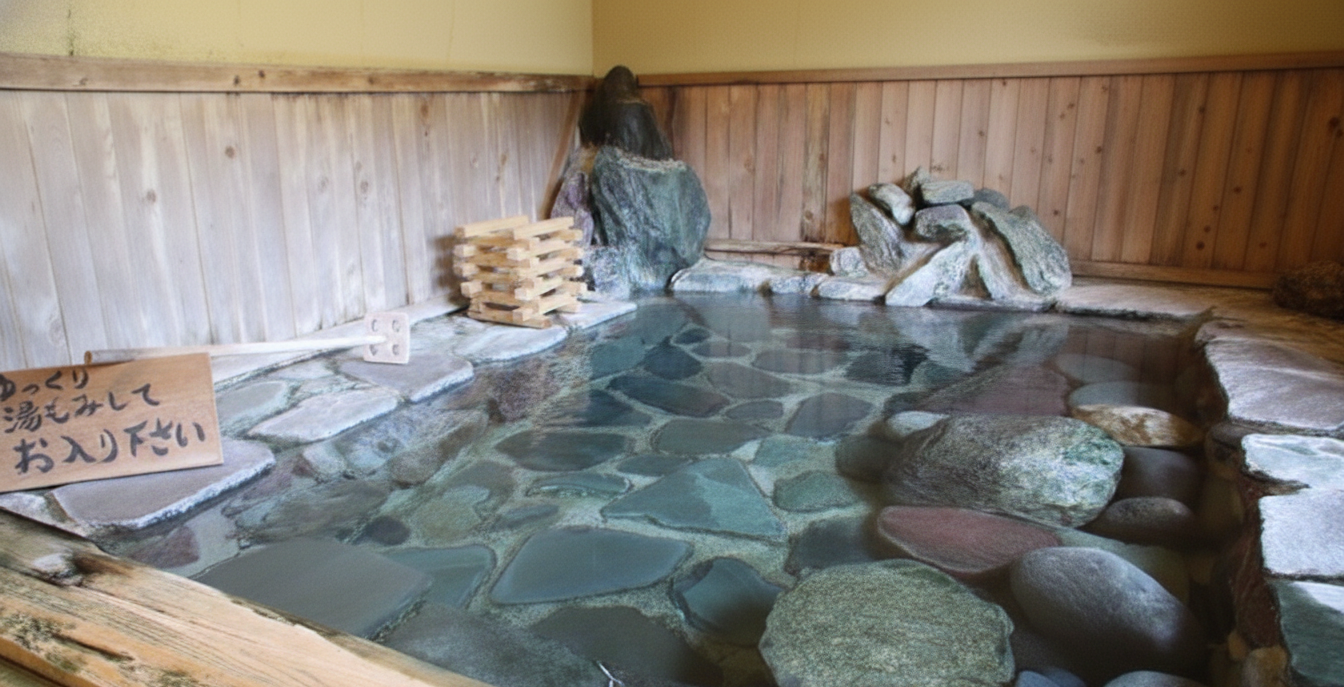
Tokigawa Onsen sits in Hiki District, Saitama Prefecture, roughly 90 minutes from central Tokyo. The water rises from Chichibu Paleozoic strata at a depth of 1,700 meters and registers pH 10, placing it firmly in the highly alkaline range. Bathers consistently note the silky feel it leaves on the skin. The facility has held onto its Showa-era bathhouse character rather than updating it.
Amenities
Getting there
From Okayama Station, take the JR Tsuyama Line to Tsuyama Station (~70 min), then transfer to the JR Kishin Line and alight at Chugoku-Katsuyama Station. From there a Maniwa City community bus runs to Yubara Onsen (~35 min). Alternatively, highway express buses run directly from Okayama Station's Tenmaya Bus Center to Katsuyama with a connection to Yubara, or from Osaka. The famous free 24-hour riverside Sunayu open-air bath is a short walk from the main bus stop.
Location & nearby
Yubara Onsen, Maniwa, Okayama
Make a day of it
Pair your soak with these nearby spots.
Attraction
Yuhara Onsen Myu Jiamu
0.0km away
Attraction
Yubara-Onsen Post Office
0.1km away
Attraction
Ashiyu
0.1km away
Attraction
Yuhara Onsen Kyo
0.4km away
Attraction
Sunayu
0.4km away
Attraction
Yubarayutsutarihiroba
0.4km away
More springs in Kansai

Arima Onsen sits in the hills above Kobe, close to Mount Rokko, and ranks among the oldest hot spring towns in Japan. The town draws visitors for two entirely different spring types that coexist within its compact footprint. Kinsen is the iron-rich golden water that stains surrounding rocks a rusty orange, while ginsen runs clear and carries both carbonation and mild radioactivity. Few other onsen destinations in Japan bring together two such distinct water types within a single small town.
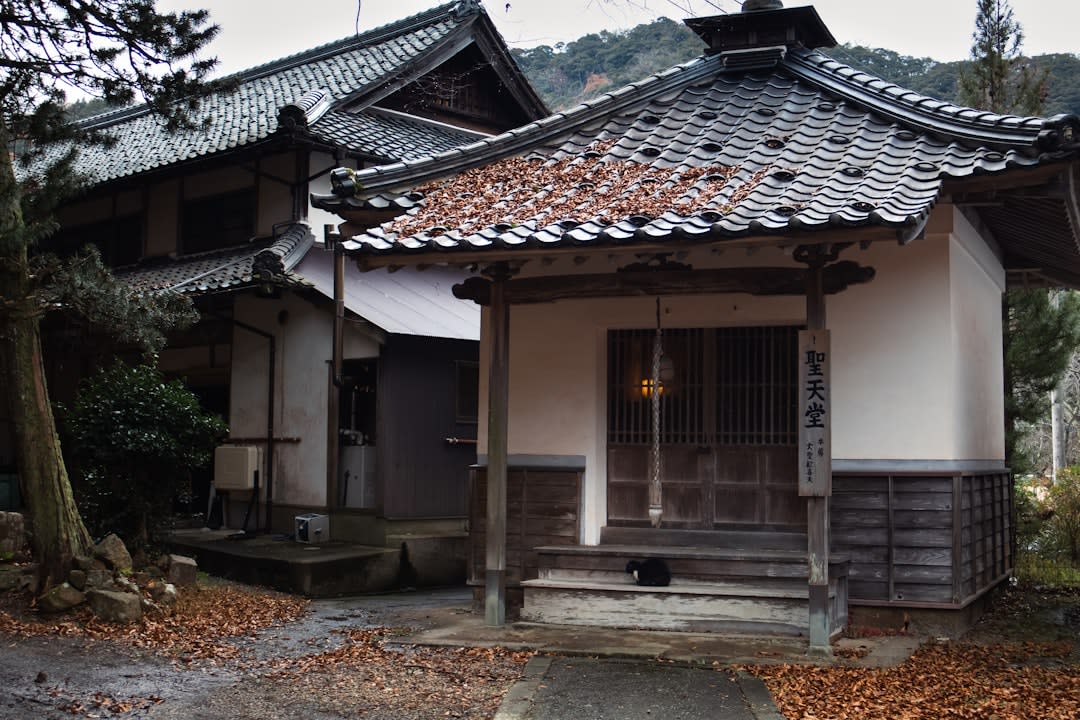
One of Japan's most beloved onsen towns. Visitors put on a yukata and wooden sandals and stroll between seven public bathhouses along a willow-lined canal. The wooden bridges, stone walkways, and traditional inn facades have barely changed in a century. The town is built for wandering.
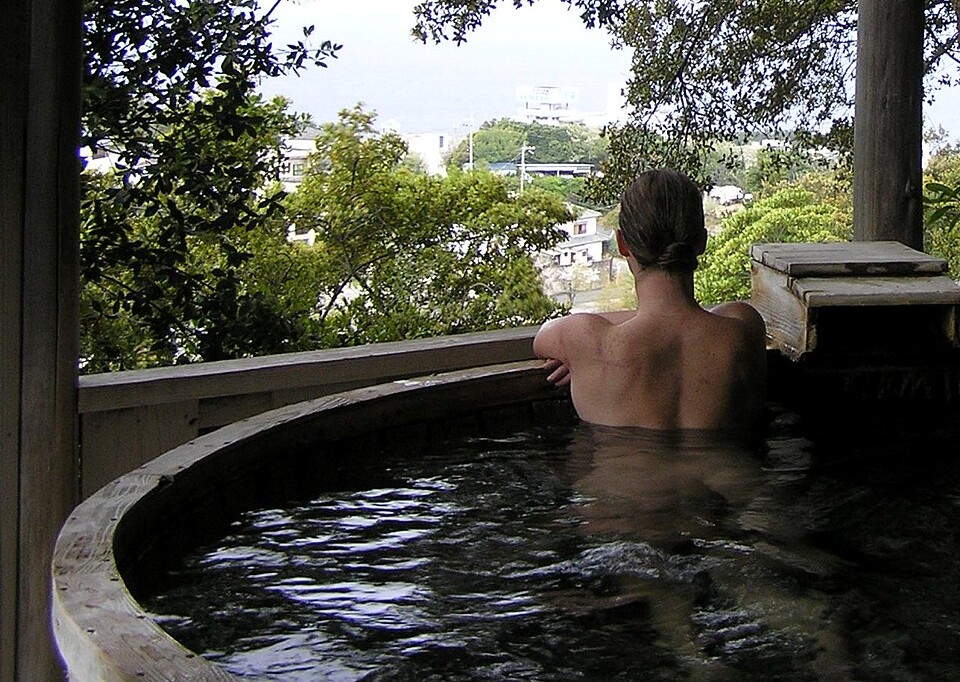
An old coastal resort town where hot springs meet the Pacific. The white-sand beach and dramatic rock formations create a setting unlike most onsen destinations. The ancient outdoor baths of Saki-no-Yu sit directly above the ocean. You soak while watching the waves crash below you.
Common questions
What is the water temperature at Yubara Onsen?▾
The water temperature at Yubara Onsen ranges up to 42°C (minimum around 42°C).
Is Yubara Onsen free to visit?▾
Yes, Yubara Onsen is free to visit.
Is Yubara Onsen a public or private bath?▾
Yubara Onsen is a public bathing spring.
Are tattoos allowed at Yubara Onsen?▾
No, Yubara Onsen does not permit visible tattoos.
What is the nearest station to Yubara Onsen?▾
The nearest station to Yubara Onsen is Sayama, about 0km away.