Asamushi Onsen
浅虫温泉
3.7 · 2208 reviews · via Google
Asamushi Onsen
sodium-chloride · Tohoku
Hotter than 68% of Japan springs (n=122).
More acidic than 74% of Japan springs (n=121).
Mineral profile
Bar width reflects listing order, not measured concentration.
Suitability
At a glance
Getting there
Easy — under 1km from a station
Cost
Low
Crowd level
Moderate
About this spring
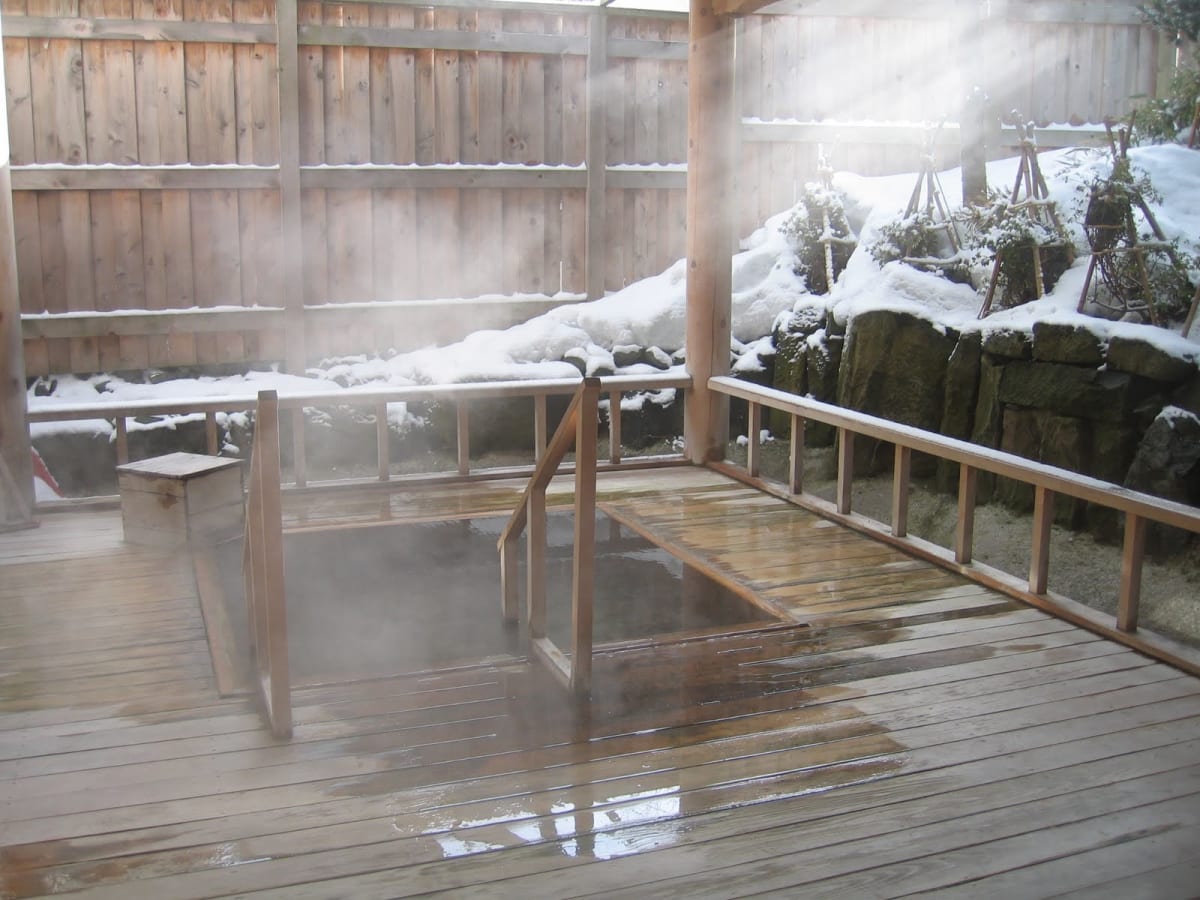
Asamushi Onsen is a quiet coastal hot spring town on the shores of Mutsu Bay, roughly 20 minutes from Aomori city by train. The waters here are gentle, and the pace of the place matches them. The town faces the bay, giving visitors open water views, and Asamushi Aquarium sits nearby, considered one of the best marine facilities in Japan.
Highlights
History
Local records place the discovery of the springs at around 1190, toward the end of the Heian period, and attribute the find to the monk Honen.
The earliest known use of the waters was practical rather than medicinal, with residents employing the steam to process hemp. Recognition of the springs as therapeutic came later. Emperor Meiji stopped here in 1876 while traveling through the region on his Hokkaido tour. Through the Meiji and Taisho eras the town grew steadily as rail and road connections made it easier for people from Aomori city to reach it.
Local guide
Twenty minutes by bus from Aomori Station, the road east runs along the edge of Mutsu Bay until the waterfront inns of Asamushi come into view, their upper floors looking directly out across the water toward the Shimokita Peninsula. Asamushi Station, opened in 1891, sits a short walk from the shore, and the narrow main street between the station and the bay is lined with the tall facades of ryokan that have been trading on this coastal position for well over a century. Emperor Meiji stopped here in 1876 on his tour of the north, which tells you something about the town's standing even in the Meiji period.
The water at Asamushi is sodium chloride, drawn from springs that produce a clear, odorless bath with a density that you notice the moment you get in. The salt content is high enough to give the water a faint mineral weight on the skin, and the heat retention is excellent, meaning you stay warm for a long time after stepping out into the sea air. The temperature of the raw spring runs at 30 degrees Celsius, which is cooler than many hot springs, though most facilities heat the water before use. The bathing halls of the larger inns are built to maximize the bay view, so you sit in the steaming water while the blue-grey surface of Mutsu Bay fills the windows in front of you.
The bay itself is what makes Asamushi feel different from inland hot spring towns. In spring, clam-digging along the shoreline is a local event, and the restaurants serve the catch the same day. In summer, festival fireworks go up over the water while bathers watch from outdoor rooftop pools. The Asamushi Aquarium sits a short walk from most inns, a smaller and unpretentious facility that has been on this stretch of coastline for decades. After the soak, vendors on the main street sell grilled squid and scallops pulled from Mutsu Bay, and the combination of sea salt in the bath and sea salt on the food is not accidental.
Historically the springs here were discovered around 1190, when the monk Honen noticed the waters and their effects. The town developed steadily through the Meiji and Taisho periods as rail access improved and Aomori residents needed a closer alternative to longer journeys south. What remains today is a resort town that is genuinely local in character. The inns are large but not ostentatious, the public baths are well maintained and inexpensive, and on weekday afternoons the main street is quiet enough that you can hear the water moving in the bay.
Mineral chemistry
Water character inferred from mineral type — verify on site.
Sodium chloride springs, essentially natural saltwater baths, are celebrated for their warming and moisturising effects. The salt forms a thin film on the skin that slows moisture evaporation, keeping skin hydrated longer than a freshwater bath.
Those with high blood pressure or heart conditions should consult a doctor before bathing, as the warming effect increases circulation. Avoid immersing open wounds.
Similar springs
 FREE
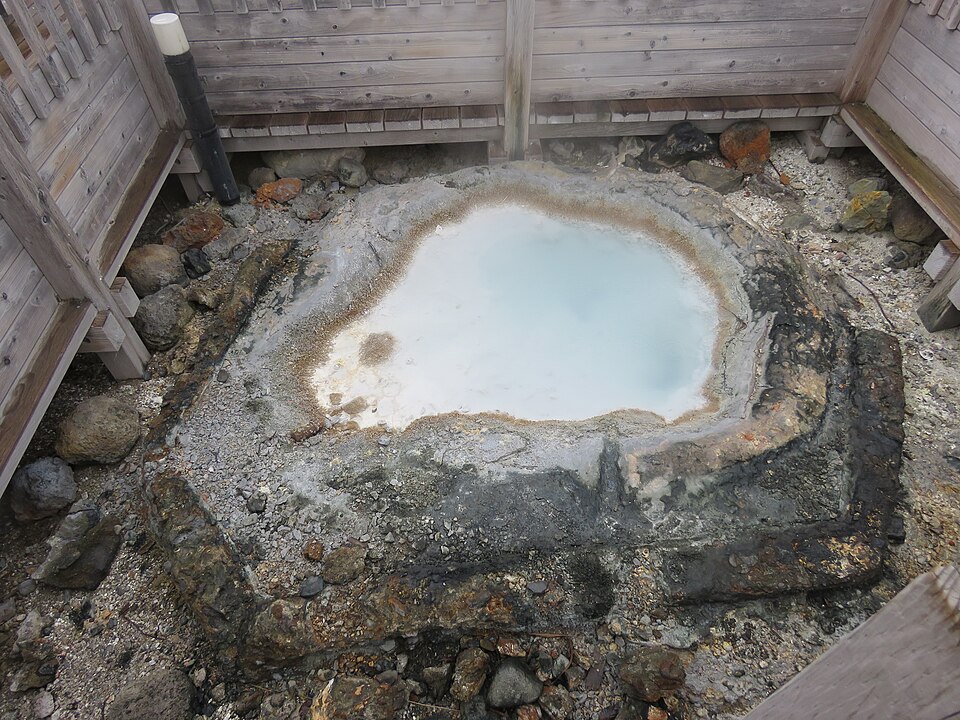
FREEThe valley occupies the center of Noboribetsu Onsen in Hokkaido. Jigokudani translates as Hell Valley. The crater covers 11 hectares and releases roughly 10,000 tonnes of hot spring water each day. Fumaroles vent steam across the floor of the valley, boiling pools bubble at the surface, and the surrounding cliffs carry heavy mineral staining. A walking path winds through the area in about 20 minutes and is open to all visitors at no cost. It ranks among the most striking landscapes accessible on foot anywhere in Japan.
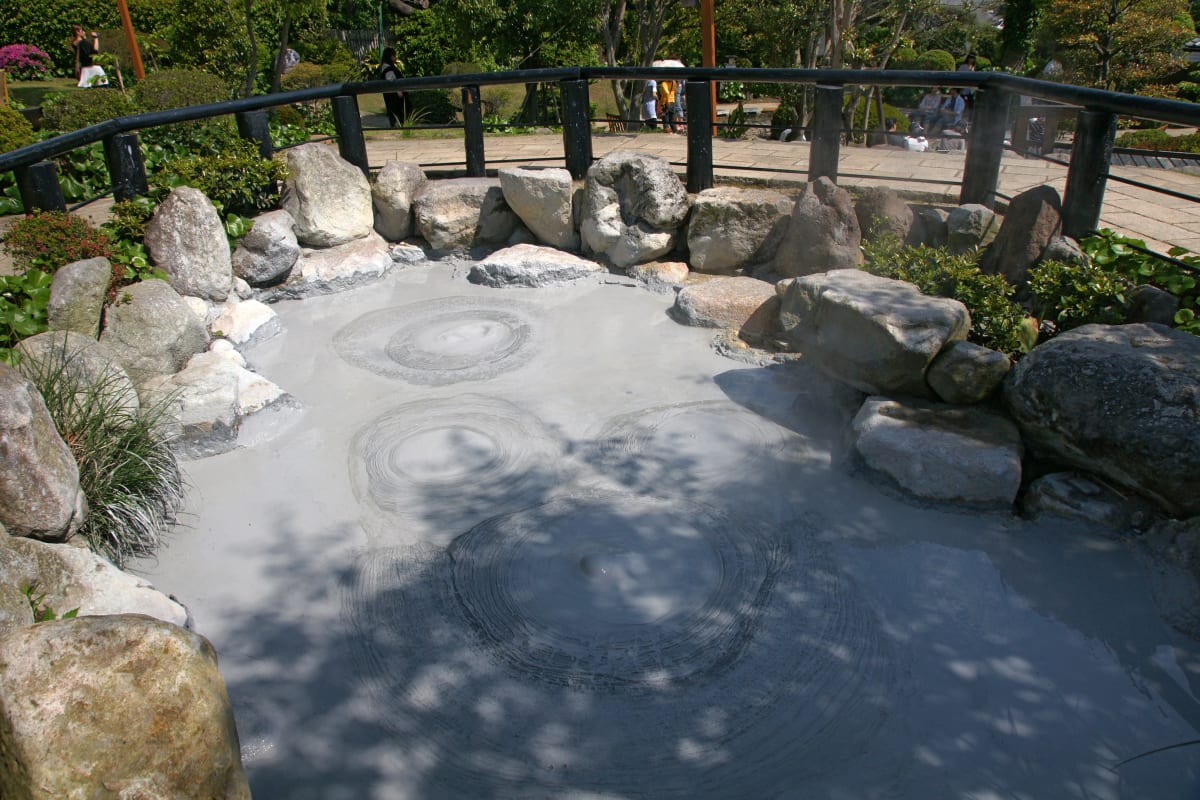
Beppu is the most geothermally active city in Japan, with more than 2,900 hot spring vents located within the city limits and eight distinct thermal spring zones collectively known as the Beppu Hatto. The variety on offer is wide, ranging from grand hotel bathhouses to modest neighborhood public facilities to the celebrated Hells, a collection of brilliantly colored boiling pools scattered across the city. The Hells run far too hot for bathing, but they draw visitors who come to walk among them and take in the spectacle.
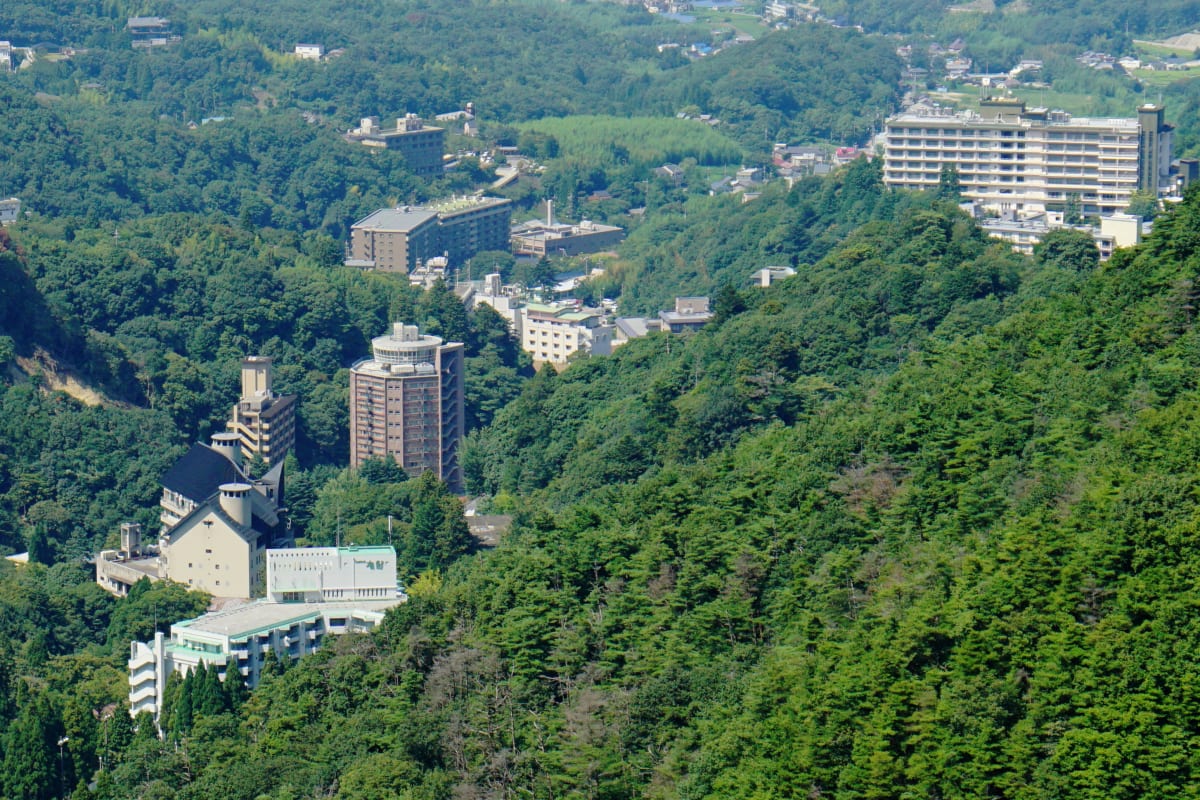
Arima Onsen sits in the hills above Kobe, close to Mount Rokko, and ranks among the oldest hot spring towns in Japan. The town draws visitors for two entirely different spring types that coexist within its compact footprint. Kinsen is the iron-rich golden water that stains surrounding rocks a rusty orange, while ginsen runs clear and carries both carbonation and mild radioactivity. Few other onsen destinations in Japan bring together two such distinct water types within a single small town.
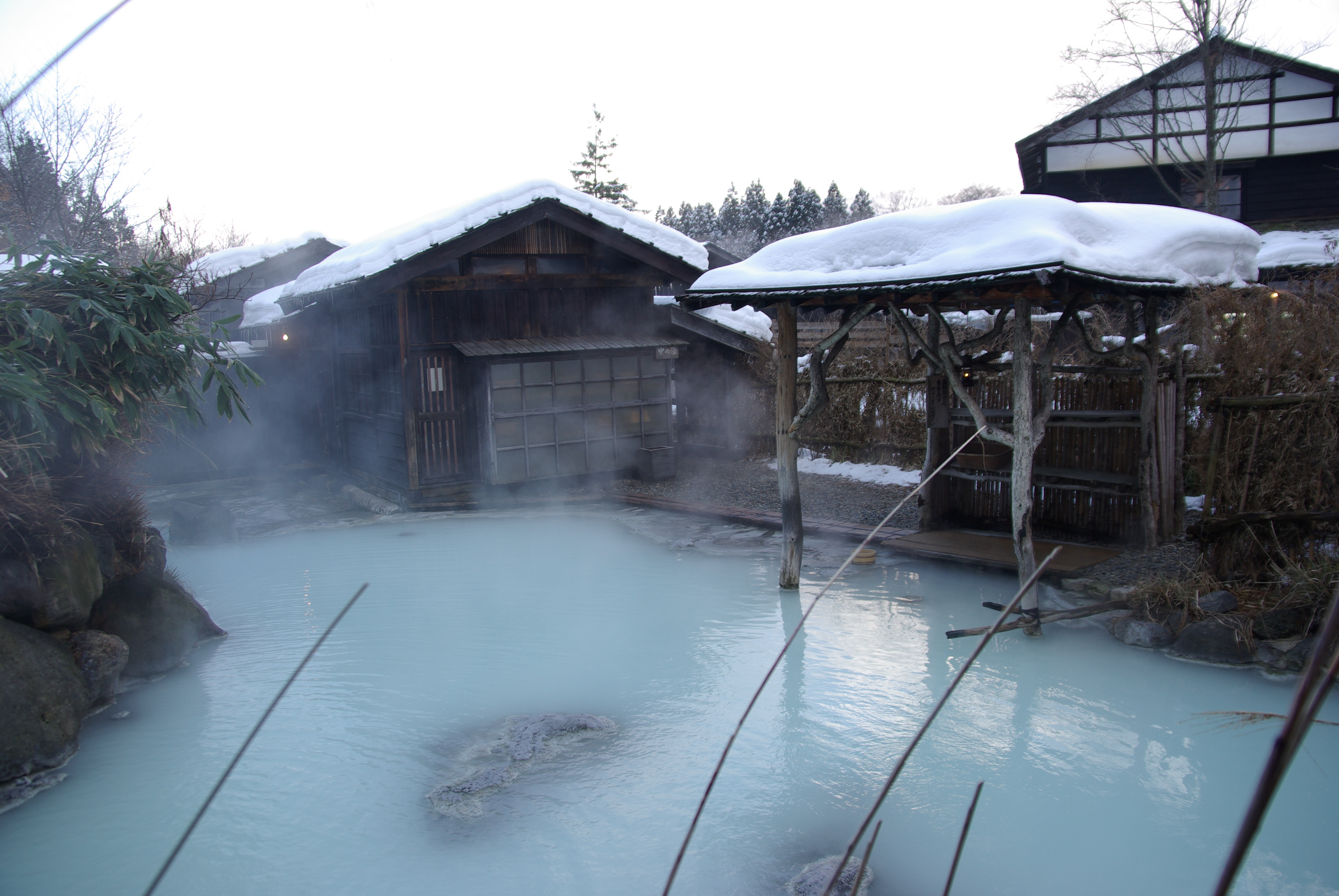
Tsuru-no-yu is the oldest of the seven inns at Nyuto, set deep in a beech forest in Akita Prefecture. The main draw is a large outdoor mixed-bathing pool fed by opaque, milky-white sulfurous water. Many regard it as the most beautiful onsen setting in Japan. People come here to put some distance between themselves and the rest of the world for a while.
Amenities
Getting there
Take the Tohoku Shinkansen to Shin-Aomori Station, then transfer to the Aoimori Railway for a 20-minute ride to Asamushi Station. The hot spring inns and public bathhouses are within easy walking distance of the station.
Location & nearby
Hotarudani-341-19 Asamushi, Aomori, 039-3501
Make a day of it
Pair your soak with these nearby spots.
Attraction
Wadakayu
0.0km away
Attraction
Asamushi Post Office
0.0km away
Park
Asamushiyottoha Ba
0.2km away
Park
Umizuri Park
0.2km away
Attraction
Asamushi Onsen Onkatsupurojekuto
0.3km away
Park
Asamushi Park
0.3km away
More springs in Tohoku
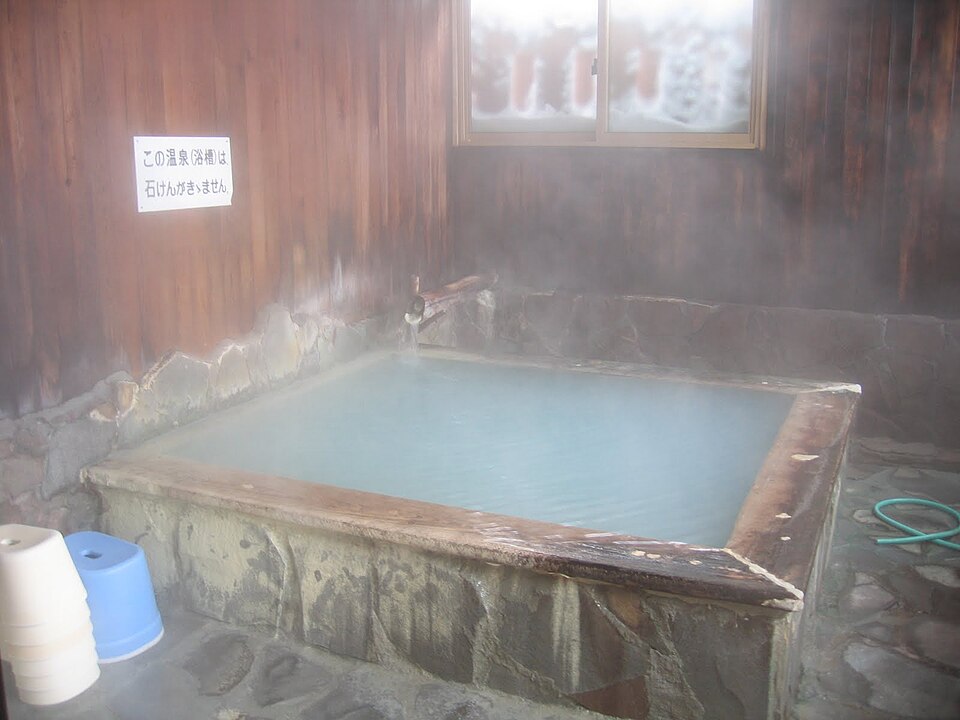
Set deep in the Hakkoda Mountains of Aomori Prefecture, Sukayu Onsen is a historic bathhouse best known for its cavernous mixed-bathing hall, the Sen-nin-buro, which translates as the Bath of a Thousand Bathers. The waters are strongly acidic, the setting is rustic and unhurried, and winter brings extraordinary snowfall to the surrounding mountains.
Tsuru-no-yu is the oldest of the seven inns at Nyuto, set deep in a beech forest in Akita Prefecture. The main draw is a large outdoor mixed-bathing pool fed by opaque, milky-white sulfurous water. Many regard it as the most beautiful onsen setting in Japan. People come here to put some distance between themselves and the rest of the world for a while.
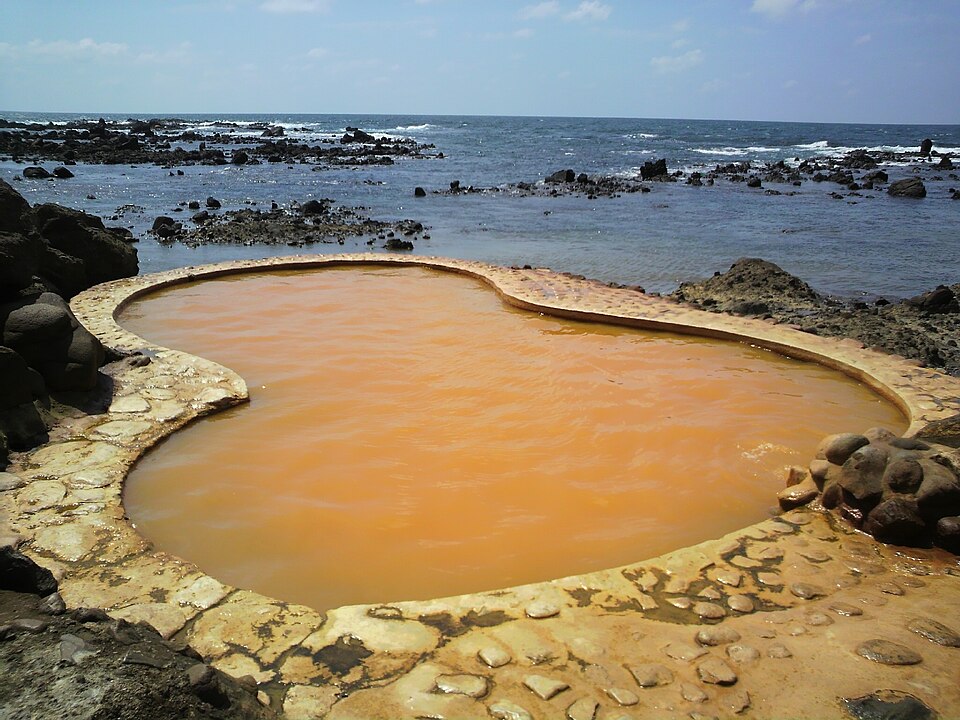
Furofushi Onsen occupies a rocky cape in Fukaura, Aomori Prefecture, with outdoor bathing pools positioned at the edge of the Sea of Japan cliffs. The spring water runs a deep reddish-brown from its high iron and sodium chloride content. The main open-air bath and a dedicated women's pool both use fully undiluted water drawn straight from the source. Sunsets over the water are a particular draw. Once day visitors depart in the late afternoon, overnight guests have the pools to themselves.
Common questions
What is the water temperature at Asamushi Onsen?▾
The water temperature at Asamushi Onsen ranges up to 73°C (minimum around 30°C).
Is Asamushi Onsen free to visit?▾
Asamushi Onsen charges an entrance fee in JPY.
Is Asamushi Onsen a public or private bath?▾
Asamushi Onsen is a public bathing spring.
Are tattoos allowed at Asamushi Onsen?▾
No, Asamushi Onsen does not permit visible tattoos.
What is the nearest station to Asamushi Onsen?▾
The nearest station to Asamushi Onsen is Michi-no-Eki Yusa-Asamushi Mae, about 0km away.