
Tara Onsen
太良温泉
4.4 · 763 reviews · via Google
Tara Onsen
sodium-bicarbonate · Kyushu
Hotter than 34% of Japan springs (n=122).
More acidic than 74% of Japan springs (n=121).
Mineral profile
Bar width reflects listing order, not measured concentration.
Suitability
At a glance
Getting there
Easy — under 1km from a station
Cost
Moderate
Crowd level
Quiet
About this spring
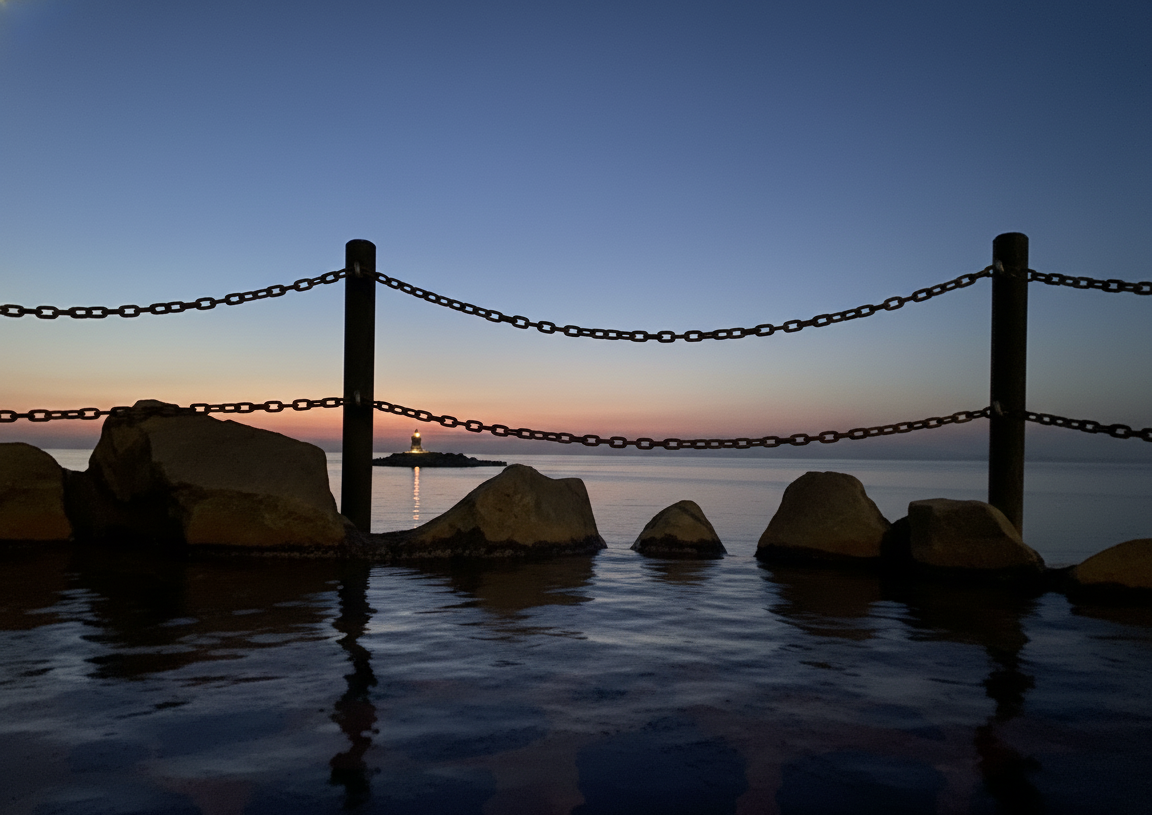
Tara Onsen is a premium all-suite ryokan in Tara Town, Saga Prefecture, set on a rise above the Ariake Sea with views reaching Unzen's Fugen Peak. Each of the 16 rooms has its own private open-air hot spring bath. A communal rotenburo on the top floor looks out over the Ariake Sea, where guests can watch the water's dramatic tidal movements while soaking. The kitchen centers its menu on Takezaki crab, a prized blue crab variety that local fishermen harvest daily.
Highlights
History
Before World War II, the Takezaki area was a small island community of fishermen, best known for the blue crab that carried its name.
A local entrepreneur, Ishida Jinichi, decided to serve those crabs to guests on site rather than shipping them raw to distant markets. He built a road connecting the area to the mainland, drilled for a hot spring, and opened an inn beside a crab restaurant, personally establishing the pairing of seafood dining and thermal bathing that still defines the resort. The spring he found was a sodium bicarbonate source of unusual gentleness, which earned it the local name bijin-no-yu, meaning the water of beautiful skin.
Local guide
From Nagasaki or Fukuoka, the route to Tara runs along the edge of the Ariake Sea, and the sea is not what you expect. The Ariake is shallow, enclosed, and dramatically tidal. When the tide pulls out, the mudflats extend for kilometers in a wide brown plain that stretches toward the visible ridge of the Unzen volcanic massif across the water in Nagasaki Prefecture. The tidal range here reaches six meters, one of the largest in Japan, which means the landscape changes completely twice a day. When the water returns, those brown flats disappear and the sea fills in again, and the distant silhouette of Unzen sits above the blue surface. Tara sits between the mountains and this sea, on the western side of Saga Prefecture, and the town is small enough that you can walk the main street and the coastal road in a single afternoon.
The spring water at Tara is a sodium bicarbonate and sodium chloride type, meaning it carries both the soft, slightly soapy quality of a bicarbonate spring and the dense warmth of salt water. It comes out clear and without the sulfur edge that marks most volcanic springs in Kyushu. When you sit in a bath here, particularly in one of the outdoor pools positioned to face the Ariake, the water feels heavy and warm in a way that is difficult to describe precisely. It coats your skin without leaving a film, and the warmth gets into the deeper muscles quickly rather than sitting on the surface. The salt content holds the heat in place for a long time after you leave the water.
The signature view at Tara is from the open-air baths that look directly west across the sea toward Unzen. In the late afternoon, the low light turns the water a deep orange-gold, and the volcanic shape of Unzen-dake on the opposite shore catches the same light. You can sit in the hot water and watch the tide continue its work, the mudflats either spreading or contracting depending on the hour, while egrets work the receding waterline looking for the mud crabs and shellfish that make the Ariake food economy possible. The Takezaki blue crab, harvested by local fishermen directly from those flats, is served at most of the inns here, and the combination of the water and the seafood is specific to this place and nowhere else.
Tara is not a resort town in any fashionable sense. The facilities are plain, the streets quiet, and there is no obvious tourist infrastructure beyond a handful of inns and a roadside station selling local produce. What it has instead is the quality of a place that has continued doing the same things for a long time without any particular pressure to change. The sea does what it does, the water comes up from the ground, the crabs are harvested in the morning, and the baths are hot in the evening. If you are coming from Nagasaki, the drive around the peninsula in either direction makes an excellent half-day detour.
Mineral chemistry
Water character inferred from mineral type — verify on site.
Bicarbonate springs cleanse and soften the skin surface, removing excess sebum without stripping the skin's acid mantle. Traditionally recommended for acne-prone skin and sensitive skin types.
Bicarbonate springs are generally among the most gentle and well-tolerated onsen types.
Sodium chloride springs, essentially natural saltwater baths, are celebrated for their warming and moisturising effects. The salt forms a thin film on the skin that slows moisture evaporation, keeping skin hydrated longer than a freshwater bath.
Those with high blood pressure or heart conditions should consult a doctor before bathing, as the warming effect increases circulation. Avoid immersing open wounds.
Similar springs
 FREE
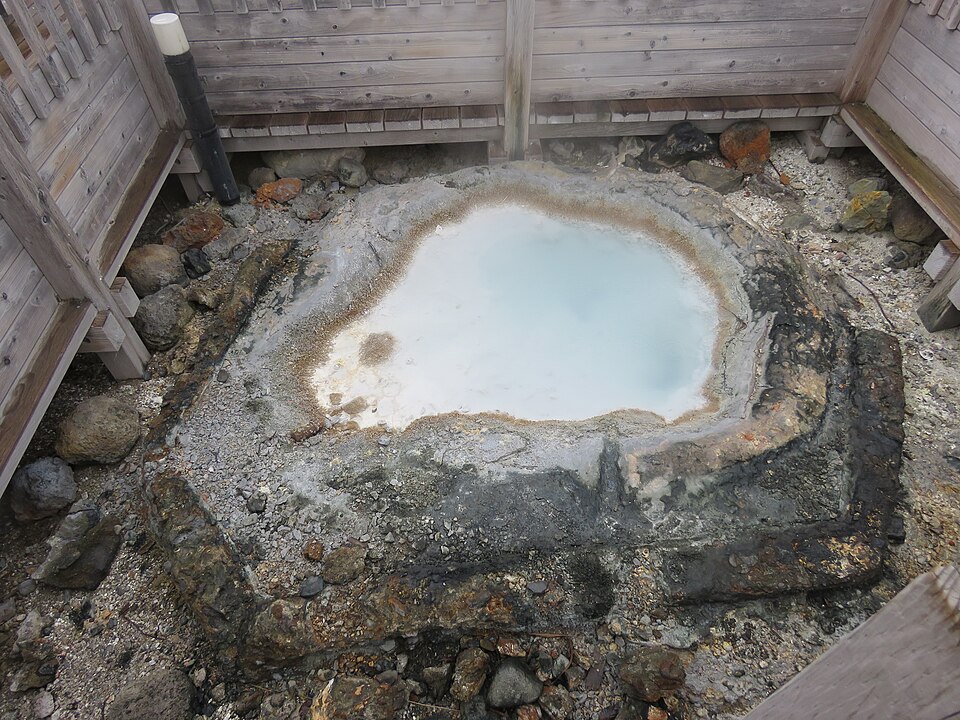
FREEThe valley occupies the center of Noboribetsu Onsen in Hokkaido. Jigokudani translates as Hell Valley. The crater covers 11 hectares and releases roughly 10,000 tonnes of hot spring water each day. Fumaroles vent steam across the floor of the valley, boiling pools bubble at the surface, and the surrounding cliffs carry heavy mineral staining. A walking path winds through the area in about 20 minutes and is open to all visitors at no cost. It ranks among the most striking landscapes accessible on foot anywhere in Japan.
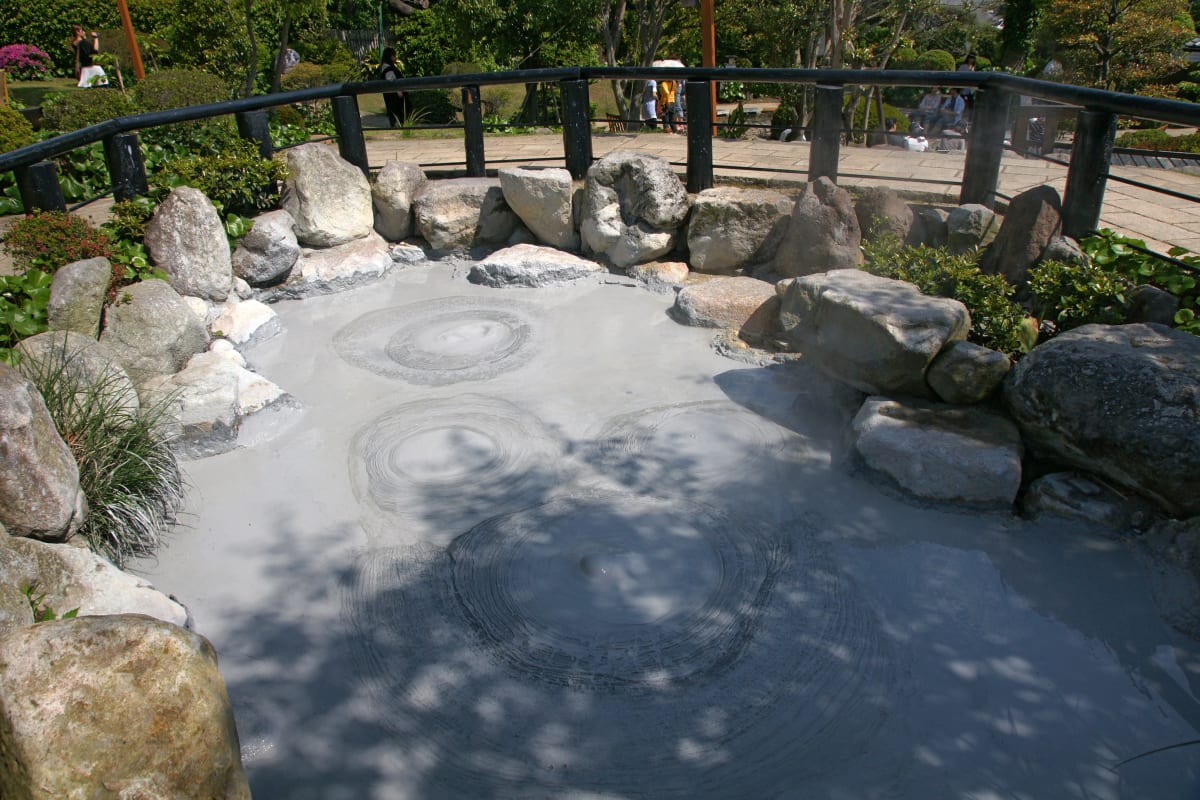
Beppu is the most geothermally active city in Japan, with more than 2,900 hot spring vents located within the city limits and eight distinct thermal spring zones collectively known as the Beppu Hatto. The variety on offer is wide, ranging from grand hotel bathhouses to modest neighborhood public facilities to the celebrated Hells, a collection of brilliantly colored boiling pools scattered across the city. The Hells run far too hot for bathing, but they draw visitors who come to walk among them and take in the spectacle.
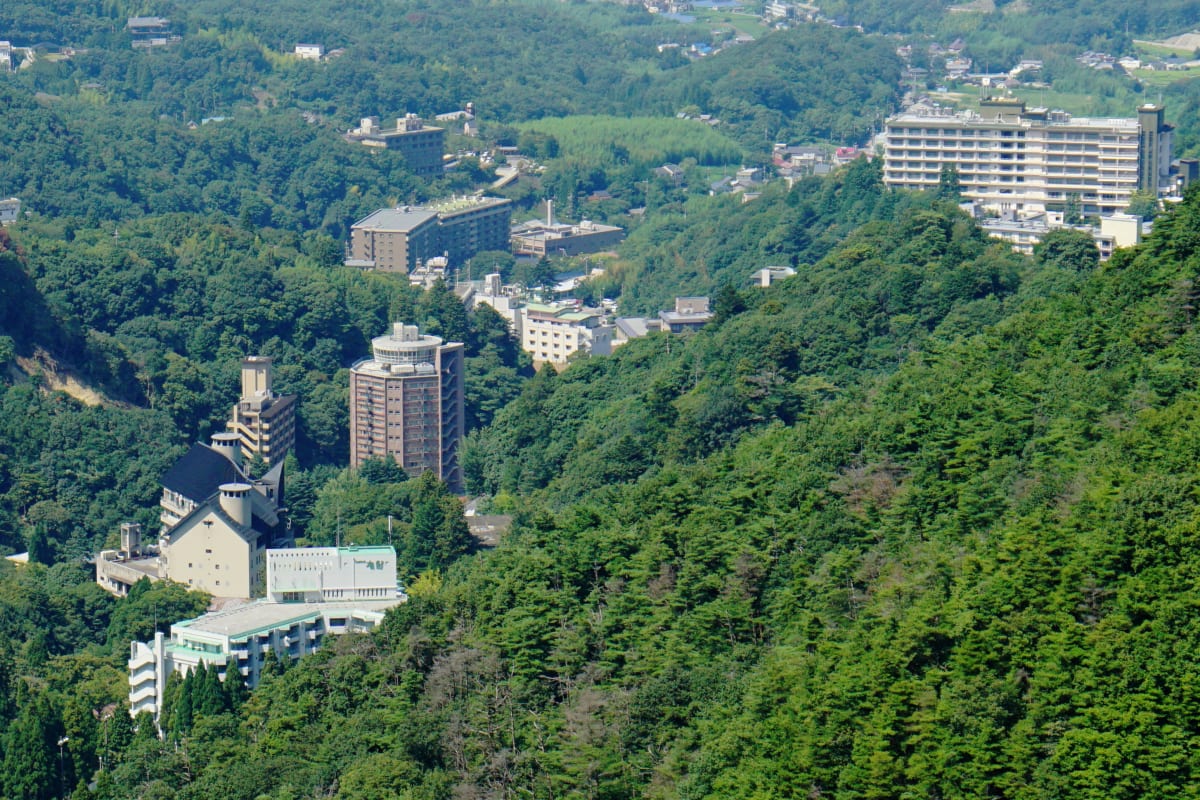
Arima Onsen sits in the hills above Kobe, close to Mount Rokko, and ranks among the oldest hot spring towns in Japan. The town draws visitors for two entirely different spring types that coexist within its compact footprint. Kinsen is the iron-rich golden water that stains surrounding rocks a rusty orange, while ginsen runs clear and carries both carbonation and mild radioactivity. Few other onsen destinations in Japan bring together two such distinct water types within a single small town.
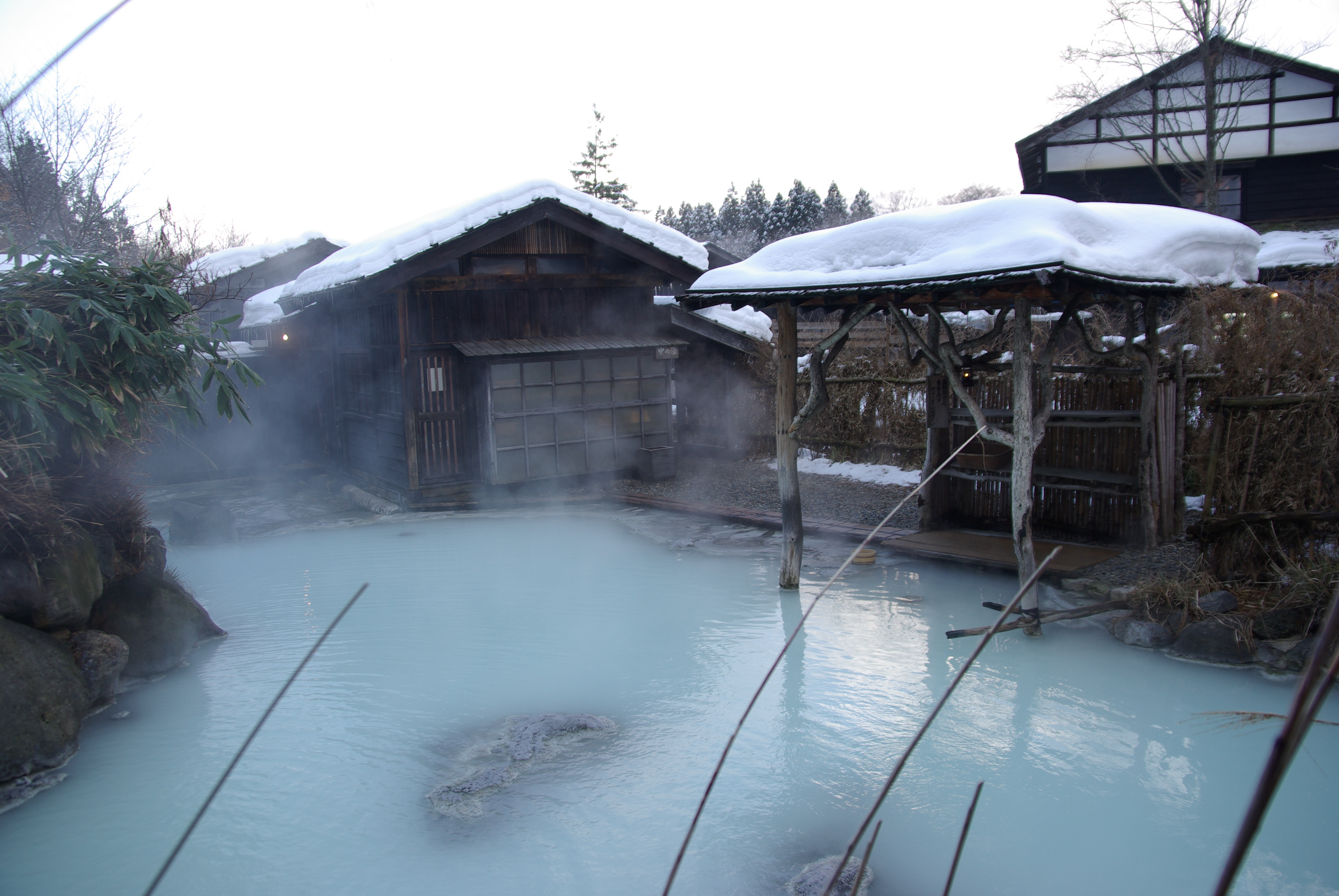
Tsuru-no-yu is the oldest of the seven inns at Nyuto, set deep in a beech forest in Akita Prefecture. The main draw is a large outdoor mixed-bathing pool fed by opaque, milky-white sulfurous water. Many regard it as the most beautiful onsen setting in Japan. People come here to put some distance between themselves and the rest of the world for a while.
Amenities
Getting there
Take the JR Kyushu Nippo Line to Tara Station. From there, the onsen is a short walk or taxi ride.
Location & nearby
Otsu-316-3 Ōura, Tara, Fujitsu District, Saga 849-1615
More springs in Kyushu
Beppu is the most geothermally active city in Japan, with more than 2,900 hot spring vents located within the city limits and eight distinct thermal spring zones collectively known as the Beppu Hatto. The variety on offer is wide, ranging from grand hotel bathhouses to modest neighborhood public facilities to the celebrated Hells, a collection of brilliantly colored boiling pools scattered across the city. The Hells run far too hot for bathing, but they draw visitors who come to walk among them and take in the spectacle.
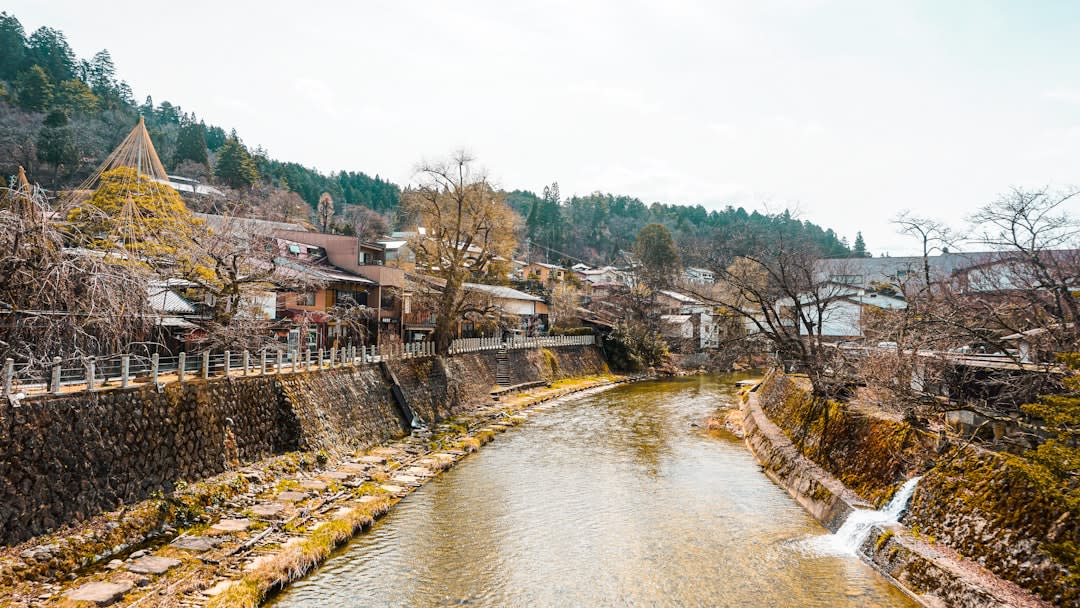
A peaceful artsy onsen town at the foot of Mt. Yufu in Oita Prefecture. The town is known for boutique galleries, craft shops, and ryokan with private outdoor baths. Lake Kinrin sits at the heart of it all. On quiet mornings, steam rises off the lake's surface in a way that seems almost designed to make you stop and stand still.
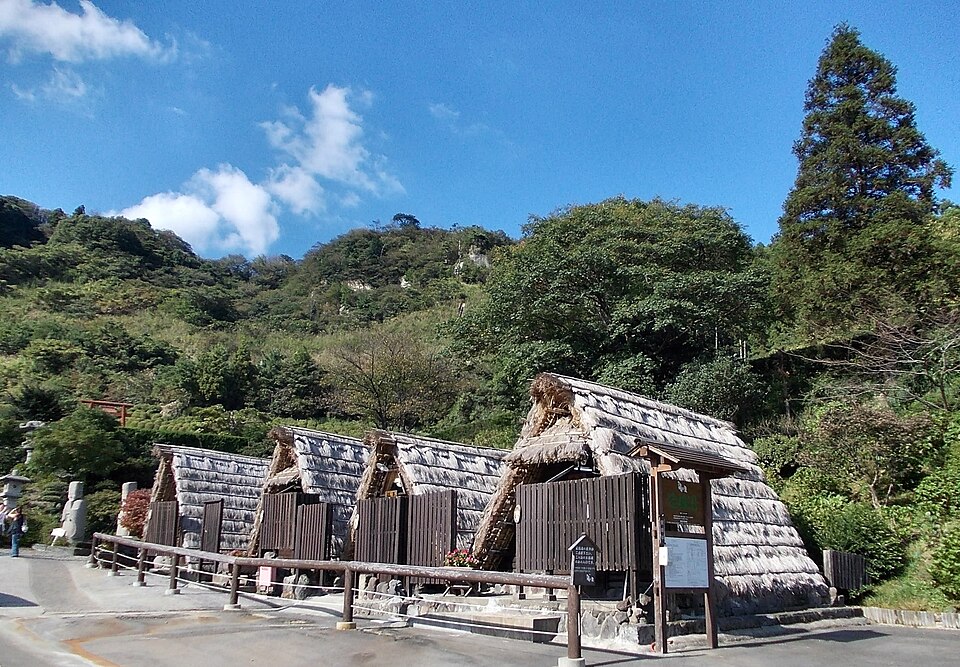
Set on a wooded slope in Beppu's Myoban district, this resort draws visitors for its yunohana, a term meaning hot spring flowers, which are white crystalline deposits that collect on surfaces where steam from the springs cools and condenses. The spring water itself is strongly sulfurous and acidic, rising at high temperatures from one of the eight volcanic source zones that make up Beppu Hatto.
Common questions
What is the water temperature at Tara Onsen?▾
The water temperature at Tara Onsen ranges up to 52°C (minimum around 52°C).
Is Tara Onsen free to visit?▾
Tara Onsen charges an entrance fee in JPY.
Is Tara Onsen a public or private bath?▾
Tara Onsen is a public bathing spring.
Are tattoos allowed at Tara Onsen?▾
No, Tara Onsen does not permit visible tattoos.