Sounkyo Onsen
層雲峡温泉
Sounkyo Onsen
sulfur · Hokkaido
Hotter than 57% of Japan springs (n=122).
More acidic than 82% of Japan springs (n=121).
Mineral profile
Bar width reflects listing order, not measured concentration.
Suitability
At a glance
Getting there
Easy — under 1km from a station
Cost
Moderate
About this spring
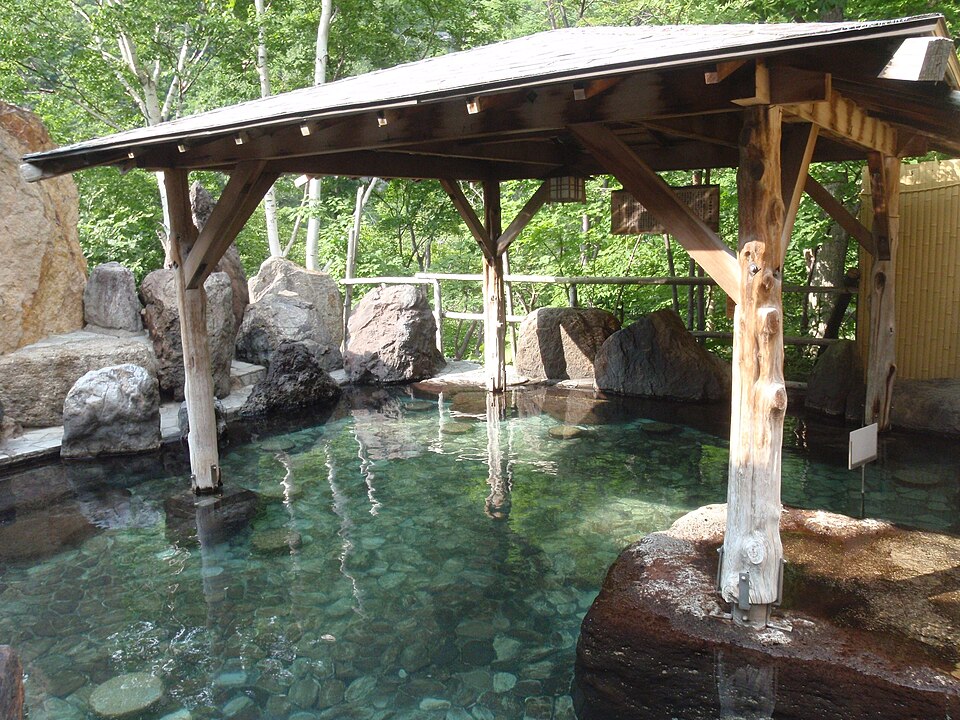
Sounkyo Onsen sits at the bottom of one of Hokkaido's most striking gorges, hemmed in by columnar basalt walls that climb up to 150 meters above the Ishikari River. Daisetsuzan National Park wraps around the town on every side. A walking path through the gorge ranks among the best hikes on the island. Each February, ice sculptures cover the valley floor for a seasonal festival. Come autumn, the cliff faces shift to deep golds and reds.
Highlights
History
The Ainu knew the Daisetsuzan massif as Kamui Mintara, meaning the playground of the gods.
Ainu hunters were the first to encounter the geothermal waters, reaching them on ascents to the high plateaux. The town's name, Sounkyo, was given by the poet and mountaineer Keigetsu Omachi, who drew it from an Ainu toponym meaning the river with many waterfalls. Omachi's 1902 travelogue brought the gorge to the attention of readers throughout Japan. In the 1950s, the government gathered the scattered inns inside the gorge into a single organized settlement, formally establishing it as a resort.
Local guide
The bus from Asahikawa Station takes two hours east into Daisetsuzan National Park, and the landscape changes substantially in the final thirty minutes. The road enters the Sounkyo Gorge along the Ishikari River, and the cliffs rise suddenly on both sides, reaching 150 meters in places with a sharpness that looks cut rather than eroded. The basalt column formations on the gorge walls, stacked vertically in tight hexagonal patterns, are the result of lava cooling slowly underground and are found nowhere else in Hokkaido at this scale. The village of Sounkyo sits in a pocket inside that gorge, backed by these walls, with the river running through and the mountains of the Daisetsuzan range visible above the canyon rim.
The spring water is a sulfur and simple alkaline blend, coming out of the ground at pH 8.5. In the bath, it has a clear, pale quality and the mild sulfur smell that you notice immediately and then stop registering after a few minutes. The alkalinity gives it the soft, slightly slick feel against the skin that is common to this type. The mountain water temperature feels genuinely different from coastal onsen, the cold air outside pulling heat from your exposed shoulders while the bath keeps your submerged body at temperature, creating a sharp contrast that is one of the specific pleasures of cold-weather bathing in Hokkaido.
From late January through late March, the gorge hosts the Sounkyo Ice Waterfall Festival, one of the more serious winter events in northern Japan. The 12,000-square-meter site along the Ishikari riverbank fills with ice sculptures over three months, some reaching several stories high with interior caverns and tunnels carved into them. At night the structures are illuminated in seven colors against the dark canyon walls, and the frozen Ginga no Taki and Ryusei no Taki waterfalls, Milky Way Falls and Shooting Star Falls, hang motionless on the cliff face to the east of the village. The combination of frozen waterfall, lit ice structures, and gorge silence is particular to this place and this season.
In summer, the gorge opens up as a hiking destination, with trails running east from the village past the waterfalls and further into the Daisetsuzan range. A ropeway and chairlift give access to the higher terrain above the canyon rim. But Sounkyo is most itself in deep winter, when the road in is a single lane through ice and the village population is reduced to the people staying at the handful of ryokan, soaking in sulfur water while snow collects on the gorge walls outside.
Mineral chemistry
Sulfuric hot springs are among the most studied in balneology worldwide. The sulfur compounds, primarily hydrogen sulfide and thiosulfate, have documented antimicrobial and anti-inflammatory properties. Regular bathing is associated with relief from chronic skin conditions including eczema and psoriasis, as well as joint inflammation and muscle soreness. Sulfuric waters have been used therapeutically across Asia and Europe for centuries.
The distinctive rotten-egg smell dissipates quickly after leaving the bath. Avoid if you have a sulfur allergy, very sensitive skin, or respiratory conditions. Remove silver jewellery before entering — sulfur will blacken it permanently.
Alkaline springs (pH above 8) are known for their skin-softening effect, sometimes called "beauty water" in bathing cultures across Asia. The high pH saponifies skin oils, producing a characteristic silky feel on the skin surface.
The slippery feeling underfoot in highly alkaline springs is normal — take care when standing and walking in the bath. Avoid prolonged soaking if you have dry or sensitive skin.
Similar springs
 FREE
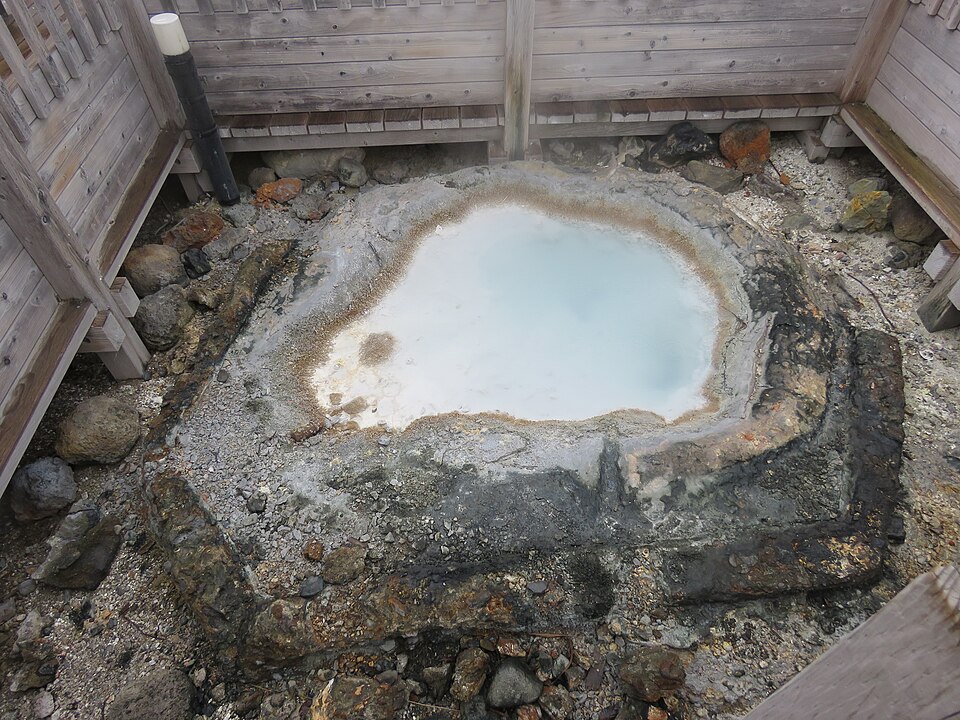
FREEThe valley occupies the center of Noboribetsu Onsen in Hokkaido. Jigokudani translates as Hell Valley. The crater covers 11 hectares and releases roughly 10,000 tonnes of hot spring water each day. Fumaroles vent steam across the floor of the valley, boiling pools bubble at the surface, and the surrounding cliffs carry heavy mineral staining. A walking path winds through the area in about 20 minutes and is open to all visitors at no cost. It ranks among the most striking landscapes accessible on foot anywhere in Japan.
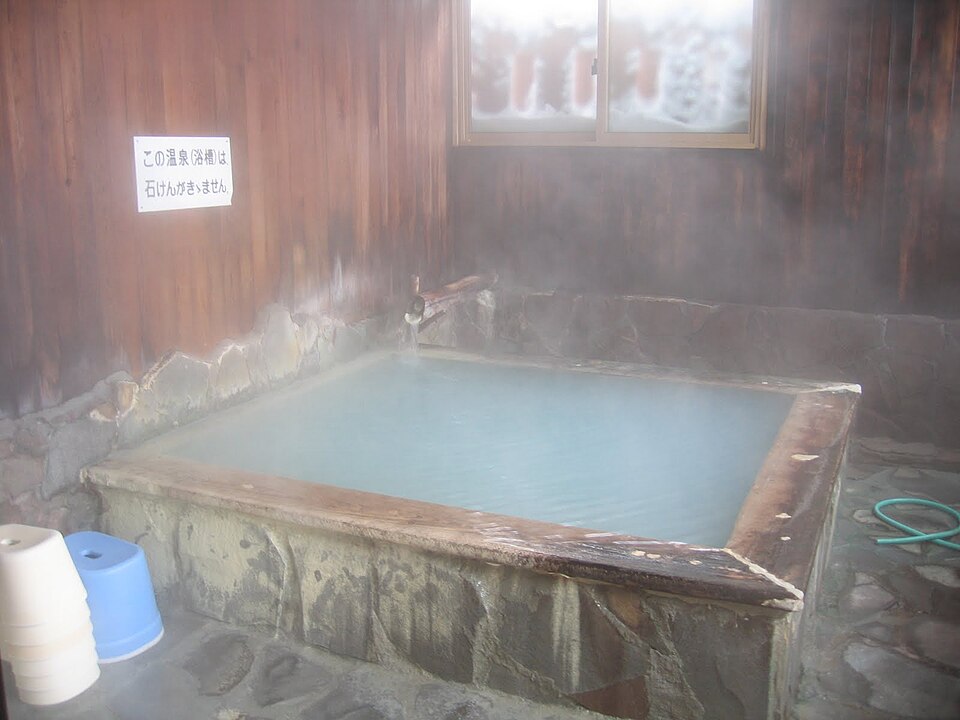
Set deep in the Hakkoda Mountains of Aomori Prefecture, Sukayu Onsen is a historic bathhouse best known for its cavernous mixed-bathing hall, the Sen-nin-buro, which translates as the Bath of a Thousand Bathers. The waters are strongly acidic, the setting is rustic and unhurried, and winter brings extraordinary snowfall to the surrounding mountains.
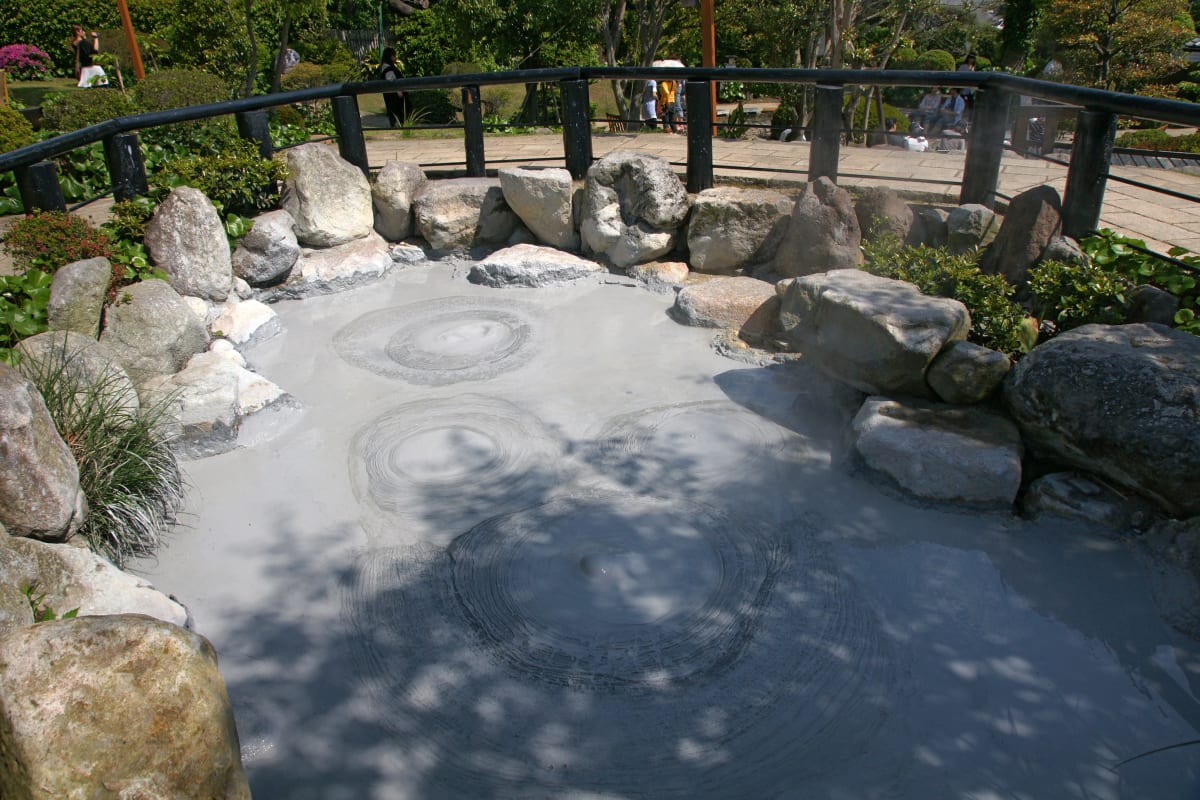
Beppu is the most geothermally active city in Japan, with more than 2,900 hot spring vents located within the city limits and eight distinct thermal spring zones collectively known as the Beppu Hatto. The variety on offer is wide, ranging from grand hotel bathhouses to modest neighborhood public facilities to the celebrated Hells, a collection of brilliantly colored boiling pools scattered across the city. The Hells run far too hot for bathing, but they draw visitors who come to walk among them and take in the spectacle.
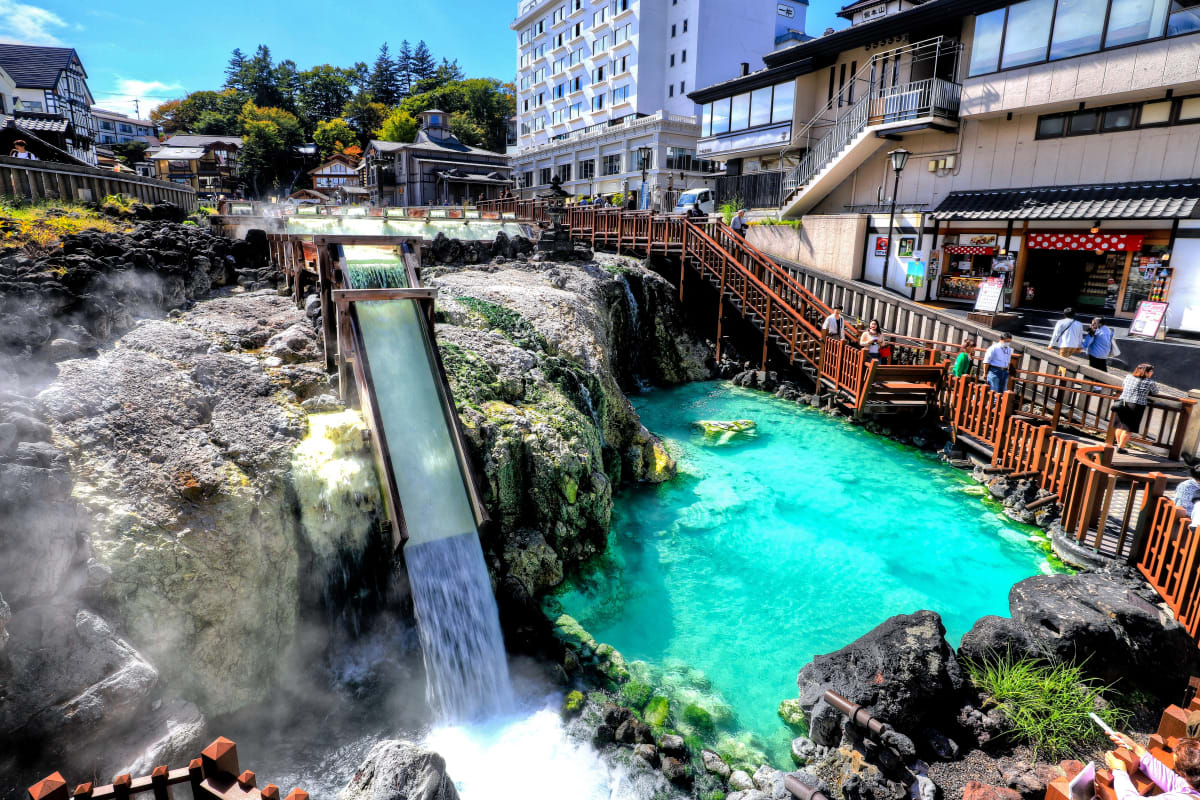 FREE
FREEKusatsu Onsen sits at 1,200 meters in the mountains of Gunma Prefecture and ranks among the most celebrated hot spring towns in Japan. The springs here produce more than 32,000 liters of water per minute, a volume unmatched anywhere else in the country. The water is strongly acidic and sulfurous, and its skin-healing properties have long made it legendary among visitors. Twice each day in the central town square, workers cool the scalding water by pulling long wooden paddles through it in unison while singing traditional songs. This practice is called yumomi.
Amenities
Getting there
From Sapporo, take a JR limited express to Kamikawa Station, about 2.5 hours. Then take the Dohoku Bus for the final 30-minute ride up into the gorge. Direct Dohoku Bus services also run from Asahikawa Station in about 2 hours.
Location & nearby
Sounkyo Onsen, Sounkyo, Kamikawa, Kamikawa District, Hokkaido 078-1701
Make a day of it
Pair your soak with these nearby spots.
Attraction
Jigogudani
0.2km away
Park
Hokkaido Daiyukiyama
0.2km away
Attraction
So Unkyo Taisetsuzanshashinmyu Jiamu
0.3km away
Park
OYukitembo Dai
0.4km away
Park
Sulfur Mountain
0.4km away
Park
Sounkyo Gorge
0.5km away
More springs in Hokkaido
FREEThe valley occupies the center of Noboribetsu Onsen in Hokkaido. Jigokudani translates as Hell Valley. The crater covers 11 hectares and releases roughly 10,000 tonnes of hot spring water each day. Fumaroles vent steam across the floor of the valley, boiling pools bubble at the surface, and the surrounding cliffs carry heavy mineral staining. A walking path winds through the area in about 20 minutes and is open to all visitors at no cost. It ranks among the most striking landscapes accessible on foot anywhere in Japan.
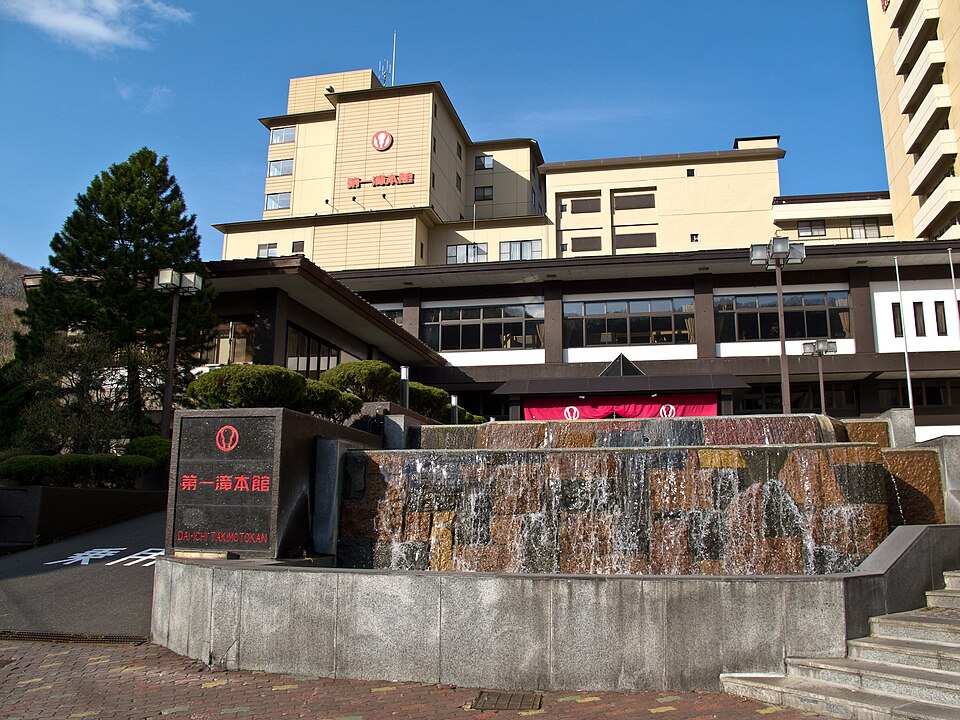
One of Hokkaido's most celebrated bathhouses. Dai-ichi Takimotokan channels water from seven distinct mineral springs into 35 pools spread across multiple floors. Indoor halls open onto outdoor rotenburo overlooking the steam-filled valley below. Day visitors are welcome without an overnight stay.
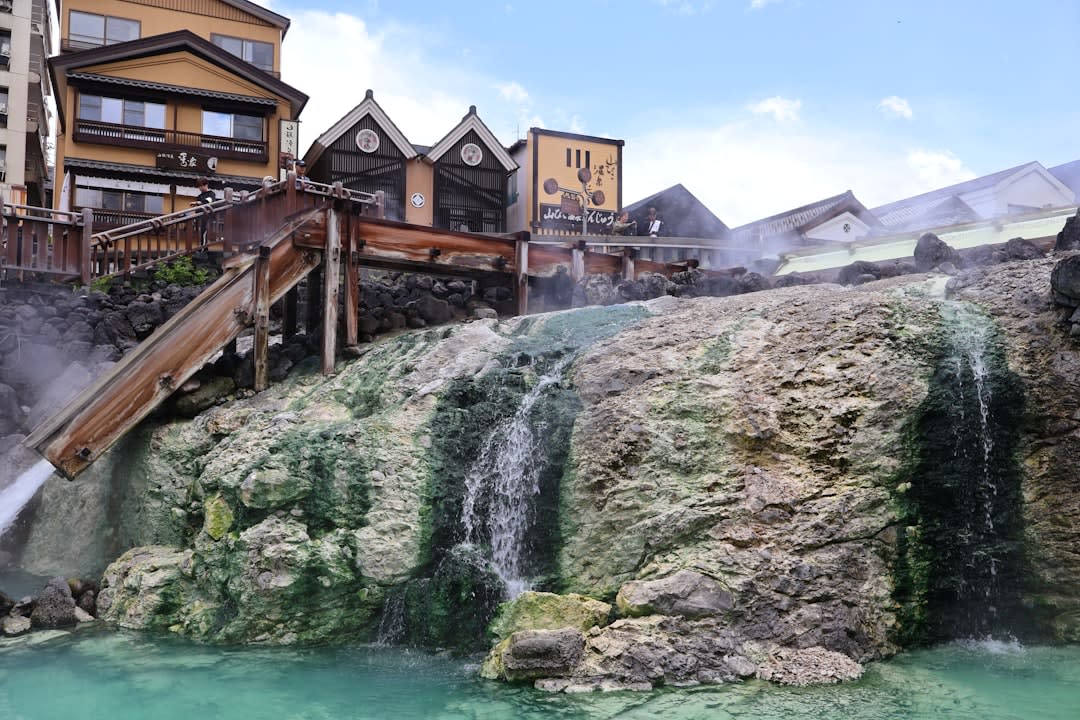
Noboribetsu Onsen is the best-known hot spring resort in Hokkaido, centered on a volcanic crater called Jigokudani, a name that translates to Hell Valley. From the crater floor, nine chemically distinct spring types rise to the surface, each with its own mineral character. Sulfurous steam drifts across the landscape constantly, giving the valley a quality found nowhere else in Japan. The ground here is visibly alive.
Common questions
What is the water temperature at Sounkyo Onsen?▾
The water temperature at Sounkyo Onsen ranges up to 65°C (minimum around 42°C).
Is Sounkyo Onsen free to visit?▾
Sounkyo Onsen charges an entrance fee in JPY.
Is Sounkyo Onsen a public or private bath?▾
Sounkyo Onsen is a public bathing spring.
Are tattoos allowed at Sounkyo Onsen?▾
No, Sounkyo Onsen does not permit visible tattoos.
What is the nearest station to Sounkyo Onsen?▾
The nearest station to Sounkyo Onsen is Sounkyo, about 0km away.