
Onneto Hot Falls
オンネトー湯の滝
4.3 · 177 reviews · via Google
Onneto Hot Falls
acidic · Hokkaido
Hotter than 11% of Japan springs (n=122).
More acidic than 17% of Japan springs (n=121).
Mineral profile
Bar width reflects listing order, not measured concentration.
Suitability
At a glance
Getting there
Remote — over 5km from the nearest station
Crowd level
Quiet
About this spring
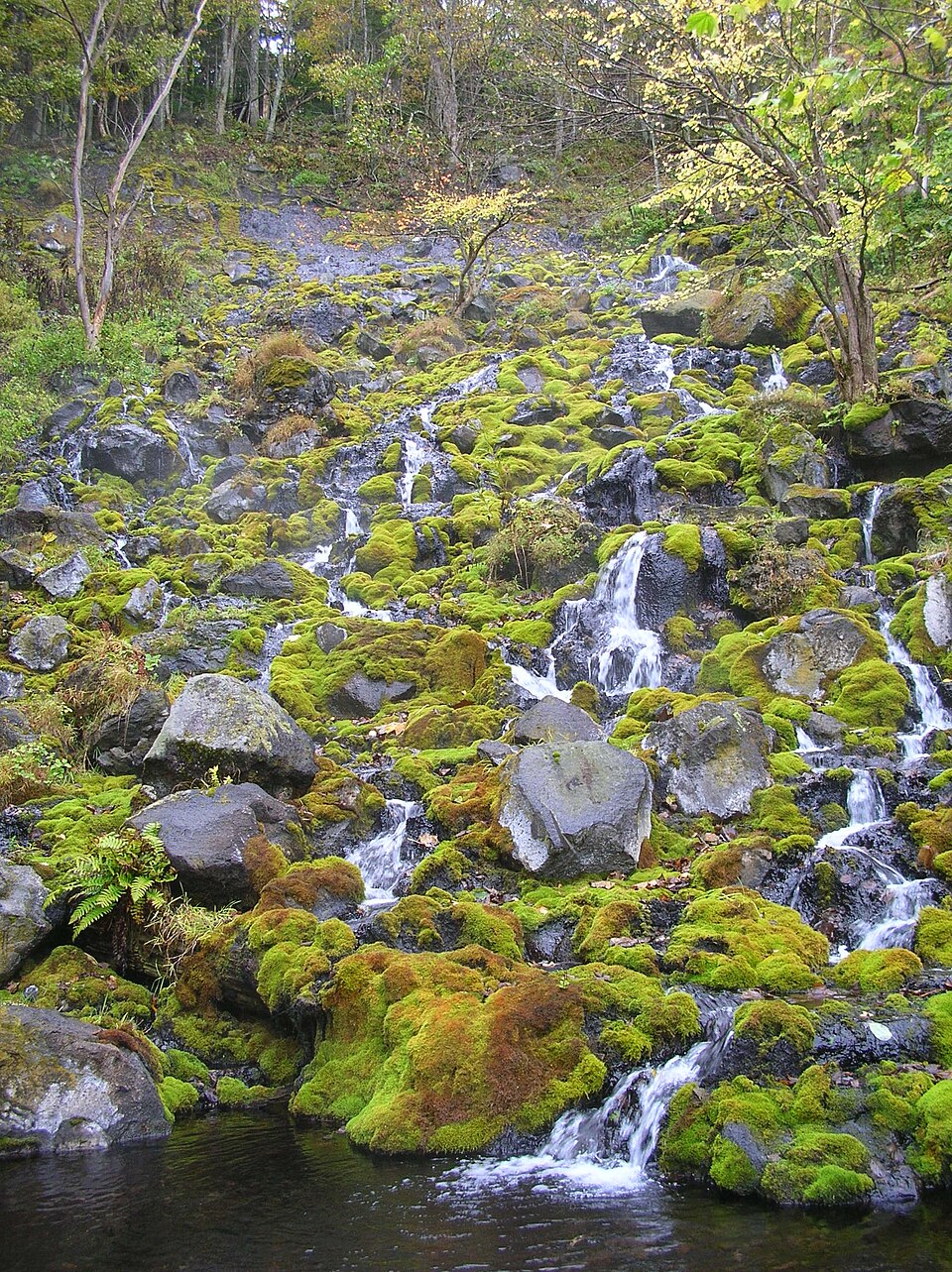
Onneto Hot Falls is a geothermal waterfall located within Akan Mashu National Park in eastern Hokkaido, part of the UNESCO-listed Shiretoko wilderness. This is not a bathing site. Entering the water has been banned since 1989 to protect rare manganese-producing microorganisms that coat the rock surfaces in unusual black mineral deposits. The falls are visited as a scenic viewpoint, reached by a 20-minute walk through the surrounding forest.
Highlights
History
For generations, both the Ainu people and early Japanese settlers made use of the warm pool at the foot of the falls as an open-air bath.
In the late 1980s, researchers found that the black coating on the rocks harbored exceptionally rare manganese-oxidizing microorganisms that were actively generating manganese dioxide at the earth's surface. The process was determined to be unique in the world, and bathing was prohibited in 1989 to protect it. In 2000, the site received formal designation as a Natural Monument of Japan, recognized as the only known location where above-ground manganese dioxide production can be directly observed.
Local guide
Lake Onneto is one of the last wild lakes in Hokkaido. It sits at the foot of Mount Me-Akan in Akan-Mashu National Park and changes color through the day from deep blue to emerald green depending on the light, the angle, and what the volcano is doing below the surface. Most visitors park at the south end of the lake and walk the 1.5 kilometer forest road through Japanese white birch and larch to the hot falls. The walk takes about half an hour, and the path is flat and signed, but the forest presses in close and by the end you have left every trace of infrastructure behind.
Onneto Hot Falls, called Yunotaki locally, is a 30-meter cascade of geothermally heated water that descends over a series of rocky terraces before reaching the river below. The water comes out of the volcanic rock at 43 degrees Celsius, warm enough to produce visible steam when the air temperature drops. The fall itself stains everything it touches. The rocks at the base are coated in a thick black and dark brown mineral deposit that turns out, on closer inspection, to be manganese oxide. The site was designated a Natural Monument of Japan in 2000 specifically because of this deposit. The only place on earth where you can observe manganese oxide forming actively on the surface of exposed rock is here, in this waterfall, at this specific convergence of volcanic heat and mineral chemistry.
Bathing is no longer permitted at Onneto Hot Falls. The designation as a natural monument closed the pools to soaking in order to protect the manganese formation. This changes what the place is, but it does not reduce it. What you get instead is pure spectacle. The water is a faintly yellow-green color in the higher channels, darkening as it picks up minerals from the rock face. The steam rises off the surface even in warm weather, and the sound of the cascade against the near-silence of the national park forest makes the whole scene feel far larger than its actual scale.
The combination of Lake Onneto, the Me-Akan volcano directly above, and the hot falls below creates a layered landscape that almost no other location in Japan can match. If you time the walk for early morning, the lake turns its most intense green, the mist lies low over the water, and the falls are visible from the forest path before you arrive at them, steaming above the tree line like a mark on the hillside.
Mineral chemistry
Water character inferred from mineral type — verify on site.
Acidic springs (pH below 6) have natural exfoliating properties. The low pH gently dissolves dead skin cells, leaving skin noticeably smoother after a soak. Strongly acidic springs (pH below 3) also carry antimicrobial effects potent enough that they have historically been used to treat skin infections.
Limit initial soaks to 3–5 minutes until you know how your skin responds. Rinse thoroughly with fresh water afterwards to neutralise the acid. Not recommended for broken skin, active eczema flare-ups, fresh tattoos, or children under 10.
Similar springs
 FREE
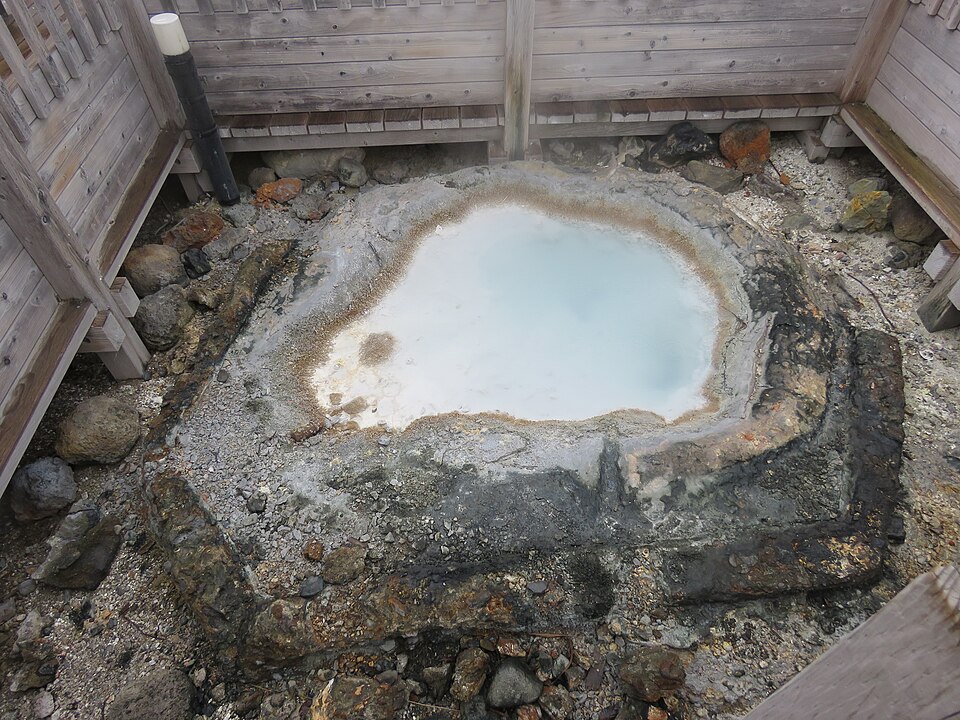
FREEThe valley occupies the center of Noboribetsu Onsen in Hokkaido. Jigokudani translates as Hell Valley. The crater covers 11 hectares and releases roughly 10,000 tonnes of hot spring water each day. Fumaroles vent steam across the floor of the valley, boiling pools bubble at the surface, and the surrounding cliffs carry heavy mineral staining. A walking path winds through the area in about 20 minutes and is open to all visitors at no cost. It ranks among the most striking landscapes accessible on foot anywhere in Japan.
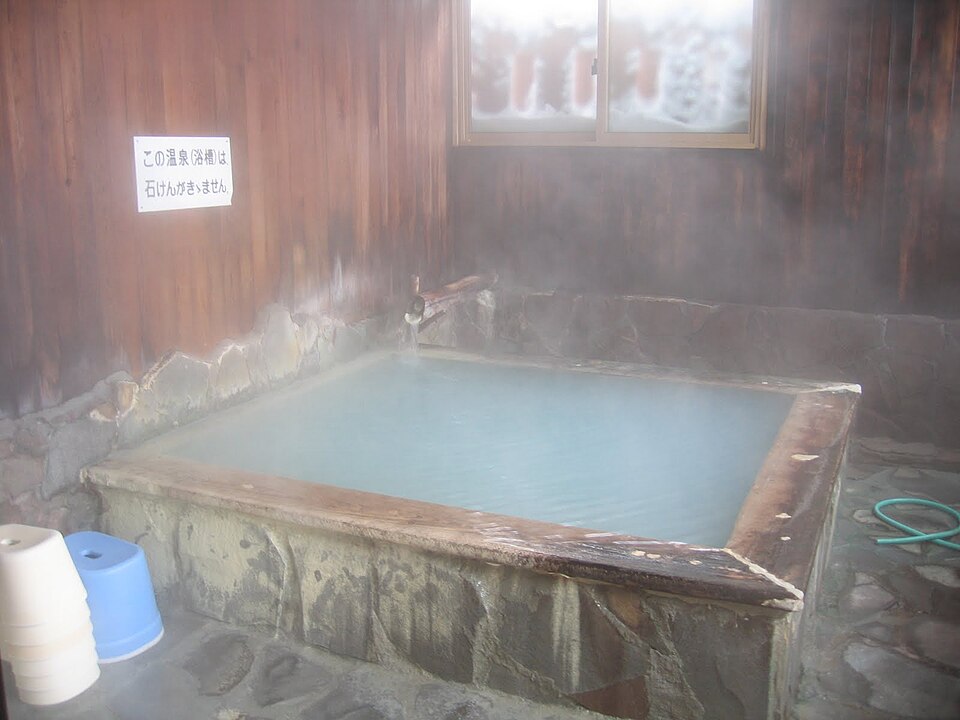
Set deep in the Hakkoda Mountains of Aomori Prefecture, Sukayu Onsen is a historic bathhouse best known for its cavernous mixed-bathing hall, the Sen-nin-buro, which translates as the Bath of a Thousand Bathers. The waters are strongly acidic, the setting is rustic and unhurried, and winter brings extraordinary snowfall to the surrounding mountains.
 FREE
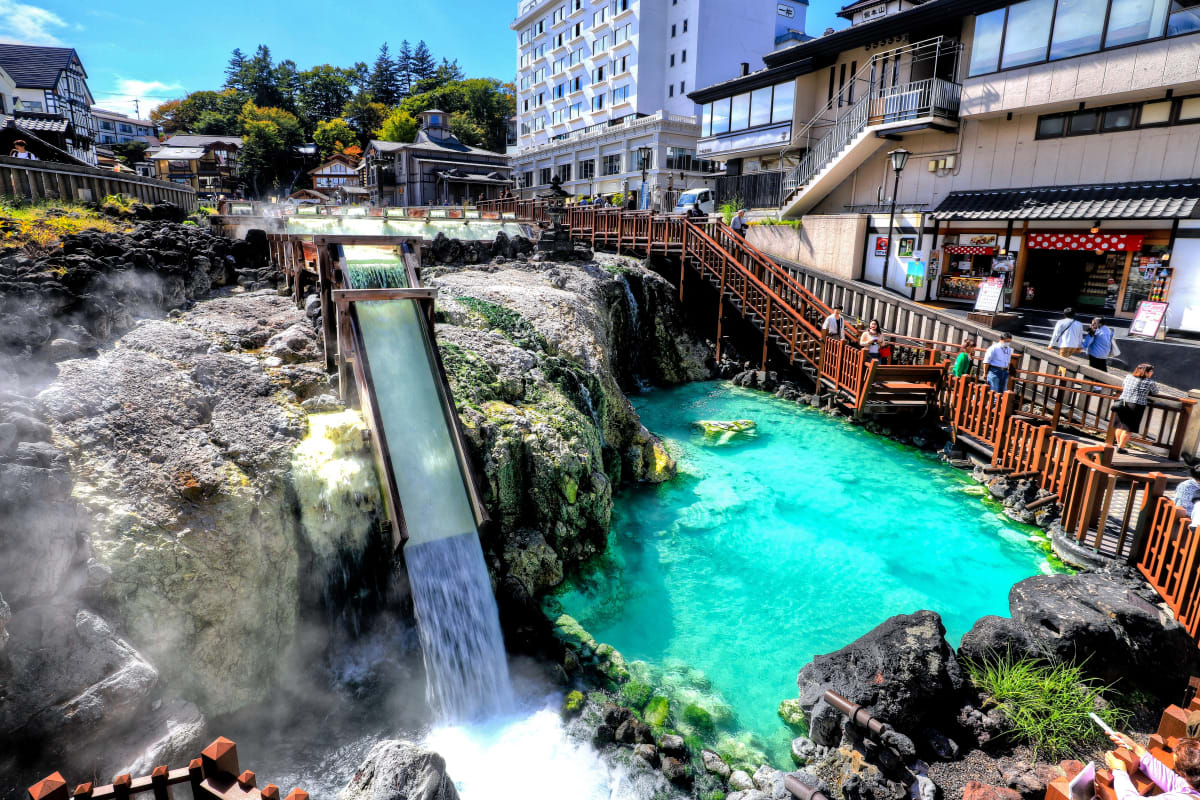
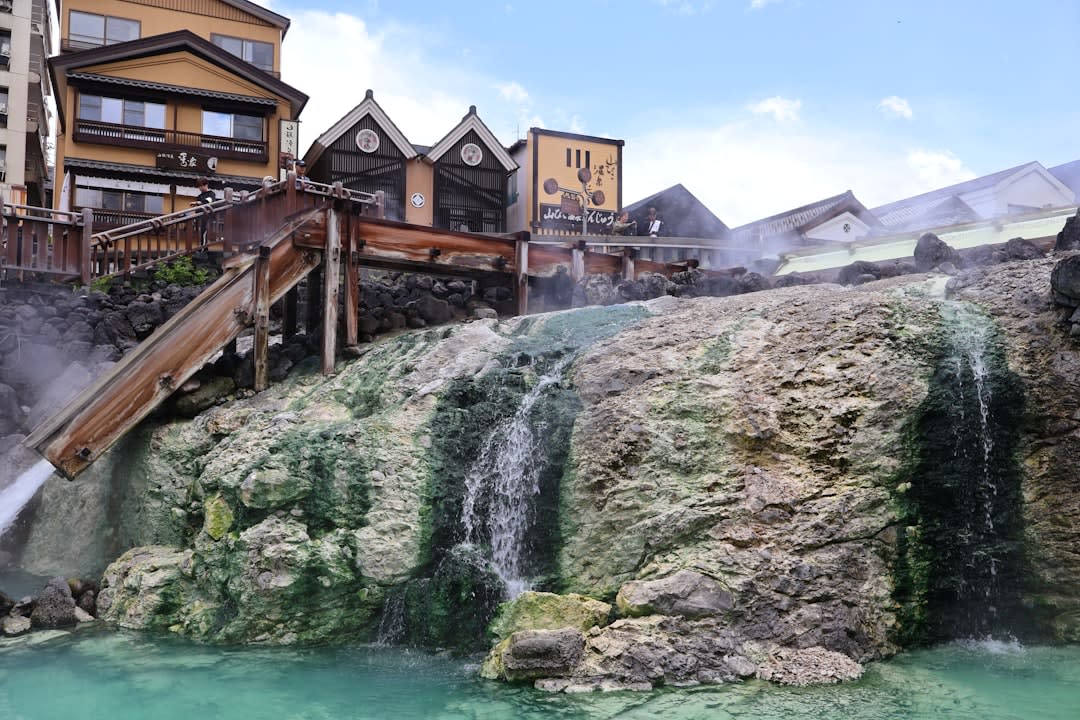
FREEKusatsu Onsen sits at 1,200 meters in the mountains of Gunma Prefecture and ranks among the most celebrated hot spring towns in Japan. The springs here produce more than 32,000 liters of water per minute, a volume unmatched anywhere else in the country. The water is strongly acidic and sulfurous, and its skin-healing properties have long made it legendary among visitors. Twice each day in the central town square, workers cool the scalding water by pulling long wooden paddles through it in unison while singing traditional songs. This practice is called yumomi.
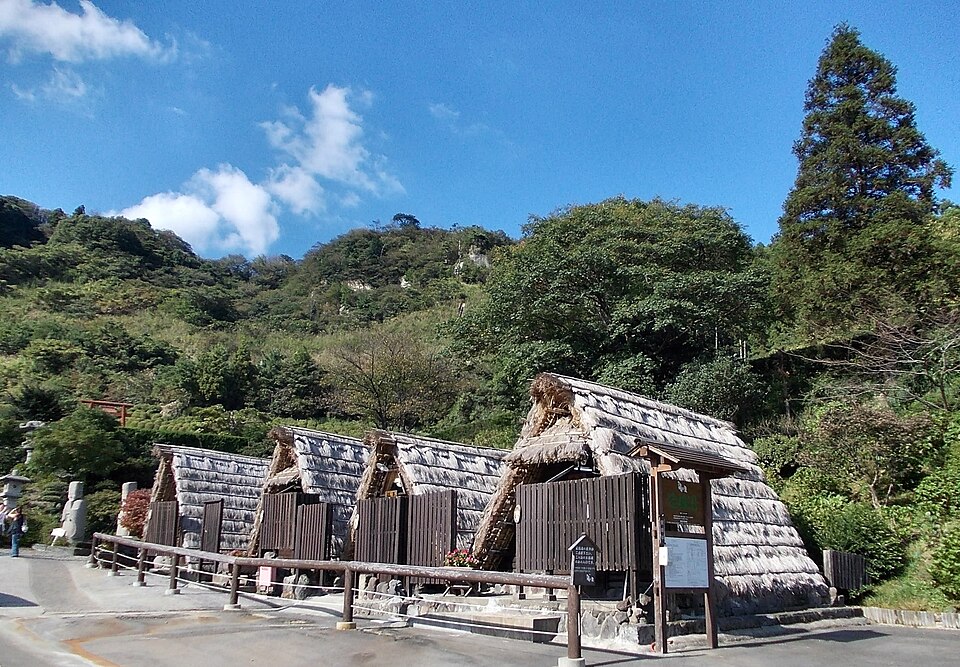
Set on a wooded slope in Beppu's Myoban district, this resort draws visitors for its yunohana, a term meaning hot spring flowers, which are white crystalline deposits that collect on surfaces where steam from the springs cools and condenses. The spring water itself is strongly sulfurous and acidic, rising at high temperatures from one of the eight volcanic source zones that make up Beppu Hatto.
Amenities
Getting there
Drive south along Prefectural Route 949 along the shore of Lake Onneto to the Onneto National Campground parking lot. Walk the flat 1.4-kilometer forest trail for about 20 minutes to reach the base of the falls. There is no public transport to the site. A rental car is required.
Location & nearby
〒089-3963 Hokkaido, Ashoro District, Ashoro, Kamirawan, 阿寒摩周国立公園
Make a day of it
Pair your soak with these nearby spots.
Attraction
Onneto Notaki
0.2km away
Park
Onneto Kohotori
1.7km away
More springs in Hokkaido
FREEThe valley occupies the center of Noboribetsu Onsen in Hokkaido. Jigokudani translates as Hell Valley. The crater covers 11 hectares and releases roughly 10,000 tonnes of hot spring water each day. Fumaroles vent steam across the floor of the valley, boiling pools bubble at the surface, and the surrounding cliffs carry heavy mineral staining. A walking path winds through the area in about 20 minutes and is open to all visitors at no cost. It ranks among the most striking landscapes accessible on foot anywhere in Japan.
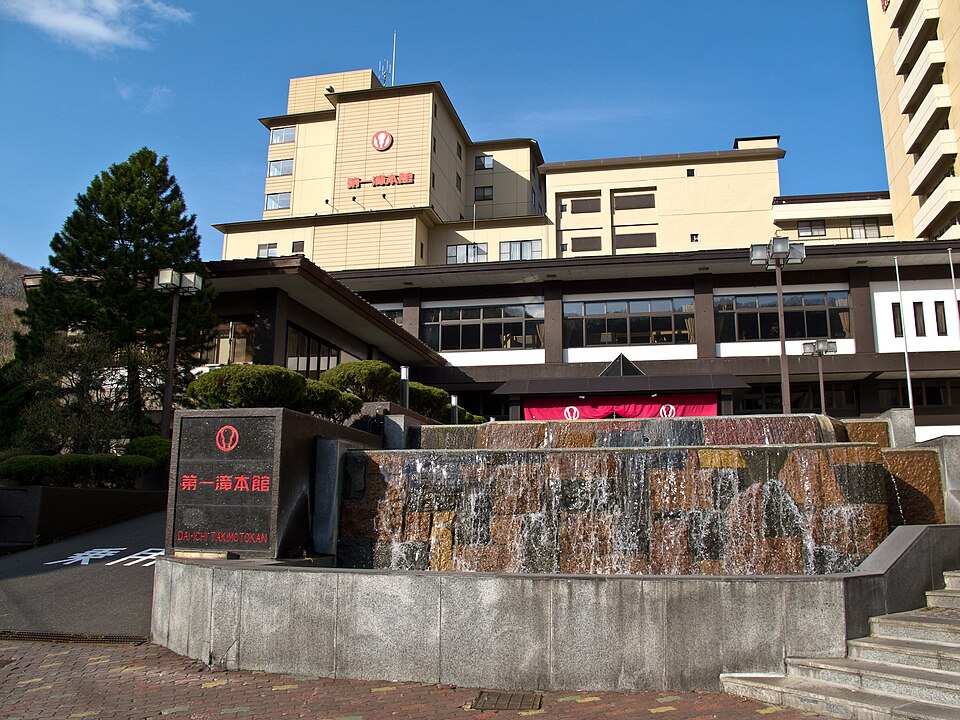
One of Hokkaido's most celebrated bathhouses. Dai-ichi Takimotokan channels water from seven distinct mineral springs into 35 pools spread across multiple floors. Indoor halls open onto outdoor rotenburo overlooking the steam-filled valley below. Day visitors are welcome without an overnight stay.
Noboribetsu Onsen is the best-known hot spring resort in Hokkaido, centered on a volcanic crater called Jigokudani, a name that translates to Hell Valley. From the crater floor, nine chemically distinct spring types rise to the surface, each with its own mineral character. Sulfurous steam drifts across the landscape constantly, giving the valley a quality found nowhere else in Japan. The ground here is visibly alive.
Common questions
What is the water temperature at Onneto Hot Falls?▾
The water temperature at Onneto Hot Falls ranges up to 43°C (minimum around 43°C).
Is Onneto Hot Falls free to visit?▾
Yes, Onneto Hot Falls is free to visit.
Is Onneto Hot Falls a public or private bath?▾
Onneto Hot Falls is a footbath bathing spring.
Are tattoos allowed at Onneto Hot Falls?▾
No, Onneto Hot Falls does not permit visible tattoos.