Toyako Onsen
洞爺湖温泉
Toyako Onsen
sodium-chloride · Hokkaido
Hotter than 24% of Japan springs (n=122).
More acidic than 26% of Japan springs (n=121).
Mineral profile
Bar width reflects listing order, not measured concentration.
Suitability
At a glance
Getting there
Easy — under 1km from a station
Cost
Moderate
About this spring
Toyako Onsen is a hot spring resort town on the shore of Lake Toya in Hokkaido, situated within an ancient volcanic caldera. Active volcano Mount Usu rises above the town and has erupted four times since the resort came into being, in 1944 to 1945, 1977 to 1978, 2000, and once more in recent years. The area affected by the 2000 eruption has been left undisturbed and serves as an open-air volcanic museum. The resort drew global attention in 2008 when it hosted the G8 Summit.
Highlights
History
The caldera that holds Lake Toya was produced by a volcanic eruption approximately 110,000 years ago.
Hot springs reached the surface in 1910 after Mount Usu erupted with enough force to push magma upward and bring previously dormant groundwater to the surface. Seven years on, in 1917, the first inn built around those waters opened along the lakeshore. The resort grew steadily through the postwar decades of rapid economic expansion. Mount Usu erupted twice more, in 1977 to 1978 and again in 2000, reshaping the landscape around the town each time. The terrain disturbed by the 2000 eruption was preserved in place and designated as a geological monument. In 2008, Toyako Onsen hosted the G8 Summit, drawing world leaders to its hotels on the lake.
Local guide
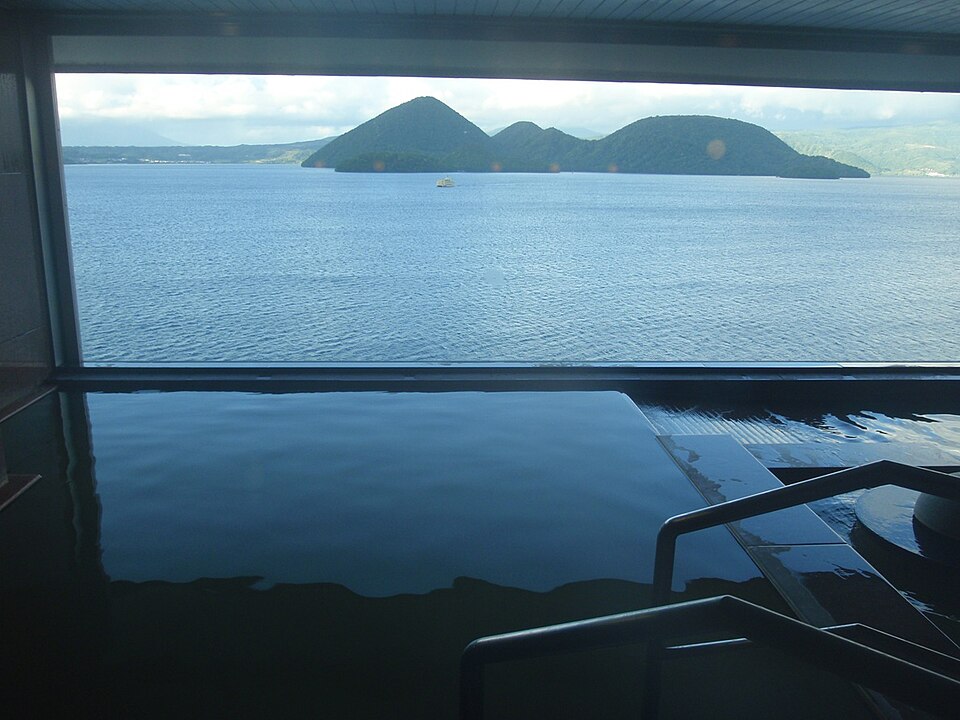
Lake Toya sits in a near-perfect circle in southwest Hokkaido, the flooded remnant of a volcanic caldera that collapsed at some point in the ancient past. From the bus terminal at Toyako Onsen, on the southern shore, the lake fills the entire view. At its center, a wooded island group called Nakajima rises from the calm water, and on the western skyline the dome of Showa Shinzan stands alongside the cone of Mount Usu. Showa Shinzan is worth knowing about: it did not exist before 1943. It pushed up from flat farmland in a series of eruptions that lasted two years, growing to 400 meters while farmers watched from their fields. The geologically new lava dome and the very old caldera lake face each other across a few kilometers of still water, and the tension between those two timescales gives the landscape its specific character.
The hot spring water at Toyako is sodium chloride and calcium chloride, drawn from deep below the lakeshore and distributed to the lakefront hotels. It is clear in the bath, warm and dense with a pleasant salt quality that you feel mainly as body warmth and skin moisture rather than any strong smell or color. The salt content keeps the heat working in your muscles for a long time after you leave the water. Most of the larger hotels position their outdoor baths to look directly across the lake, which means you soak in warm salt water with the view of Nakajima Island and the smoking ridge of Usu beyond it.
The specific event that defines the Toyako experience for most visitors is the Long Run Fireworks, which launch from a boat on the lake every single night from late April through October. Around 450 fireworks go up per evening, starting at 8:45 PM, and the effect from an outdoor bath or the lakefront walkway is completely different from watching fireworks on land. The rockets climb above the lake surface and the reflections double the display in the water below. The sound arrives late, a soft percussion across the lake rather than the sharp crack you get in a stadium, and the smoke drifts slowly over the calm surface afterward. After the last firework, the lake goes dark and quiet almost immediately. The contrast is good.
Toyako town is a straightforward resort, its lakefront strip of hotels built for the view and the water rather than for any particular historical or cultural character. The free footbath on the sculpture walking path operates until 9 PM most evenings, which makes it possible to end a day of hiking the Usu volcano trails or walking the lakeshore without paying for a full bathhouse entry. The G8 Summit was held here in 2008, which the locals mention occasionally and which explains some of the road infrastructure. What matters more than that, on any given quiet morning before the tour buses arrive, is how completely still the lake is and how clearly the island and the mountain reflect in it.
Mineral chemistry
Water character inferred from mineral type — verify on site.
Sodium chloride springs, essentially natural saltwater baths, are celebrated for their warming and moisturising effects. The salt forms a thin film on the skin that slows moisture evaporation, keeping skin hydrated longer than a freshwater bath.
Those with high blood pressure or heart conditions should consult a doctor before bathing, as the warming effect increases circulation. Avoid immersing open wounds.
Calcium chloride springs share the heat-retaining property of sodium chloride springs but with a stronger warming effect. Prized for muscle and joint relief.
The strong warming effect means those with cardiovascular conditions, high blood pressure, or pregnancy should limit soak duration and consult a doctor if in doubt.
Similar springs
 FREE
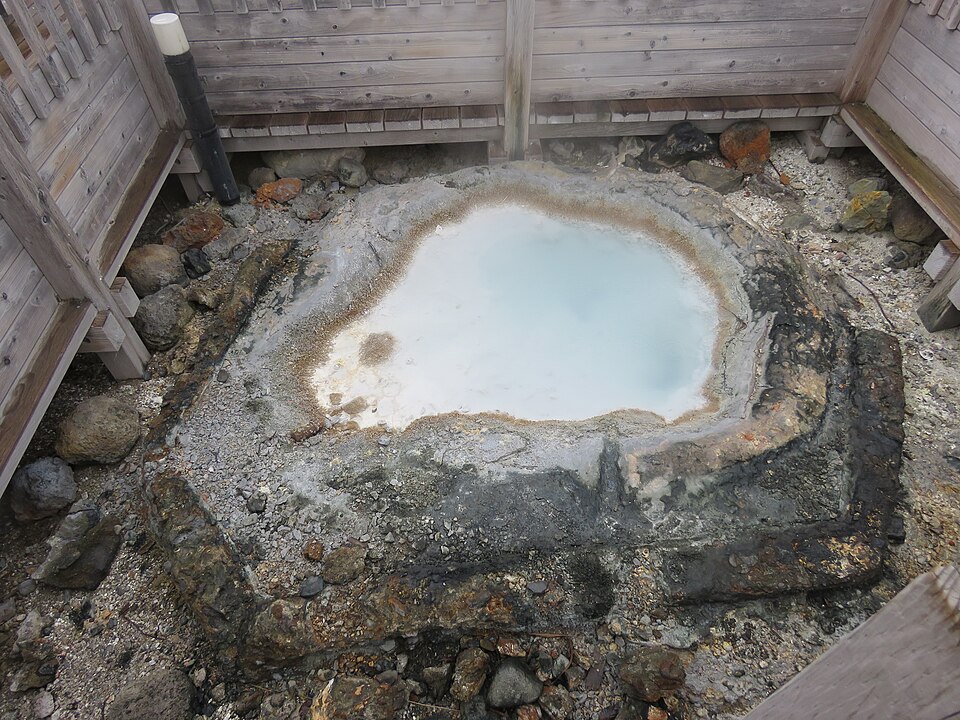
FREEThe valley occupies the center of Noboribetsu Onsen in Hokkaido. Jigokudani translates as Hell Valley. The crater covers 11 hectares and releases roughly 10,000 tonnes of hot spring water each day. Fumaroles vent steam across the floor of the valley, boiling pools bubble at the surface, and the surrounding cliffs carry heavy mineral staining. A walking path winds through the area in about 20 minutes and is open to all visitors at no cost. It ranks among the most striking landscapes accessible on foot anywhere in Japan.
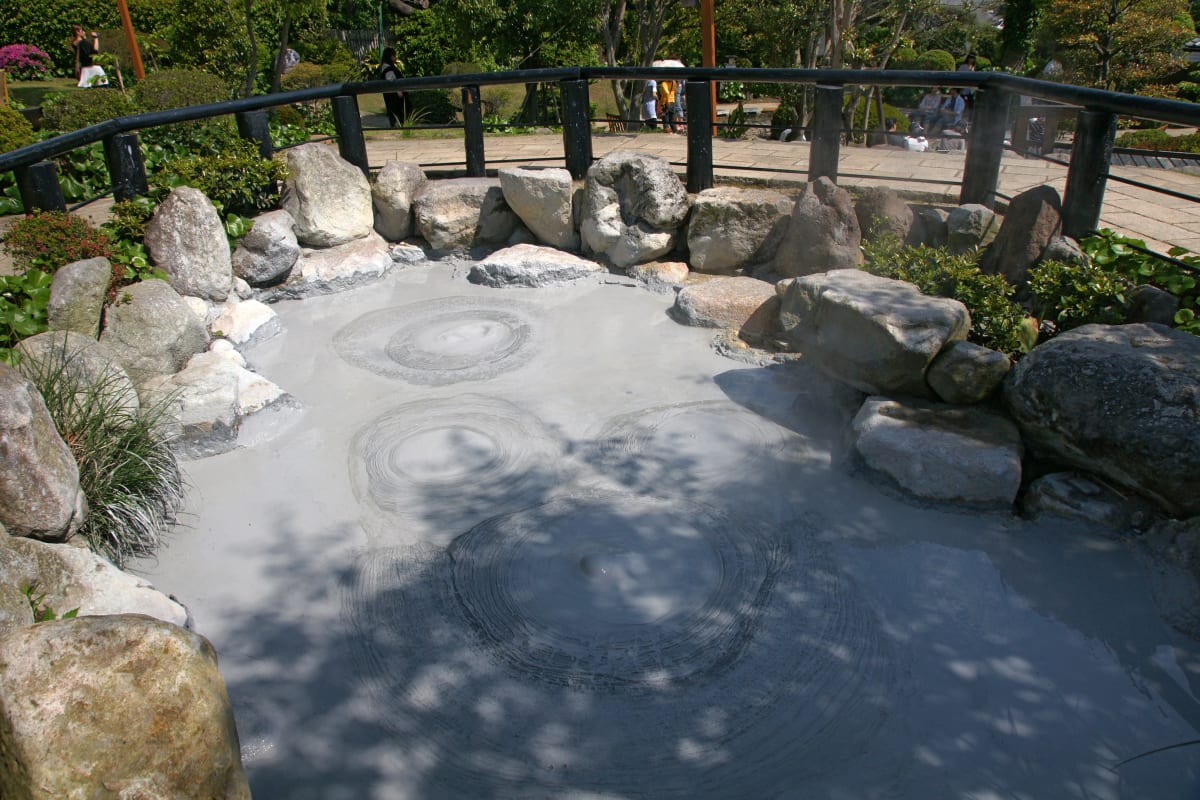
Beppu is the most geothermally active city in Japan, with more than 2,900 hot spring vents located within the city limits and eight distinct thermal spring zones collectively known as the Beppu Hatto. The variety on offer is wide, ranging from grand hotel bathhouses to modest neighborhood public facilities to the celebrated Hells, a collection of brilliantly colored boiling pools scattered across the city. The Hells run far too hot for bathing, but they draw visitors who come to walk among them and take in the spectacle.
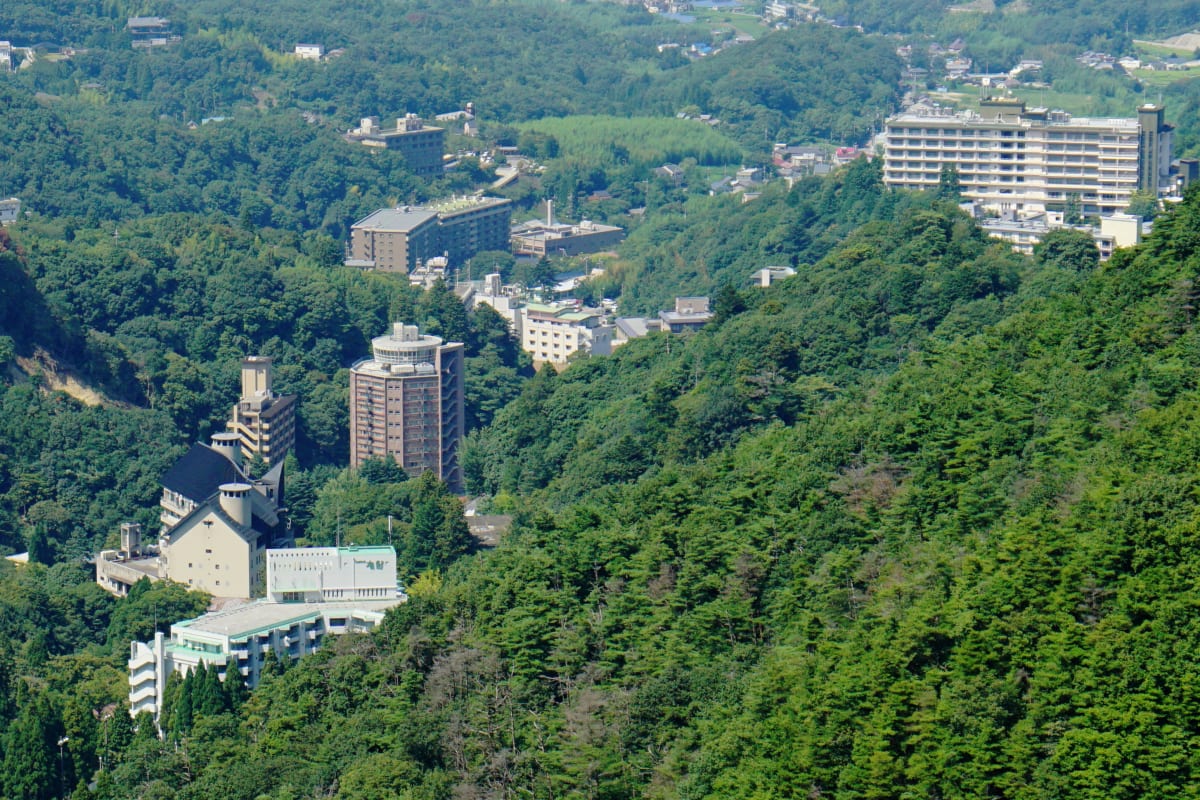
Arima Onsen sits in the hills above Kobe, close to Mount Rokko, and ranks among the oldest hot spring towns in Japan. The town draws visitors for two entirely different spring types that coexist within its compact footprint. Kinsen is the iron-rich golden water that stains surrounding rocks a rusty orange, while ginsen runs clear and carries both carbonation and mild radioactivity. Few other onsen destinations in Japan bring together two such distinct water types within a single small town.
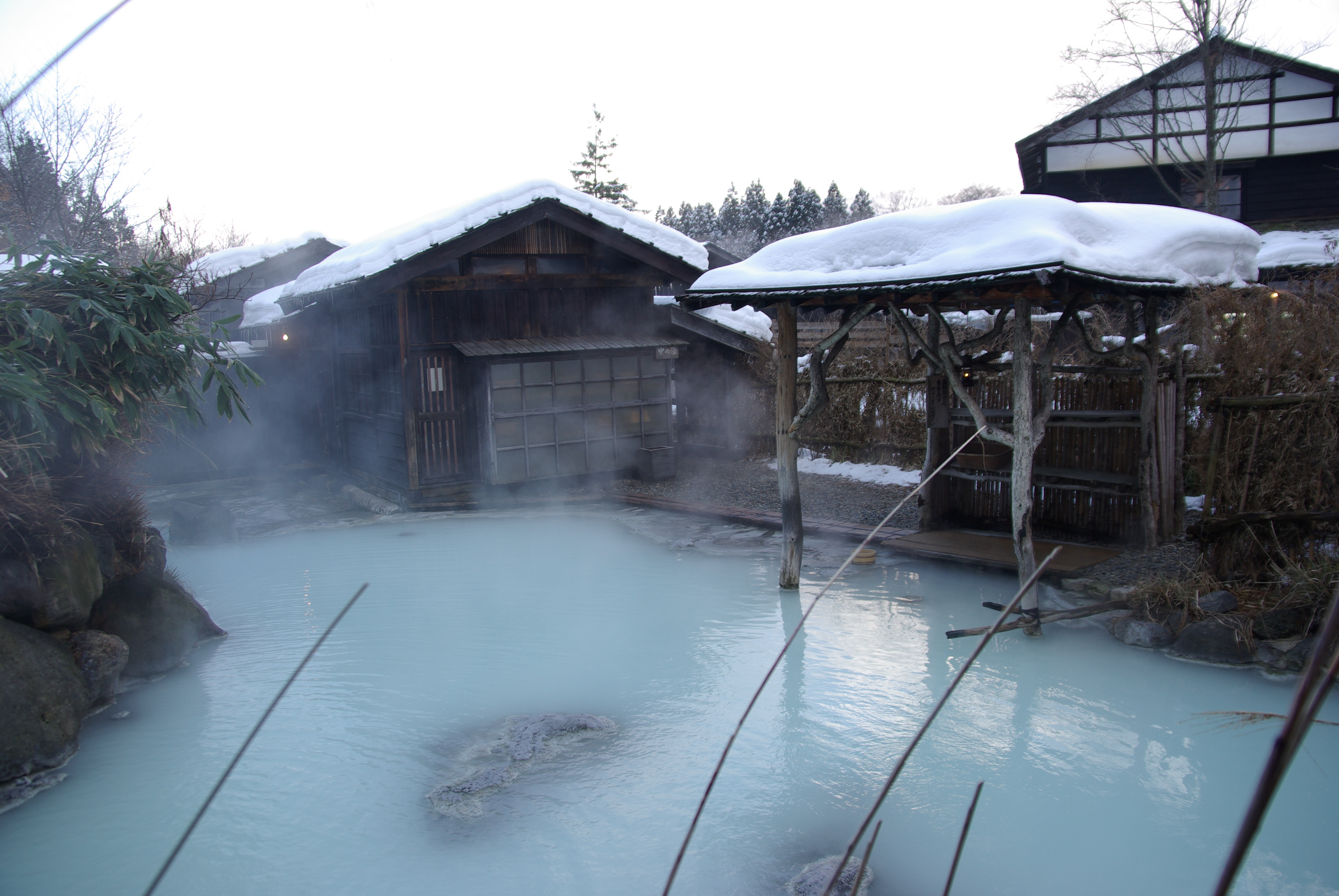
Tsuru-no-yu is the oldest of the seven inns at Nyuto, set deep in a beech forest in Akita Prefecture. The main draw is a large outdoor mixed-bathing pool fed by opaque, milky-white sulfurous water. Many regard it as the most beautiful onsen setting in Japan. People come here to put some distance between themselves and the rest of the world for a while.
Amenities
Getting there
From Sapporo, take the JR limited express Hokuto toward Hakodate and alight at Toya Station, about 1 hour 40 minutes. Then take the Donan Bus to Toyako Onsen Bus Terminal, about 15-20 minutes. By car from New Chitose Airport, take the Doo Expressway to the Toyako IC, about 75 minutes.
Location & nearby
Toyako Onsen, Hokkaido
Make a day of it
Pair your soak with these nearby spots.
Attraction
HokkaidōTōYakosamittokinenkan
0.0km away
Attraction
Lake Toya Hot spring, Hokkaido, Japan
0.0km away
Attraction
AshiyupokettopāKu
0.2km away
Attraction
KompirakakōSaigaiikōSansakuro
0.2km away
Attraction
TōYakochōRitsukazankagakukan
0.2km away
Attraction
TōYakomachiyakubatōYakobijitāSentā・Kazankagakukan
0.2km away
More springs in Hokkaido
FREEThe valley occupies the center of Noboribetsu Onsen in Hokkaido. Jigokudani translates as Hell Valley. The crater covers 11 hectares and releases roughly 10,000 tonnes of hot spring water each day. Fumaroles vent steam across the floor of the valley, boiling pools bubble at the surface, and the surrounding cliffs carry heavy mineral staining. A walking path winds through the area in about 20 minutes and is open to all visitors at no cost. It ranks among the most striking landscapes accessible on foot anywhere in Japan.
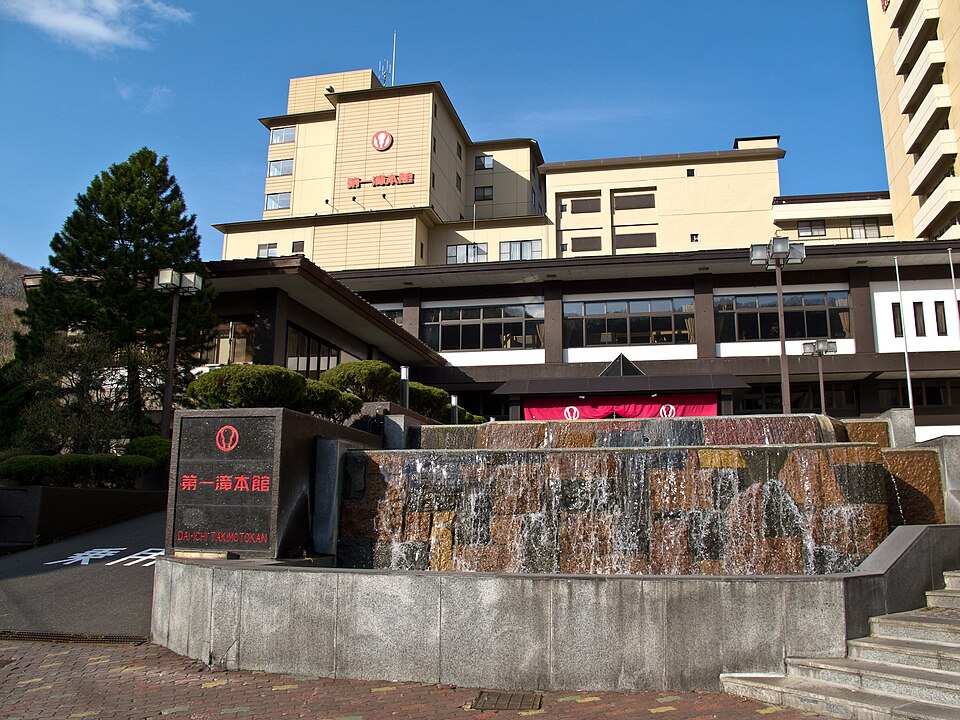
One of Hokkaido's most celebrated bathhouses. Dai-ichi Takimotokan channels water from seven distinct mineral springs into 35 pools spread across multiple floors. Indoor halls open onto outdoor rotenburo overlooking the steam-filled valley below. Day visitors are welcome without an overnight stay.
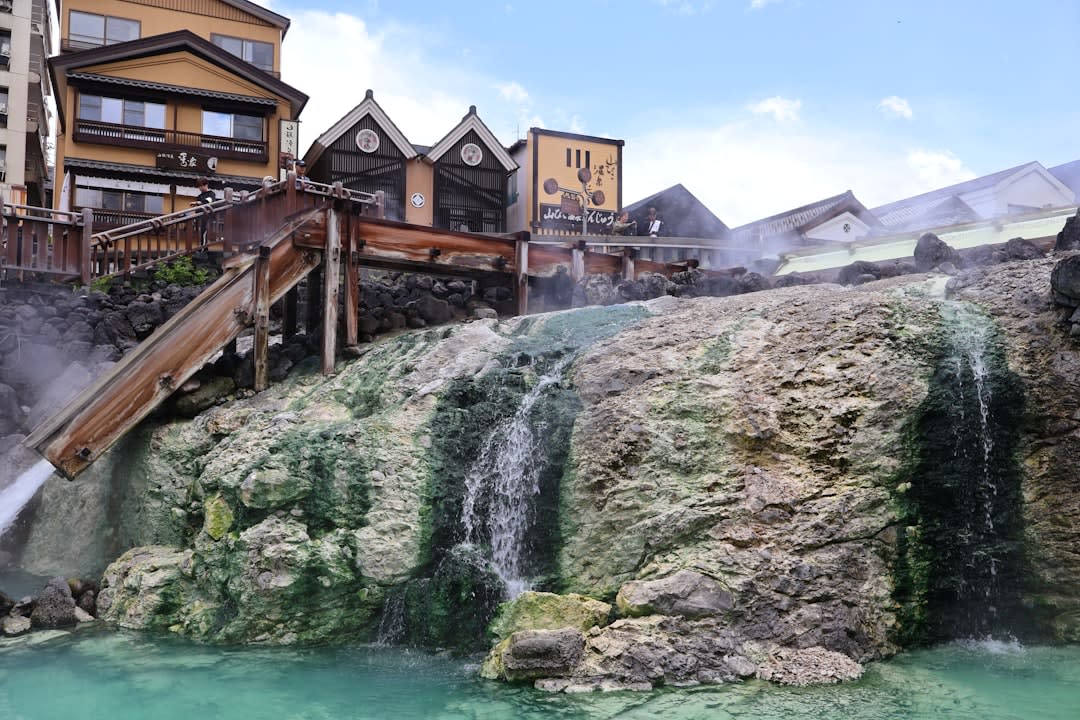
Noboribetsu Onsen is the best-known hot spring resort in Hokkaido, centered on a volcanic crater called Jigokudani, a name that translates to Hell Valley. From the crater floor, nine chemically distinct spring types rise to the surface, each with its own mineral character. Sulfurous steam drifts across the landscape constantly, giving the valley a quality found nowhere else in Japan. The ground here is visibly alive.
Common questions
What is the water temperature at Toyako Onsen?▾
The water temperature at Toyako Onsen ranges up to 50°C (minimum around 50°C).
Is Toyako Onsen free to visit?▾
Toyako Onsen charges an entrance fee in JPY.
Is Toyako Onsen a public or private bath?▾
Toyako Onsen is a public bathing spring.
Are tattoos allowed at Toyako Onsen?▾
No, Toyako Onsen does not permit visible tattoos.
What is the nearest station to Toyako Onsen?▾
The nearest station to Toyako Onsen is Toyako Onsen Bus Terminal, about 0km away.