Jozankei Onsen
定山渓温泉
Jozankei Onsen
sodium-chloride · Hokkaido
Hotter than 73% of Japan springs (n=122).
More acidic than 41% of Japan springs (n=121).
Mineral profile
Bar width reflects listing order, not measured concentration.
Suitability
At a glance
Getting there
Easy — under 1km from a station
Cost
High
About this spring
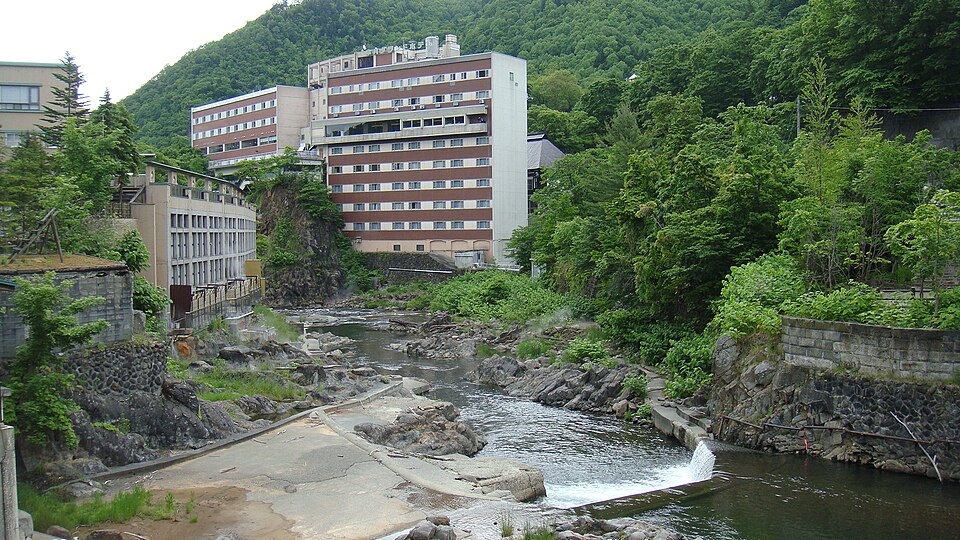
Jozankei Onsen sits in a wooded hot spring valley roughly 30 kilometers south of Sapporo, earning a reputation as the city's oasis. The valley runs through the steep gorge of the Toyohira River, and a concentration of large resort hotels alongside vivid autumn foliage draw the crowds that place this among Hokkaido's most frequented onsen destinations. The spring water is sodium chloride in composition, running clear with a warming effect on the body.
Highlights
History
The resort takes its name from one person.
In 1866, Ainu guides led the Buddhist ascetic Miizumi Jozan into the Toyohira valley, where hot springs rose naturally from the forested gorge. Jozan cut through the trees, erected bridges, and set up a modest bathhouse along the riverbank for those seeking relief. The surrounding district was given the name Jozankei, meaning the ravine of Jozan, as a tribute to his efforts. The Jozankei-Shiroishi Railway opened in 1918, linking the valley directly to Sapporo's urban rail network and marking the start of the resort's shift from an isolated retreat to a widely visited destination.
Local guide
The Jotetsu Bus from Sapporo's Makomanai Station takes fifty minutes southwest into the mountains of Shikotsu-Toya National Park, following the Toyohira River as the road climbs and the city falls away behind you. By the time the bus stops at Jozankei Onsen, you are at three hundred meters elevation and the river is running loudly in a gorge twenty meters below the road. This is Sapporo's nearest mountain escape, close enough that locals ride up for dinner and a soak and take the last bus back. The proximity means the town is genuinely used, not a destination that only exists for tourists.
The hot spring here is sodium-chloride type, flowing between 60 and 80 degrees from the source, neutral at pH 7.2. In the bath it sits clear, warming the skin quickly and holding heat in a way that makes the Hokkaido cold feel manageable the moment you step outside afterward. The salinity is gentle enough that there is no taste unless you consciously put your hand to your lips, and on the skin it leaves a barely perceptible warmth that persists for the walk back to the inn. Most facilities here offer outdoor baths with views of the Toyohira River gorge, and the specific pleasure is listening to the river in the darkness while the steam rises around you.
In October, Jozankei becomes one of Hokkaido's most photographed autumn foliage locations. The altitude and the cold river gorge produce a temperature differential that drives intense color change earlier and more dramatically than the flatlands around Sapporo. The maples go red and orange around the Futami Tsuribashi suspension bridge, a bright red footbridge spanning the Toyohira, and on a clear October morning when you are standing on that bridge watching the colored leaves fall into fast-moving glacial water, you understand why the town fills up. The combination of foliage and steam above the river is something Hokkaido does in a way that is genuinely its own.
The town was developed as a hot spring destination in the early twentieth century, and the inn tradition here runs toward proper ryokan with kaiseki meals featuring Hokkaido dairy and seafood alongside the mountain vegetables. Staying overnight is worth it for the early morning bath, when the other guests are still sleeping and the river is loud and the steam catches the low light.
Mineral chemistry
Water character inferred from mineral type — verify on site.
Sodium chloride springs, essentially natural saltwater baths, are celebrated for their warming and moisturising effects. The salt forms a thin film on the skin that slows moisture evaporation, keeping skin hydrated longer than a freshwater bath.
Those with high blood pressure or heart conditions should consult a doctor before bathing, as the warming effect increases circulation. Avoid immersing open wounds.
Similar springs
 FREE
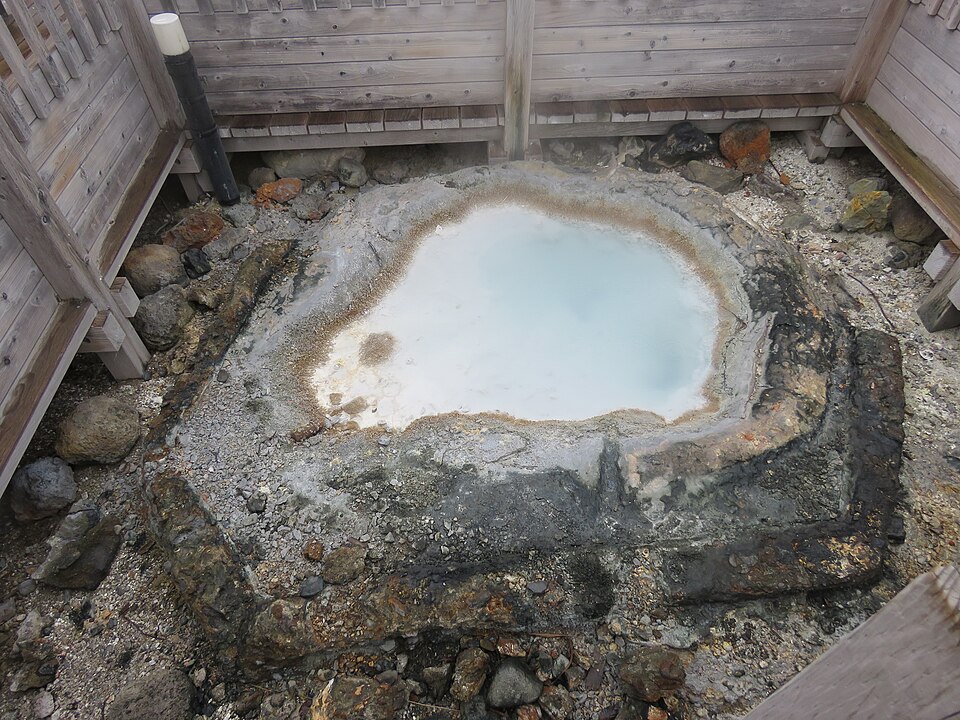
FREEThe valley occupies the center of Noboribetsu Onsen in Hokkaido. Jigokudani translates as Hell Valley. The crater covers 11 hectares and releases roughly 10,000 tonnes of hot spring water each day. Fumaroles vent steam across the floor of the valley, boiling pools bubble at the surface, and the surrounding cliffs carry heavy mineral staining. A walking path winds through the area in about 20 minutes and is open to all visitors at no cost. It ranks among the most striking landscapes accessible on foot anywhere in Japan.
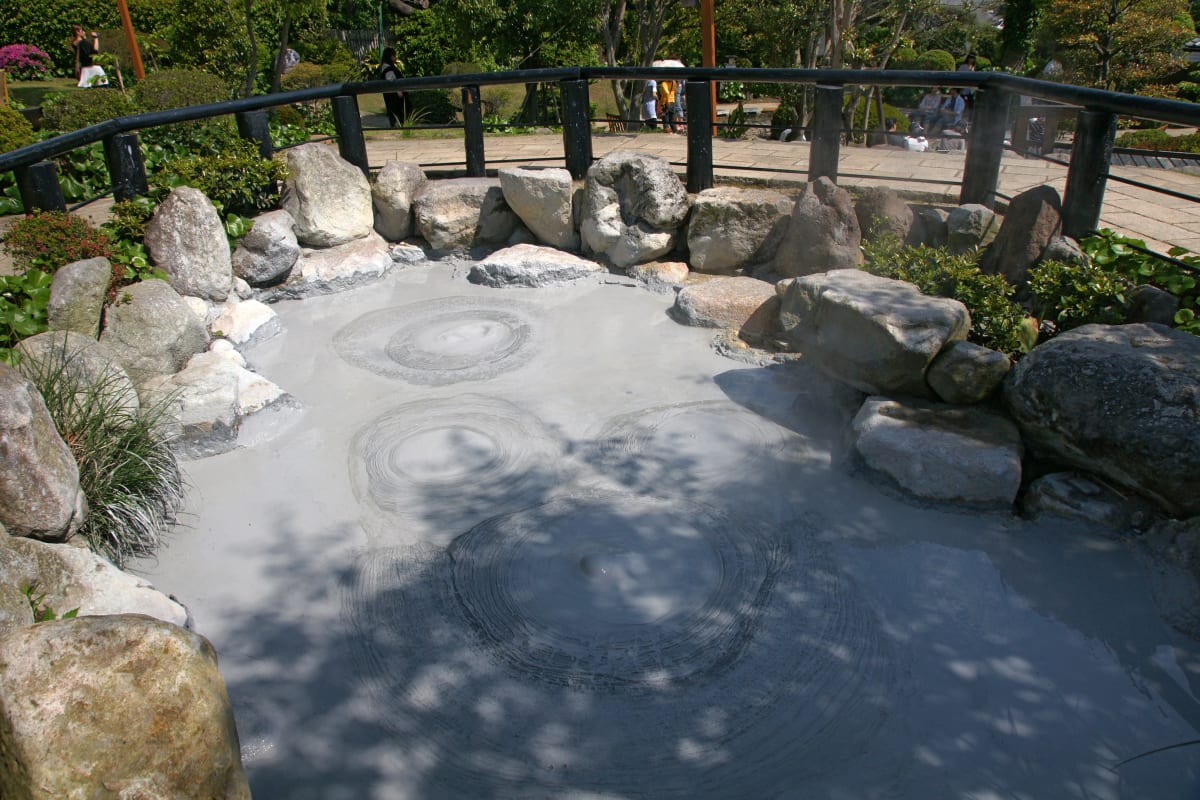
Beppu is the most geothermally active city in Japan, with more than 2,900 hot spring vents located within the city limits and eight distinct thermal spring zones collectively known as the Beppu Hatto. The variety on offer is wide, ranging from grand hotel bathhouses to modest neighborhood public facilities to the celebrated Hells, a collection of brilliantly colored boiling pools scattered across the city. The Hells run far too hot for bathing, but they draw visitors who come to walk among them and take in the spectacle.
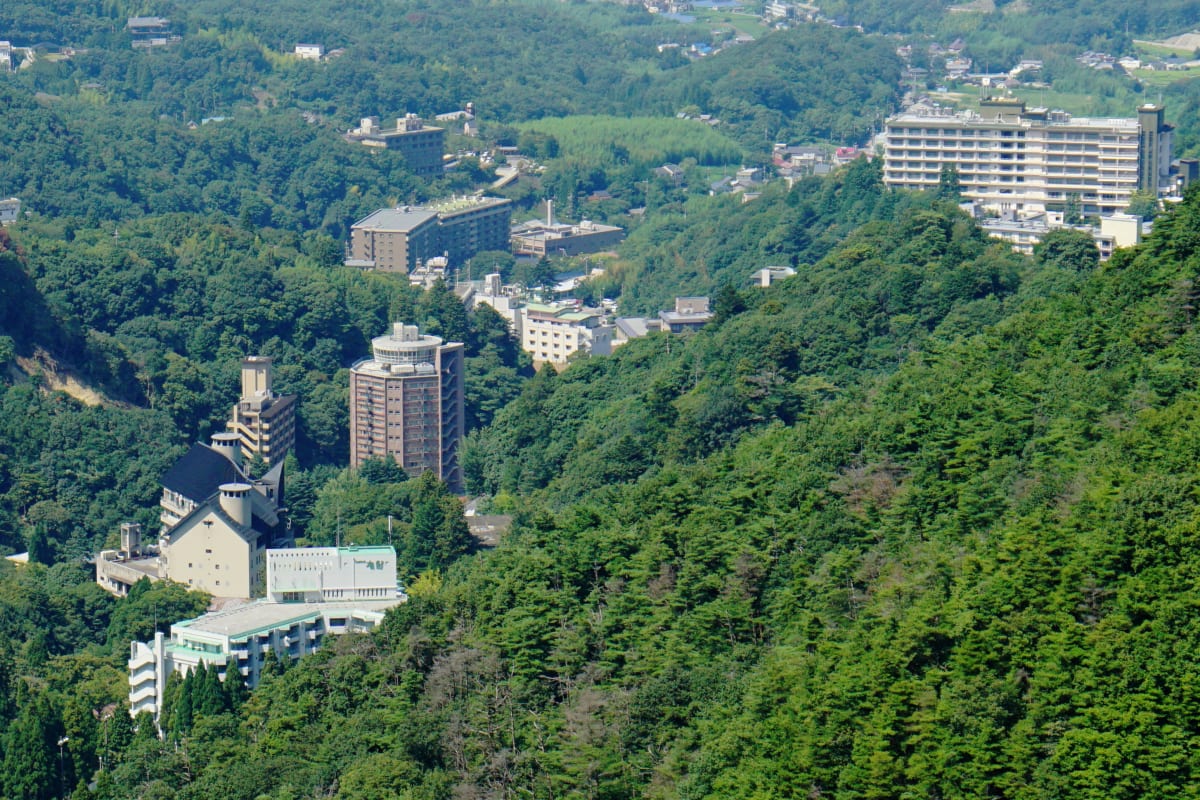
Arima Onsen sits in the hills above Kobe, close to Mount Rokko, and ranks among the oldest hot spring towns in Japan. The town draws visitors for two entirely different spring types that coexist within its compact footprint. Kinsen is the iron-rich golden water that stains surrounding rocks a rusty orange, while ginsen runs clear and carries both carbonation and mild radioactivity. Few other onsen destinations in Japan bring together two such distinct water types within a single small town.
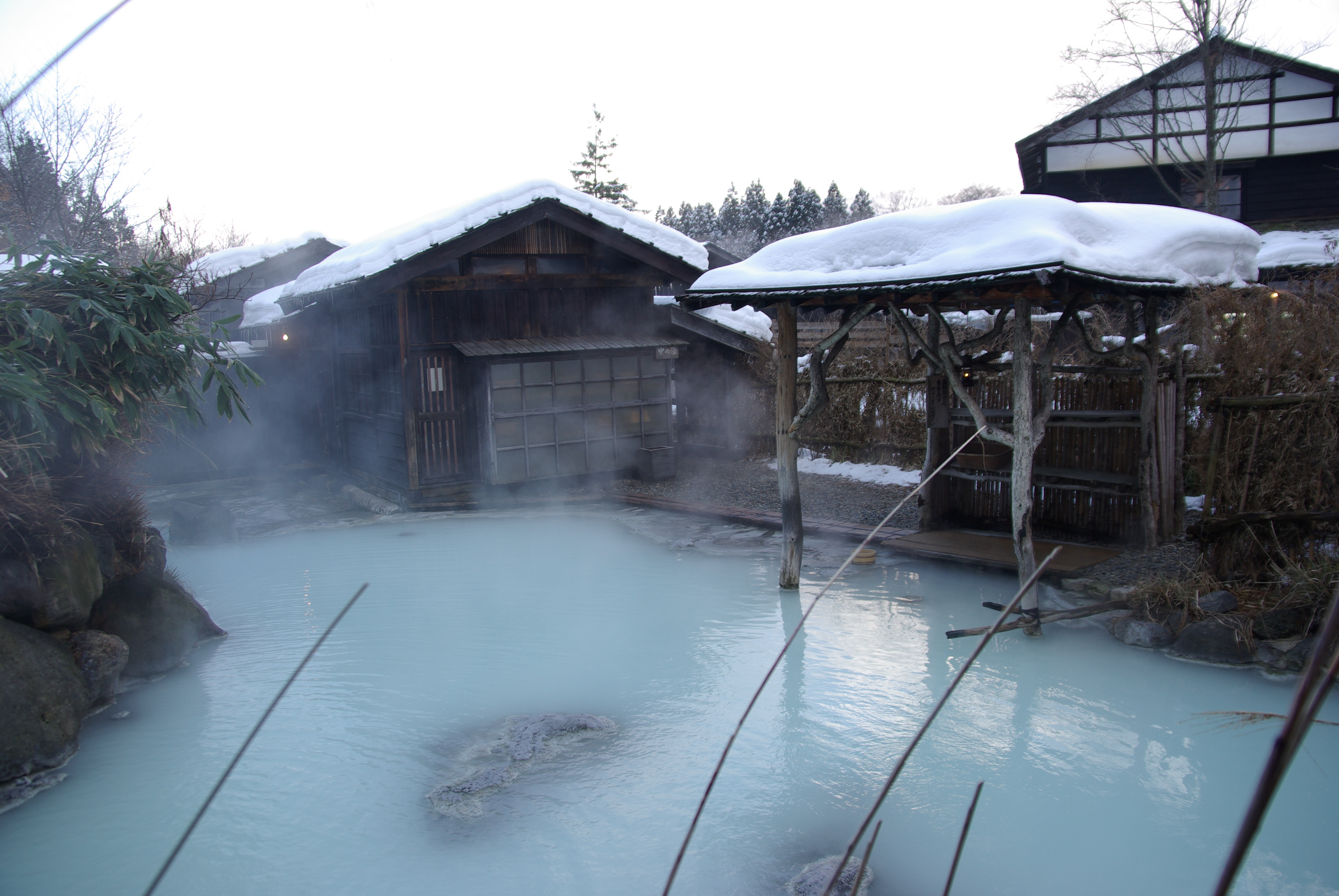
Tsuru-no-yu is the oldest of the seven inns at Nyuto, set deep in a beech forest in Akita Prefecture. The main draw is a large outdoor mixed-bathing pool fed by opaque, milky-white sulfurous water. Many regard it as the most beautiful onsen setting in Japan. People come here to put some distance between themselves and the rest of the world for a while.
Amenities
Getting there
From Sapporo Station Bus Terminal, take the Jotetsu Bus (route 7 or 8) directly to Jozankei Onsen. The journey takes about 75 minutes. The faster KappaLiner express takes around 60 minutes with advance reservation. By car from central Sapporo, head south on National Route 230, about 50 minutes.
Location & nearby
Jozankei Onsen, Minami Ward, Sapporo, Hokkaido
Make a day of it
Pair your soak with these nearby spots.
Attraction
Futamitsuribashi
0.0km away
Attraction
AshinofureaitarōNoyu
0.2km away
Attraction
Kappakazokunogankakeshuyu
0.2km away
Attraction
JOZANKEI ONSEN
0.2km away
Attraction
Morisupa
0.2km away
Park
MizunoōKoku"RagūN"
0.3km away
More springs in Hokkaido
FREEThe valley occupies the center of Noboribetsu Onsen in Hokkaido. Jigokudani translates as Hell Valley. The crater covers 11 hectares and releases roughly 10,000 tonnes of hot spring water each day. Fumaroles vent steam across the floor of the valley, boiling pools bubble at the surface, and the surrounding cliffs carry heavy mineral staining. A walking path winds through the area in about 20 minutes and is open to all visitors at no cost. It ranks among the most striking landscapes accessible on foot anywhere in Japan.
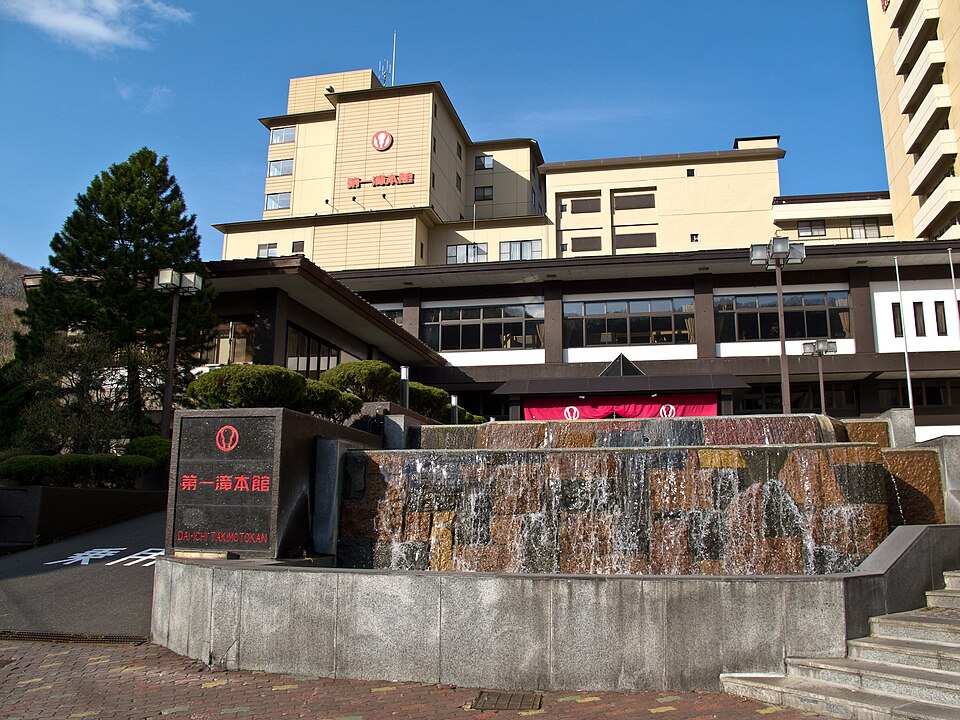
One of Hokkaido's most celebrated bathhouses. Dai-ichi Takimotokan channels water from seven distinct mineral springs into 35 pools spread across multiple floors. Indoor halls open onto outdoor rotenburo overlooking the steam-filled valley below. Day visitors are welcome without an overnight stay.
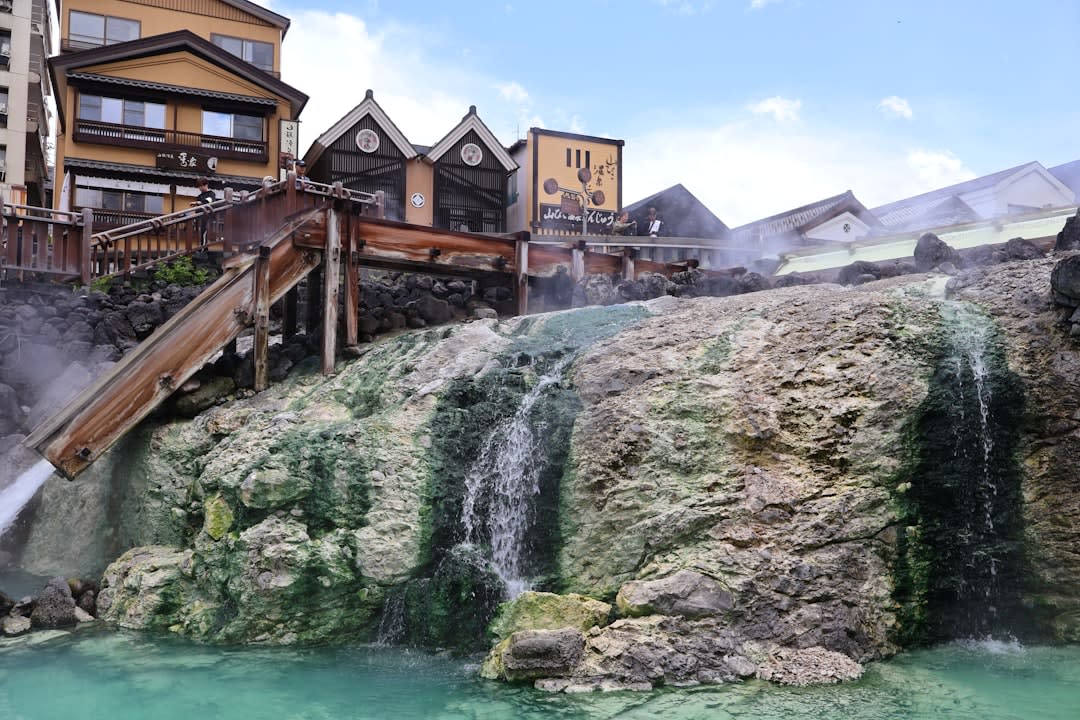
Noboribetsu Onsen is the best-known hot spring resort in Hokkaido, centered on a volcanic crater called Jigokudani, a name that translates to Hell Valley. From the crater floor, nine chemically distinct spring types rise to the surface, each with its own mineral character. Sulfurous steam drifts across the landscape constantly, giving the valley a quality found nowhere else in Japan. The ground here is visibly alive.
Common questions
What is the water temperature at Jozankei Onsen?▾
The water temperature at Jozankei Onsen ranges up to 80°C (minimum around 60°C).
Is Jozankei Onsen free to visit?▾
Jozankei Onsen charges an entrance fee in JPY.
Is Jozankei Onsen a public or private bath?▾
Jozankei Onsen is a public bathing spring.
Are tattoos allowed at Jozankei Onsen?▾
Tattoo policy varies at Jozankei Onsen. Check ahead of your visit.
What is the nearest station to Jozankei Onsen?▾
The nearest station to Jozankei Onsen is Jozankei jinja mae, about 0km away.