Suwa Onsen
諏訪温泉
Suwa Onsen
sulfur · Chubu
Hotter than 48% of Japan springs (n=122).
More acidic than 95% of Japan springs (n=121).
Mineral profile
Bar width reflects listing order, not measured concentration.
Suitability
At a glance
Getting there
Easy — under 1km from a station
Cost
High
About this spring
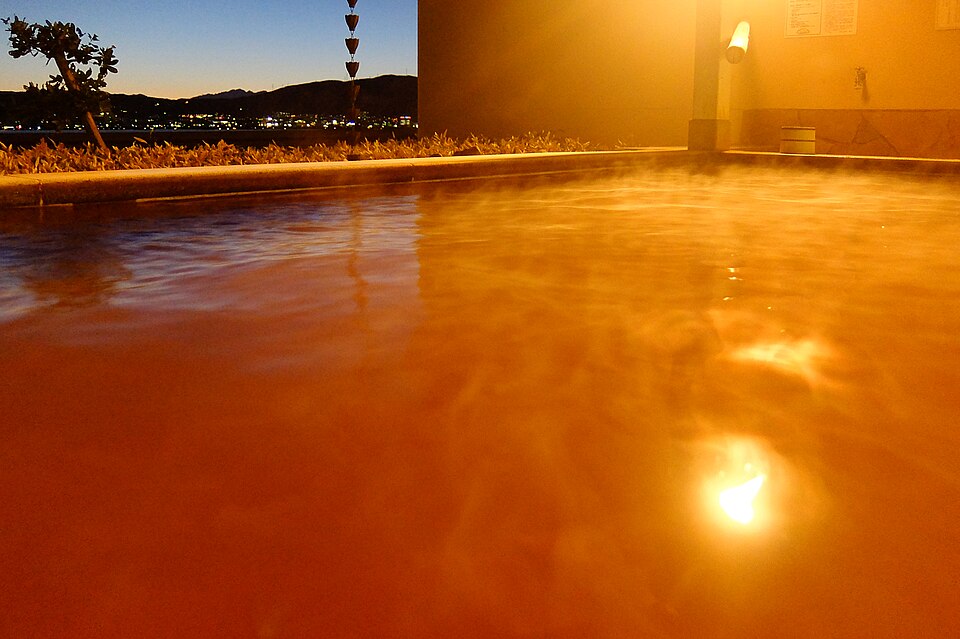
Kamisuwa Onsen sits on the northern shore of Lake Suwa in Nagano Prefecture, a lakeside resort built around one of the most productive thermal sources in the region. The springs here push out 26,000 liters of water per minute, the highest output of any onsen in Nagano Prefecture. The lake lies at the base of Suwa Taisha, one of the oldest Shinto shrine complexes in Japan. The surrounding area combines mountain views, a working geyser, and traces of a silk industry that once gave this valley a worldwide reputation.
Highlights
History
The hot springs were in use before the Edo period, but the resort took its present shape in the seventeenth century, when the area served as a stop along the Koshu Kaido highway and as the castle town of the Suwa Domain.
Around 14 inns lined the lakefront at that time, and bathers shared four communal pools. The Meiji period brought a decisive shift when the Suwa Basin became the leading producer of raw silk in the world. The Katakurakan bathhouse was constructed during that era as a statement of the town's confidence in its own modernization. The springs continue to flow today at more than 26,000 liters per minute, a rate that remains the highest in the prefecture.
Local guide
The Limited Express from Matsumoto takes about 35 minutes along the Chuo Line before depositing you at Kami-Suwa Station, right at the edge of Lake Suwa. The lake is Nagano's largest, sitting at 759 meters above sea level in a flat basin between mountain ranges, and on a clear morning the water reflects the surrounding peaks so cleanly that you can barely tell where the surface ends. Walk ten minutes from the station toward the lake shore and you will start to see the thin plumes of steam rising from street vents and inn rooftops. The hot water is very close to the surface here. In fact, it sits so close that the Suwa Lake Geyser Center, right on the waterfront, sends it shooting five meters into the air on a regular schedule throughout the day.
The spring water at Kami-Suwa Onsen is classified as simple alkaline, registering at pH 9.7, which puts it firmly on the silky end of the spectrum. It emerges from the ground at 60 degrees Celsius, clear and odorless, without the sulfur edge you find at volcanic mountain springs further north. The water feels immediately smooth when you enter a bath, almost like it has a mild soap quality without any soap present. Your skin picks up a faint coating that stays for hours after you dry off, and in the cold dry air of a Nagano winter, that warmth retention is very noticeable. Local bathhouses around town, several of which are municipally operated and very inexpensive, use the water in both deep soaking tubs and shallow pools.
What grounds Suwa Onsen in something older than a resort is its proximity to Suwa Taisha, one of the most ancient shrine complexes in Japan. The four sub-shrines of Suwa Taisha, two on each side of the lake, predate written records and are connected to the surrounding landscape in a way that is not purely symbolic. At the Maemiya shrine on the western shore, the chozuya purification basin, where you wash your hands before entering, runs with actual hot spring water instead of the cold water you find at every other shrine in the country. It is an unusual thing to notice. You cup your hands under a stream that comes out warm and faintly slippery, and for a moment the division between the mountain water, the shrine, and the onsen collapses into something continuous.
Suwa itself is a working town with a precision manufacturing history, better known for optics and watchmaking than for hot spring tourism. The inns along the lake shore are solid and practical rather than extravagant, and the public footbath along the waterfront promenade is heavily used by locals on lunch breaks. The lake freezes in the coldest winters, and when it does, the ice makes a sound locals call Omiwatari, a deep crack and groan that crosses the surface in the early morning, which Shinto tradition interprets as the gods crossing the frozen lake between the upper and lower shrines. The timing of that crossing has been recorded without interruption for over 500 years.
Mineral chemistry
Sulfuric hot springs are among the most studied in balneology worldwide. The sulfur compounds, primarily hydrogen sulfide and thiosulfate, have documented antimicrobial and anti-inflammatory properties. Regular bathing is associated with relief from chronic skin conditions including eczema and psoriasis, as well as joint inflammation and muscle soreness. Sulfuric waters have been used therapeutically across Asia and Europe for centuries.
The distinctive rotten-egg smell dissipates quickly after leaving the bath. Avoid if you have a sulfur allergy, very sensitive skin, or respiratory conditions. Remove silver jewellery before entering — sulfur will blacken it permanently.
Alkaline springs (pH above 8) are known for their skin-softening effect, sometimes called "beauty water" in bathing cultures across Asia. The high pH saponifies skin oils, producing a characteristic silky feel on the skin surface.
The slippery feeling underfoot in highly alkaline springs is normal — take care when standing and walking in the bath. Avoid prolonged soaking if you have dry or sensitive skin.
Similar springs
 FREE
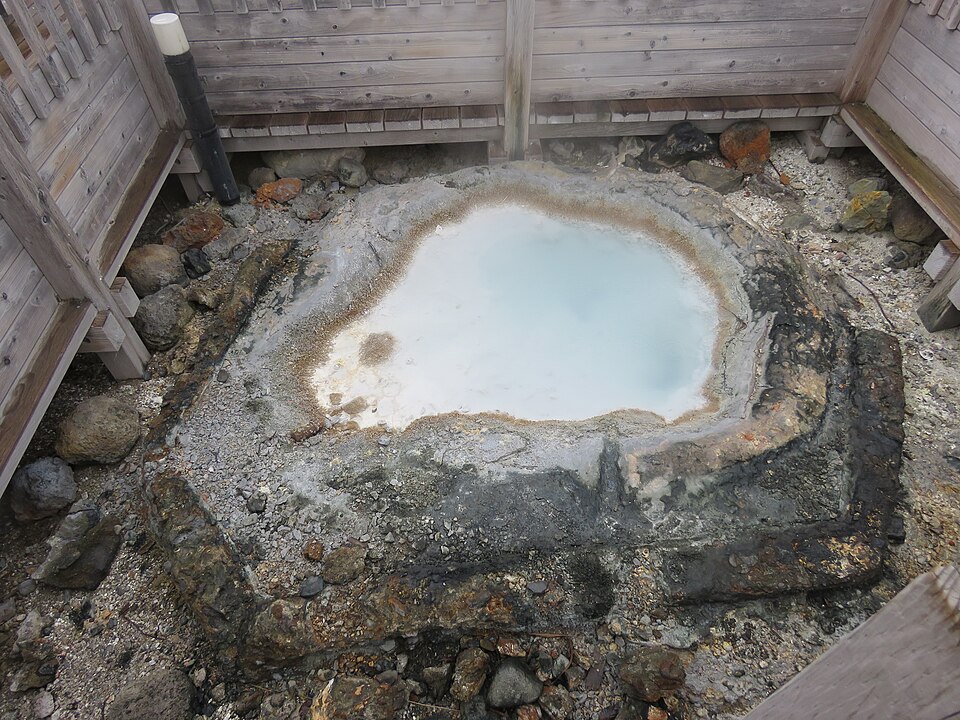
FREEThe valley occupies the center of Noboribetsu Onsen in Hokkaido. Jigokudani translates as Hell Valley. The crater covers 11 hectares and releases roughly 10,000 tonnes of hot spring water each day. Fumaroles vent steam across the floor of the valley, boiling pools bubble at the surface, and the surrounding cliffs carry heavy mineral staining. A walking path winds through the area in about 20 minutes and is open to all visitors at no cost. It ranks among the most striking landscapes accessible on foot anywhere in Japan.
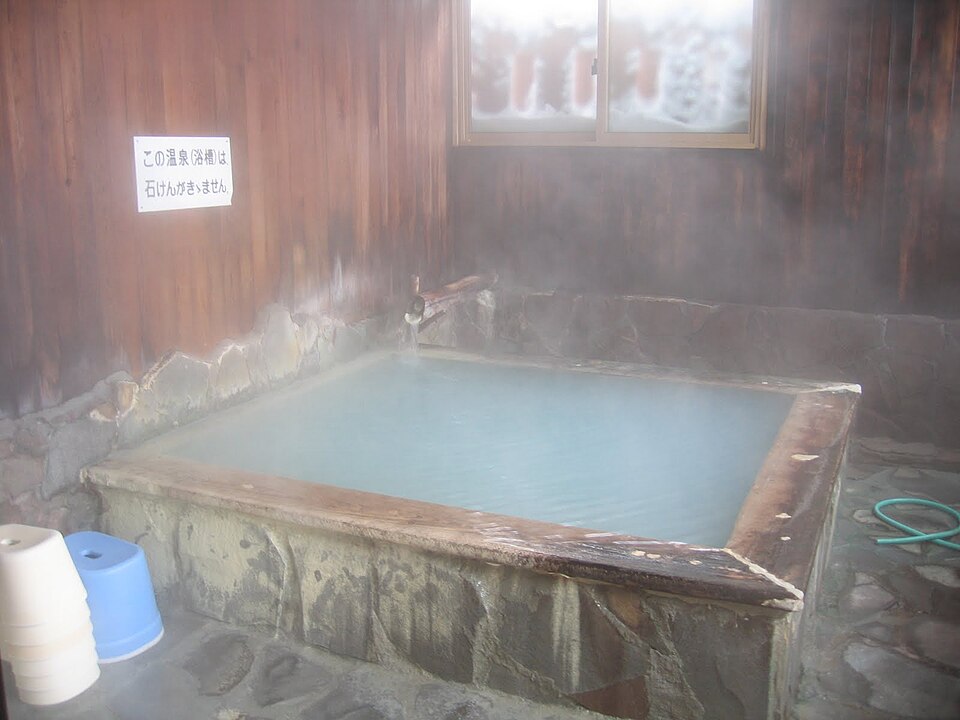
Set deep in the Hakkoda Mountains of Aomori Prefecture, Sukayu Onsen is a historic bathhouse best known for its cavernous mixed-bathing hall, the Sen-nin-buro, which translates as the Bath of a Thousand Bathers. The waters are strongly acidic, the setting is rustic and unhurried, and winter brings extraordinary snowfall to the surrounding mountains.
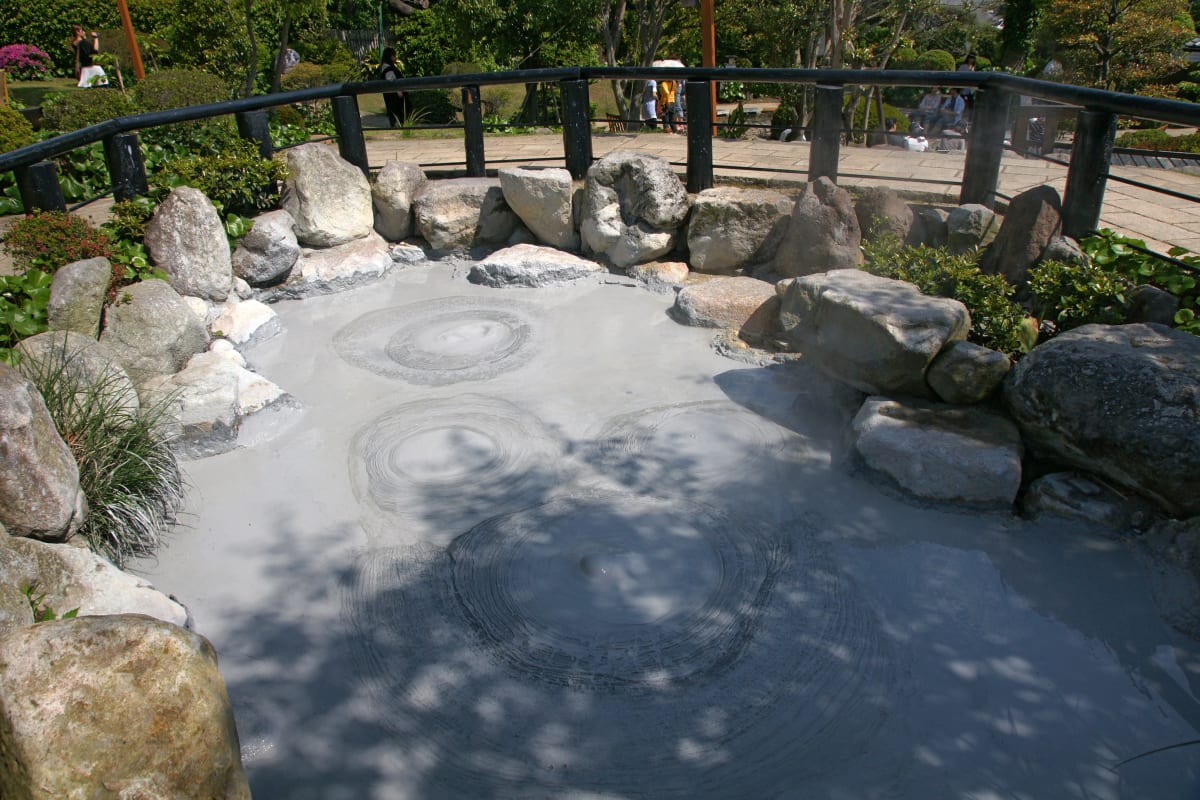
Beppu is the most geothermally active city in Japan, with more than 2,900 hot spring vents located within the city limits and eight distinct thermal spring zones collectively known as the Beppu Hatto. The variety on offer is wide, ranging from grand hotel bathhouses to modest neighborhood public facilities to the celebrated Hells, a collection of brilliantly colored boiling pools scattered across the city. The Hells run far too hot for bathing, but they draw visitors who come to walk among them and take in the spectacle.
 FREE
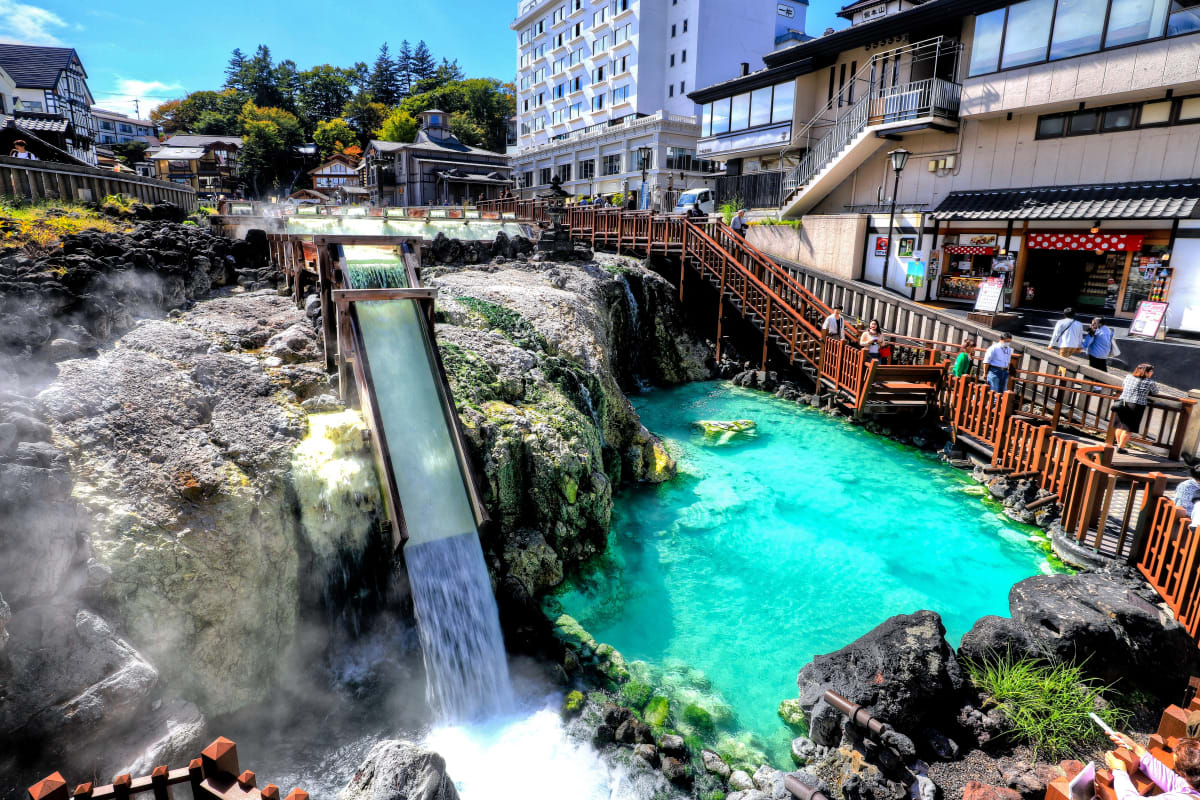
FREEKusatsu Onsen sits at 1,200 meters in the mountains of Gunma Prefecture and ranks among the most celebrated hot spring towns in Japan. The springs here produce more than 32,000 liters of water per minute, a volume unmatched anywhere else in the country. The water is strongly acidic and sulfurous, and its skin-healing properties have long made it legendary among visitors. Twice each day in the central town square, workers cool the scalding water by pulling long wooden paddles through it in unison while singing traditional songs. This practice is called yumomi.
Amenities
Getting there
Take the JR Azusa or Super Azusa limited express from Shinjuku directly to Kami-Suwa Station. The journey takes about 2 hours 15 minutes. The lake shore and onsen district are within easy walking distance of the station.
Location & nearby
Kamisuwa Onsen, Suwa, Nagano
Make a day of it
Pair your soak with these nearby spots.
Attraction
Katakurakan
0.0km away
Attraction
Suwashibijutsukan
0.0km away
Park
IshiekōEn
0.2km away
Park
Suwa Lakeside Park
0.2km away
Attraction
Kamisuwaonsensha
0.3km away
Park
SuwashieichūShajō
0.3km away
More springs in Chubu
 FREE
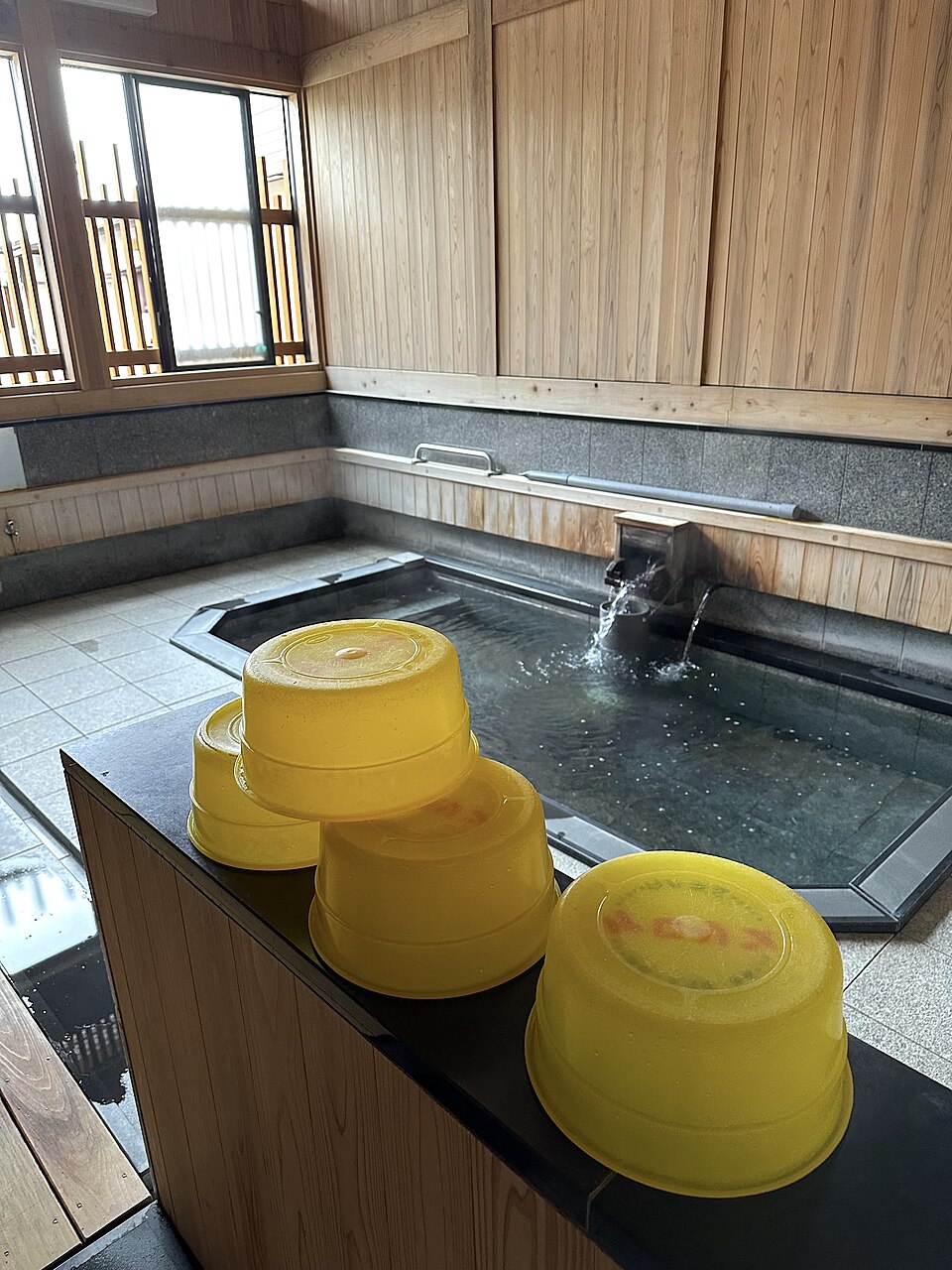
FREENozawa Onsen is a traditional village in Nagano Prefecture that maintains 13 free public bathhouses open to visitors and residents alike. These bathhouses, known as soto-yu, have been overseen by neighborhood cooperatives called yunakama for close to four centuries. The village also contains world-class ski slopes, a pairing that is genuinely uncommon anywhere in the world.
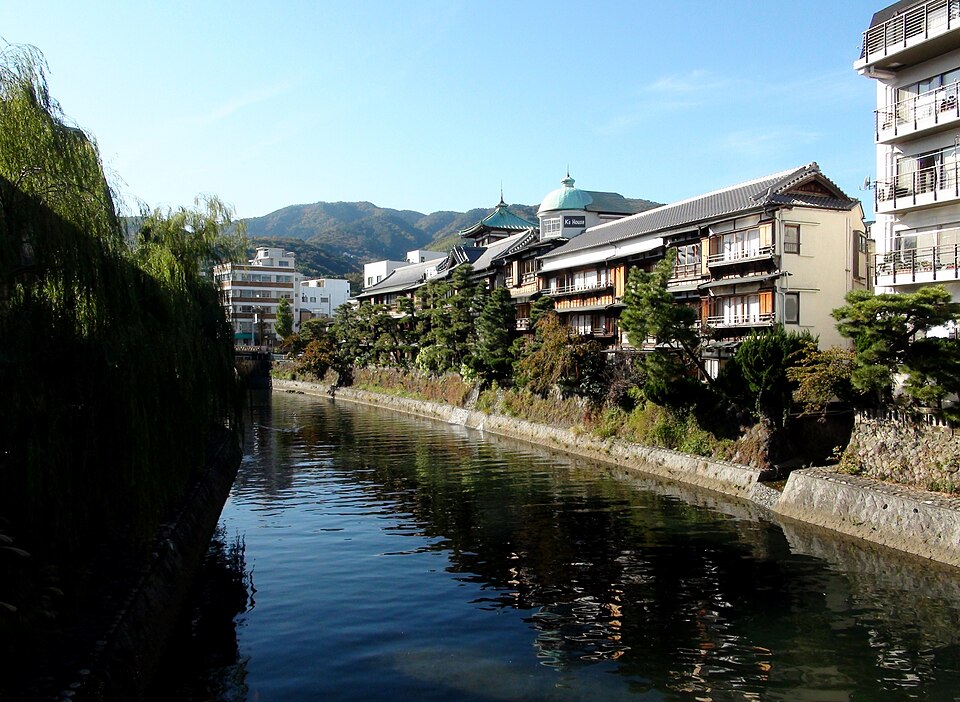
Ito sits along the eastern shore of the Izu Peninsula, facing the ocean and ranking among Japan's most productive hot spring districts by volume. More than 1,500 individual springs feed the town's supply, together pushing out around 30,000 kiloliters of water each day. Palm-lined avenues, tropical parks, and botanical gardens set the tone here, giving Ito a resort atmosphere that reads as distinctly its own compared to inland onsen destinations.
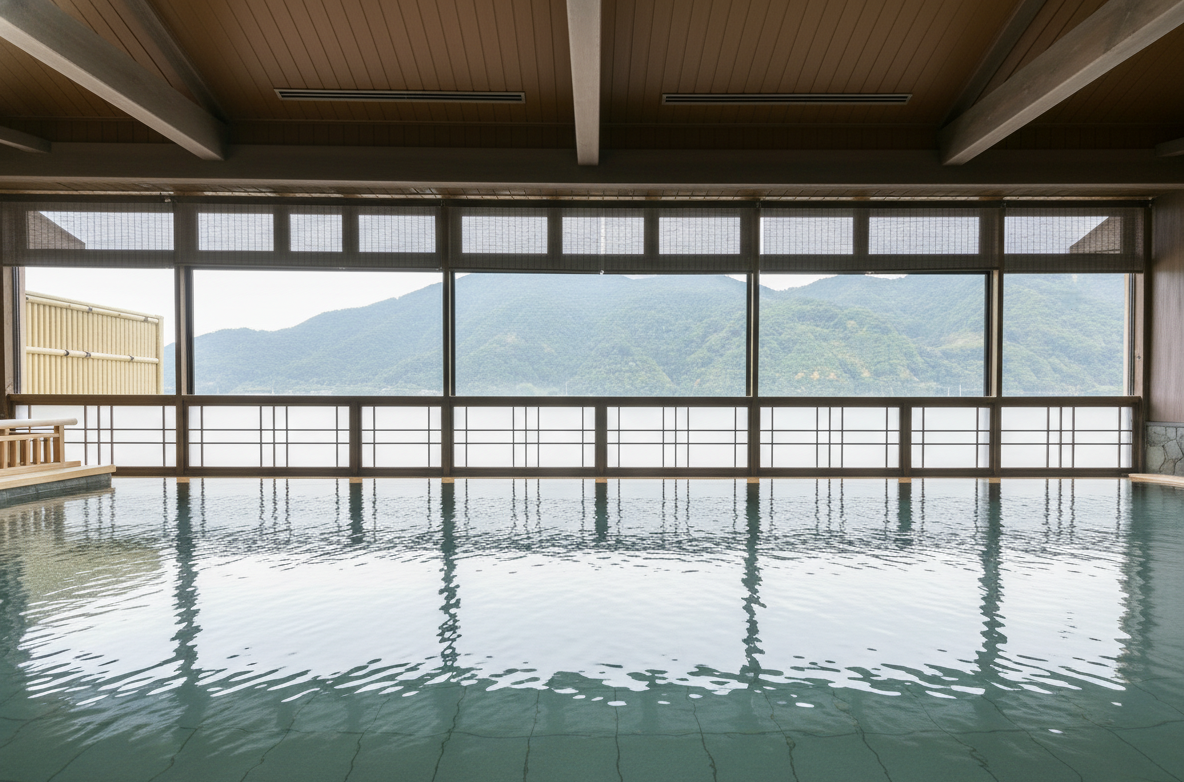
A mountain town in Niigata Prefecture famous for heavy snowfall and a unique sake-infused bath. After a day on the ski slopes, visitors soak in outdoor baths while snow falls silently around them. The town is also the setting of one of Japan's greatest novels.
Common questions
What is the water temperature at Suwa Onsen?▾
The water temperature at Suwa Onsen ranges up to 60°C (minimum around 60°C).
Is Suwa Onsen free to visit?▾
Suwa Onsen charges an entrance fee in JPY.
Is Suwa Onsen a public or private bath?▾
Suwa Onsen is a public bathing spring.
Are tattoos allowed at Suwa Onsen?▾
No, Suwa Onsen does not permit visible tattoos.
What is the nearest station to Suwa Onsen?▾
The nearest station to Suwa Onsen is Katakurakan Mae, about 0.1km away.