Yunokawa Onsen
湯の川温泉
Yunokawa Onsen
sodium-chloride · Hokkaido
Hotter than 57% of Japan springs (n=122).
More acidic than 31% of Japan springs (n=121).
Mineral profile
Bar width reflects listing order, not measured concentration.
Suitability
At a glance
Getting there
Easy — under 1km from a station
Cost
Low
About this spring
Yunokawa Onsen occupies the southeastern shore of Hakodate Bay in Hokkaido, close to both Hakodate city center and the international airport. Trams from central Hakodate reach the onsen terminus in roughly 30 minutes, making Yunokawa the most accessible of Hokkaido's major hot spring destinations. A free foot bath near the tram stop offers a first taste of the waters on arrival. The area's tropical botanical gardens, located close to the main hotel strip, are home to hamanatsu monkeys that bathe year-round in outdoor spring pools.
Highlights
History
The origin story traces to 1653, when the Matsumae clan brought its ailing young heir to the coastal spring after the boy's mother dreamed of a divine message pointing her toward a healing source.
He recovered, and the clan rebuilt the local shrine to mark their gratitude. The resort's modern scale took shape in 1886, when drilling operations reached water exceeding 100 degrees Celsius flowing at 140 liters per minute, providing the foundation for large-scale development. Today Yunokawa ranks among the three major hot spring resorts of Hokkaido.
Local guide
Most onsen towns ask something of you before they give you the water. You take a shinkansen, then a local train, then a bus, then maybe a short walk up a mountain road. Yunokawa Onsen in Hakodate does not do this. Hakodate Airport is five minutes by taxi from the first hotel on the strip, which makes Yunokawa arguably the most accessible onsen destination in Japan relative to a major airport. You step off the plane in Hokkaido, collect your bag, and you are in the water within the hour.
The springs here are sodium chloride and calcium chloride, neutral at pH 7, emerging at 65 degrees Celsius. The water is clear and carries a pleasant, faint saltiness on the skin, with the density of a mild seawater bath rather than the sharp sting of a sulfurous mountain spring. It warms you from the outside in, and the salt locks the heat into your muscles for a long time after you leave the bath. The large resort hotels along the Matsukura River have both indoor and outdoor facilities, and the better rooms look straight across the river toward the water. In winter, the outdoor baths are extremely hot against the Hokkaido air, and you can sit in the steaming water with snow falling on your face while the hotel lanterns reflect in the dark current below you.
The Matsukura River that runs through the resort area is one of the few places in Japan where Japanese red-crowned cranes, the tall white birds with red caps that are among the most endangered in the world, can be observed close to a city. They winter near the river in small numbers, standing in the shallow water or in the snow beside the bank, and if you are there in January or February and walk the riverside path early in the morning, the birds are sometimes visible from the path. It is an unexpected piece of wildness in the middle of a developed resort area, and the contrast between the crane standing still in the grey water and the steam rising from the hotel bath buildings just behind the treeline is peculiar and beautiful.
Hakodate itself is thirty minutes away by tram, and the city is worth a day of your time. The morning seafood market at the base of the mountain is open from five in the morning and sells sea urchin, crab, and squid fresh off the boats. The night view of the city from the cable car on Hakodate-yama is frequently listed as one of the three best in Japan. Yunokawa works well as a base for all of this. You arrive from the airport, check in before lunch, soak in the afternoon, go into the city in the evening, come back to another bath before bed, and leave the next morning feeling like you actually stopped somewhere rather than passed through.
Mineral chemistry
Water character inferred from mineral type — verify on site.
Sodium chloride springs, essentially natural saltwater baths, are celebrated for their warming and moisturising effects. The salt forms a thin film on the skin that slows moisture evaporation, keeping skin hydrated longer than a freshwater bath.
Those with high blood pressure or heart conditions should consult a doctor before bathing, as the warming effect increases circulation. Avoid immersing open wounds.
Calcium chloride springs share the heat-retaining property of sodium chloride springs but with a stronger warming effect. Prized for muscle and joint relief.
The strong warming effect means those with cardiovascular conditions, high blood pressure, or pregnancy should limit soak duration and consult a doctor if in doubt.
Similar springs
 FREE
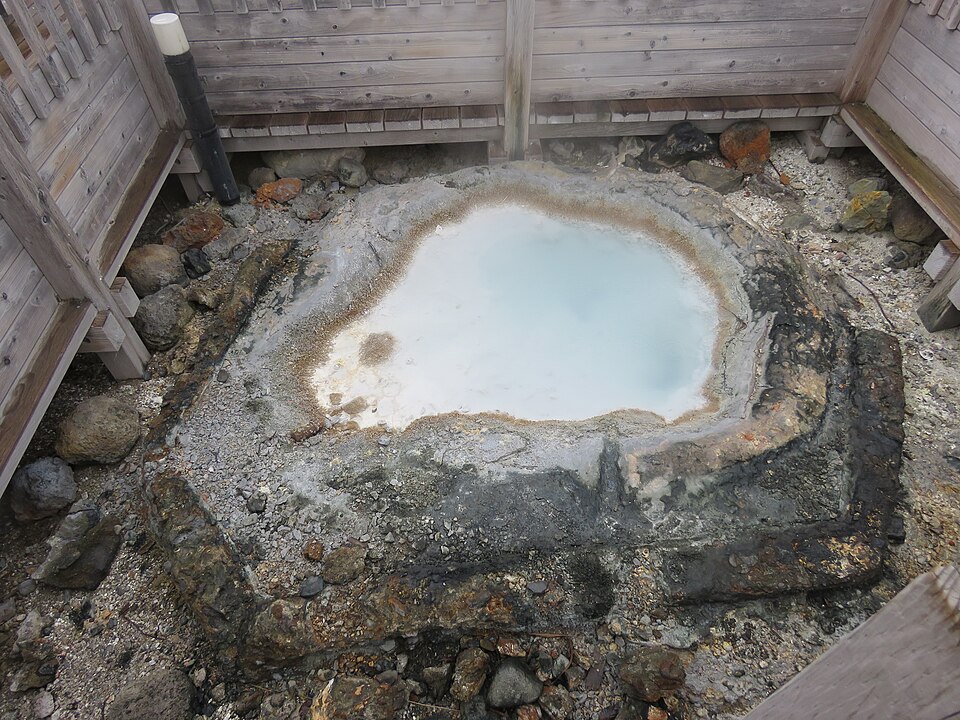
FREEThe valley occupies the center of Noboribetsu Onsen in Hokkaido. Jigokudani translates as Hell Valley. The crater covers 11 hectares and releases roughly 10,000 tonnes of hot spring water each day. Fumaroles vent steam across the floor of the valley, boiling pools bubble at the surface, and the surrounding cliffs carry heavy mineral staining. A walking path winds through the area in about 20 minutes and is open to all visitors at no cost. It ranks among the most striking landscapes accessible on foot anywhere in Japan.
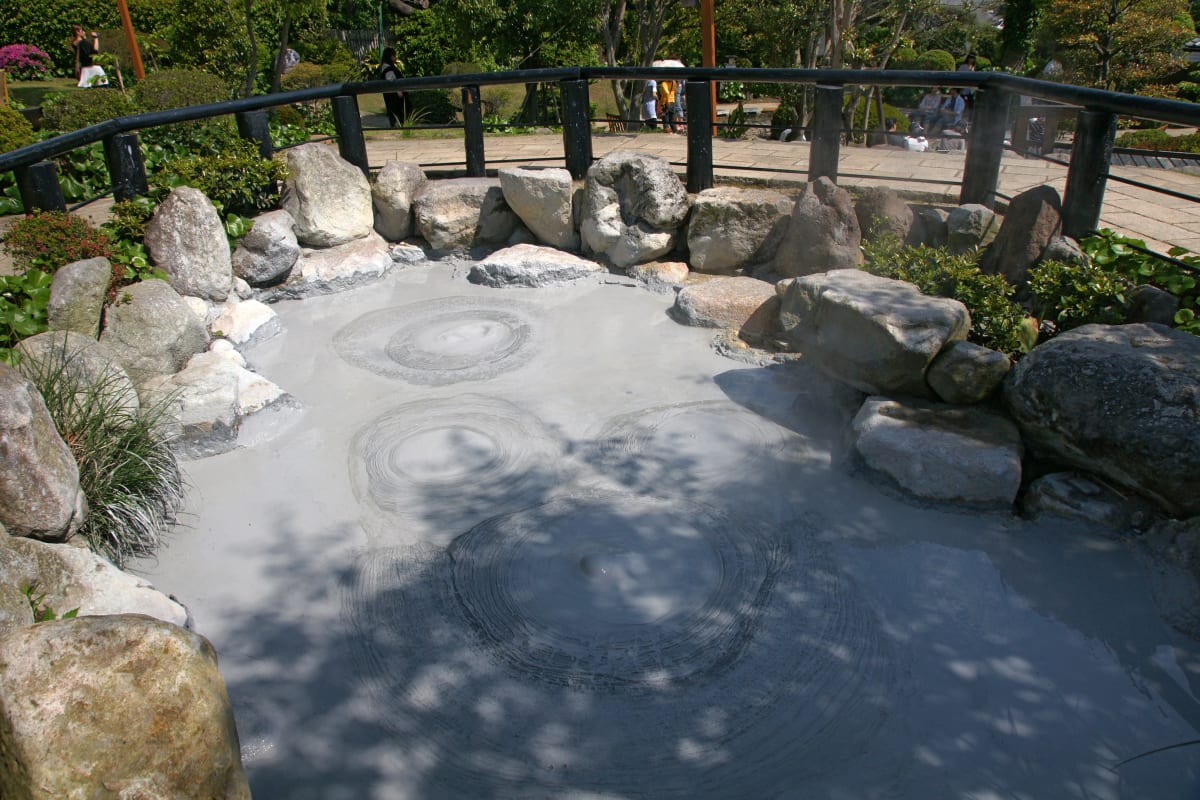
Beppu is the most geothermally active city in Japan, with more than 2,900 hot spring vents located within the city limits and eight distinct thermal spring zones collectively known as the Beppu Hatto. The variety on offer is wide, ranging from grand hotel bathhouses to modest neighborhood public facilities to the celebrated Hells, a collection of brilliantly colored boiling pools scattered across the city. The Hells run far too hot for bathing, but they draw visitors who come to walk among them and take in the spectacle.
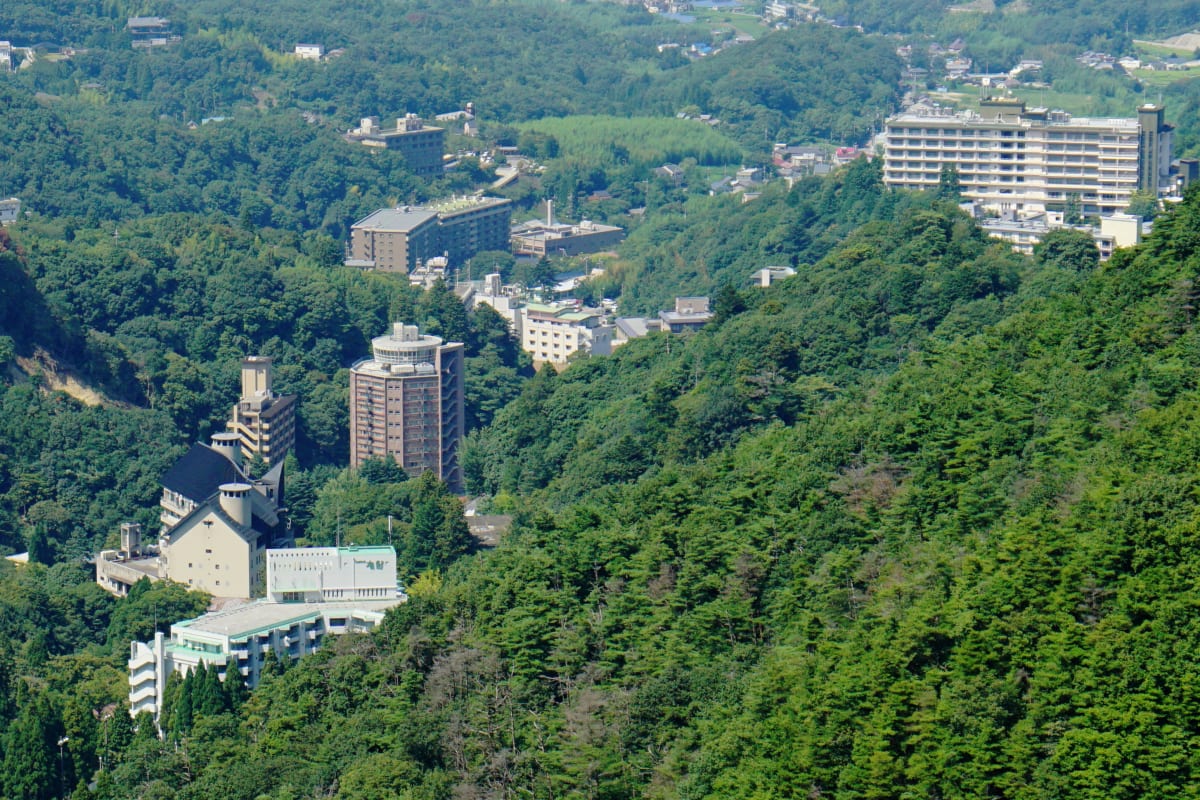
Arima Onsen sits in the hills above Kobe, close to Mount Rokko, and ranks among the oldest hot spring towns in Japan. The town draws visitors for two entirely different spring types that coexist within its compact footprint. Kinsen is the iron-rich golden water that stains surrounding rocks a rusty orange, while ginsen runs clear and carries both carbonation and mild radioactivity. Few other onsen destinations in Japan bring together two such distinct water types within a single small town.
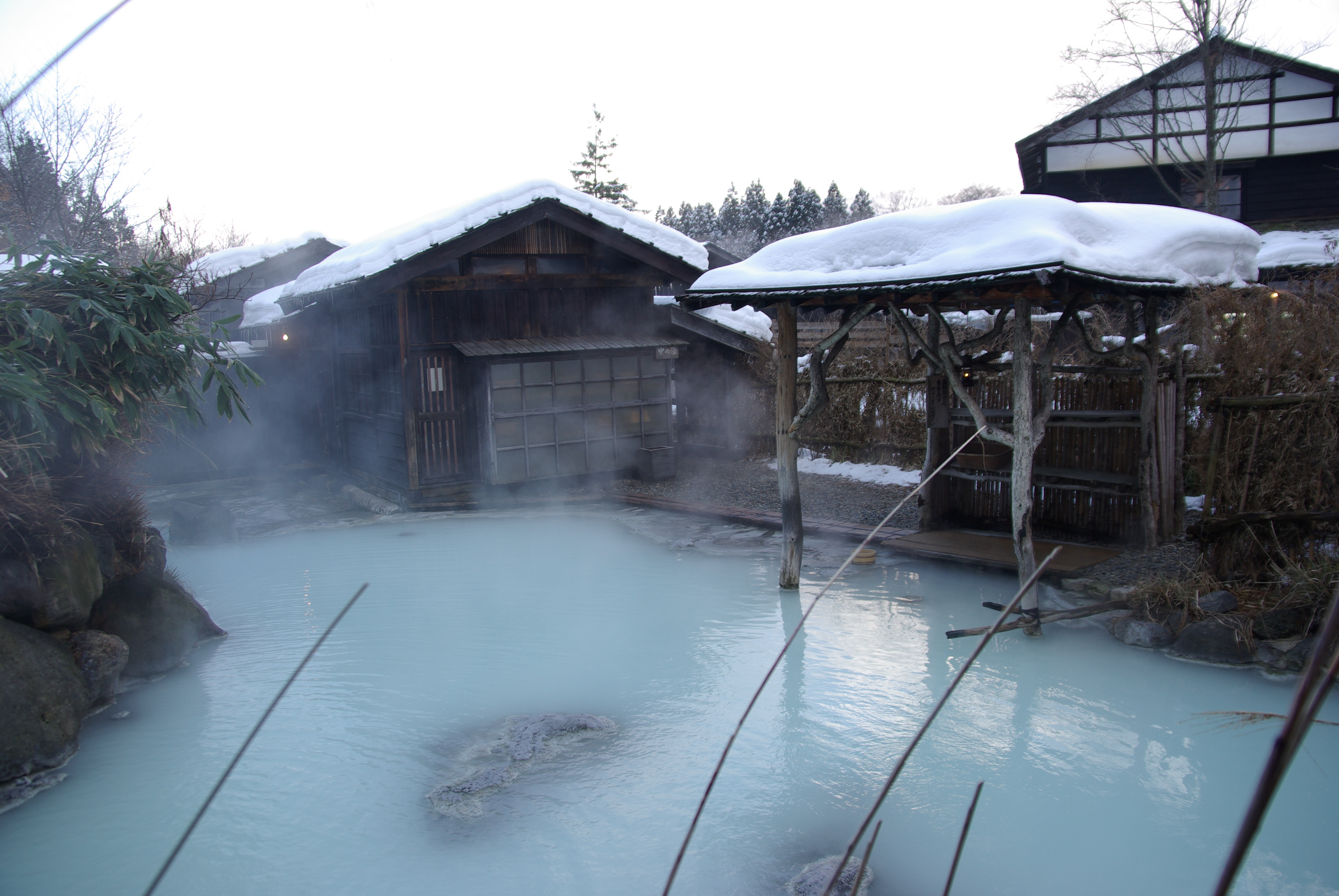
Tsuru-no-yu is the oldest of the seven inns at Nyuto, set deep in a beech forest in Akita Prefecture. The main draw is a large outdoor mixed-bathing pool fed by opaque, milky-white sulfurous water. Many regard it as the most beautiful onsen setting in Japan. People come here to put some distance between themselves and the rest of the world for a while.
Amenities
Getting there
From Hakodate Airport, take a taxi for about 10 minutes or a local bus. From Hakodate Station, take the city tram to the Yunokawa-Onsen terminus, about 30 minutes. From Shin-Hakodate-Hokuto Shinkansen Station, take the rapid train to Hakodate Station and connect to the tram.
Location & nearby
Yunokawa Onsen, Hokkaido
Make a day of it
Pair your soak with these nearby spots.
Attraction
Hakodateyunokawa溫Izumi
0.1km away
Attraction
Yunokawaonsen Megumi Hakokanya
0.2km away
Park
YunohamakōEn
0.3km away
Attraction
Yukawaonsendentomazenbasutei
0.3km away
Attraction
YamauchionsenchōSeiyu
0.3km away
Attraction
Daisakariyu
0.3km away
More springs in Hokkaido
FREEThe valley occupies the center of Noboribetsu Onsen in Hokkaido. Jigokudani translates as Hell Valley. The crater covers 11 hectares and releases roughly 10,000 tonnes of hot spring water each day. Fumaroles vent steam across the floor of the valley, boiling pools bubble at the surface, and the surrounding cliffs carry heavy mineral staining. A walking path winds through the area in about 20 minutes and is open to all visitors at no cost. It ranks among the most striking landscapes accessible on foot anywhere in Japan.
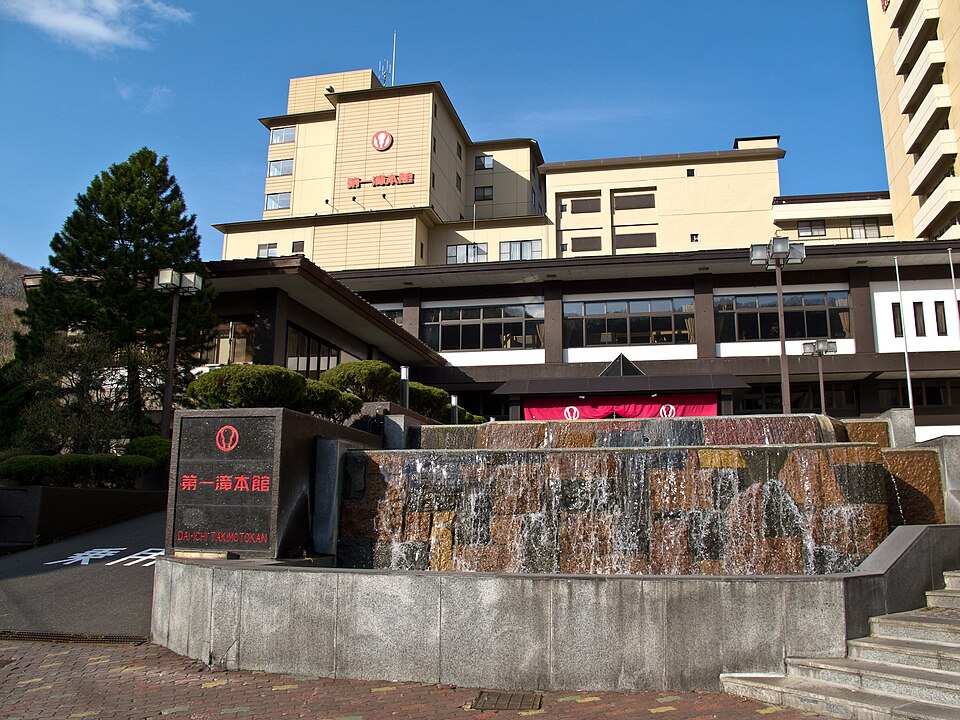
One of Hokkaido's most celebrated bathhouses. Dai-ichi Takimotokan channels water from seven distinct mineral springs into 35 pools spread across multiple floors. Indoor halls open onto outdoor rotenburo overlooking the steam-filled valley below. Day visitors are welcome without an overnight stay.
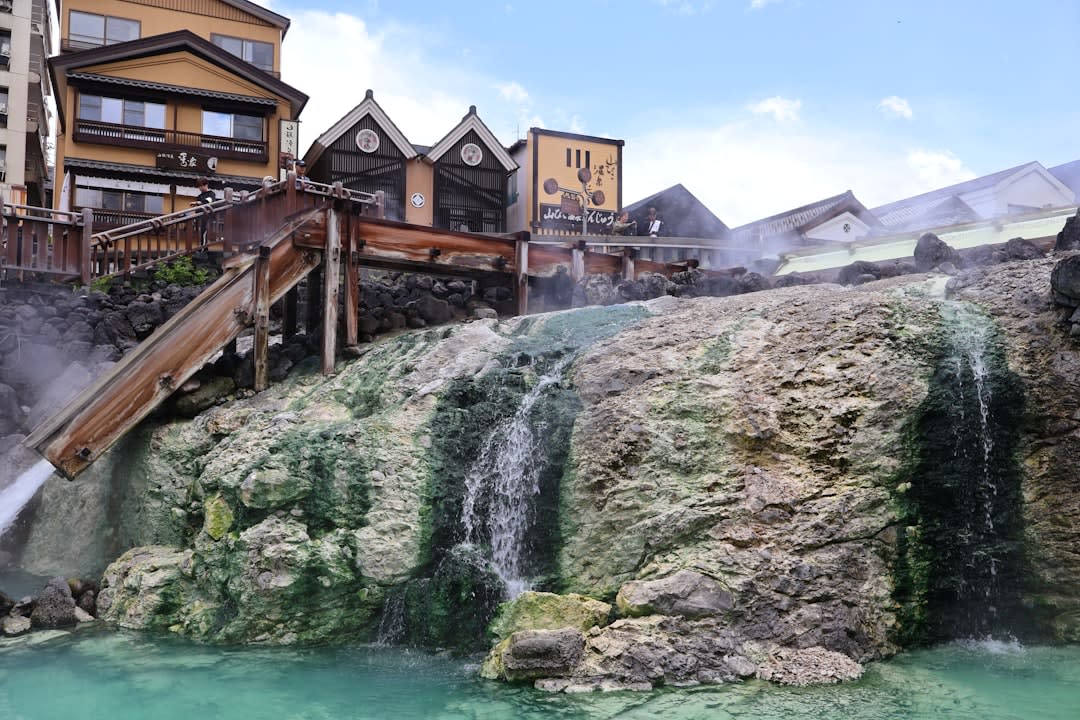
Noboribetsu Onsen is the best-known hot spring resort in Hokkaido, centered on a volcanic crater called Jigokudani, a name that translates to Hell Valley. From the crater floor, nine chemically distinct spring types rise to the surface, each with its own mineral character. Sulfurous steam drifts across the landscape constantly, giving the valley a quality found nowhere else in Japan. The ground here is visibly alive.
Common questions
What is the water temperature at Yunokawa Onsen?▾
The water temperature at Yunokawa Onsen ranges up to 65°C (minimum around 65°C).
Is Yunokawa Onsen free to visit?▾
Yunokawa Onsen charges an entrance fee in JPY.
Is Yunokawa Onsen a public or private bath?▾
Yunokawa Onsen is a public bathing spring.
Are tattoos allowed at Yunokawa Onsen?▾
Tattoo policy varies at Yunokawa Onsen. Check ahead of your visit.
What is the nearest station to Yunokawa Onsen?▾
The nearest station to Yunokawa Onsen is Yunokawa Hanabishi Hotel, about 0.3km away.