


Mixed · Indoor & Outdoor · ¥100
Beppu Onsen
別府温泉
105°CMixed BathingIndoor & Outdoorsulfursodium-chlorideironsimple-thermal
4.4· 4,800 reviewsvia Google
28–105°CWater temp
7.2pH
¥100 (~$1)Entry fee
MixedBathing type
—Opening hours
About this spring
The most geothermally active city in Japan. Beppu has over 2,900 hot spring vents within its city limits and eight distinct thermal spring zones called the Beppu Hatto. The range here is remarkable: from grand hotel baths to neighborhood public facilities to the famous Hells, a series of dramatically colored boiling pools that are too hot to bathe in but spectacular to walk around.
Data: Wikipedia (CC BY-SA 4.0) · OpenStreetMap (ODbL)
Highlights
- Eight thermal spring zones
- The Hell sightseeing pools
- 2,900 spring vents
- Public baths from 100 yen
Suitability
Tattoo policy
Policy varies
Children policy
Family-friendly
Altitude
5m
Mineral chemistry
Sulfur
Benefits
Sulfuric hot springs are among the most studied in Japanese balneology. The sulfur compounds — primarily hydrogen sulfide and thiosulfate — have documented antimicrobial and anti-inflammatory properties. Regular bathing is associated with relief from chronic skin conditions including eczema and psoriasis, as well as joint inflammation and muscle soreness. Sulfuric waters have been prescribed in Japanese medical practice since the Edo period.
Note
The distinctive rotten-egg smell dissipates quickly after leaving the bath. Avoid if you have a sulfur allergy, very sensitive skin, or respiratory conditions. Remove silver jewellery before entering — sulfur will blacken it permanently.
Sodium Chloride (Salt)
Benefits
Sodium chloride springs — essentially natural saltwater baths — are celebrated for their warming and moisturising effects. The salt forms a thin film on the skin after bathing that slows moisture evaporation, keeping skin hydrated longer than a freshwater bath. This "heat-retaining" property means bathers stay warm for significantly longer after leaving the water, making these springs especially popular in winter. Salt springs are among the most accessible for first-time onsen visitors.
Note
Those with high blood pressure or heart conditions should consult a doctor before bathing, as the warming effect increases circulation. Avoid immersing open wounds. The salt will sting slightly in eyes — take care when submerging.
Iron
Benefits
Iron-bearing springs are recognised by their characteristic rust-red or amber colour and metallic taste. The iron content — primarily ferrous bicarbonate or ferric sulfate — is associated with stimulation of red blood cell production and is traditionally recommended for anaemia and fatigue recovery. The distinctive colouring comes from iron oxidising on contact with air and is not a sign of contamination.
Note
Iron springs will stain light-coloured swimwear and towels a persistent brownish-orange. Avoid wearing white or light fabrics into the water. Those with haemochromatosis (iron overload condition) should seek medical advice before bathing.
Simple Thermal
Benefits
Simple thermal springs (単純温泉) have a lower dissolved mineral content than other spring types but are valued for the pure therapeutic effect of heat immersion itself. The warmth increases core body temperature, promotes sweating, eases muscle tension, and improves peripheral circulation. Simple thermal springs are the most common onsen type in Japan and are recommended as the gentlest introduction to onsen bathing — suitable for a wide range of health conditions and ages.
Note
Simple thermal springs are the most broadly accessible onsen type. Standard precautions apply: avoid bathing within 30 minutes of eating, keep soaks to 10–15 minutes for first-timers, and hydrate before and after.
History
Legends link Beppu's springs to the gods Sukunabikona and Okuninushi.
Kamakura-period records confirm its use as a healing site for wounded samurai. The Edo-period scholar Dr. Ekiken Kaibara wrote about the springs in detail, bringing them to wider attention. The Meiji era brought modern drilling techniques that multiplied the number of accessible springs dramatically. After World War II, rapid development transformed Beppu into Japan's most visited hot spring city, a status it holds today.
Local guide
The JR Nippo Main Line from Kokura crosses Oita Bay and deposits you at Beppu Station with the harbor on one side and a steep green hillside on the other, every crease of which is exhaling white steam. Beppu's 2,909 thermal vents make it the second-largest hot spring discharge zone in the world, and the steam is not a tourist presentation, it rises from street drains, from gutters, from patches of bare earth between buildings, from vents in the hillside visible from the train window. The city smells like sulfur in a way that takes about ten minutes to stop noticing and then simply becomes the smell of the place.
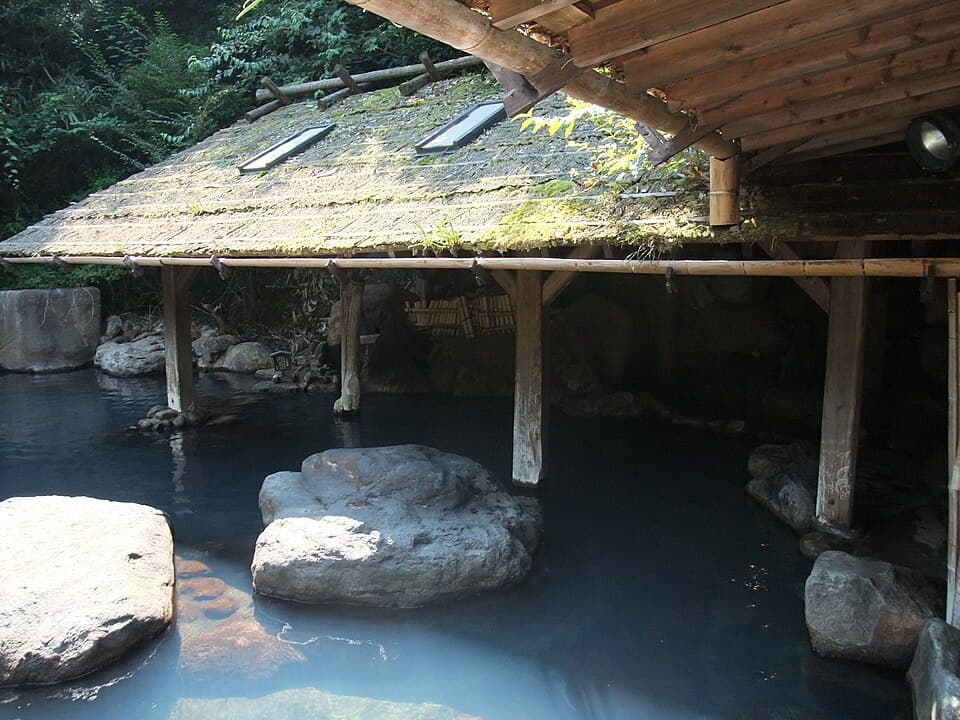
The water across Beppu's eight distinct zones, the Beppu Hatto, covers almost the full range of spring chemistry available in Japan. The simple thermal baths in Hamawaki and Kannawa are clear and neutral, good for long soaks. The sulfur pools in Shibaseki turn a pale blue-white in deeper water. The iron pools run rust-brown. In Myoban, the water is a milky white sulfur spring that leaves a faint powdery residue on the skin. The pH across the city ranges from acid to neutral to alkaline depending on which bath you choose, meaning Beppu is less a single spring than a geological catalogue of what the earth produces when it runs hot.
The Hells, the jigoku, are the thing most visitors come to see before they bathe. Umi Jigoku in the Kannawa district is a cobalt blue pool at 98 degrees Celsius, the color coming from dissolved minerals reacting with the sky. It sits beside a pond where the waste heat keeps Amazon water lilies alive year-round, their leaves over a meter across floating on the surface in a botanical impossibility. Chinoike Jigoku, the Blood Pond, is the oldest documented hell in Japan, red from iron and magnesium, the color of diluted brick clay. Neither of these is a bathing pool, but both produce the specific sensation of standing at the edge of something genuinely dangerous and beautiful at the same time.
For the actual bathing, the network of public sento in Kannawa and Hamawaki is where Beppu operates as a real town rather than a tourist circuit. The Sunayu sand bath in Beppu Beach Park is the strangest option: attendants bury you up to the neck in black volcanic sand heated by the spring water beneath, and you lie there for ten minutes while the heat works through you from all directions. After the sand bath, even a simple hot tub feels like an extension of the ground itself.
How this spring compares
pH level
7.2
More alkaline than41% of Japan springs
More acidic than50% of Japan springs
Japan median7.3
Japan range1.2–11.3
n=121 springs
Max temperature
105°C
Hotter than98% of Japan springs
Japan median60°C
Japan hottest105°C
n=122 springs
Getting there
Sanyo + Nippo Main Line→ Beppu2h
Local bus to bathhouse
Total: 2h 10m
Take the JR Nippo Main Line from Kokura or Hakata to Beppu Station. Buses connect from the station to all major bath areas including Kannawa, Myoban, and Hamawaki.
Amenities
Towel rental
Locker
Restaurant
Café
Parking
Wheelchair access
English spoken
Tattoo-friendly
Private bath
Soap provided
Hair dryer
Location & nearby
Beppu Onsen, Beppu, Oita
Kokura Station · 87.6 kmShinkansen
Beppu Station · 0 km
Kamegawa Station · 5.8 km
Nishi-Ōita Station · 8.6 km
Bungo-Toyooka Station · 9.2 km
Oita Airport · 31.3 km
Yamaguchi-Ube Airport · 75.2 km
T.B.D. · 0.1 km
Beppu Eki · 0 km
Ekimae Hommachi · 0.1 km
Beppu Eki mae · 0 km
Book a stay nearby
Hotels near Beppu
26+ optionsSpringsAtlas may earn a commission from bookings made through these links.
More springs in Kyushu
1 / 13






Last verified:
Data: OpenStreetMap (ODbL) · local tourism agencies
Verified listing