Sawatari Hot Springs
沢渡温泉
Sawatari Hot Springs
calcium-sulfate · Kanto
Hotter than 42% of Japan springs (n=122).
More acidic than 82% of Japan springs (n=121).
Mineral profile
Bar width reflects listing order, not measured concentration.
Suitability
At a glance
Getting there
Easy — under 1km from a station
Cost
Low
About this spring
Sawatari Hot Springs is a traditional hot spring resort in Nakanojo, Gunma Prefecture, situated along the Azuma River valley. The waters are a mild alkaline calcium-sodium sulfate-chloride spring with a pH of 8.5. For eight centuries, the spring has carried the title naoshiyu of Kusatsu, meaning the hot spring that heals what Kusatsu damages. Kusatsu's waters are famously intense and acidic, and Sawatari's gentle alkaline spring was traditionally used to restore the skin after bathing there.
Highlights
History
In 1191, the warrior Minamoto no Yoritomo passed through the area after a stay at Kusatsu Onsen, where the strongly acidic water had irritated his skin.
He bathed in Sawatari's mild alkaline waters and found they soothed the damage and returned his skin to its former softness. He gave the spring the name naoshiyu of Kusatsu. That connection to the founding shogun raised the spring's reputation considerably. Throughout the Edo period, Sawatari developed into a medicinal destination, drawing both samurai and commoners who traveled between Edo and the mountain provinces.
Local guide
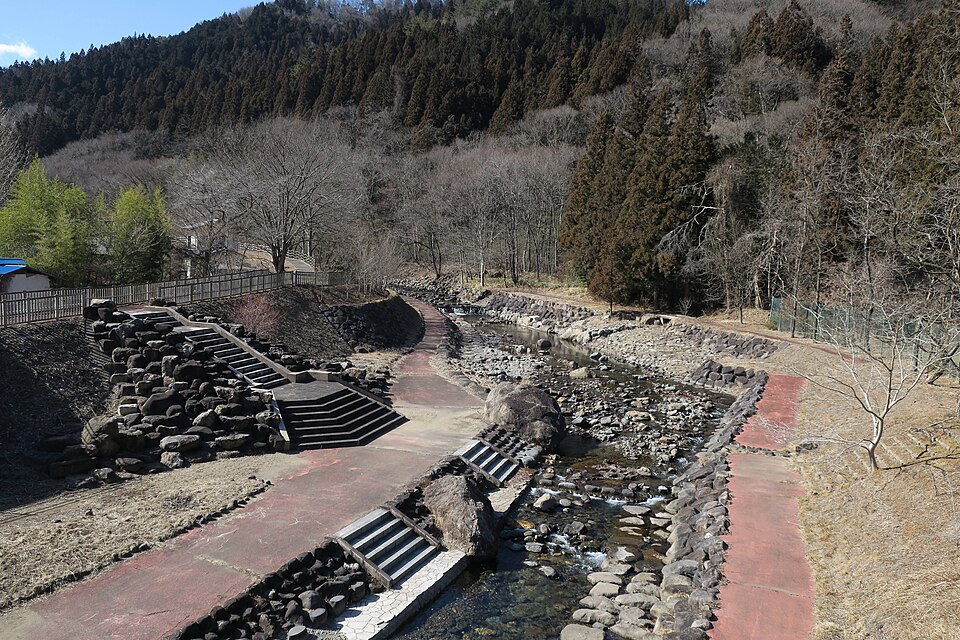
The bus from Nakanojo Station follows the Agatsuma River into the mountains, and after about forty minutes the valley narrows and the road starts switching back up the hillside. Sawatari Hot Springs sits at the end of that climb, a small cluster of eleven ryokan beside a stream, with nothing much around it except forest and the sound of moving water. Most visitors to this corner of Gunma head straight for Kusatsu, which is forty minutes further up the road and far more famous. Sawatari is the quieter stop in between, and it has been serving bathers for over eight hundred years.
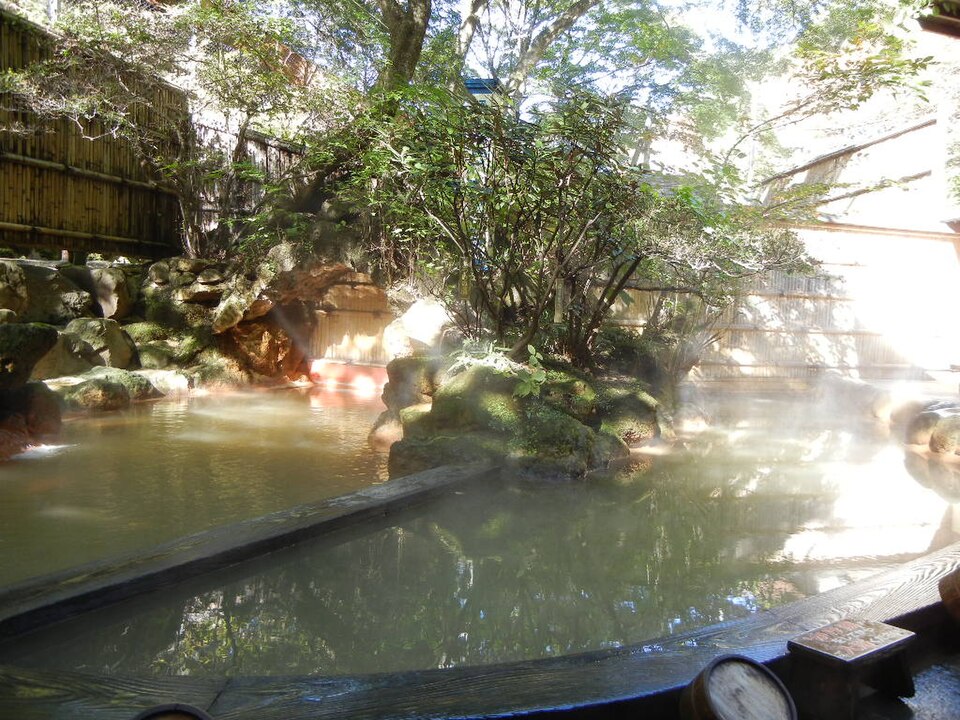
The water here is a calcium sulfate and sodium chloride type, and it differs noticeably from the aggressive acidic water at Kusatsu. At Sawatari, the bath is completely clear, without the milky turbidity you find at many sulfur springs, and the temperature is comfortable without any sharpness to it. There is a faint mineral character, something dry and clean at the back of the throat if you breathe deeply near the surface, but nothing that stings. The water feels neutral and steady on the skin, the kind of bath you can stay in for a long time without feeling overwhelmed. Historically, visitors would come to Kusatsu first for its strong, acidic waters, then stop at Sawatari on the way back to soothe skin irritated by the harsher spring.
That secondary role is part of what defines Sawatari. It has never chased the crowd that Kusatsu pulls, and the town shows it. The public bathhouse charges a few hundred yen and has two tubs, both heated from the same source. There are no souvenir shops worth mentioning, and the main street is quiet enough on a weekday that you might walk the full length of it without passing another person. The ryokan are mostly traditional and small, and several have wooden outdoor baths positioned above the stream.
The best reason to stop here is that combination of scale and water quality. You get a genuine mountain onsen without the coach-tour atmosphere that blankets Kusatsu on weekends. In late October, the maple and beech trees along the Agatsuma valley turn color, and if you catch that timing, the hillside above the inn rooftops looks like it is on fire. The water is calm, the surroundings are dramatic, and the whole place costs a fraction of what a night at a big Kusatsu ryokan will set you back.
Mineral chemistry
Water character inferred from mineral type — verify on site.
Sulfate springs contain dissolved calcium, sodium, or magnesium sulfate. Calcium sulfate springs are traditionally associated with wound healing and post-surgical recovery.
Sodium sulfate springs can have a mild laxative effect in sensitive individuals — stay well hydrated.
Sodium chloride springs, essentially natural saltwater baths, are celebrated for their warming and moisturising effects. The salt forms a thin film on the skin that slows moisture evaporation, keeping skin hydrated longer than a freshwater bath.
Those with high blood pressure or heart conditions should consult a doctor before bathing, as the warming effect increases circulation. Avoid immersing open wounds.
Similar springs
 FREE
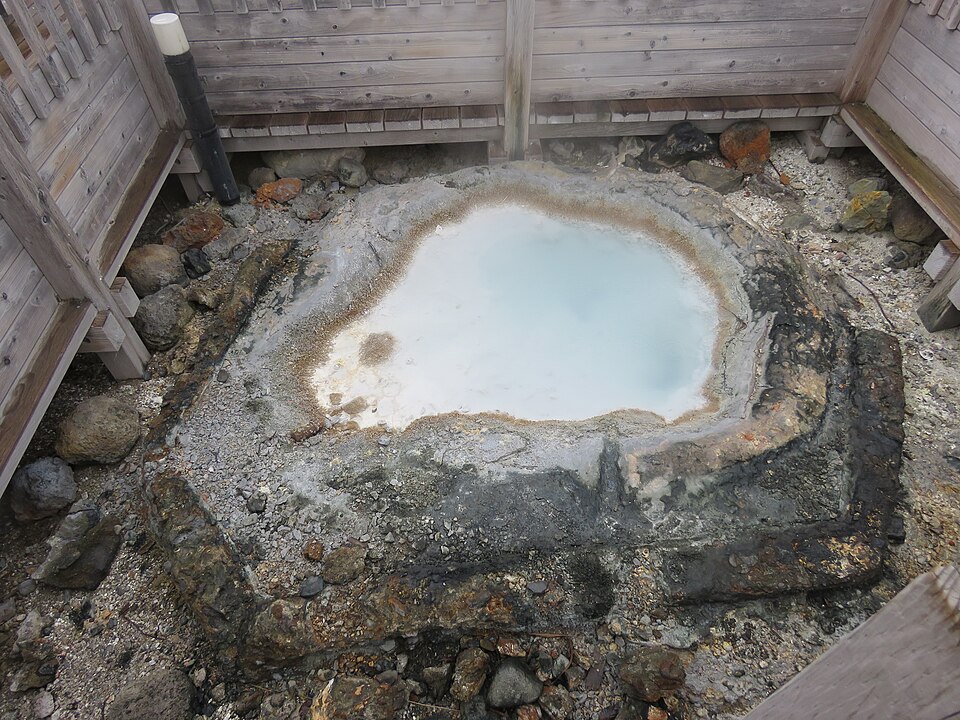
FREEThe valley occupies the center of Noboribetsu Onsen in Hokkaido. Jigokudani translates as Hell Valley. The crater covers 11 hectares and releases roughly 10,000 tonnes of hot spring water each day. Fumaroles vent steam across the floor of the valley, boiling pools bubble at the surface, and the surrounding cliffs carry heavy mineral staining. A walking path winds through the area in about 20 minutes and is open to all visitors at no cost. It ranks among the most striking landscapes accessible on foot anywhere in Japan.
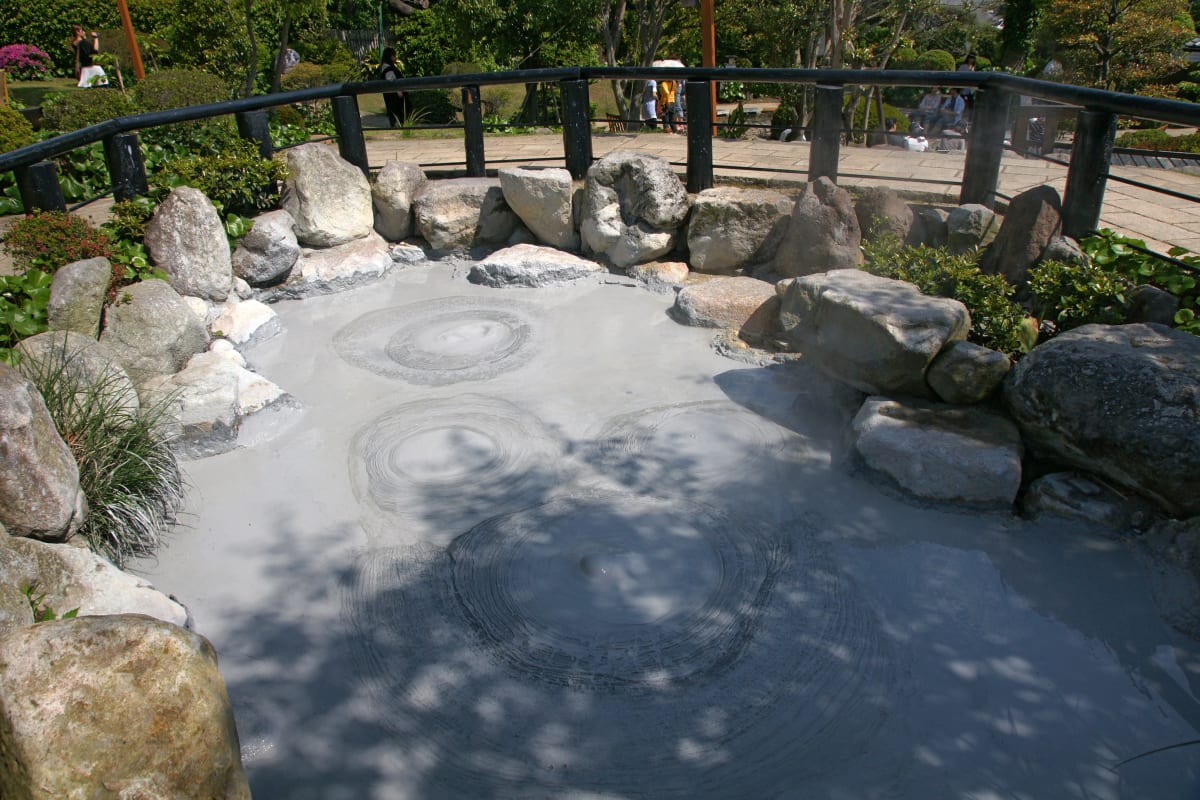
Beppu is the most geothermally active city in Japan, with more than 2,900 hot spring vents located within the city limits and eight distinct thermal spring zones collectively known as the Beppu Hatto. The variety on offer is wide, ranging from grand hotel bathhouses to modest neighborhood public facilities to the celebrated Hells, a collection of brilliantly colored boiling pools scattered across the city. The Hells run far too hot for bathing, but they draw visitors who come to walk among them and take in the spectacle.
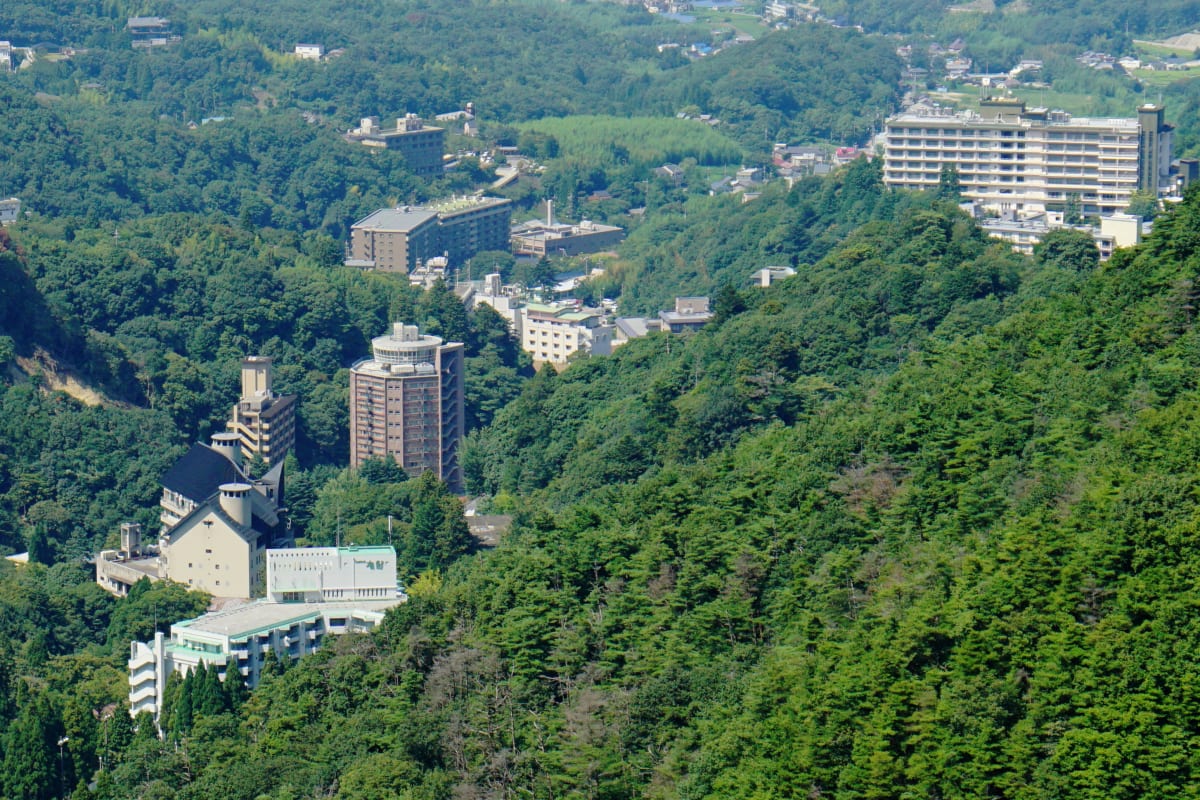
Arima Onsen sits in the hills above Kobe, close to Mount Rokko, and ranks among the oldest hot spring towns in Japan. The town draws visitors for two entirely different spring types that coexist within its compact footprint. Kinsen is the iron-rich golden water that stains surrounding rocks a rusty orange, while ginsen runs clear and carries both carbonation and mild radioactivity. Few other onsen destinations in Japan bring together two such distinct water types within a single small town.
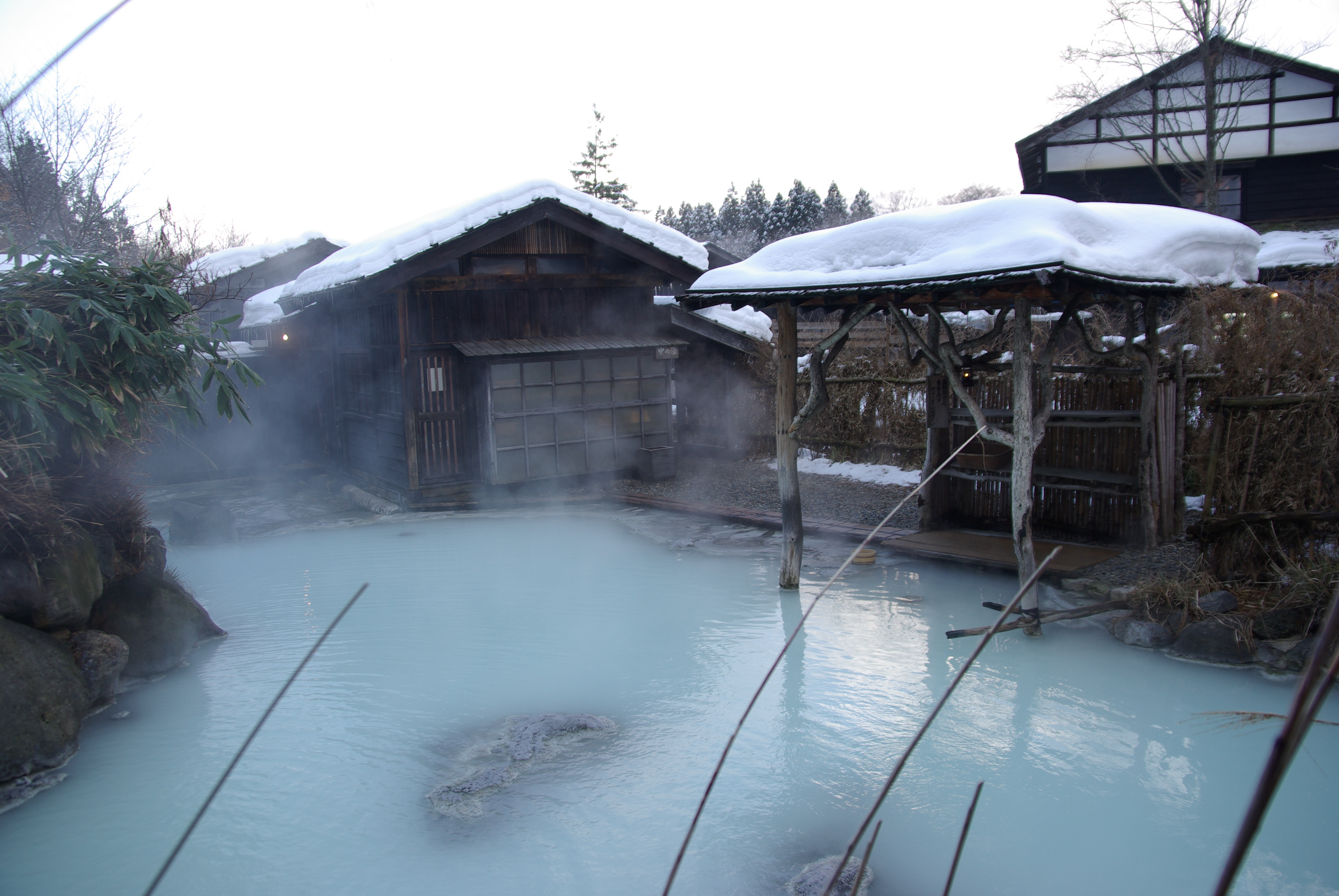
Tsuru-no-yu is the oldest of the seven inns at Nyuto, set deep in a beech forest in Akita Prefecture. The main draw is a large outdoor mixed-bathing pool fed by opaque, milky-white sulfurous water. Many regard it as the most beautiful onsen setting in Japan. People come here to put some distance between themselves and the rest of the world for a while.
Amenities
Getting there
Take the Joetsu Shinkansen from Tokyo to Takasaki Station, then transfer to the JR Agatsuma Line to Nakanojo Station, about 50 minutes from Takasaki. From Nakanojo, take a Kan-etsu Kotsu bus or taxi to Sawatari Onsen, about 20 minutes.
Location & nearby
Sawatari Onsen, Kamisawatari, Nakanojo, Agatsuma District, Gunma 377-0541
Make a day of it
Pair your soak with these nearby spots.
Attraction
SawawatarionsenkōShūYokujō
0.0km away
Attraction
Sawawatarionsen RyūNakan
0.0km away
Park
BantsuriseseragikōEn
0.3km away
Attraction
SawawatarionsenautodoapāKu
1.4km away
More springs in Kanto
 FREE
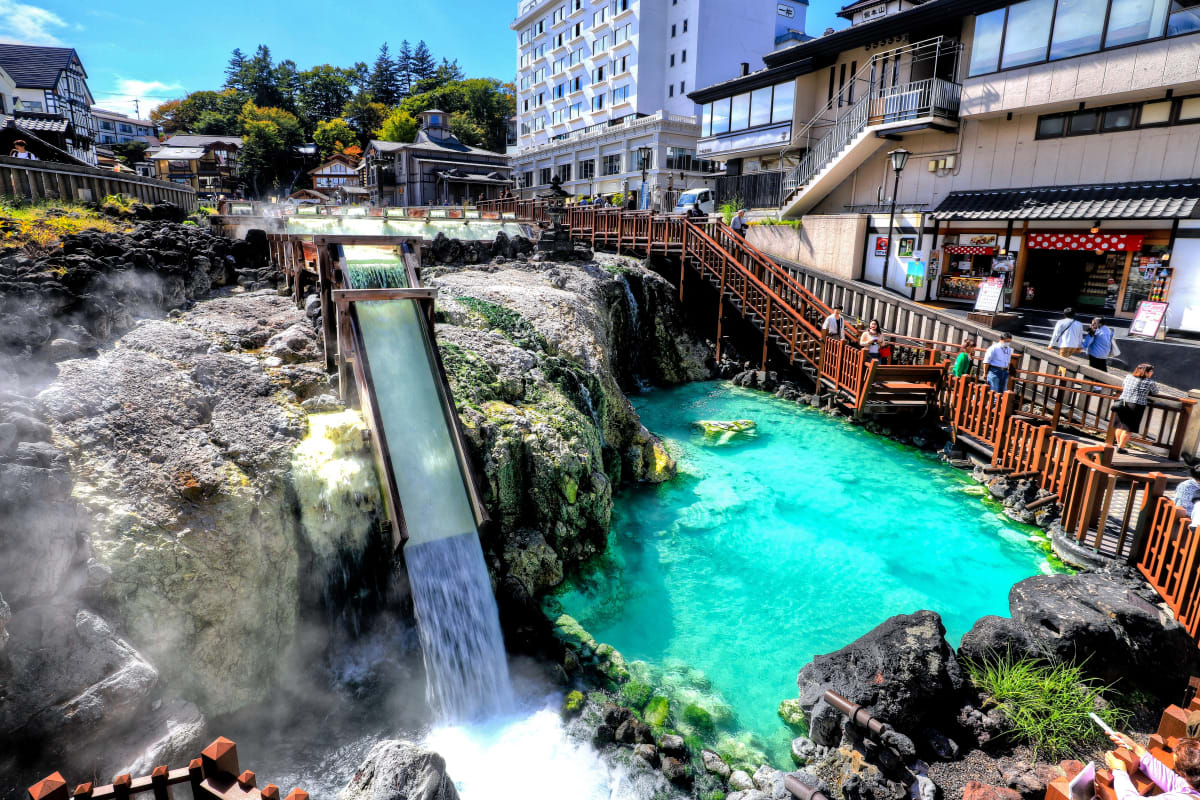
FREEKusatsu Onsen sits at 1,200 meters in the mountains of Gunma Prefecture and ranks among the most celebrated hot spring towns in Japan. The springs here produce more than 32,000 liters of water per minute, a volume unmatched anywhere else in the country. The water is strongly acidic and sulfurous, and its skin-healing properties have long made it legendary among visitors. Twice each day in the central town square, workers cool the scalding water by pulling long wooden paddles through it in unison while singing traditional songs. This practice is called yumomi.
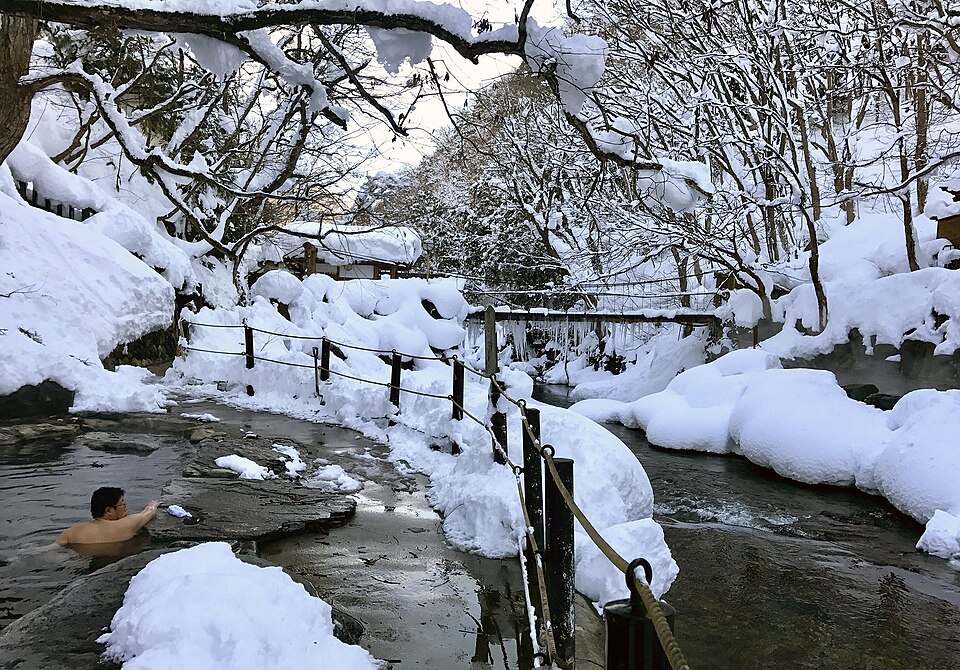
A mountain hot spring resort in Gunma Prefecture, positioned along the Takara River roughly 100 kilometers outside Tokyo. The centerpiece is a large outdoor bath built right at the river's edge, with dense forest climbing the slopes on either side. One portion of the bathing area accommodates mixed-gender soaking. The draw here is the pairing of untamed river scenery with open-air thermal pools.
Ikaho Onsen sits on a hillside in Gunma Prefecture, its layout defined by 365 stone steps that rise through a narrow valley flanked by ryokan and traditional shops. The waters are iron-rich and run a characteristic golden-brown, a color reflecting the mineral content that has drawn visitors since the Nara period. The staircase serves as the town's central axis, with nearly all activity concentrated along its length or on the side streets branching from it.
Common questions
What is the water temperature at Sawatari Hot Springs?▾
The water temperature at Sawatari Hot Springs ranges up to 55°C (minimum around 54°C).
Is Sawatari Hot Springs free to visit?▾
Sawatari Hot Springs charges an entrance fee in JPY.
Is Sawatari Hot Springs a public or private bath?▾
Sawatari Hot Springs is a public bathing spring.
Are tattoos allowed at Sawatari Hot Springs?▾
No, Sawatari Hot Springs does not permit visible tattoos.
What is the nearest station to Sawatari Hot Springs?▾
The nearest station to Sawatari Hot Springs is Sawatari Onsen, about 0.2km away.