
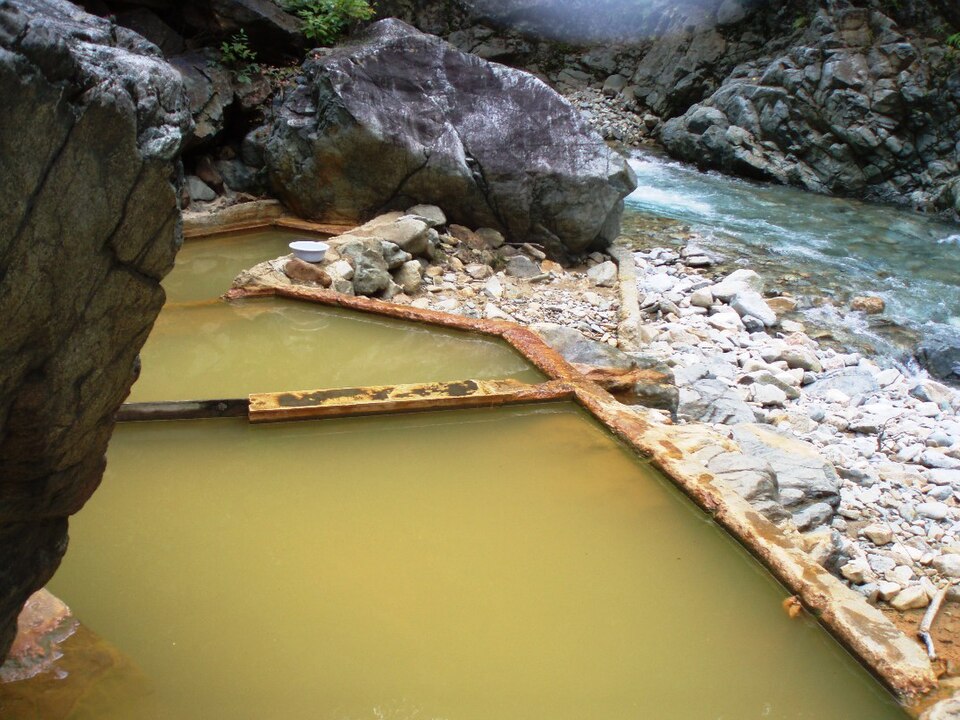
Akayu Onsen
赤湯温泉
Akayu Onsen
sulfur · Tohoku
Hotter than 56% of Japan springs (n=122).
More acidic than 41% of Japan springs (n=121).
Mineral profile
Bar width reflects listing order, not measured concentration.
Suitability
At a glance
Getting there
Easy — under 1km from a station
Cost
Low
About this spring
Akayu Onsen is a historic hot spring town in Nanyo City, Yamagata Prefecture, situated along the Mogami River. The thermal waters carry a sulfurous quality and are valued for their warming effect on the body. The name Akayu, which translates as red hot water, comes from a founding legend rooted in 1093, when soldiers serving Minamoto no Yoshie reportedly bathed in the spring after sustaining wounds, and their skin turned visibly red in the water.
Highlights
History
In the autumn of 1093, warriors of the Minamoto clan moved through this valley in Yamagata.
Local tradition holds that injured men among them found a reddish spring, bathed in it, and recovered with unusual speed. The reddening their skin showed in the water became the origin of the spring's name. The settlement developed over time into a post station along the Oshu Kaido, the great northern highway. During the Edo period, the Uesugi clan of the Yonezawa domain claimed Akayu as a reserved bathing ground for domain nobility. When the Meiji Restoration ended those domain privileges, the town opened itself to the general public as a resort.
Local guide
From Yamagata Station, the Yamagata Shinkansen carries you south through broad rice paddies before the landscape tightens into the rolling hills of Nanyo City. Akayu sits at the center of this small city, about forty minutes from Yamagata by local train. When you step off at the station, the town announces itself immediately with a faint sulfurous tang in the air, the kind of smell that is sharp without being unpleasant, more like struck matchheads than rotten eggs. Fourteen inns and four public bathhouses are spread across a compact grid of streets that you can cover in an easy twenty-minute walk.
The water here is a blend of sulfur, sodium chloride, and calcium chloride, a combination that makes it quite different from the single-note springs you find in alpine villages. It comes out clear, but the sulfur content gives it a slight milky quality in deeper pools, somewhere between transparent and faintly white. On your skin it feels clean and mildly astringent, and the salt content means you feel warm for a long time after you leave the tub. The temperature runs hot, and in winter the contrast between the cold night air and the steaming surface of an outdoor pool is one of the better sensations available in Tohoku.
The public bathhouse Yukotto, which opened in 2022 after the older Azuma-yu and Towa-no-yu facilities closed after fifty years of service, is the central gathering point for locals. It is a plain, functional building, not the grand architectural statement you will find at some famous onsen towns, but that is exactly the point. You buy your ticket from a machine, fold your clothes into a basket, and within two minutes you are submerged alongside Nanyo residents who clearly consider this a normal Tuesday evening. There is no performance of tradition here, just the actual thing.
Akayu also sits in the middle of one of Japan's most productive wine-growing valleys. The Mogami River basin has been growing grapes since the nineteenth century, and several wineries operate within a short drive of the bathhouses. The combination that locals propose, a long soak followed by a glass of Nanyo red wine and a plate of Yonezawa beef, is not a tourist gimmick. It is simply what people do here. If you arrive in cherry blossom season, the ryokans along the main street put on a brief, sincere show of pink that frames the steam rising from the baths in a way that feels genuinely worth seeing.
Mineral chemistry
Water character inferred from mineral type — verify on site.
Sulfuric hot springs are among the most studied in balneology worldwide. The sulfur compounds, primarily hydrogen sulfide and thiosulfate, have documented antimicrobial and anti-inflammatory properties. Regular bathing is associated with relief from chronic skin conditions including eczema and psoriasis, as well as joint inflammation and muscle soreness. Sulfuric waters have been used therapeutically across Asia and Europe for centuries.
The distinctive rotten-egg smell dissipates quickly after leaving the bath. Avoid if you have a sulfur allergy, very sensitive skin, or respiratory conditions. Remove silver jewellery before entering — sulfur will blacken it permanently.
Sodium chloride springs, essentially natural saltwater baths, are celebrated for their warming and moisturising effects. The salt forms a thin film on the skin that slows moisture evaporation, keeping skin hydrated longer than a freshwater bath.
Those with high blood pressure or heart conditions should consult a doctor before bathing, as the warming effect increases circulation. Avoid immersing open wounds.
Calcium chloride springs share the heat-retaining property of sodium chloride springs but with a stronger warming effect. Prized for muscle and joint relief.
The strong warming effect means those with cardiovascular conditions, high blood pressure, or pregnancy should limit soak duration and consult a doctor if in doubt.
Similar springs
 FREE
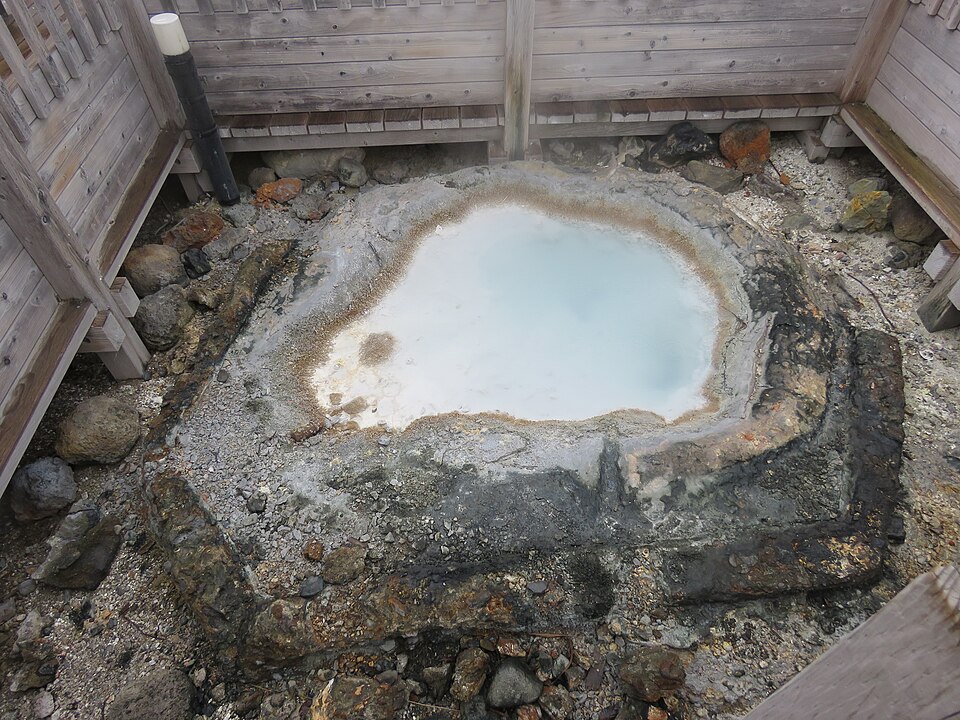
FREEThe valley occupies the center of Noboribetsu Onsen in Hokkaido. Jigokudani translates as Hell Valley. The crater covers 11 hectares and releases roughly 10,000 tonnes of hot spring water each day. Fumaroles vent steam across the floor of the valley, boiling pools bubble at the surface, and the surrounding cliffs carry heavy mineral staining. A walking path winds through the area in about 20 minutes and is open to all visitors at no cost. It ranks among the most striking landscapes accessible on foot anywhere in Japan.
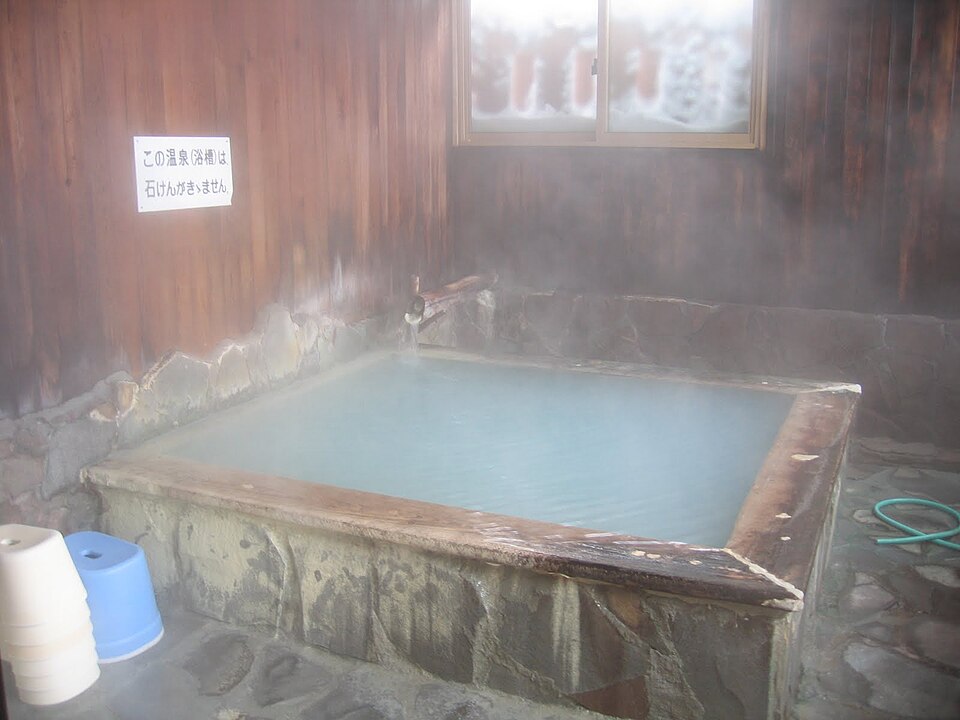
Set deep in the Hakkoda Mountains of Aomori Prefecture, Sukayu Onsen is a historic bathhouse best known for its cavernous mixed-bathing hall, the Sen-nin-buro, which translates as the Bath of a Thousand Bathers. The waters are strongly acidic, the setting is rustic and unhurried, and winter brings extraordinary snowfall to the surrounding mountains.
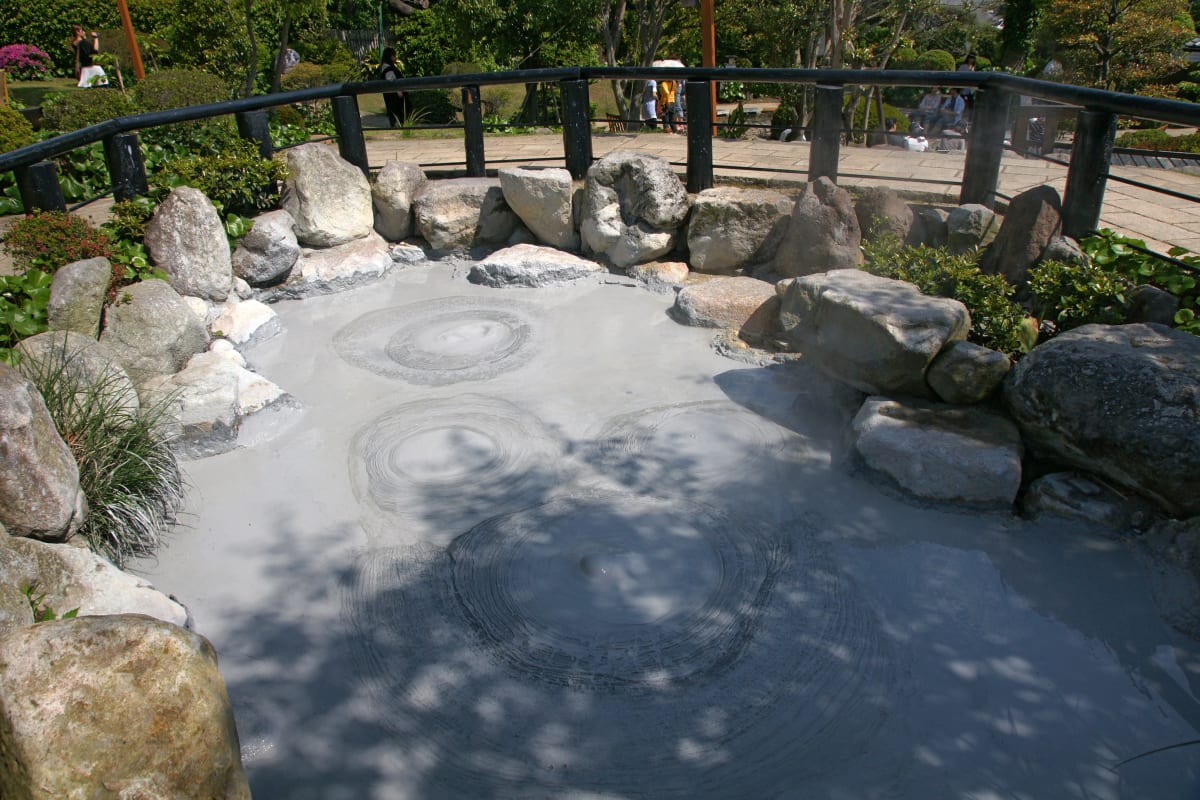
Beppu is the most geothermally active city in Japan, with more than 2,900 hot spring vents located within the city limits and eight distinct thermal spring zones collectively known as the Beppu Hatto. The variety on offer is wide, ranging from grand hotel bathhouses to modest neighborhood public facilities to the celebrated Hells, a collection of brilliantly colored boiling pools scattered across the city. The Hells run far too hot for bathing, but they draw visitors who come to walk among them and take in the spectacle.
 FREE
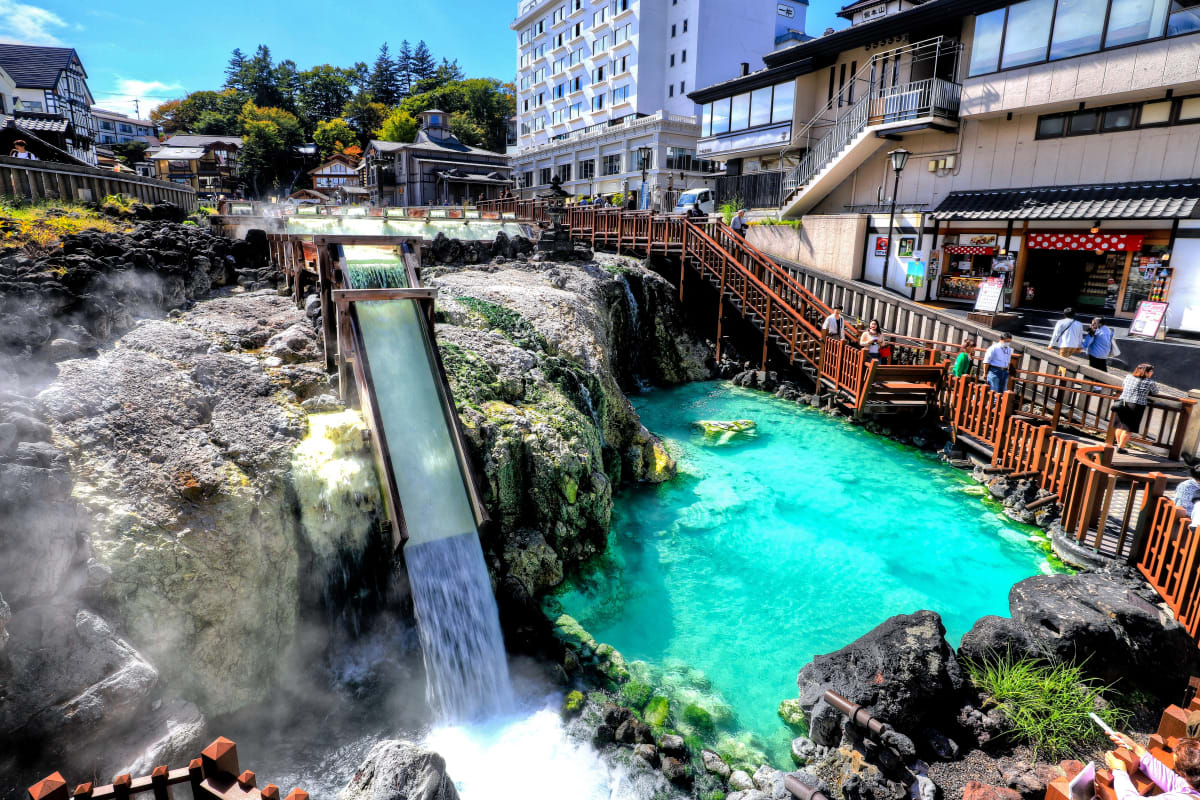
FREEKusatsu Onsen sits at 1,200 meters in the mountains of Gunma Prefecture and ranks among the most celebrated hot spring towns in Japan. The springs here produce more than 32,000 liters of water per minute, a volume unmatched anywhere else in the country. The water is strongly acidic and sulfurous, and its skin-healing properties have long made it legendary among visitors. Twice each day in the central town square, workers cool the scalding water by pulling long wooden paddles through it in unison while singing traditional songs. This practice is called yumomi.
Amenities
Getting there
Take the Yamagata Shinkansen from Tokyo to Akayu Station. The journey takes about 2 hours 30 minutes. The town center and main ryokan are within walking distance of the station.
Location & nearby
Akayu Onsen, Nanyō, Yamagata
Make a day of it
Pair your soak with these nearby spots.
Attraction
Akayuonsen
0.0km away
Attraction
Akayumotoyu
0.0km away
Attraction
Sakurayuyamagumi
0.1km away
Attraction
Tsurunoyu Matsushimakan
0.1km away
Attraction
Tanizumihoteru
0.1km away
Attraction
Morinoyu
0.1km away
More springs in Tohoku
Set deep in the Hakkoda Mountains of Aomori Prefecture, Sukayu Onsen is a historic bathhouse best known for its cavernous mixed-bathing hall, the Sen-nin-buro, which translates as the Bath of a Thousand Bathers. The waters are strongly acidic, the setting is rustic and unhurried, and winter brings extraordinary snowfall to the surrounding mountains.
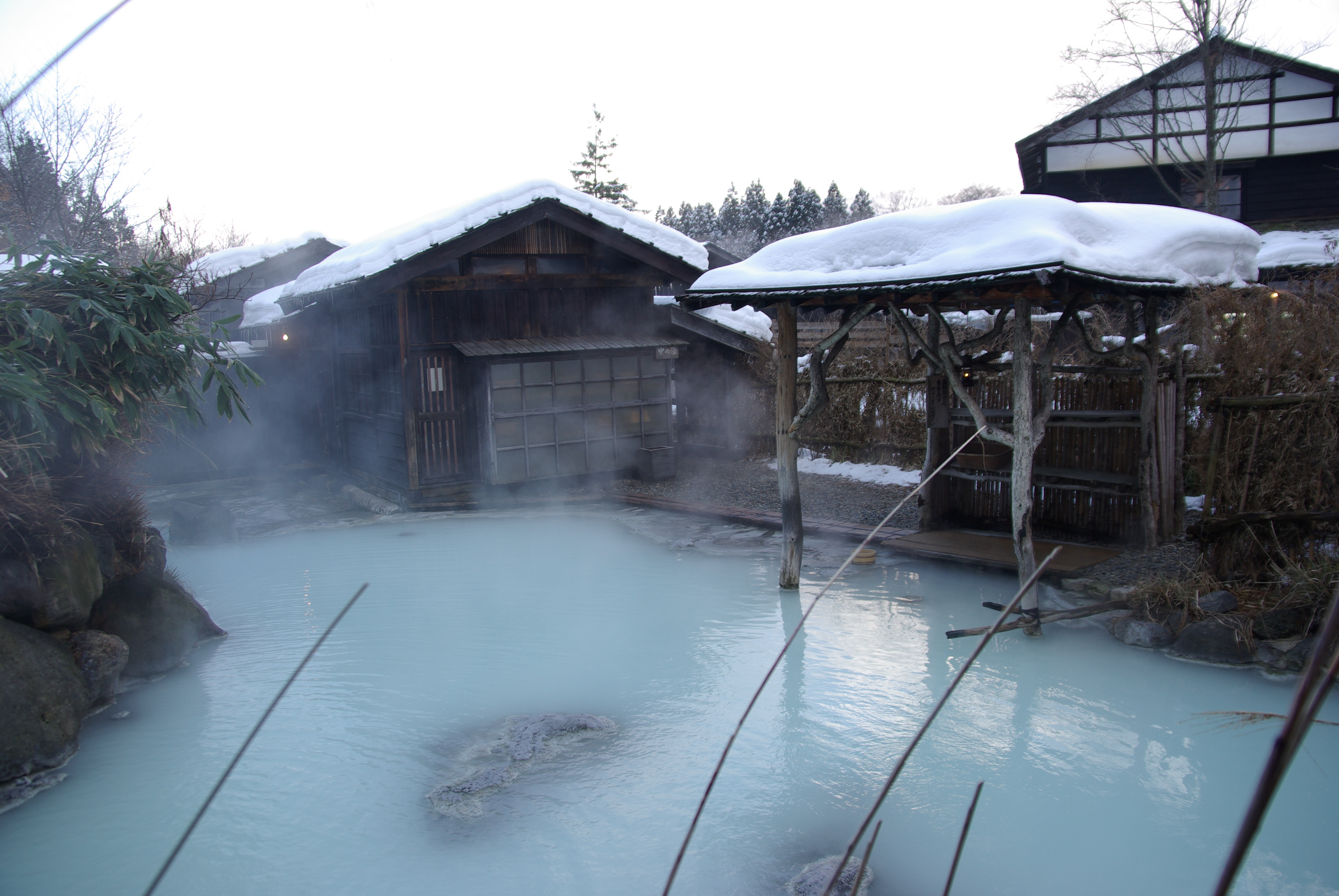
Tsuru-no-yu is the oldest of the seven inns at Nyuto, set deep in a beech forest in Akita Prefecture. The main draw is a large outdoor mixed-bathing pool fed by opaque, milky-white sulfurous water. Many regard it as the most beautiful onsen setting in Japan. People come here to put some distance between themselves and the rest of the world for a while.
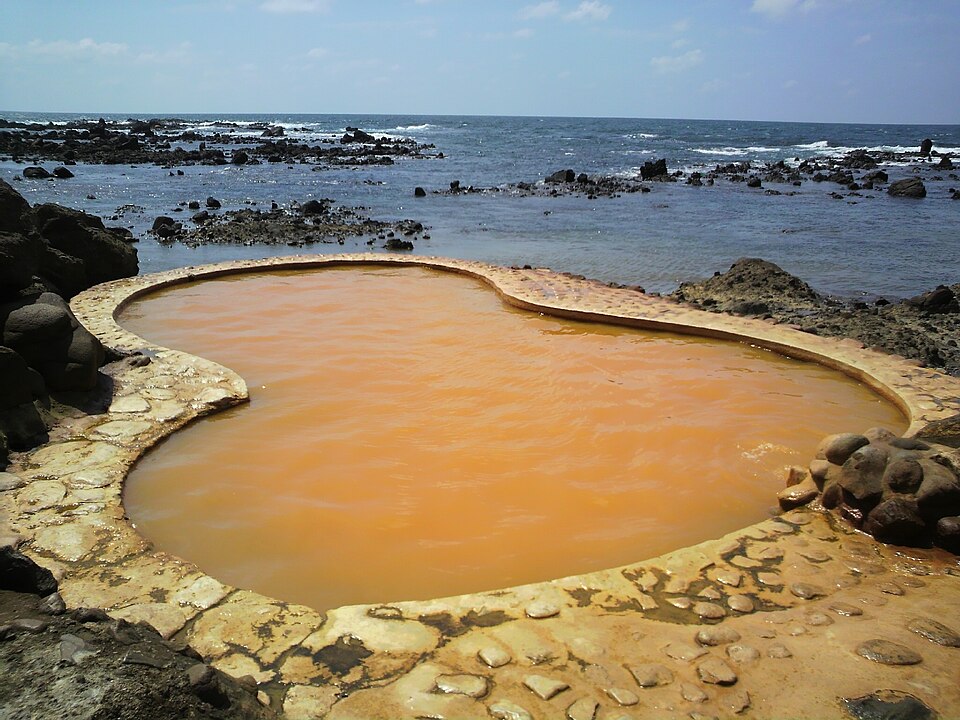
Furofushi Onsen occupies a rocky cape in Fukaura, Aomori Prefecture, with outdoor bathing pools positioned at the edge of the Sea of Japan cliffs. The spring water runs a deep reddish-brown from its high iron and sodium chloride content. The main open-air bath and a dedicated women's pool both use fully undiluted water drawn straight from the source. Sunsets over the water are a particular draw. Once day visitors depart in the late afternoon, overnight guests have the pools to themselves.
Common questions
What is the water temperature at Akayu Onsen?▾
The water temperature at Akayu Onsen ranges up to 63°C (minimum around 45°C).
Is Akayu Onsen free to visit?▾
Akayu Onsen charges an entrance fee in JPY.
Is Akayu Onsen a public or private bath?▾
Akayu Onsen is a public bathing spring.
Are tattoos allowed at Akayu Onsen?▾
No, Akayu Onsen does not permit visible tattoos.