Asahidake Onsen
旭岳温泉
4.0 · 3 reviews · via Google
Asahidake Onsen
calcium-sulfate · Hokkaido
Hotter than 30% of Japan springs (n=122).
More acidic than 15% of Japan springs (n=121).
Mineral profile
Bar width reflects listing order, not measured concentration.
Suitability
At a glance
Getting there
Easy — under 1km from a station
Cost
High
Crowd level
Quiet
About this spring
Asahidake Onsen is a small hot spring village at the foot of Mount Asahidake in Daisetsuzan National Park, Hokkaido. The mountain reaches 2,290 meters, making it the tallest peak on the island. The village itself sits at roughly 1,000 meters elevation and serves as the lower terminal for the Asahidake Ropeway, which carries visitors up to the volcanic plateau in under ten minutes. Few places in Japan combine open alpine wilderness with naturally flowing hot springs in the same way.
Highlights
History
The Ainu knew this place as Yukomambetsu, a name meaning a river that flows toward hot water, which confirms that the geothermal character of the area was recognized well before Japanese settlers arrived.
A man named Akutsu was the first to develop the springs, reaching the site in 1914 and putting up a small bathing hut. Daisetsuzan National Park was established in 1934 as Japan's largest national park, bringing the surrounding wilderness under formal protection. A motorway connecting the village to the broader road network was completed in 1954. The Asahidake Ropeway opened in 1967, turning what had been a remote and difficult destination into one accessible throughout the year.
Local guide
The bus from Asahikawa Station takes about ninety minutes to reach the end of the road at Asahidake Onsen, climbing through farmland and then birch forest before the trees thin out and the volcanic summit of Mount Asahidake fills the windshield. This is Hokkaido's highest peak at 2,291 meters, and the village at its base is small enough that calling it a village is generous: a handful of lodges, the ropeway base station, and clouds of steam rising from fumarolic vents scattered across the open hillside. The whole place feels provisional, like it exists at the pleasure of the mountain rather than in spite of it.
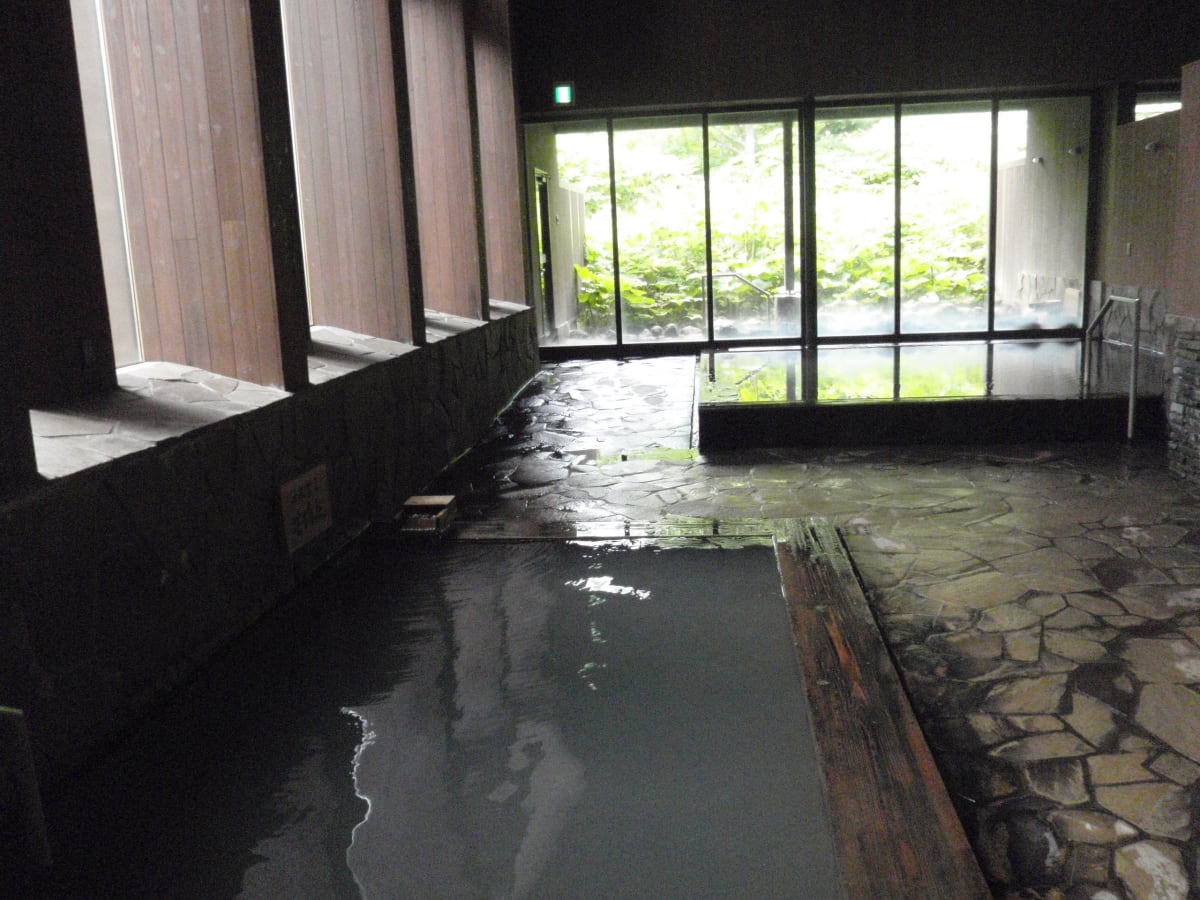
The water chemistry at Asahidake draws from calcium sulfate, sodium sulfate, and sodium chloride springs, which together produce a bath that is clear to faintly cloudy and comes out of the earth between 47 and 51 degrees Celsius. On the skin the sulfate content feels smooth without the strong alkaline slipperiness of some springs. The sulfurous smell is present but mild, more mountain than industrial. Outdoors, where most lodges pipe their water into rotenburo facing the volcanic slope, the steam from the bath mingles with the fumarole steam in a way that makes it impossible to tell which clouds are from the earth and which are from the pool.
Asahidake produces Japan's earliest autumn foliage each year, typically in mid-September, three to four weeks before the forests below turn. The ropeway carries you from 1,100 meters to 1,600 meters in ten minutes, crossing the treeline entirely, and from the upper station you look out across a volcanic plateau where the grasses go yellow and amber weeks before the rest of the country. When you descend from a morning hike and lower yourself into an outdoor bath at Yukomanso or one of the other lodges, the combination of volcanic terrain, early autumn color on the hillside, and the genuine cold of the Hokkaido air is something that is difficult to replicate anywhere else in Japan.
In winter the whole valley transforms completely. The ropeway continues operating for skiers and snowshoers, and the lodges keep their outdoor baths running through temperatures that drop well below minus ten. Soaking in a sulfate spring at minus fifteen while the snow falls straight down through still air is its own specific kind of extreme. The accommodation here is small and plainly furnished, the food is Hokkaido mountain cooking, and the schedule is organized entirely around the mountain. There are no shops or izakayas. What there is, consistently, is one of the most genuinely remote onsen experiences available on the island.
Mineral chemistry
Water character inferred from mineral type — verify on site.
Sulfate springs contain dissolved calcium, sodium, or magnesium sulfate. Calcium sulfate springs are traditionally associated with wound healing and post-surgical recovery.
Sodium sulfate springs can have a mild laxative effect in sensitive individuals — stay well hydrated.
Sodium chloride springs, essentially natural saltwater baths, are celebrated for their warming and moisturising effects. The salt forms a thin film on the skin that slows moisture evaporation, keeping skin hydrated longer than a freshwater bath.
Those with high blood pressure or heart conditions should consult a doctor before bathing, as the warming effect increases circulation. Avoid immersing open wounds.
Similar springs
 FREE
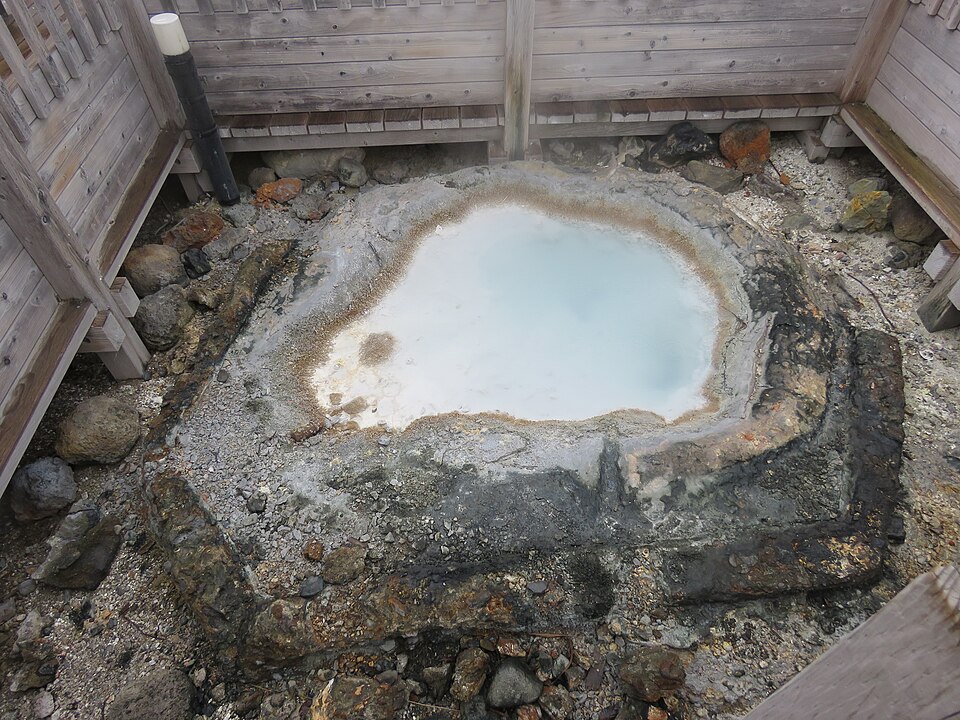
FREEThe valley occupies the center of Noboribetsu Onsen in Hokkaido. Jigokudani translates as Hell Valley. The crater covers 11 hectares and releases roughly 10,000 tonnes of hot spring water each day. Fumaroles vent steam across the floor of the valley, boiling pools bubble at the surface, and the surrounding cliffs carry heavy mineral staining. A walking path winds through the area in about 20 minutes and is open to all visitors at no cost. It ranks among the most striking landscapes accessible on foot anywhere in Japan.
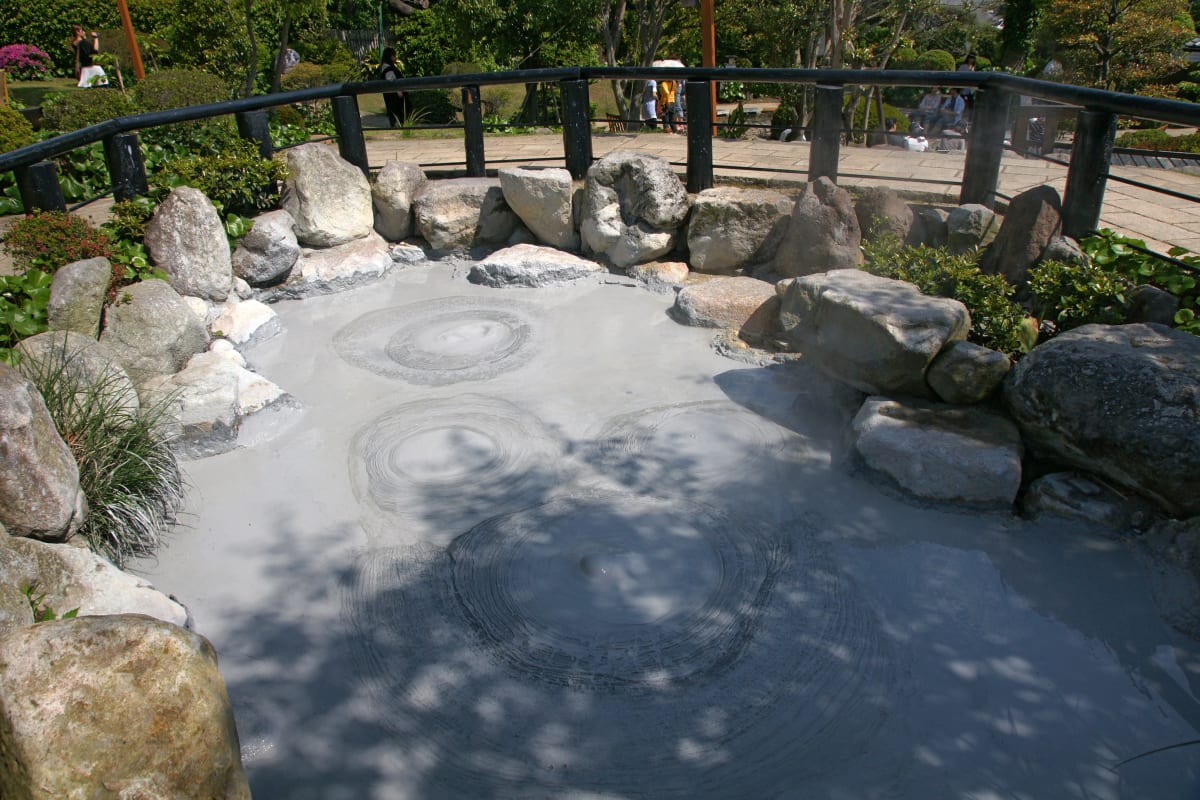
Beppu is the most geothermally active city in Japan, with more than 2,900 hot spring vents located within the city limits and eight distinct thermal spring zones collectively known as the Beppu Hatto. The variety on offer is wide, ranging from grand hotel bathhouses to modest neighborhood public facilities to the celebrated Hells, a collection of brilliantly colored boiling pools scattered across the city. The Hells run far too hot for bathing, but they draw visitors who come to walk among them and take in the spectacle.
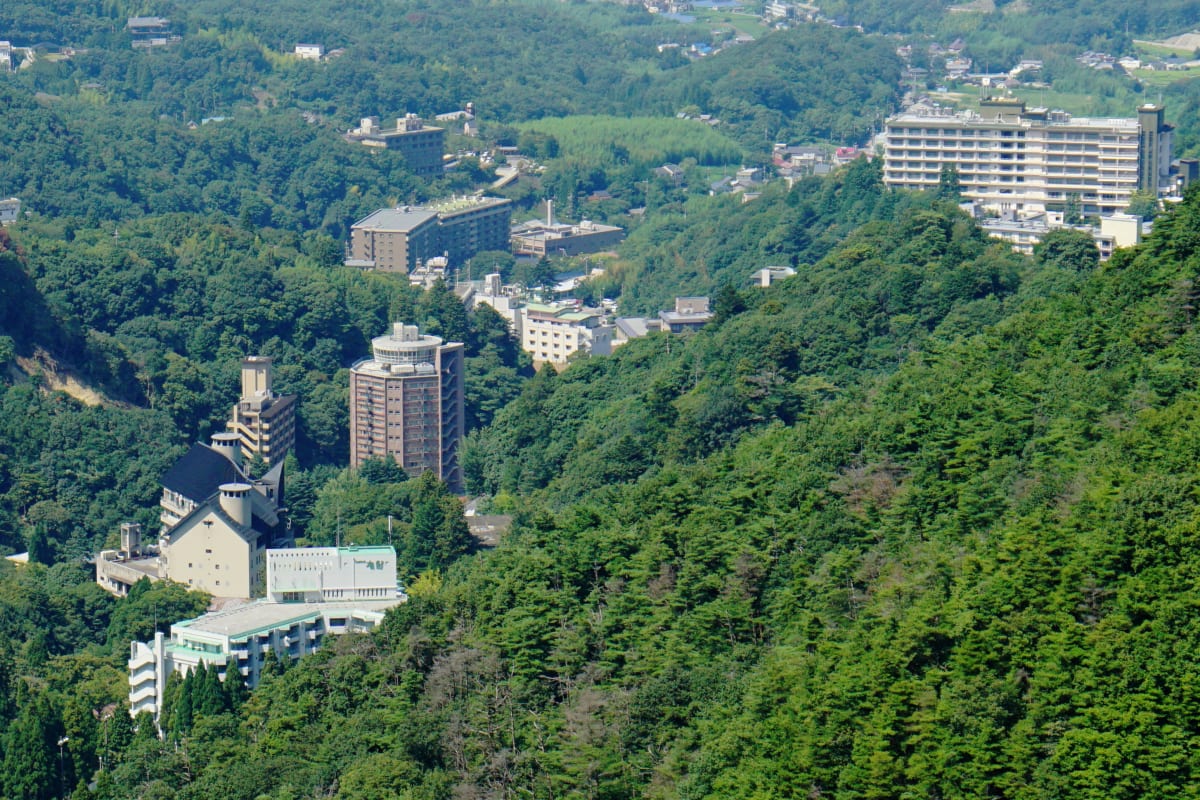
Arima Onsen sits in the hills above Kobe, close to Mount Rokko, and ranks among the oldest hot spring towns in Japan. The town draws visitors for two entirely different spring types that coexist within its compact footprint. Kinsen is the iron-rich golden water that stains surrounding rocks a rusty orange, while ginsen runs clear and carries both carbonation and mild radioactivity. Few other onsen destinations in Japan bring together two such distinct water types within a single small town.
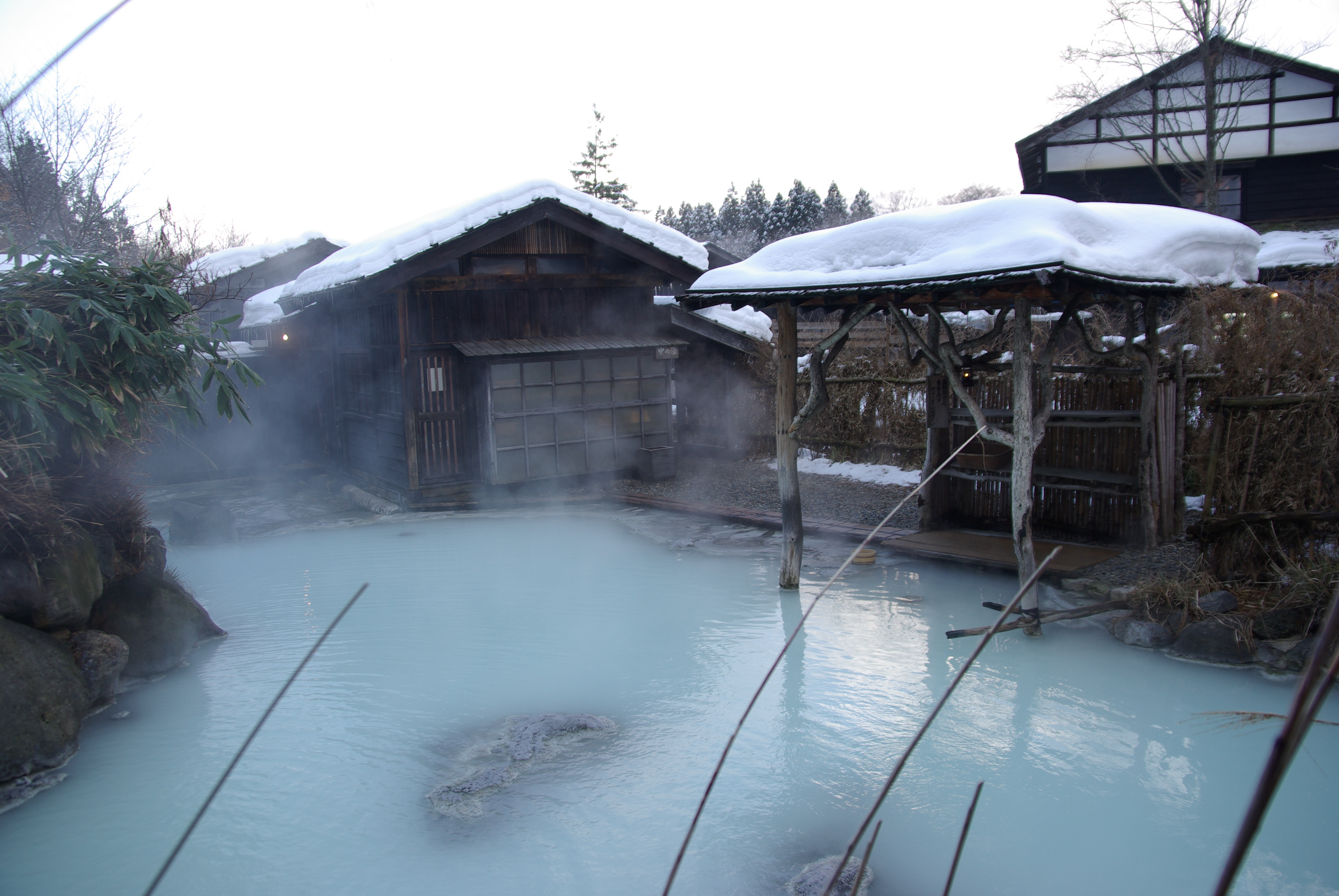
Tsuru-no-yu is the oldest of the seven inns at Nyuto, set deep in a beech forest in Akita Prefecture. The main draw is a large outdoor mixed-bathing pool fed by opaque, milky-white sulfurous water. Many regard it as the most beautiful onsen setting in Japan. People come here to put some distance between themselves and the rest of the world for a while.
Amenities
Getting there
From Sapporo, take the JR limited express to Asahikawa Station, about 80 minutes. Then board the Asahikawa Denkikido Ideyu-go bus (route 66) from Bus Stop 9 outside the station. The ride to Asahidake Onsen takes about 100 minutes. Confirm bus schedules with your accommodation as service may be reduced in winter.
Location & nearby
〒071-1472 Hokkaido, Kamikawa District, Higashikawa, Yukomanbetsu, 旭岳温泉
Make a day of it
Pair your soak with these nearby spots.
Attraction
Yumotoyu Komaso
0.3km away
Attraction
Asahidake Onsen
0.5km away
Attraction
Komadomenotaki
0.5km away
Park
Asahitakeshibijita Senta
0.6km away
Park
Asahidake, Hokkaido
0.8km away
Attraction
Yukomambetsushitsugen
0.9km away
More springs in Hokkaido
FREEThe valley occupies the center of Noboribetsu Onsen in Hokkaido. Jigokudani translates as Hell Valley. The crater covers 11 hectares and releases roughly 10,000 tonnes of hot spring water each day. Fumaroles vent steam across the floor of the valley, boiling pools bubble at the surface, and the surrounding cliffs carry heavy mineral staining. A walking path winds through the area in about 20 minutes and is open to all visitors at no cost. It ranks among the most striking landscapes accessible on foot anywhere in Japan.
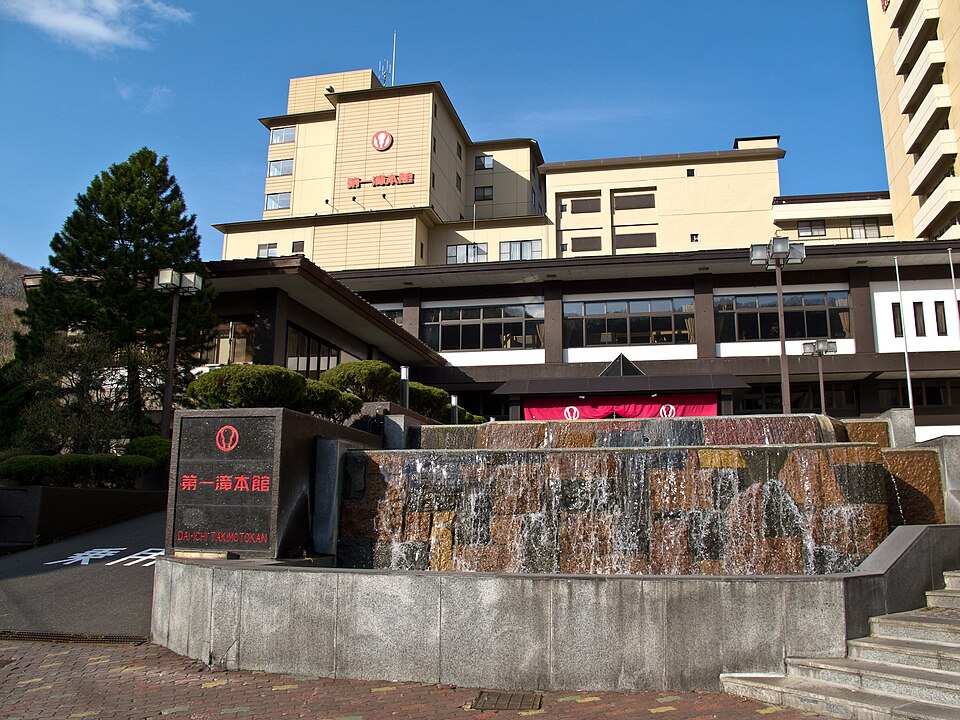
One of Hokkaido's most celebrated bathhouses. Dai-ichi Takimotokan channels water from seven distinct mineral springs into 35 pools spread across multiple floors. Indoor halls open onto outdoor rotenburo overlooking the steam-filled valley below. Day visitors are welcome without an overnight stay.
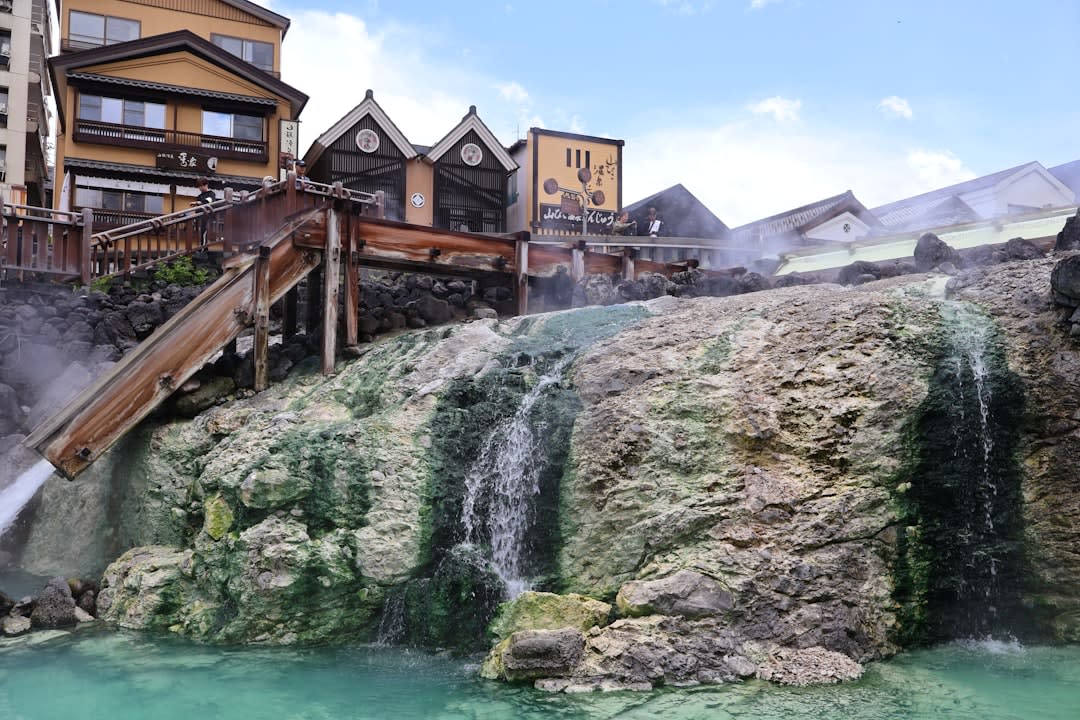
Noboribetsu Onsen is the best-known hot spring resort in Hokkaido, centered on a volcanic crater called Jigokudani, a name that translates to Hell Valley. From the crater floor, nine chemically distinct spring types rise to the surface, each with its own mineral character. Sulfurous steam drifts across the landscape constantly, giving the valley a quality found nowhere else in Japan. The ground here is visibly alive.
Common questions
What is the water temperature at Asahidake Onsen?▾
The water temperature at Asahidake Onsen ranges up to 51°C (minimum around 47°C).
Is Asahidake Onsen free to visit?▾
Asahidake Onsen charges an entrance fee in JPY.
Is Asahidake Onsen a public or private bath?▾
Asahidake Onsen is a mixed bathing spring.
Are tattoos allowed at Asahidake Onsen?▾
Tattoo policy varies at Asahidake Onsen. Check ahead of your visit.