

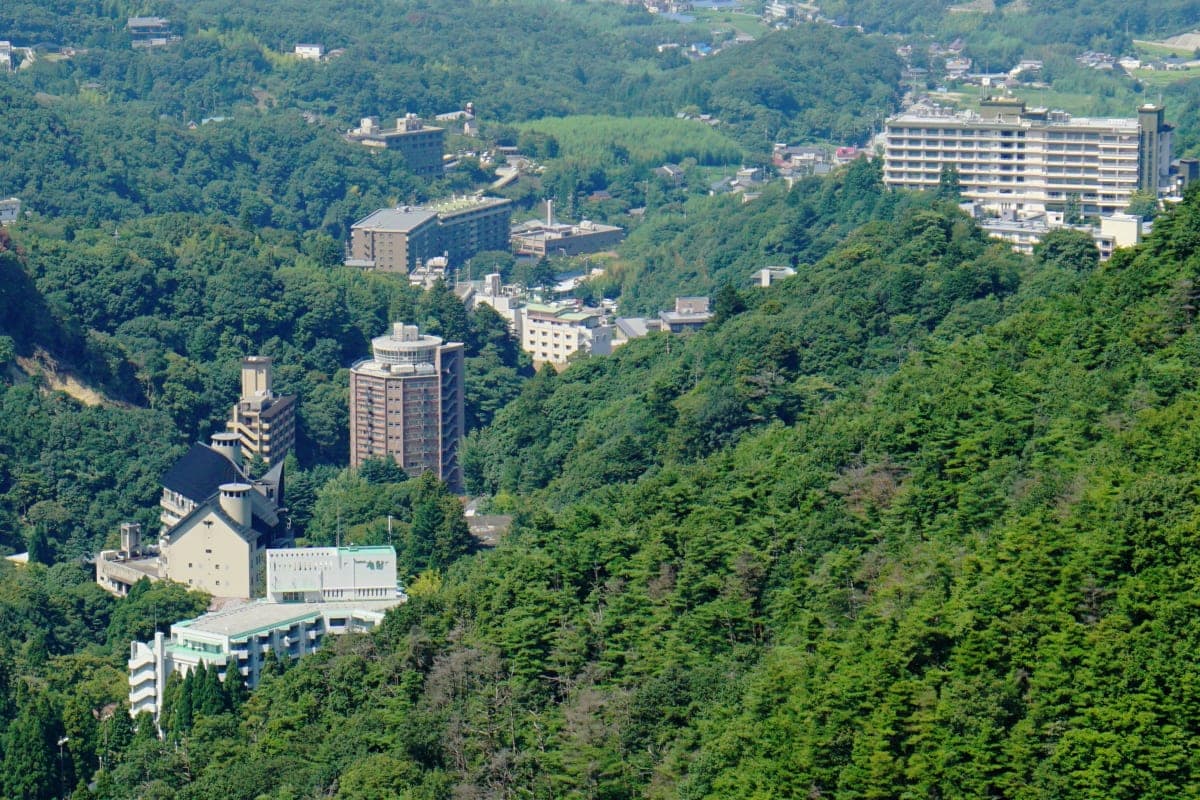
Public · Indoor & Outdoor · ¥650
Arima Onsen
有馬温泉
98°CPublic BathIndoor & Outdoorironsodium-chlorideradiumcarbonate
4.4· 3,600 reviewsvia Google
34–98°CWater temp
6.5pH
¥650 (~$4)Entry fee
PublicBathing type
—Opening hours
About this spring
One of Japan's oldest hot spring towns, tucked into the hills behind Kobe near Mount Rokko. The town is celebrated for two completely distinct spring types: kinsen, the golden iron-rich water that leaves a rust tint on the rocks, and ginsen, a colorless radioactive and carbonated water. Very few onsen destinations in Japan offer this level of contrast in a single small town.
Data: Wikipedia (CC BY-SA 4.0) · OpenStreetMap (ODbL)
Highlights
- Kinsen golden spring
- Ginsen colorless spring
- One of Japan's three ancient towns
- Easy Kobe and Osaka access
Suitability
Tattoo policy
Policy varies
Children policy
Family-friendly
Altitude
350m
Mineral chemistry
Iron
Benefits
Iron-bearing springs are recognised by their characteristic rust-red or amber colour and metallic taste. The iron content — primarily ferrous bicarbonate or ferric sulfate — is associated with stimulation of red blood cell production and is traditionally recommended for anaemia and fatigue recovery. The distinctive colouring comes from iron oxidising on contact with air and is not a sign of contamination.
Note
Iron springs will stain light-coloured swimwear and towels a persistent brownish-orange. Avoid wearing white or light fabrics into the water. Those with haemochromatosis (iron overload condition) should seek medical advice before bathing.
Sodium Chloride (Salt)
Benefits
Sodium chloride springs — essentially natural saltwater baths — are celebrated for their warming and moisturising effects. The salt forms a thin film on the skin after bathing that slows moisture evaporation, keeping skin hydrated longer than a freshwater bath. This "heat-retaining" property means bathers stay warm for significantly longer after leaving the water, making these springs especially popular in winter. Salt springs are among the most accessible for first-time onsen visitors.
Note
Those with high blood pressure or heart conditions should consult a doctor before bathing, as the warming effect increases circulation. Avoid immersing open wounds. The salt will sting slightly in eyes — take care when submerging.
Radium (Radon)
Benefits
Radium or radon springs (放射能泉) are a recognised therapeutic category under Japan's Onsen Law. At the low concentrations found in natural springs, radon exposure is associated with hormesis — a mild beneficial stress response — and has been studied for effects on rheumatism, gout, and certain skin conditions. Misasa Onsen in Tottori Prefecture is Japan's most famous radium spring and has been the subject of long-running epidemiological research.
Note
The radon concentrations in natural hot springs are far below levels associated with health risk, and the Japanese government regulates maximum permissible concentrations. Standard onsen soak times are safe. Those with concerns about radiation exposure during pregnancy should consult a doctor.
Carbonated (CO₂)
Benefits
Carbonated hot springs are genuinely rare — natural CO₂ concentration dissolves rapidly at high temperatures, so most are warm rather than hot (typically 30–37°C). The dissolved carbon dioxide creates micro-bubbles that cling to the skin, dilating capillaries and boosting local circulation to a degree comparable to mild exercise. This effect is used therapeutically in Japan for cardiovascular rehabilitation and is one reason carbonated springs are sometimes called "heart baths." The tingling sensation is mild and pleasant.
Note
Carbonated springs are typically cooler than conventional onsen. The circulation-boosting effect means those with cardiovascular conditions should soak for shorter periods (10–15 minutes maximum) and exit slowly to avoid lightheadedness. CO₂ is heavier than air — in enclosed bathhouses, ventilation is important.
History
References to Arima's waters appear in the Pillow Book and other Heian-period writings of the tenth and eleventh centuries.
The springs are named alongside Arima in one of Japan's earliest lists of celebrated hot spring destinations. The Buddhist monk Gyoki is credited with developing the site in the eighth century. In the sixteenth century, Toyotomi Hideyoshi was an ardent devotee who visited more than ten times, reportedly bathing here before and after his military campaigns. He transformed Arima from a remote therapeutic retreat into a prestige destination that attracted the elite of his era.
Local guide
One way to reach Arima is to take the Hankyu Line to Rokko Station, ride the Rokko Cable Car for ten minutes up through the pine forest to the summit plateau, cross the top of Mount Rokko on a winding bus road, and then drop down the far side on the Arima Ropeway in twelve minutes. When the gondola emerges from the trees and the old tile rooftops of the village come into view below you, the fact that you are less than an hour from central Kobe feels almost impossible. Arima sits in a steep-sided valley that cuts it off completely from the surrounding city, and that isolation is exactly why it has survived as a genuine hot spring town rather than a theme park version of one.
Arima is famous for having two entirely different kinds of water, and the difference between them is not subtle. The kinsen, or gold spring, arrives at the surface as a clear liquid but oxidizes almost immediately on contact with air, turning into a thick, reddish-brown water that looks like diluted rust. It is loaded with iron and sodium chloride, and when you lower yourself into a kinsen bath your skin is immediately coated with a faint mineral film, almost like being wrapped in warm salt air. The color stains the tiles and the stones a deep orange-brown over time, which gives the older bathhouses a patina that no amount of cleaning will remove. The ginsen, by contrast, stays clear, carries radium and carbonate, and produces a cool, fizzy sensation on the skin that feels completely different from the heavy warmth of the gold water.
The main public facility, Kin no Yu, is a low, plain building near the center of the village that has been in operation for a very long time. You pay a few hundred yen, leave your shoes in a cubby by the door, and join whoever is already in the cloudy brown water. Tosen Shrine, which guards the gods said to have discovered the springs, sits a short walk uphill and is the kind of small, shaded place that deserves ten quiet minutes even if you are not religious. The narrow shopping street between them sells ginger sweets that Hideyoshi Toyotomi supposedly requested on his visits in the sixteenth century, a detail that is probably embellished but is also probably at least partly true.
On winter evenings, when the temperature drops sharply in the valley, the red lanterns along the main street reflect in the wet stone paving and the steam rises from every drain and gutter. Standing at the edge of the public bath with the iron-brown water steaming in front of you, looking out through the wooden lattice at the dark hillside above the town, you understand why this place has been drawing visitors for well over a thousand years. It is not comfortable in a modern hotel sense. It is comfortable in a much older and more reliable way.
How this spring compares
pH level
6.5
More alkaline than19% of Japan springs
More acidic than75% of Japan springs
Japan median7.3
Japan range1.2–11.3
n=121 springs
Max temperature
98°C
Hotter than93% of Japan springs
Japan median60°C
Japan hottest105°C
n=122 springs
Getting there
Kobe Municipal Subway + Kobe Electric Railway→ Arima Onsen
Walk to bathhouse
Total: 35 min
From Shin-Kobe Station, take the Kobe Municipal Subway Seishin-Yamate Line to Tanigami Station, then transfer to the Kobe Dentetsu Arima Line via Arimaguchi to Arima Onsen Station. The total journey takes about 40 minutes. From Osaka Umeda, direct buses to Arima take about 75 minutes.
Amenities
Towel rental
Locker
Restaurant
Café
Parking
Wheelchair access
English spoken
Tattoo-friendly
Private bath
Soap provided
Hair dryer
Location & nearby
Arima Onsen, Arimacho, Kita Ward, Kobe, Hyogo 651-1401
Arima Onsen · 0.1 km
Shin-Kobe Station · 12.4 kmShinkansen
Arimaguchi Station · 2.5 km
Gosha Station · 3 km
Karatodai Station · 3.4 km
Osaka Itami Airport · 17.4 km
Kobe Airport · 18.2 km
Arima Onsen Hot Springs · 0.2 km
Arima Onsen (Taikoubashi) Bus Stop (Kobe Airport Line - Downhill Station) · 0.3 km
Arima Onsen [Taikobashi] · 0.3 km
Book a stay nearby
Hotels near Kobe
32+ optionsSpringsAtlas may earn a commission from bookings made through these links.
More springs in Kansai
1 / 13






Last verified:
Data: OpenStreetMap (ODbL) · local tourism agencies
Verified listing