
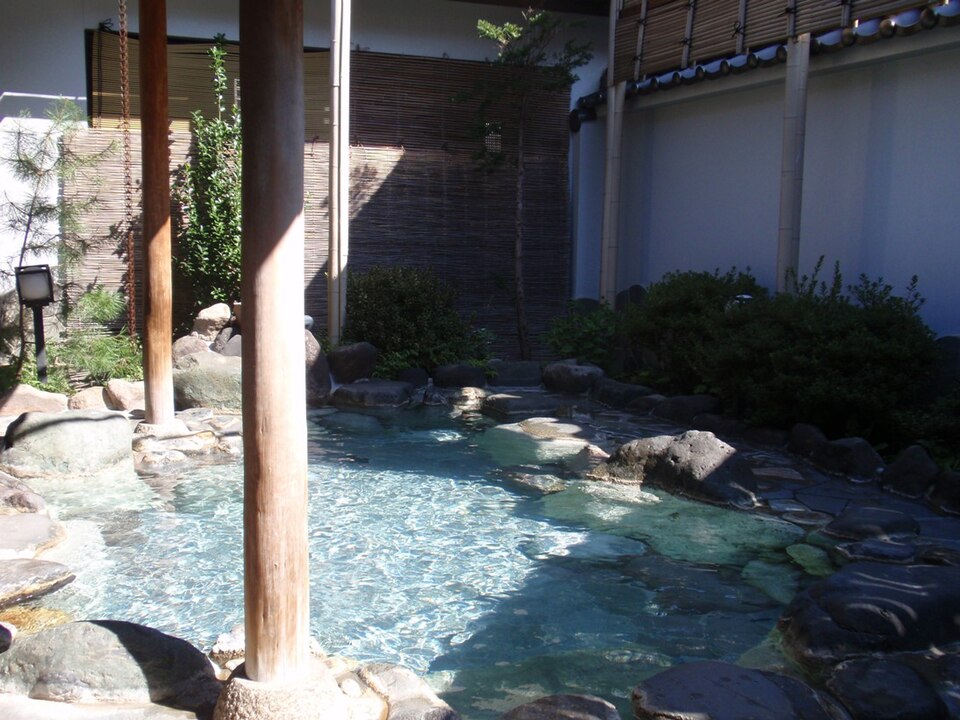
Kakeyu Onsen
鹿教湯温泉
Kakeyu Onsen
simple-alkaline · Chubu
Hotter than 22% of Japan springs (n=122).
More acidic than 73% of Japan springs (n=121).
Mineral profile
Bar width reflects listing order, not measured concentration.
Suitability
At a glance
Getting there
Easy — under 1km from a station
Cost
Low
About this spring
Kakeyu Onsen is a hot spring village in Ueda City, Nagano Prefecture. Its name translates roughly as deer-guided hot spring, recalling a pilgrim who wandered through the mountains and was led to a steaming pool by a deer that was, in truth, the Bodhisattva Monju in animal form. The waters here have been flowing for roughly 1,200 years. The main public bathhouse, Monju no Yu, is supplied by five individual springs.
Highlights
History
The founding story is the source of the village's name.
A pilgrim, deep in the mountains and having lost his way, tracked a deer into a gorge where hot water bubbled up from the ground. The animal was eventually recognized as the Bodhisattva Monju, deity of wisdom. Monjudo Temple was raised beside the site to commemorate the event. The village also lies within territory once controlled by the Sanada clan, one of the most celebrated warrior families in Japanese history. Ueda Castle served as the Sanada stronghold and repelled Tokugawa forces on two occasions, in 1585 and 1600. Soldiers from each side are said to have used the valley's waters for recovery after those engagements. The Ministry of the Environment has since designated it a National Recreation Hot Spring.
Local guide
From Ueda Station on the Hokuriku Shinkansen, the bus ride into the hills above the Chikuma River plain takes forty minutes on a road that climbs through cedar and broadleaf forest before leveling out at a small plateau. Kakeyu Onsen sits at the center of a tight cluster of about thirty inns along a riverside avenue that has been in use since before the Edo period. The name comes from a local story about injured deer: hunters following a wounded animal supposedly watched it wade into a particular spring repeatedly until the wound closed. The founding legend runs this way for a lot of Japanese onsen towns, but at Kakeyu the deer story shows up in enough records from enough different periods that it seems to have been taken seriously for a long time.
The spring water here is simple-alkaline at 45 degrees, clear and colorless, with a faint slippery quality on the skin that is characteristic of higher-alkalinity waters. It is not as dramatically alkaline as Iiyama, but it is distinctly smoother than neutral water, and you notice it immediately on entry as a lack of resistance, as if the water wants to let you through. Long-time visitors use the phrase hadanururu, meaning skin-slippery, to describe it. The inn culture at Kakeyu runs toward the traditional end: wooden buildings, corridor baths, low tables, and the assumption that guests are there to rest for two days and not be hurried.
One specific practice that sets Kakeyu apart is the encouragement to drink the spring water as well as bathe in it. A small facility called Monju no Yu near the center of the village offers both bathing and a drinking fountain where visitors take cups of warm spring water to treat digestion and various internal conditions. This kind of drinking-bath culture, nomun onsen, is much less common than ordinary bathing and requires a spring that is mild enough to be safe. Kakeyu's alkaline water qualifies.
The plateau setting means winters are serious, with significant snowfall turning the narrow avenue into a compressed white tunnel between the old inn fronts. In late October the maples between the buildings go bright red and drop into the river, and the contrast between the hot pale water in the outdoor baths and the cold air coming off the Chikuma valley is the version of this experience you will remember longest.
Mineral chemistry
Water character inferred from mineral type — verify on site.
Alkaline springs (pH above 8) are known for their skin-softening effect, sometimes called "beauty water" in bathing cultures across Asia. The high pH saponifies skin oils, producing a characteristic silky feel on the skin surface.
The slippery feeling underfoot in highly alkaline springs is normal — take care when standing and walking in the bath. Avoid prolonged soaking if you have dry or sensitive skin.
Similar springs
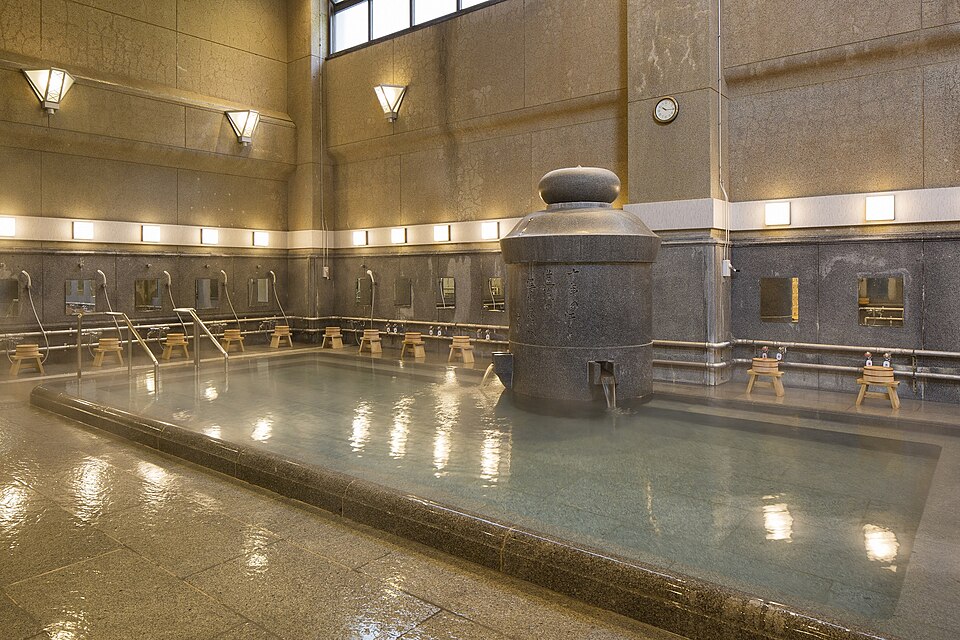
Tsubaki Onsen occupies a single large bathhouse on the Kii Peninsula in Wakayama Prefecture, surrounded by forest and roughly 2.5 hours from Osaka by train. The spring registers pH 9.9, placing it among the most alkaline waters in Japan. The facility is straightforward and well-maintained, attracting visitors from the Kumano region as well as day-trippers traveling in from the coast.
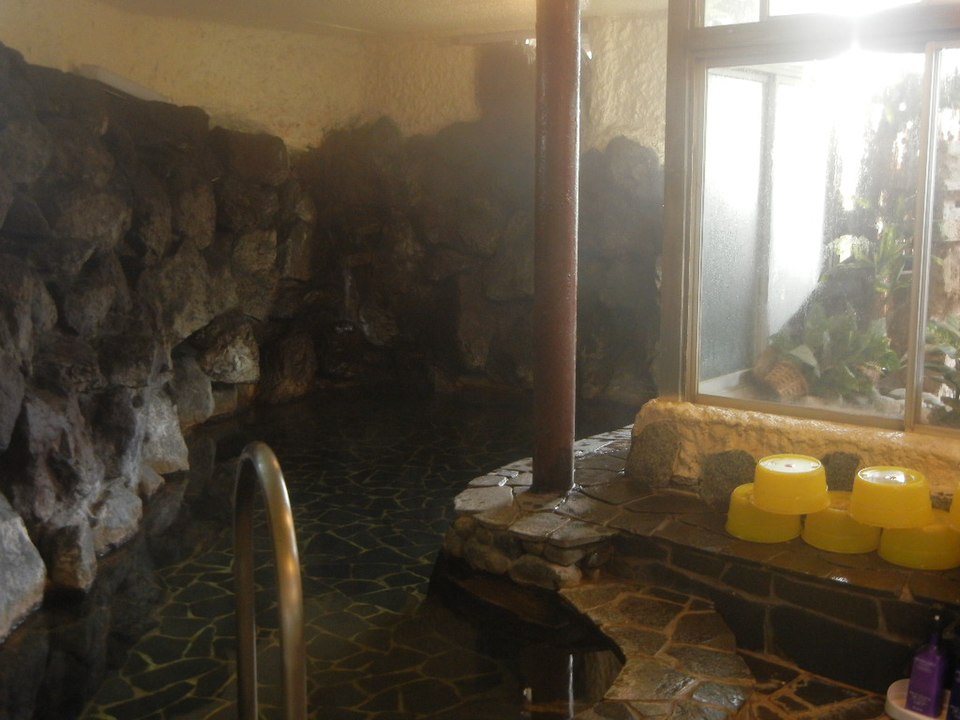
Iiyama Onsen sits in northern Nagano Prefecture near the Nozawa Onsen highlands and produces water with a pH of 11.3, placing it among the most alkaline natural hot springs anywhere in Japan. The soft, high-alkaline water has long been sought out as a beauty spring, widely praised for the way it smooths and softens the skin. The Hokuriku Shinkansen now stops at Iiyama Station, cutting travel time from Tokyo considerably.
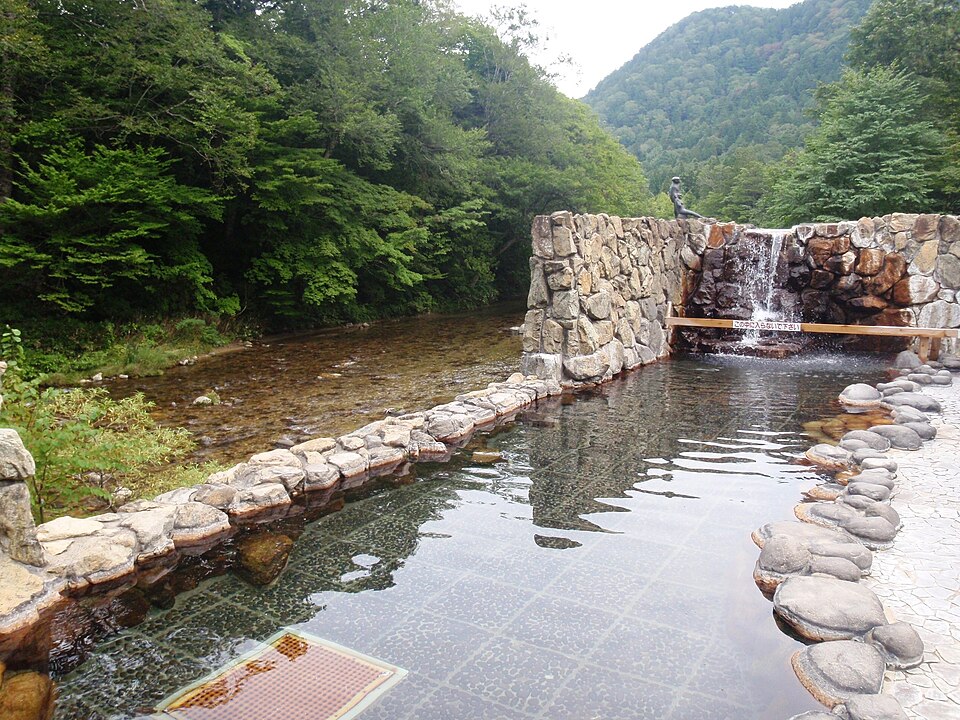 FREE
FREEKappa-no-yu is a free, open-air bathing spot tucked into Yagen Valley on the Shimokita Peninsula in Aomori Prefecture, roughly 2 kilometers up the slope from the central Yagen Onsen cluster. Two separate baths rest beside a clear mountain stream, surrounded by old-growth beech and cypress trees. The water temperature holds at 46 degrees Celsius. Visitors are not permitted to bring soap or shampoo. The baths are open from April through November and charge no entry fee.
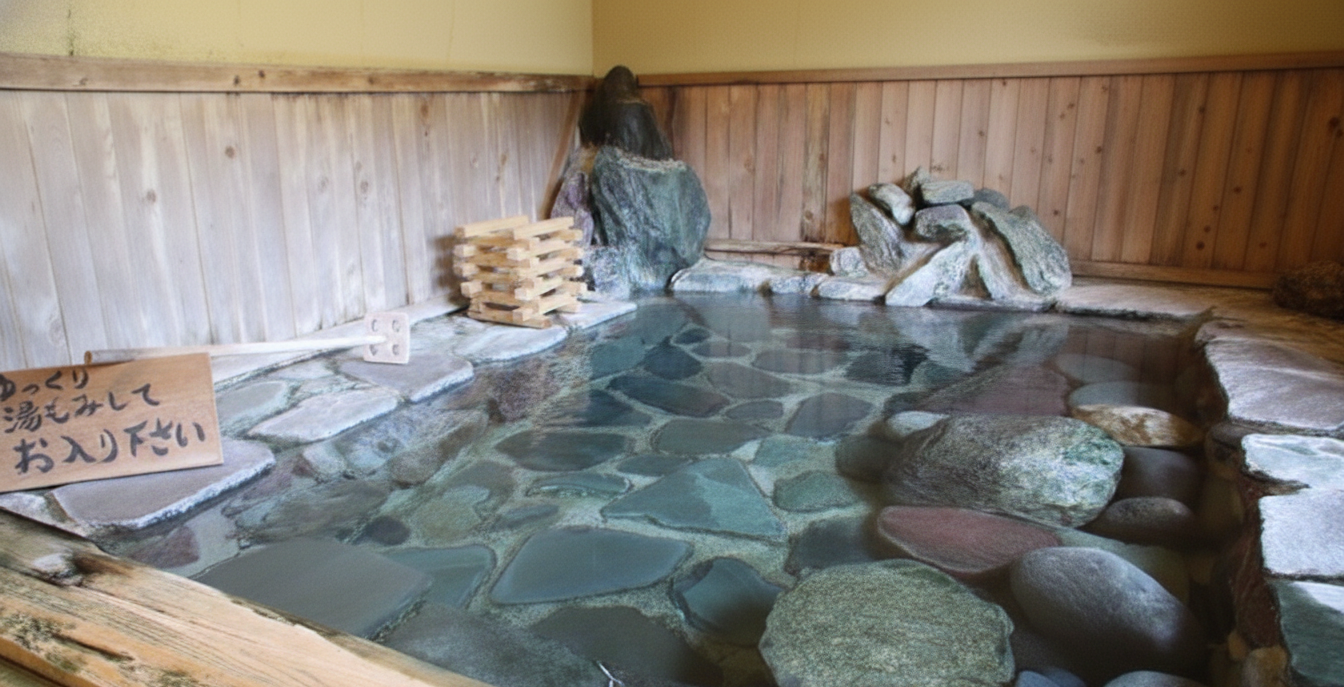
Tokigawa Onsen sits in Hiki District, Saitama Prefecture, roughly 90 minutes from central Tokyo. The water rises from Chichibu Paleozoic strata at a depth of 1,700 meters and registers pH 10, placing it firmly in the highly alkaline range. Bathers consistently note the silky feel it leaves on the skin. The facility has held onto its Showa-era bathhouse character rather than updating it.
Amenities
Getting there
Take the Hokuriku Shinkansen to Ueda Station, about 70 minutes from Tokyo. From Ueda Station, board a Chikuma Bus toward Kakeyu Onsen. The journey takes about 60 minutes. Check the timetable in advance as departures are limited. A taxi from Ueda takes about 40 minutes.
Location & nearby
Kakeyu Onsen, Ueda, Nagano
Make a day of it
Pair your soak with these nearby spots.
Attraction
ShikakyōYu(Kakeyu)Genkipurojekuto
0.1km away
Attraction
ShikakyōYuonsen Monjunoyu
0.2km away
Attraction
ShikakyōYuonsen Hitoshikitasō
0.3km away
Attraction
Samizukan
0.4km away
Attraction
KeiryūRotenyunoyadokajikasō
0.4km away
Attraction
ShikakyōYu(Kakeyu)Onsen
0.4km away
More springs in Chubu
 FREE
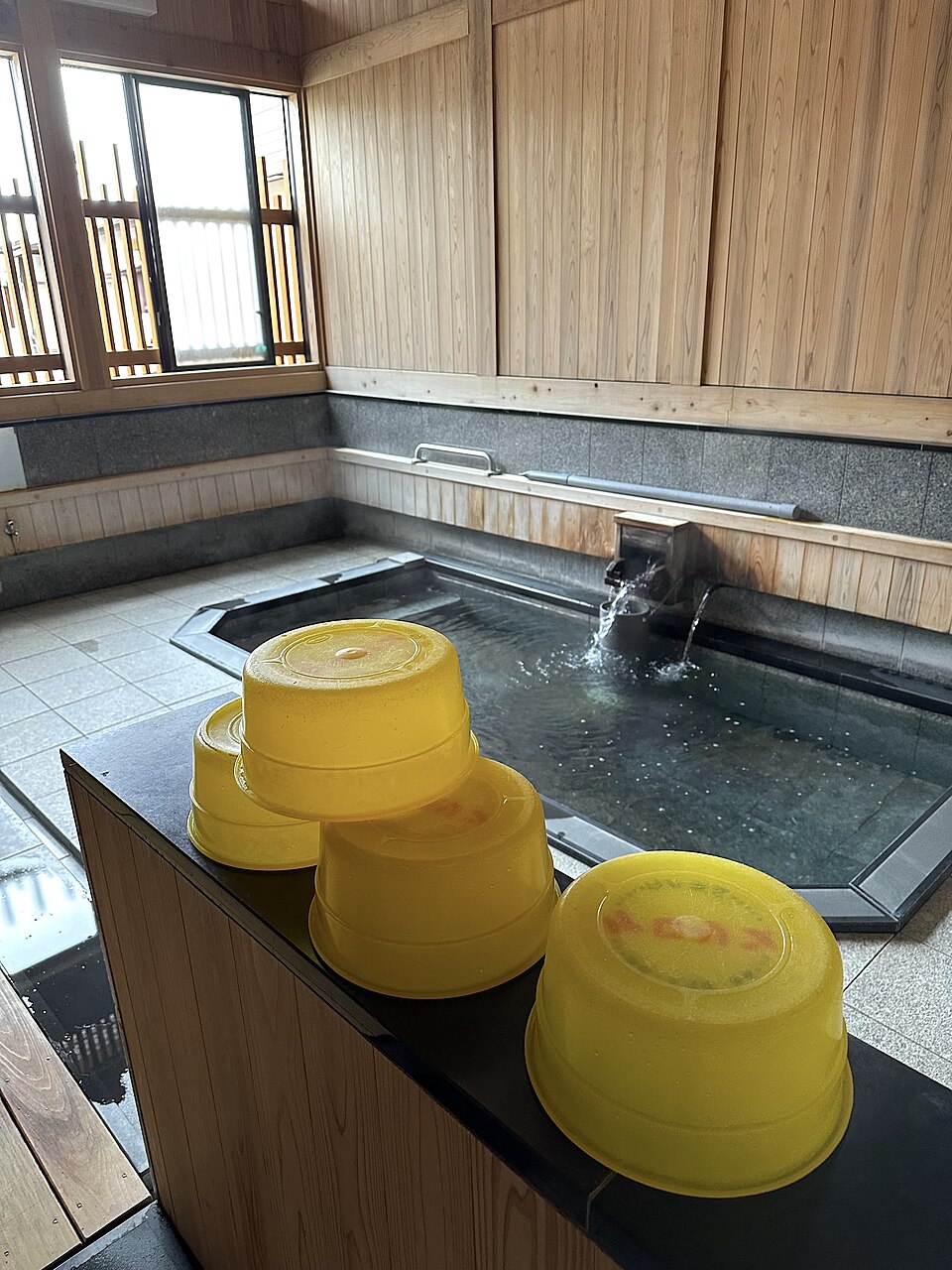
FREENozawa Onsen is a traditional village in Nagano Prefecture that maintains 13 free public bathhouses open to visitors and residents alike. These bathhouses, known as soto-yu, have been overseen by neighborhood cooperatives called yunakama for close to four centuries. The village also contains world-class ski slopes, a pairing that is genuinely uncommon anywhere in the world.
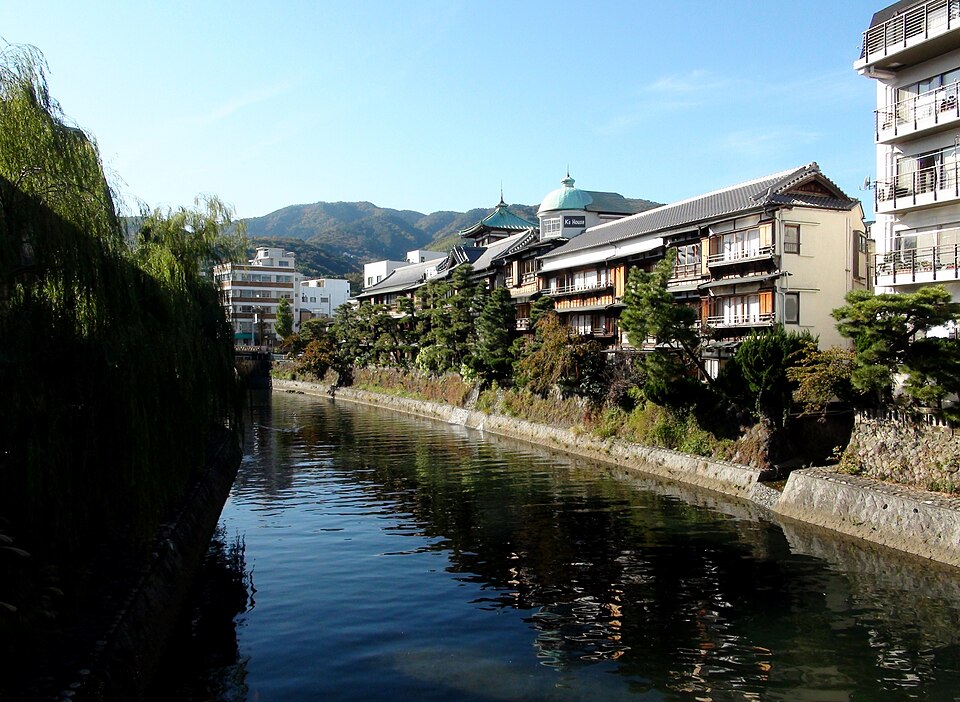
Ito sits along the eastern shore of the Izu Peninsula, facing the ocean and ranking among Japan's most productive hot spring districts by volume. More than 1,500 individual springs feed the town's supply, together pushing out around 30,000 kiloliters of water each day. Palm-lined avenues, tropical parks, and botanical gardens set the tone here, giving Ito a resort atmosphere that reads as distinctly its own compared to inland onsen destinations.
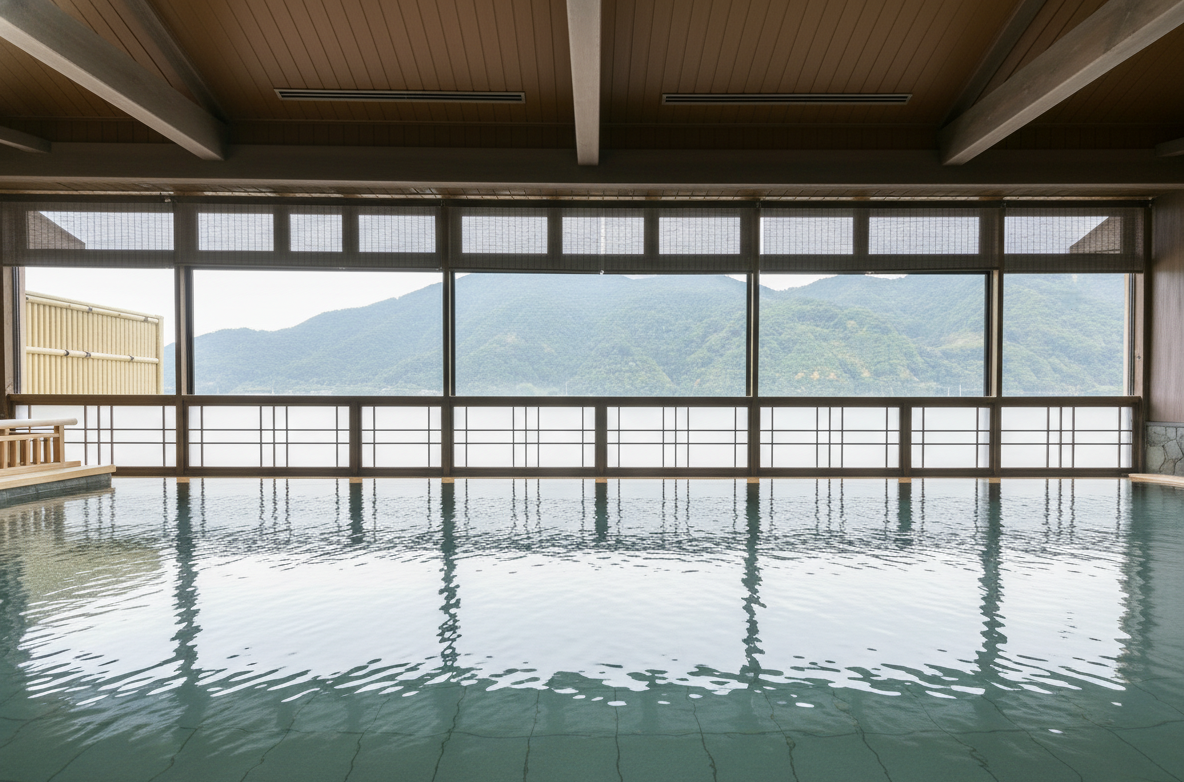
A mountain town in Niigata Prefecture famous for heavy snowfall and a unique sake-infused bath. After a day on the ski slopes, visitors soak in outdoor baths while snow falls silently around them. The town is also the setting of one of Japan's greatest novels.
Common questions
What is the water temperature at Kakeyu Onsen?▾
The water temperature at Kakeyu Onsen ranges up to 48°C (minimum around 44°C).
Is Kakeyu Onsen free to visit?▾
Kakeyu Onsen charges an entrance fee in JPY.
Is Kakeyu Onsen a public or private bath?▾
Kakeyu Onsen is a public bathing spring.
Are tattoos allowed at Kakeyu Onsen?▾
Tattoo policy varies at Kakeyu Onsen. Check ahead of your visit.