Awazu Onsen
粟津温泉
Awazu Onsen
sodium-sulfate · Chubu
Hotter than 34% of Japan springs (n=122).
More acidic than 50% of Japan springs (n=121).
Mineral profile
Bar width reflects listing order, not measured concentration.
Suitability
At a glance
Getting there
Easy — under 1km from a station
Cost
Moderate
About this spring
Awazu Onsen is a compact hot spring resort in Komatsu, Ishikawa Prefecture, established in 718 AD by the Nara-period monk Taich, who was guided to the location by the mountain deity of Hakusan. Roughly a dozen ryokan make up the district, and each property draws water from its own dedicated well, giving it an intimacy that sets it apart from larger Hokuriku destinations. The Hoshi Ryokan, situated within the Awazu district, has been recognized by Guinness World Records as the world's oldest hotel.
Highlights
History
Taich, a monk from the neighboring province of Echizen, established the spring in 718 AD after the deity of Mount Hakusan directed him to the site.
The Hoshi Ryokan, also located within the Awazu district, maintains that it has operated without interruption since that founding, a claim that earned the property Guinness World Records status as the world's oldest hotel. During the Edo period, the Maeda clan of Kanazawa became patrons of the resort.
Local guide
From Komatsu Station on the Hokuriku Main Line, a twenty-minute taxi ride carries you south through flat Ishikawa farmland until the roadside pine trees signal that you are entering the grounds of Awazu Onsen. The town is small and compact, its dozen ryokan arranged around narrow lanes shaded by trees that have been growing here for centuries. One of those inns, Hoshi Ryokan, was founded in 718 AD, making it the longest-running family business on record in the Guinness Book of Records, currently managed by the forty-sixth generation of the same family. That fact alone justifies stopping here, but the spring itself earns the trip independently.
The water at Awazu is a sodium sulfate spring, pumped from separate wells under each individual inn rather than from a shared municipal source. Each ryokan's water draws from a different depth and a slightly different geological layer, which means the mineral balance shifts from one property to the next. The water is crystal clear and comes out hot, with a clean, slightly earthy quality on the skin. The sodium sulfate content gives bathers a noticeable smoothness and a lingering warmth that builds gradually over a long soak. The springs here were originally claimed, according to the founding legend, by the monk Taicho Daishi, who descended Mount Hakusan under instruction from the mountain deity Hakusan Daigongen. That mountain, snow-capped in winter, is visible from the higher floors of some of the inns.
At Hoshi Ryokan, the four wings of the building are named after the four seasons, and the garden they surround is partly four hundred years old, thick with cedar and pine over bright green moss. Stepping from one wing to another through the garden passages in the early morning, when the grounds are quiet and the bath water is still steaming, gives a sense of time operating differently here than it does in cities. The bath halls themselves are traditional in scale, built for function rather than spectacle, with the emphasis on the water rather than the surroundings.
Awazu occupies an unusual position in Japanese inn history because its story is documented rather than merely claimed. The forty-six generations of innkeepers represent an unbroken thread from the Nara period through to the present, and the Guinness recognition in the twentieth century confirmed what locals had understood for a long time. If you have spent days touring the grand castles and temples of Kanazawa, forty minutes away to the north, Awazu offers something those places cannot: a building that is still doing exactly what it was built to do, in an uninterrupted line across thirteen centuries.
Mineral chemistry
Water character inferred from mineral type — verify on site.
Sulfate springs contain dissolved calcium, sodium, or magnesium sulfate. Calcium sulfate springs are traditionally associated with wound healing and post-surgical recovery.
Sodium sulfate springs can have a mild laxative effect in sensitive individuals — stay well hydrated.
Similar springs
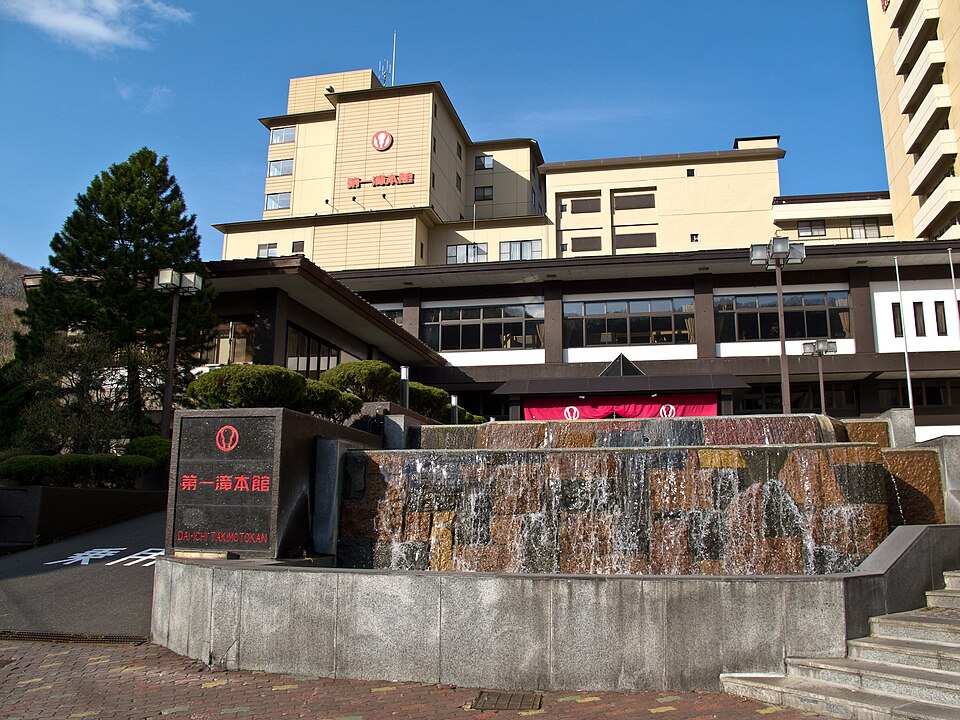
One of Hokkaido's most celebrated bathhouses. Dai-ichi Takimotokan channels water from seven distinct mineral springs into 35 pools spread across multiple floors. Indoor halls open onto outdoor rotenburo overlooking the steam-filled valley below. Day visitors are welcome without an overnight stay.
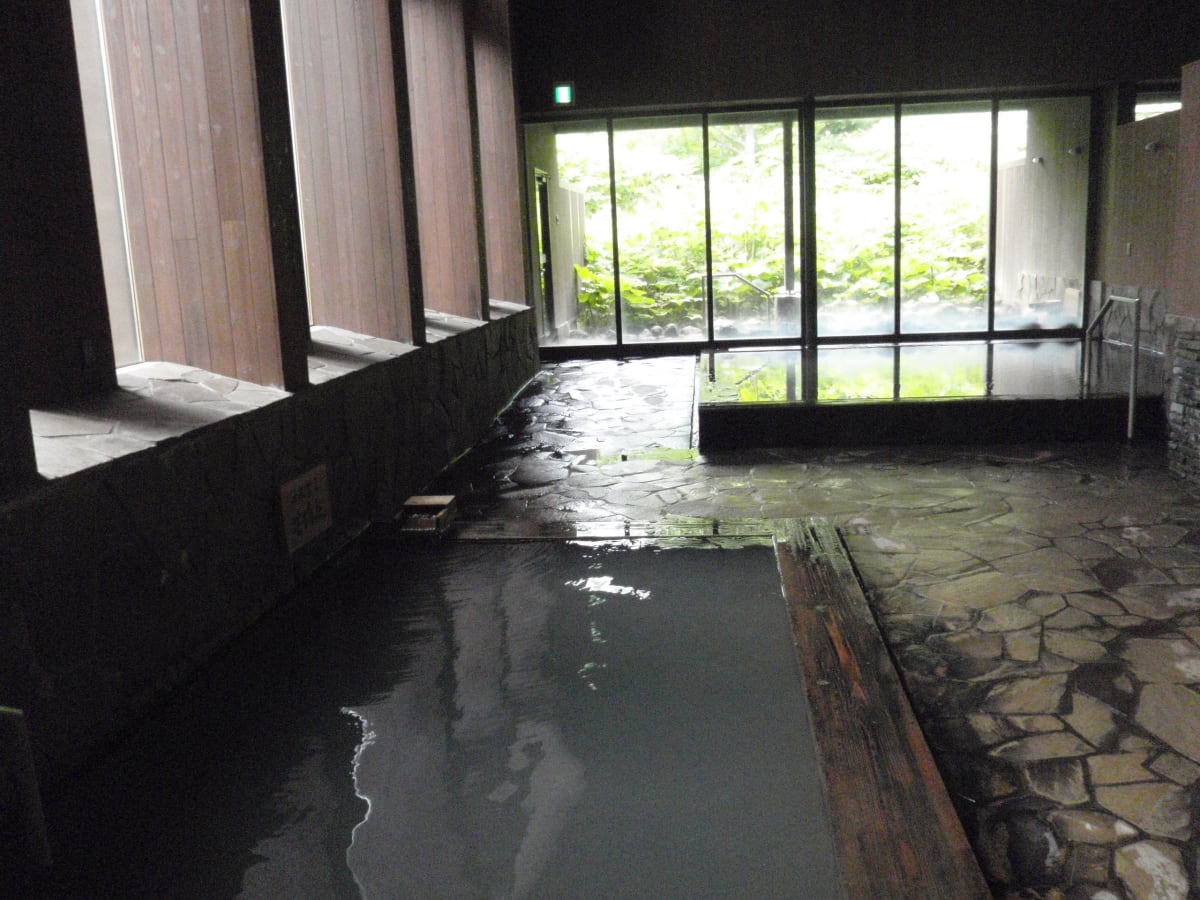
Asahidake Onsen is a small hot spring village at the foot of Mount Asahidake in Daisetsuzan National Park, Hokkaido. The mountain reaches 2,290 meters, making it the tallest peak on the island. The village itself sits at roughly 1,000 meters elevation and serves as the lower terminal for the Asahidake Ropeway, which carries visitors up to the volcanic plateau in under ten minutes. Few places in Japan combine open alpine wilderness with naturally flowing hot springs in the same way.
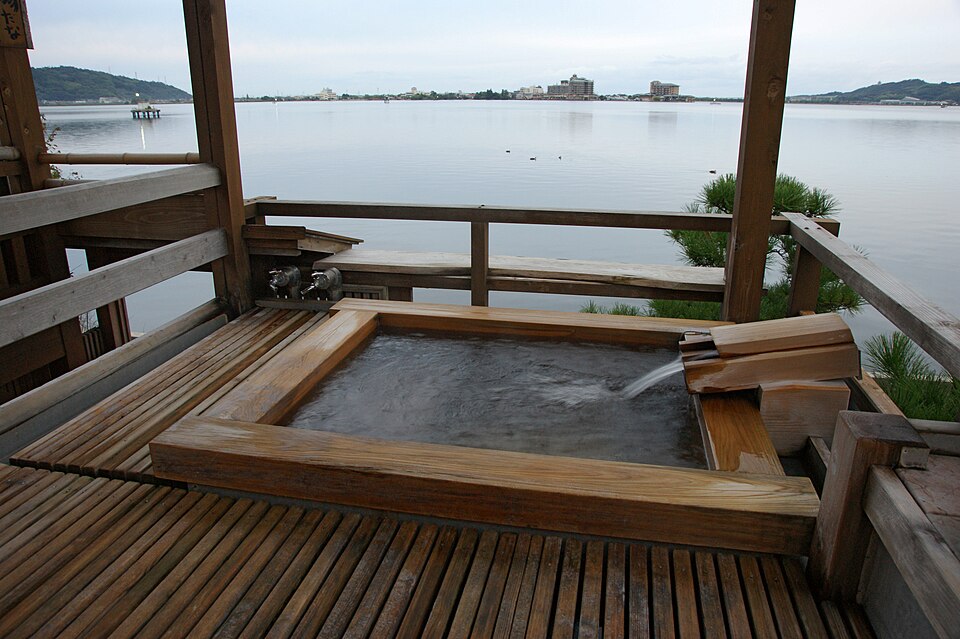
Togo Onsen sits along the edge of Lake Togo, a coastal lagoon in the town of Yurihama on the San'in coast of Tottori Prefecture. The ryokan line the shore so closely that guests can drop a fishing line directly from their room windows into the lake. The water changes hue across the course of the day as the sunlight moves, and the thermal water itself wells up from beneath the lakebed rather than from a distant source on land.
Amenities
Getting there
Take the Hokuriku Shinkansen to Kanazawa Station, then transfer to the JR Hokuriku Line to Komatsu Station. From Komatsu, take a local bus or taxi to Awazu Onsen. The journey from Kanazawa takes about 30 minutes.
Location & nearby
Awazu Onsen, Komatsu, Ishikawa
Make a day of it
Pair your soak with these nearby spots.
Attraction
Kappazushi
0.0km away
Park
Kaerunoo Jisama
0.3km away
Attraction
Gyarari Sachiaidamitsuo Branch
1.3km away
Park
Awazu Onsen Dori Mupa Kudai1guraundo
1.4km away
Attraction
Yunokuninomori
1.4km away
Attraction
Motorcar Museum of Japan
1.5km away
More springs in Chubu
 FREE
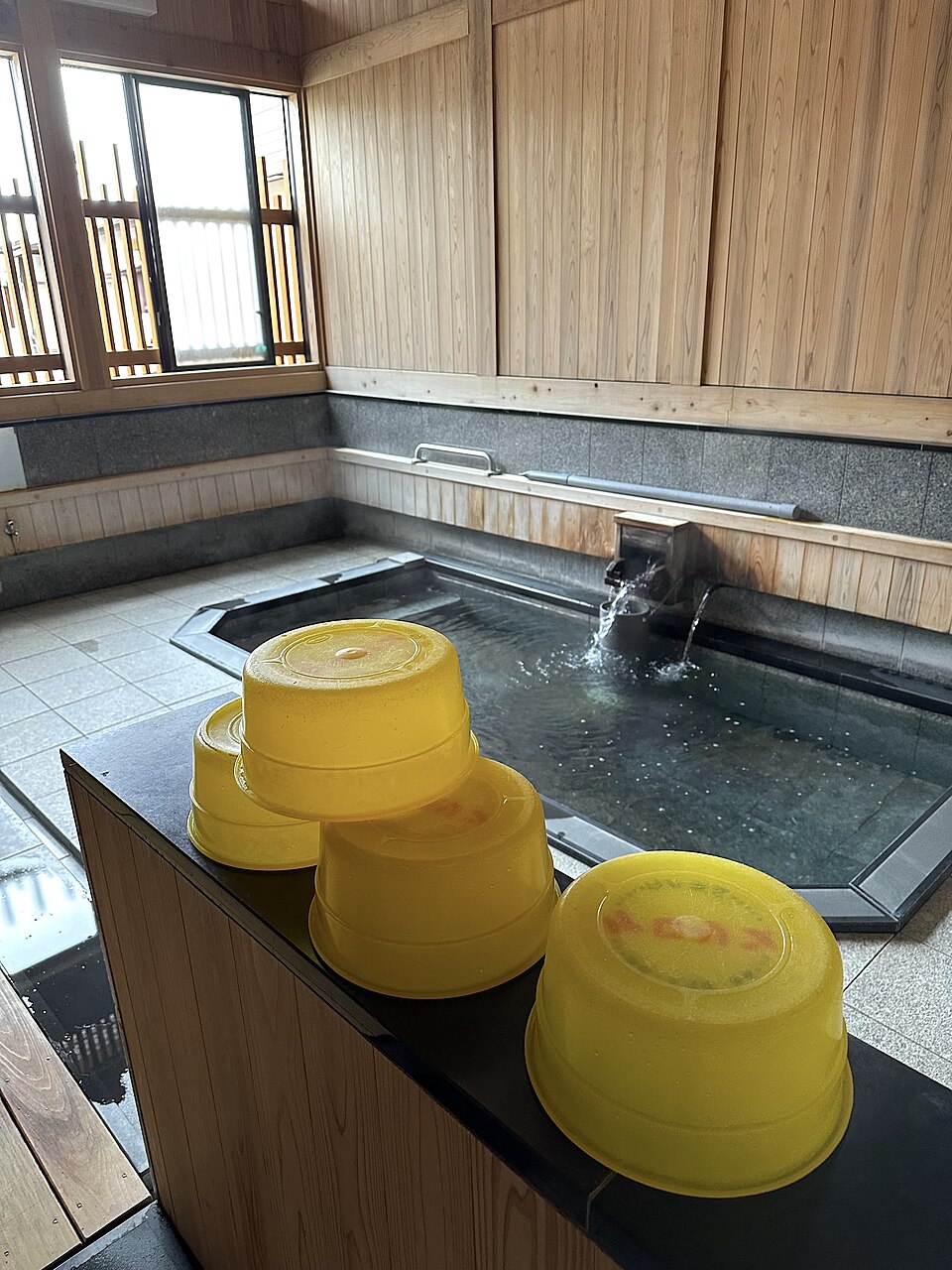
FREENozawa Onsen is a traditional village in Nagano Prefecture that maintains 13 free public bathhouses open to visitors and residents alike. These bathhouses, known as soto-yu, have been overseen by neighborhood cooperatives called yunakama for close to four centuries. The village also contains world-class ski slopes, a pairing that is genuinely uncommon anywhere in the world.
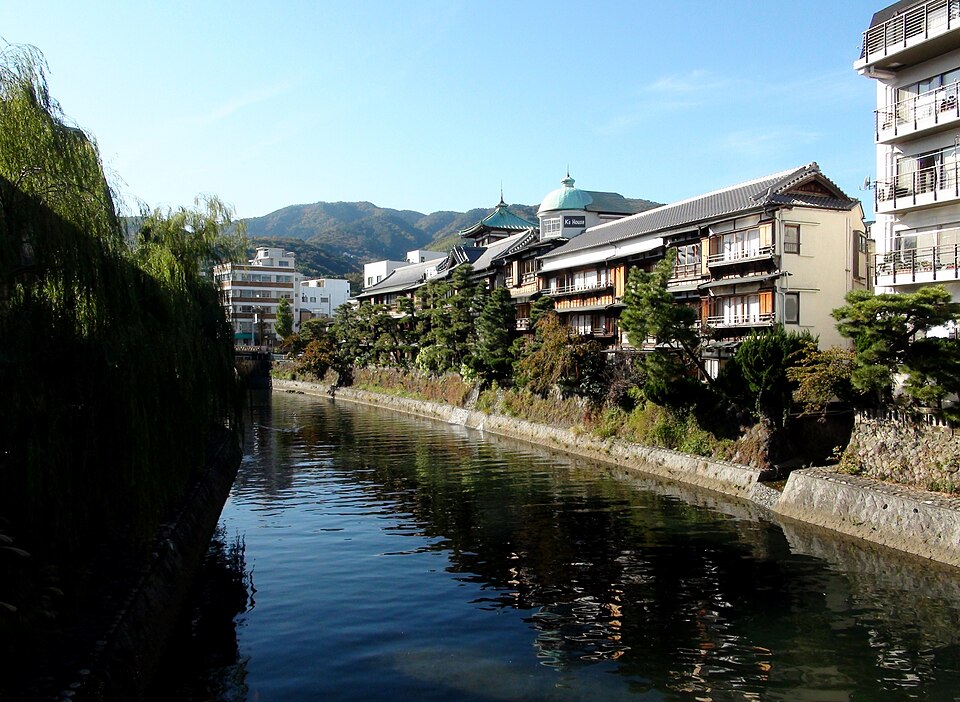
Ito sits along the eastern shore of the Izu Peninsula, facing the ocean and ranking among Japan's most productive hot spring districts by volume. More than 1,500 individual springs feed the town's supply, together pushing out around 30,000 kiloliters of water each day. Palm-lined avenues, tropical parks, and botanical gardens set the tone here, giving Ito a resort atmosphere that reads as distinctly its own compared to inland onsen destinations.
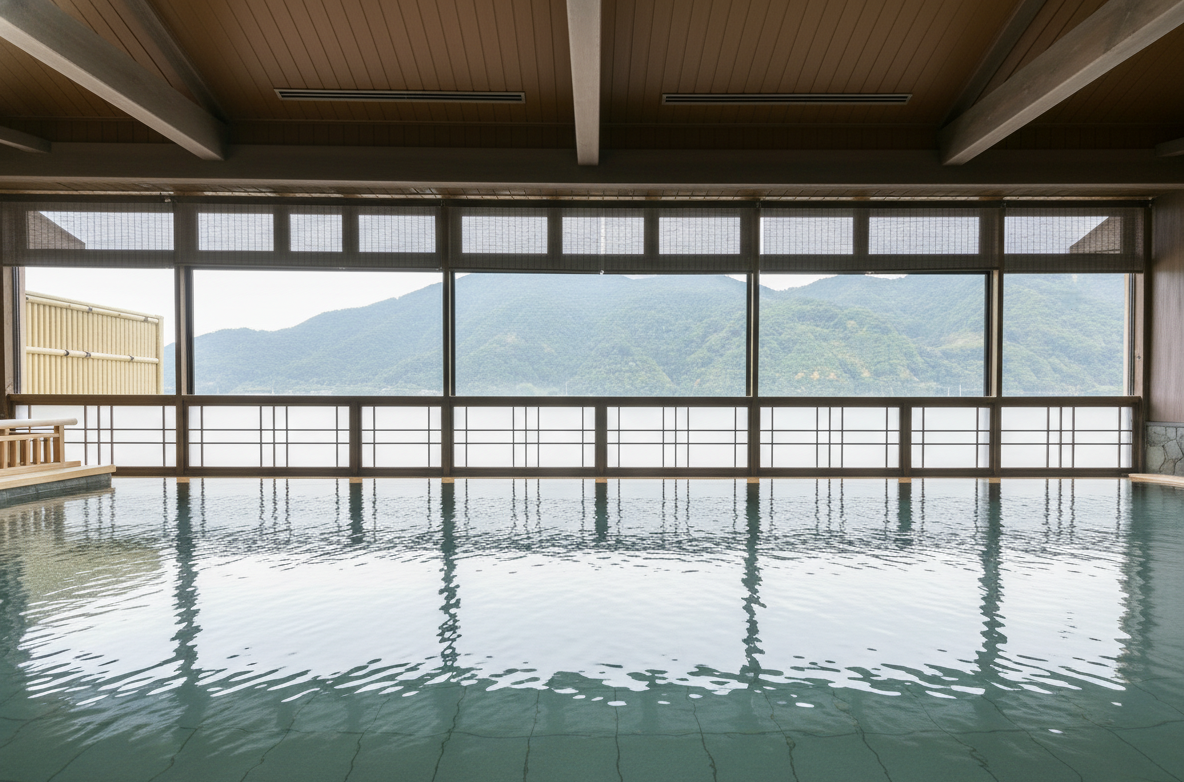
A mountain town in Niigata Prefecture famous for heavy snowfall and a unique sake-infused bath. After a day on the ski slopes, visitors soak in outdoor baths while snow falls silently around them. The town is also the setting of one of Japan's greatest novels.
Common questions
What is the water temperature at Awazu Onsen?▾
The water temperature at Awazu Onsen ranges up to 52°C (minimum around 26°C).
Is Awazu Onsen free to visit?▾
Awazu Onsen charges an entrance fee in JPY.
Is Awazu Onsen a public or private bath?▾
Awazu Onsen is a public bathing spring.
Are tattoos allowed at Awazu Onsen?▾
Tattoo policy varies at Awazu Onsen. Check ahead of your visit.