
Wakura Onsen
和倉温泉
Wakura Onsen
sodium-bicarbonate · Chubu
Hotter than 88% of Japan springs (n=122).
More acidic than 82% of Japan springs (n=121).
Mineral profile
Bar width reflects listing order, not measured concentration.
Suitability
At a glance
Getting there
Easy — under 1km from a station
Cost
Moderate
About this spring
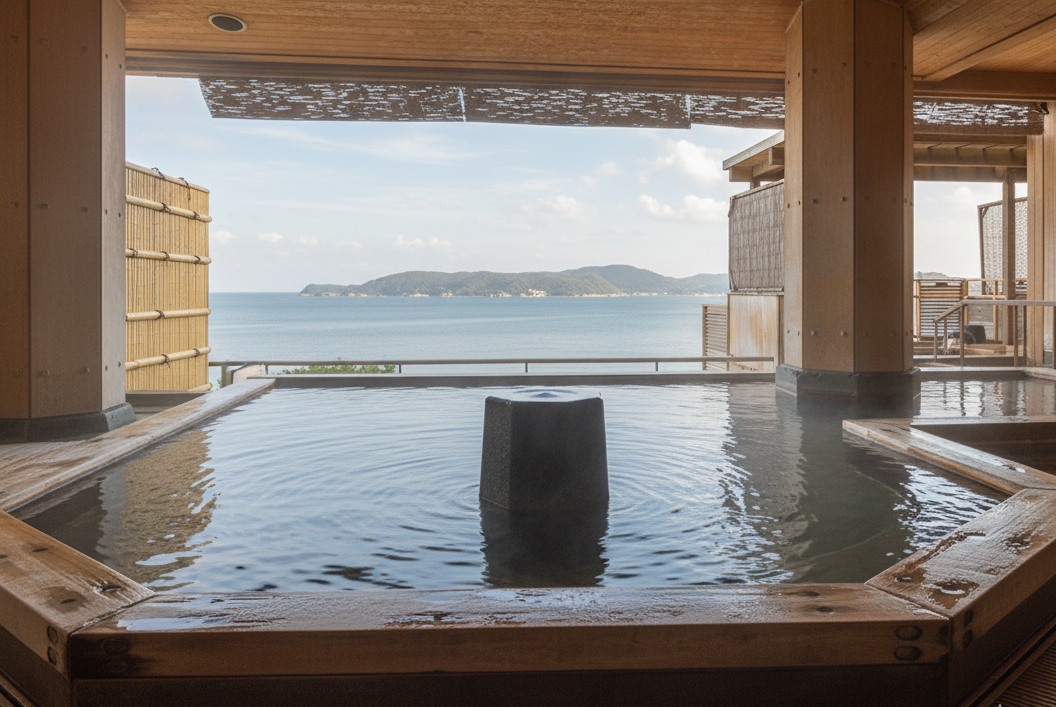
Wakura Onsen sits on the shore of Nanao Bay at the base of the Noto Peninsula in Ishikawa Prefecture, an upscale resort town where the bay water is sheltered and the views stretch broadly across it. The geothermal springs here reach temperatures close to 90 degrees Celsius, so the water must be cooled down before guests can bathe. Around the small town, several public foot baths are available at no charge.
Highlights
History
Local tradition holds that the springs were discovered when a fisherman spotted an injured crane soaking in warm water along the bay.
This legend places the origin of Wakura Onsen in at least the early Heian period, making the site more than 1,200 years old. The town grew into a recognized resort during the Meiji era, when new rail connections brought travelers from Kanazawa and Nagoya within reach. It remains one of the most highly regarded ryokan destinations on the Noto Peninsula.
Local guide
The Hokuriku Shinkansen drops you at Kanazawa and from there the Nanao Line runs northeast across the base of the Noto Peninsula. The landscape changes as you go, from the flat coastal plain to low hills covered in camellias and then down to the shore of Nanao Bay, which is wide and grey-green and almost completely enclosed by the surrounding peninsulas. Wakura Onsen Station sits right at the water's edge, and the ryokan of the resort are visible from the platform, their wide wooden facades and tiled roofs arranged along the shoreline as if placed there specifically to be seen from a moving train.
Wakura has one central hot spring source that supplies every inn in the resort from a single well. There are no private wells here, no independent boreholes, no variation from one building to the next. All the hot water in the town comes from the same point, a submarine-origin source that was first documented centuries ago, and the arrangements for distributing it have been in place since the modern resort took its current form. The water is a sodium bicarbonate type, emerging at 89 degrees Celsius and cooled before it reaches the baths. It is colorless and clear, with a slightly softening, almost soapy quality from the bicarbonate that stays on your skin long after you have dried off.
The location on the bay is what distinguishes Wakura from the inland onsen towns of Ishikawa. The better ryokan have baths that look out across Nanao Bay, and at high tide the water surface reaches close enough to the buildings that you can hear it. In the morning, fishing boats move out through the pale light across the bay, and if you are in an outdoor bath at that hour the combination of steam and sea mist makes the view almost indistinguishable from the water itself. The Noto Peninsula coast is known for seafood, particularly oysters and snow crab in winter, and the kaiseki menus at the inns here are built around what comes out of Nanao Bay.
Wakura was used as a setting in a famous 19th-century woodblock print by Hiroshige, which gives it a particular status among Japanese travelers who grew up seeing that image. The town has not tried to live down to nostalgia or up to modernity, and what you find when you arrive is simply a serious, unhurried place to sit in hot water and look at the sea.
Mineral chemistry
Water character inferred from mineral type — verify on site.
Bicarbonate springs cleanse and soften the skin surface, removing excess sebum without stripping the skin's acid mantle. Traditionally recommended for acne-prone skin and sensitive skin types.
Bicarbonate springs are generally among the most gentle and well-tolerated onsen types.
Similar springs
 FREE
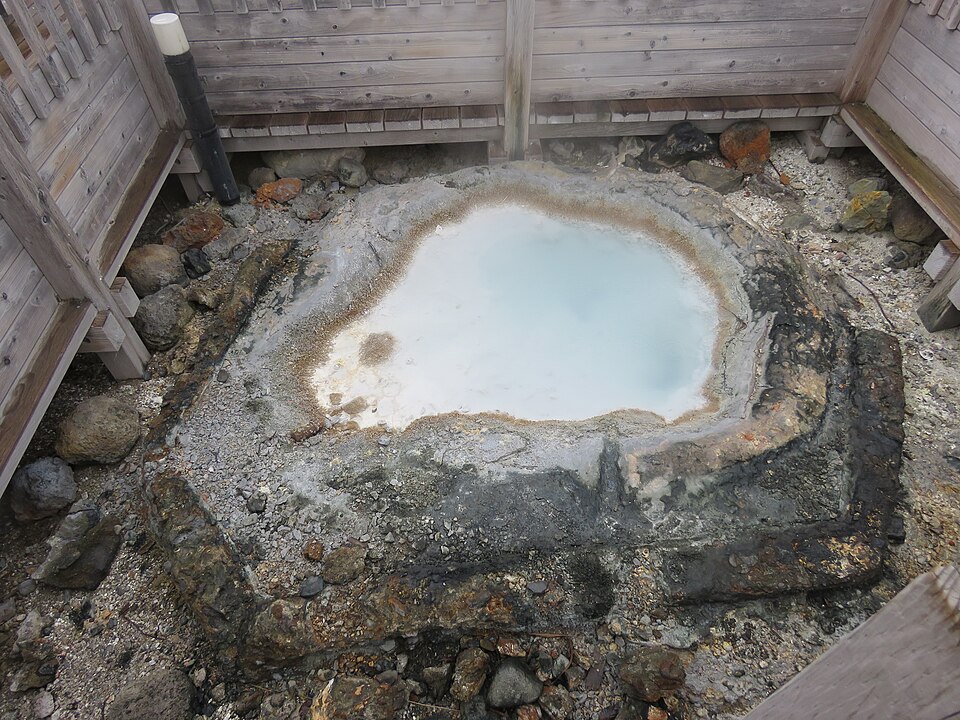
FREEThe valley occupies the center of Noboribetsu Onsen in Hokkaido. Jigokudani translates as Hell Valley. The crater covers 11 hectares and releases roughly 10,000 tonnes of hot spring water each day. Fumaroles vent steam across the floor of the valley, boiling pools bubble at the surface, and the surrounding cliffs carry heavy mineral staining. A walking path winds through the area in about 20 minutes and is open to all visitors at no cost. It ranks among the most striking landscapes accessible on foot anywhere in Japan.
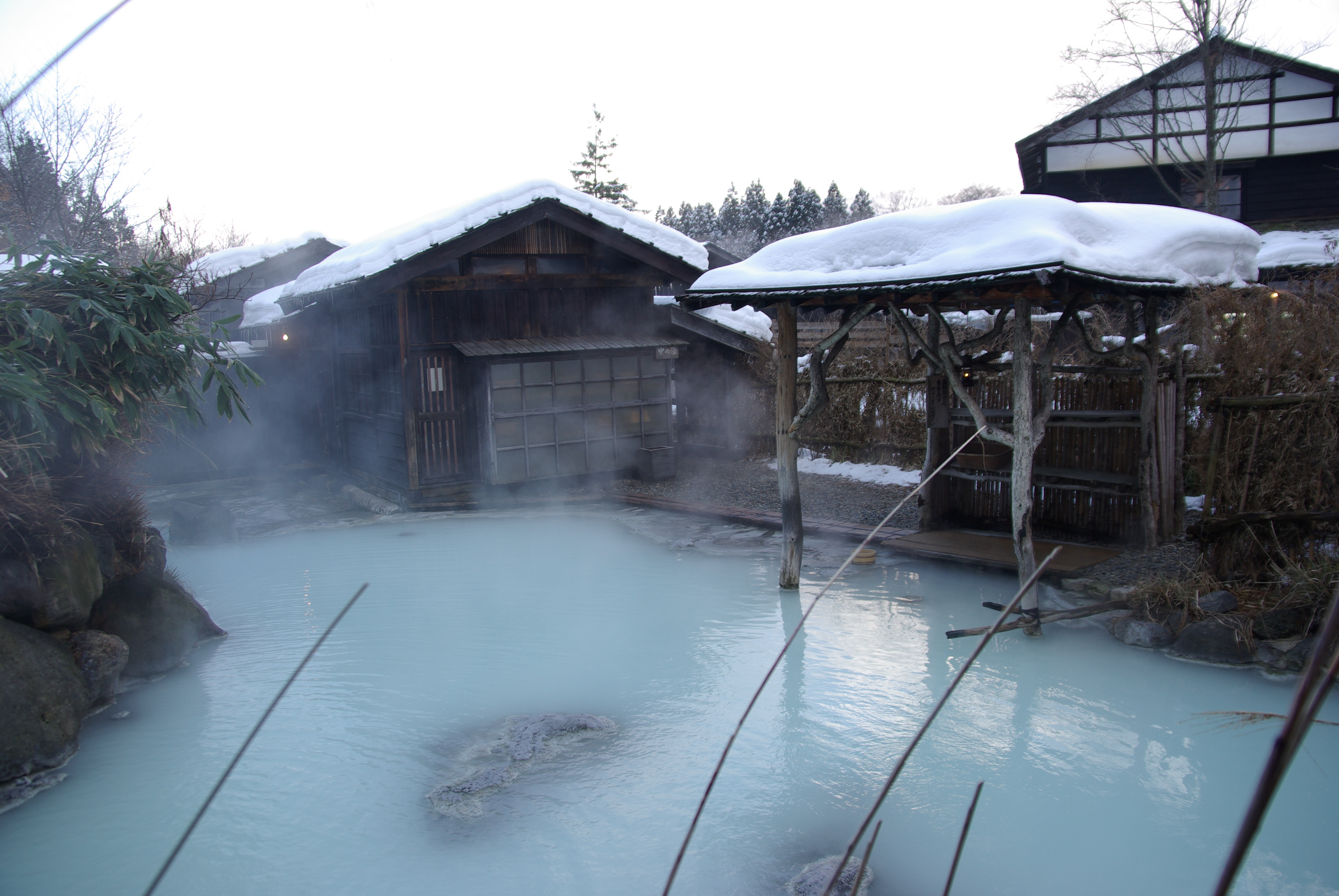
Tsuru-no-yu is the oldest of the seven inns at Nyuto, set deep in a beech forest in Akita Prefecture. The main draw is a large outdoor mixed-bathing pool fed by opaque, milky-white sulfurous water. Many regard it as the most beautiful onsen setting in Japan. People come here to put some distance between themselves and the rest of the world for a while.
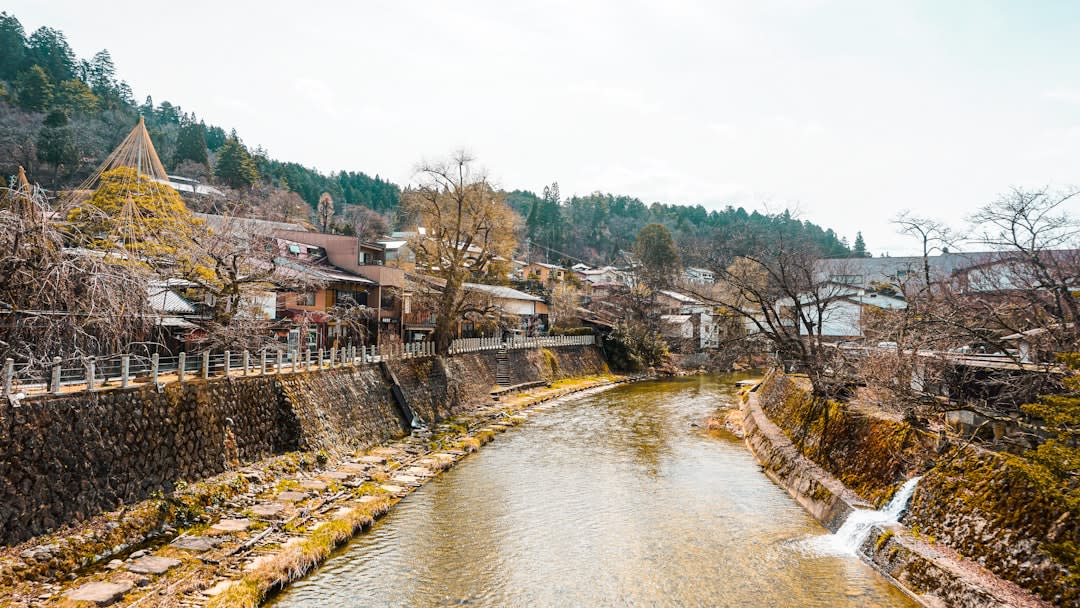
A peaceful artsy onsen town at the foot of Mt. Yufu in Oita Prefecture. The town is known for boutique galleries, craft shops, and ryokan with private outdoor baths. Lake Kinrin sits at the heart of it all. On quiet mornings, steam rises off the lake's surface in a way that seems almost designed to make you stop and stand still.
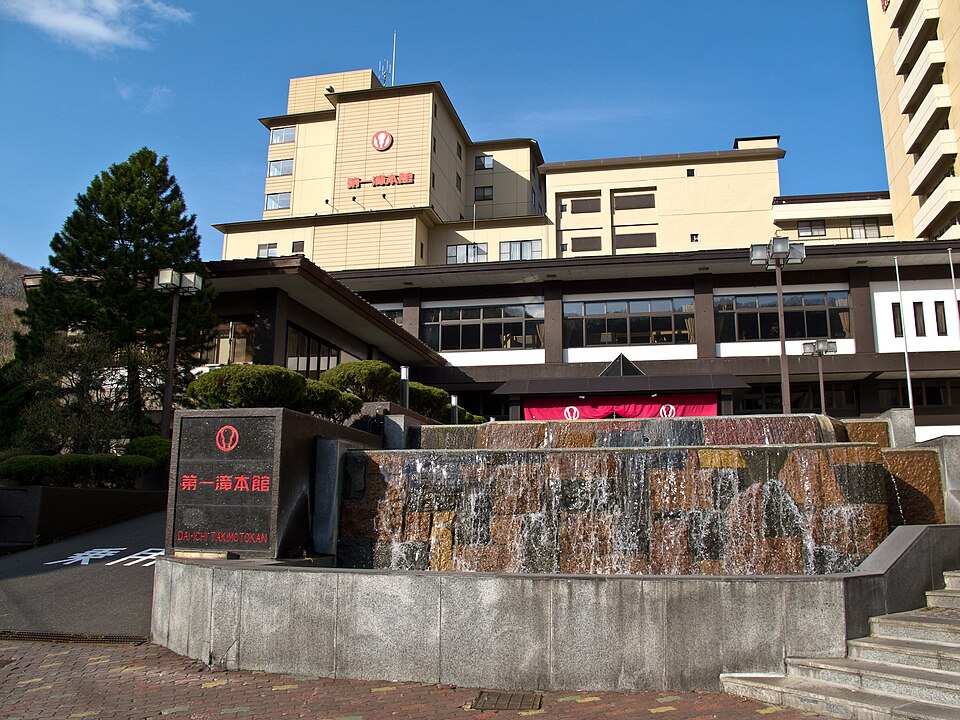
One of Hokkaido's most celebrated bathhouses. Dai-ichi Takimotokan channels water from seven distinct mineral springs into 35 pools spread across multiple floors. Indoor halls open onto outdoor rotenburo overlooking the steam-filled valley below. Day visitors are welcome without an overnight stay.
Amenities
Getting there
Take the Hokuriku Shinkansen to Kanazawa Station, then transfer to the JR Nanao Line. The ride to Wakura-Onsen Station takes about 1 hour from Kanazawa.
Location & nearby
Wakura Onsen, Ishikawa
Make a day of it
Pair your soak with these nearby spots.
Attraction
Wakuraonsen Ashiyu
0.3km away
Attraction
Yutsutaripa Ku
0.5km away
Park
Wakurako Wakuwakupuraza
0.5km away
Park
Wakuramachi-Hibari 1-chome
0.5km away
Attraction
Notokagaya
0.5km away
Attraction
Notobe Shrine
0.7km away
More springs in Chubu
 FREE
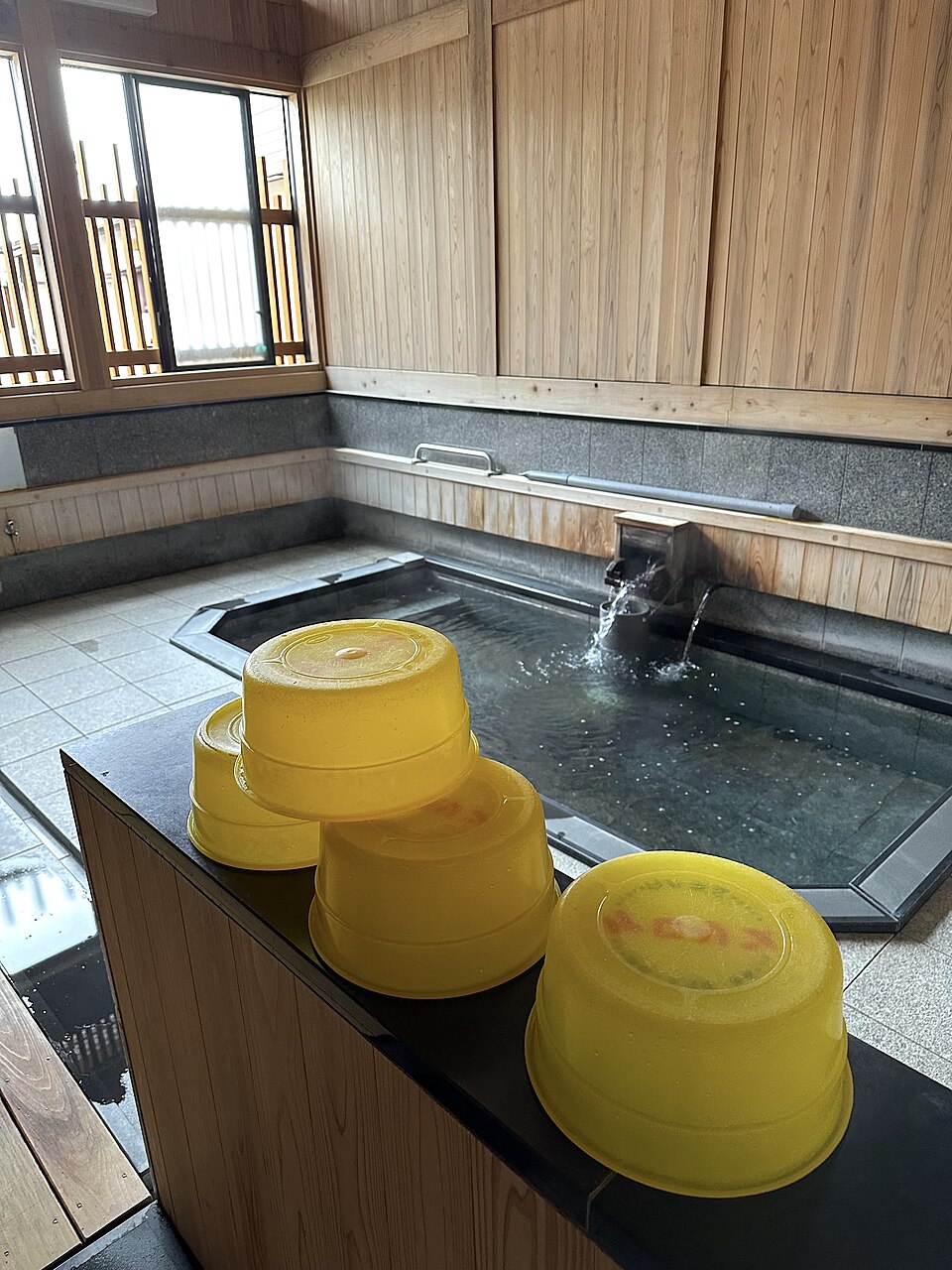
FREENozawa Onsen is a traditional village in Nagano Prefecture that maintains 13 free public bathhouses open to visitors and residents alike. These bathhouses, known as soto-yu, have been overseen by neighborhood cooperatives called yunakama for close to four centuries. The village also contains world-class ski slopes, a pairing that is genuinely uncommon anywhere in the world.
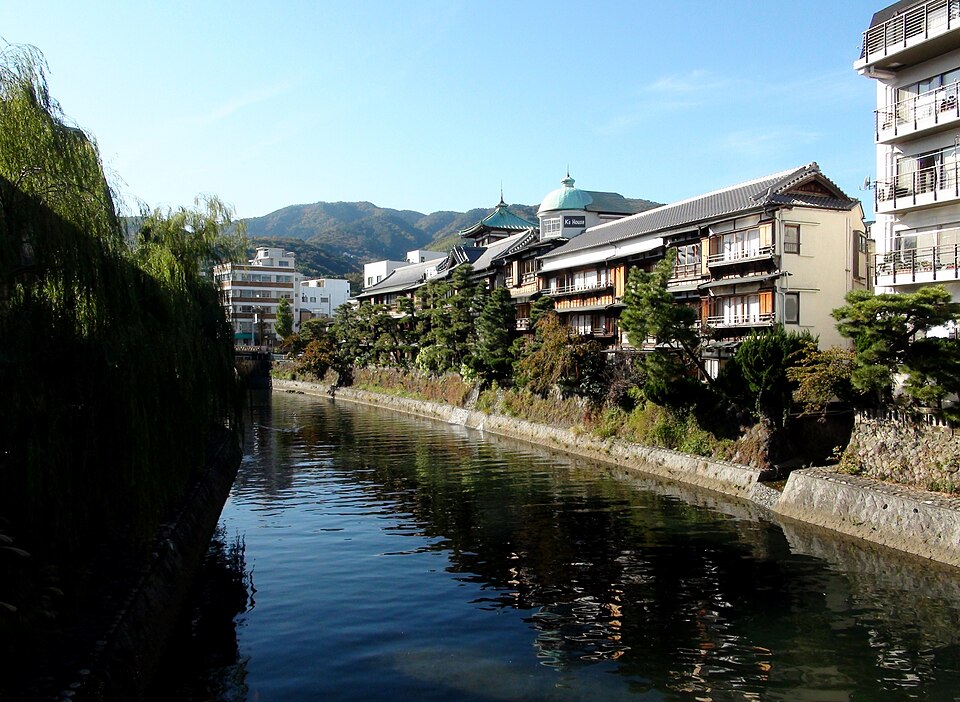
Ito sits along the eastern shore of the Izu Peninsula, facing the ocean and ranking among Japan's most productive hot spring districts by volume. More than 1,500 individual springs feed the town's supply, together pushing out around 30,000 kiloliters of water each day. Palm-lined avenues, tropical parks, and botanical gardens set the tone here, giving Ito a resort atmosphere that reads as distinctly its own compared to inland onsen destinations.
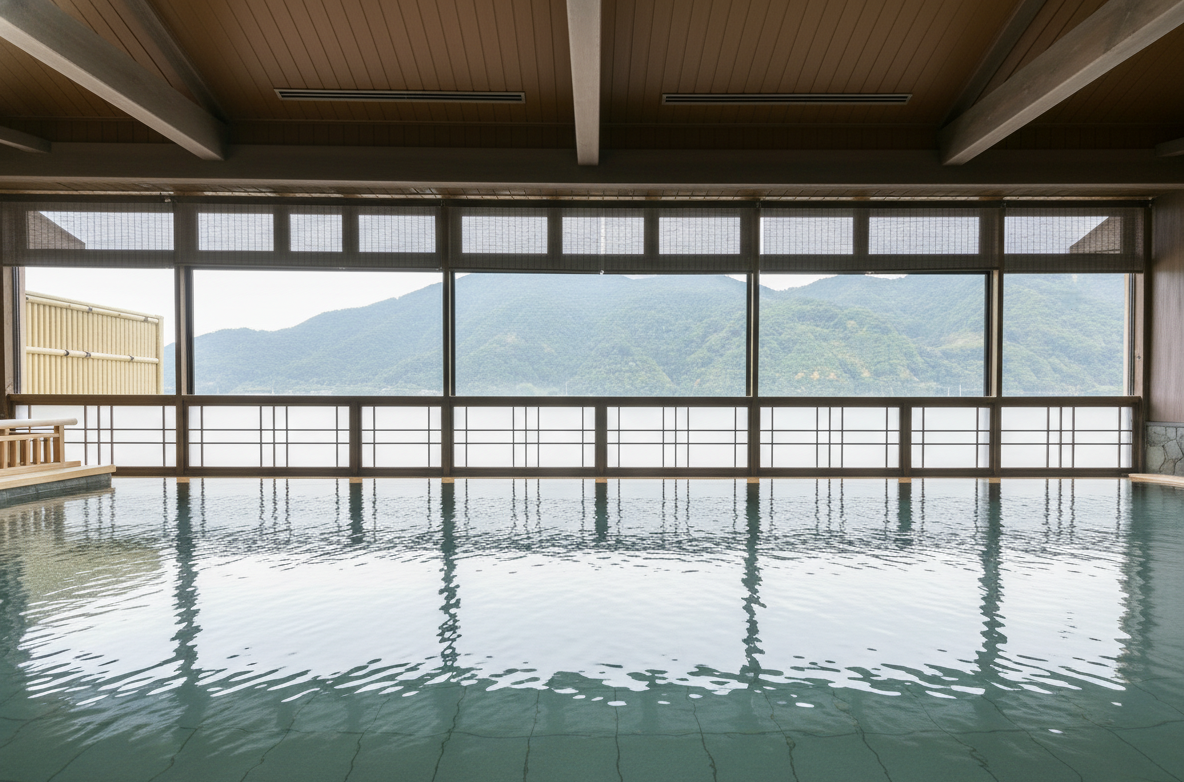
A mountain town in Niigata Prefecture famous for heavy snowfall and a unique sake-infused bath. After a day on the ski slopes, visitors soak in outdoor baths while snow falls silently around them. The town is also the setting of one of Japan's greatest novels.
Common questions
What is the water temperature at Wakura Onsen?▾
The water temperature at Wakura Onsen ranges up to 92°C (minimum around 89.1°C).
Is Wakura Onsen free to visit?▾
Wakura Onsen charges an entrance fee in JPY.
Is Wakura Onsen a public or private bath?▾
Wakura Onsen is a public bathing spring.
Are tattoos allowed at Wakura Onsen?▾
No, Wakura Onsen does not permit visible tattoos.