
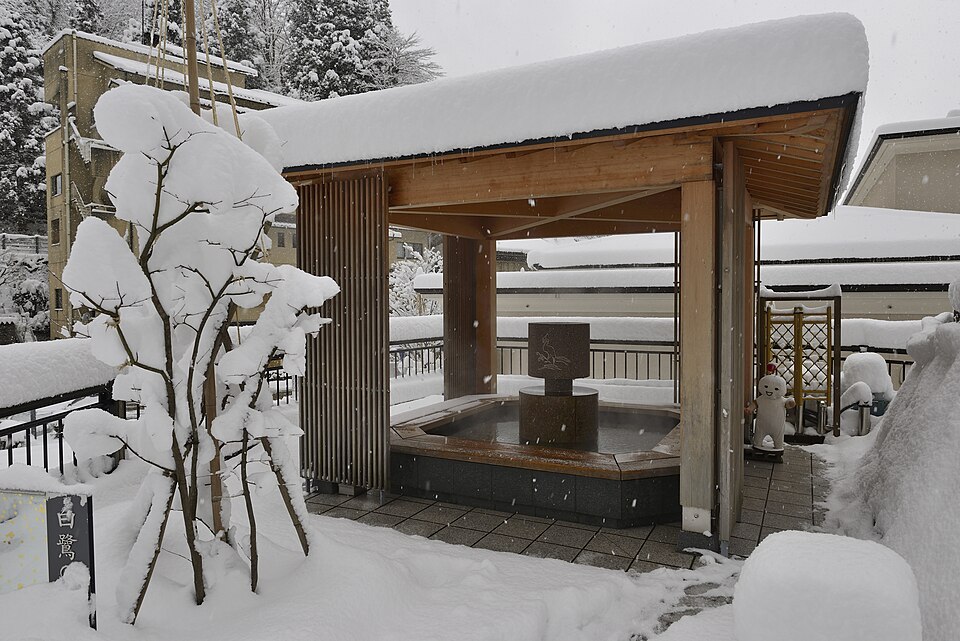
Yuwaku Onsen
湯涌温泉
Yuwaku Onsen
sodium-bicarbonate · Chubu
Hotter than 2% of Japan springs (n=122).
More acidic than 79% of Japan springs (n=121).
Mineral profile
Bar width reflects listing order, not measured concentration.
Suitability
At a glance
Getting there
Easy — under 1km from a station
Cost
Moderate
About this spring
Yuwaku Onsen is a compact hot spring village nestled against the base of Mount Ioh in Kanazawa, Ishikawa Prefecture. The settlement holds nine ryokan along a wooded hillside roughly one hour from central Kanazawa. Its waters are slightly alkaline and carry a gypsum mineral composition, and the area is characterized by quiet forested slopes and subdued mountain views.
Highlights
History
Local tradition holds that the springs were found during the Nara period by a papermaker who noticed an injured white heron soaking in the warm water and healing its wounds.
The resort grew into a recognized destination during the Edo period, supported by the Maeda clan of Kaga Domain, the ruling house that administered the surrounding region from Kanazawa Castle. During the Meiji era, the artist Takehisa Yumeji made his way to Yuwaku and regarded the tranquil setting as well suited to his painting practice.
Local guide
A bus from Kanazawa Station climbs southeast for about forty minutes through the city's outer neighborhoods and then up into the forest. The road follows the Tatsumi River into the hills, and by the time it reaches Yuwaku Onsen the city has completely disappeared. There are nine small inns in the village, most of them old wooden buildings set among trees along the river, and the whole place operates at a pace that is hard to reconcile with the fact that Kanazawa's gold leaf workshops and geisha districts are just twelve kilometers away. During the Edo period, the Maeda lords who controlled Kaga Domain used these hills for hunting, and they used the springs for recovering afterward. The village was their private retreat, and it has kept that slightly enclosed, protected feeling ever since.
The water at Yuwaku is sodium bicarbonate, lightly alkaline, emerging at 32 degrees Celsius from the source and heated for bathing use. The spring has a faint gypsum content that the locals believe is responsible for the water's skin-softening properties, and the Yuwaku spring water has traditionally been used in the preparation of Kaga Yuzen silk dye. Kaga Yuzen is the regional textile tradition of Kanazawa, distinguished from Kyoto's Nishijin weaving by its direct-painted, muted floral patterns, and the slightly alkaline chemistry of the Yuwaku water was used historically in the rinsing stages of the dyeing process. Whether or not that history changes how you feel soaking in it is up to you, but knowing the same water touched both the silk and your skin gives the bath a different register.
Yunokuni no Mori, a craft village about five minutes from the main inn cluster, offers hands-on workshops in Kaga Yuzen dyeing, Kutani pottery, and gold leaf application. It is not a tourist recreation. The workshops are taught by working craftspeople and take a couple of hours. Combining a morning in the craft village with an afternoon soak at one of the valley inns is the most honest way to use Yuwaku, because it connects the water to the art that grew up beside it rather than treating the spring as a standalone amenity.
The landscape in autumn is excellent. The forest above the village holds a mix of maple and beech that turns orange-red in October, and the river below the inns reflects the color back in the mornings when the light is coming from the east. There are walking trails from the village up into the Tatsumi River gorge that take two to three hours and require no special equipment. In winter, the snow on the cedar branches above the outdoor baths produces a kind of gravity-held stillness that the Kanazawa region is known for. The city gets more tourists than it can comfortably handle in cherry blossom season. Yuwaku, quietly, does not.
Mineral chemistry
Bicarbonate springs cleanse and soften the skin surface, removing excess sebum without stripping the skin's acid mantle. Traditionally recommended for acne-prone skin and sensitive skin types.
Bicarbonate springs are generally among the most gentle and well-tolerated onsen types.
Similar springs
 FREE
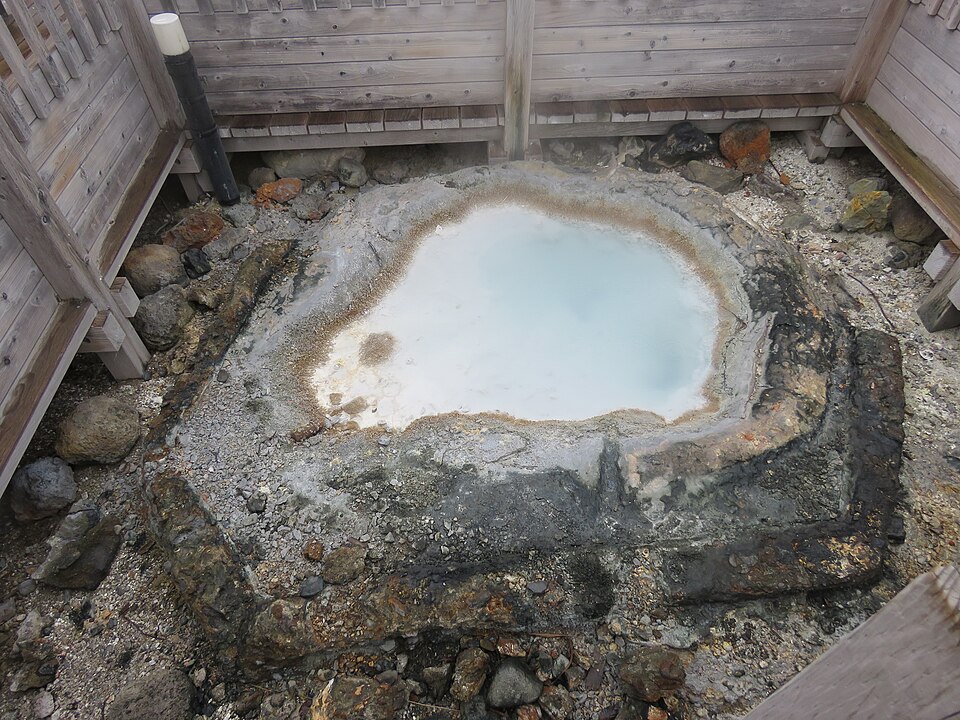
FREEThe valley occupies the center of Noboribetsu Onsen in Hokkaido. Jigokudani translates as Hell Valley. The crater covers 11 hectares and releases roughly 10,000 tonnes of hot spring water each day. Fumaroles vent steam across the floor of the valley, boiling pools bubble at the surface, and the surrounding cliffs carry heavy mineral staining. A walking path winds through the area in about 20 minutes and is open to all visitors at no cost. It ranks among the most striking landscapes accessible on foot anywhere in Japan.
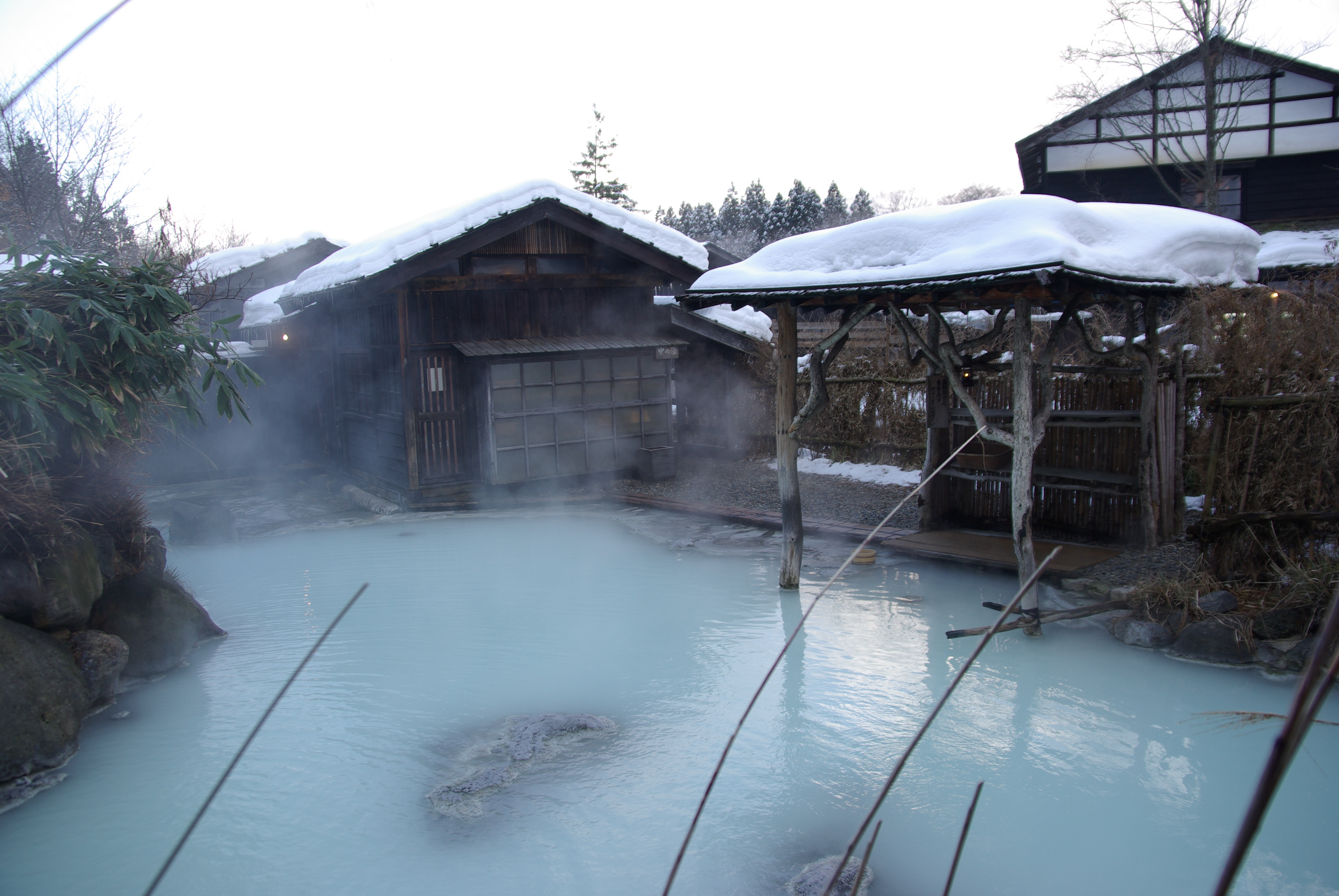
Tsuru-no-yu is the oldest of the seven inns at Nyuto, set deep in a beech forest in Akita Prefecture. The main draw is a large outdoor mixed-bathing pool fed by opaque, milky-white sulfurous water. Many regard it as the most beautiful onsen setting in Japan. People come here to put some distance between themselves and the rest of the world for a while.
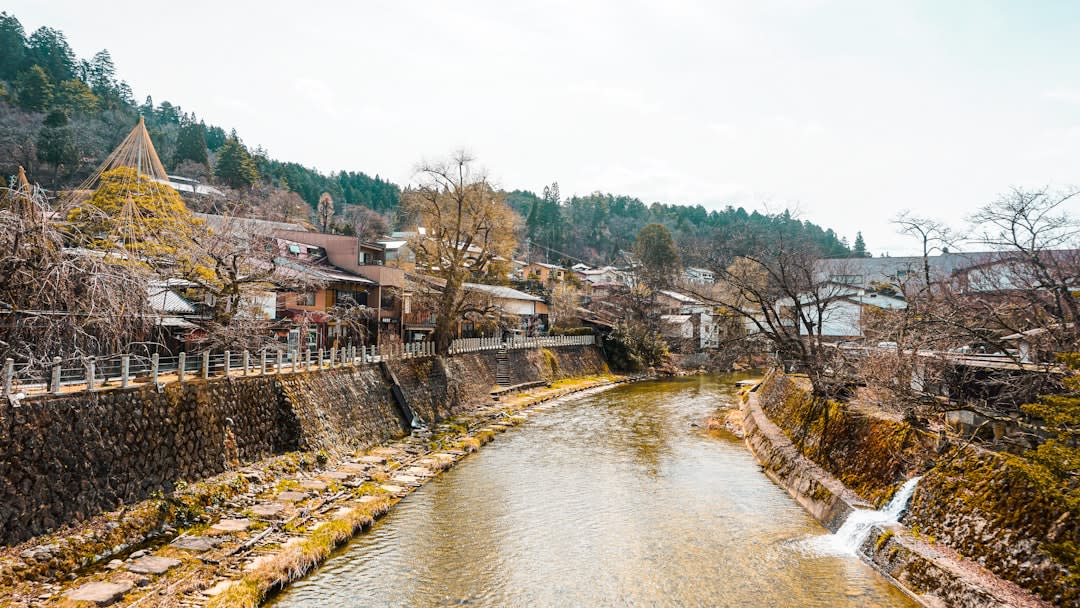
A peaceful artsy onsen town at the foot of Mt. Yufu in Oita Prefecture. The town is known for boutique galleries, craft shops, and ryokan with private outdoor baths. Lake Kinrin sits at the heart of it all. On quiet mornings, steam rises off the lake's surface in a way that seems almost designed to make you stop and stand still.
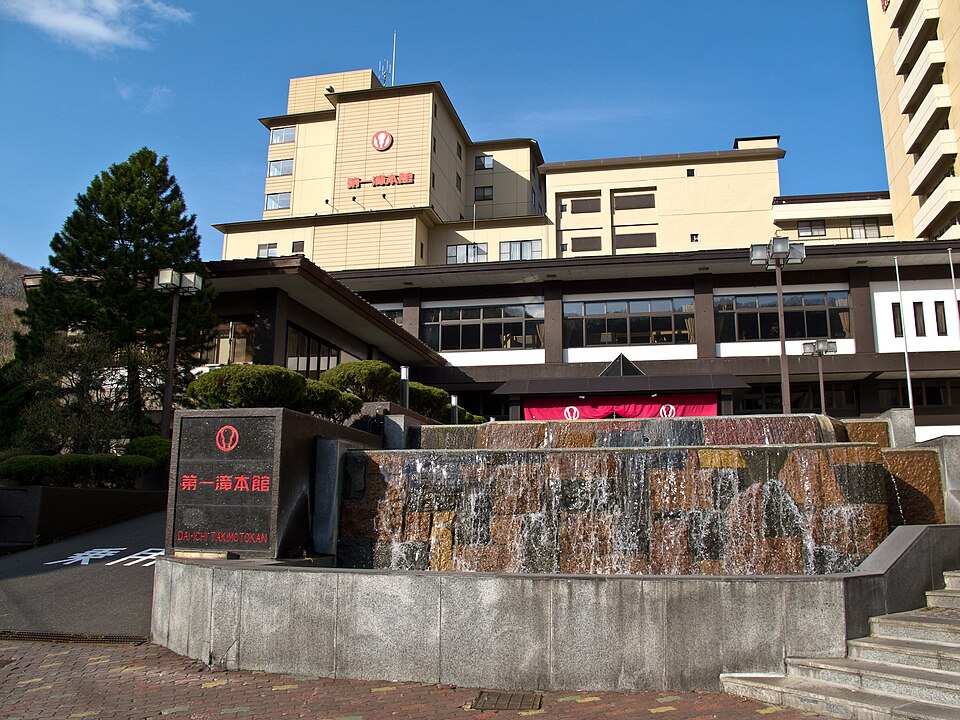
One of Hokkaido's most celebrated bathhouses. Dai-ichi Takimotokan channels water from seven distinct mineral springs into 35 pools spread across multiple floors. Indoor halls open onto outdoor rotenburo overlooking the steam-filled valley below. Day visitors are welcome without an overnight stay.
Amenities
Getting there
Take the Hokuriku Shinkansen to Kanazawa Station, then board a Hokutetsu bus to Yuwaku Onsen. The ride takes about 40 minutes.
Location & nearby
Yuwaku Onsen, Kanazawa, Ishikawa
Make a day of it
Pair your soak with these nearby spots.
Park
Yuwaku Onsen Kanko Kyo Kai
0.0km away
Attraction
Yuwaku Case Study House
0.3km away
Attraction
Kanazawayuwakumidorinosato
0.4km away
Attraction
Kanazawa Yuwaku Edomura
0.6km away
Attraction
AsanokawaOnsen ・Yuraku
0.9km away
Attraction
Shirakumoro Hotel Atochi
1.1km away
More springs in Chubu
 FREE
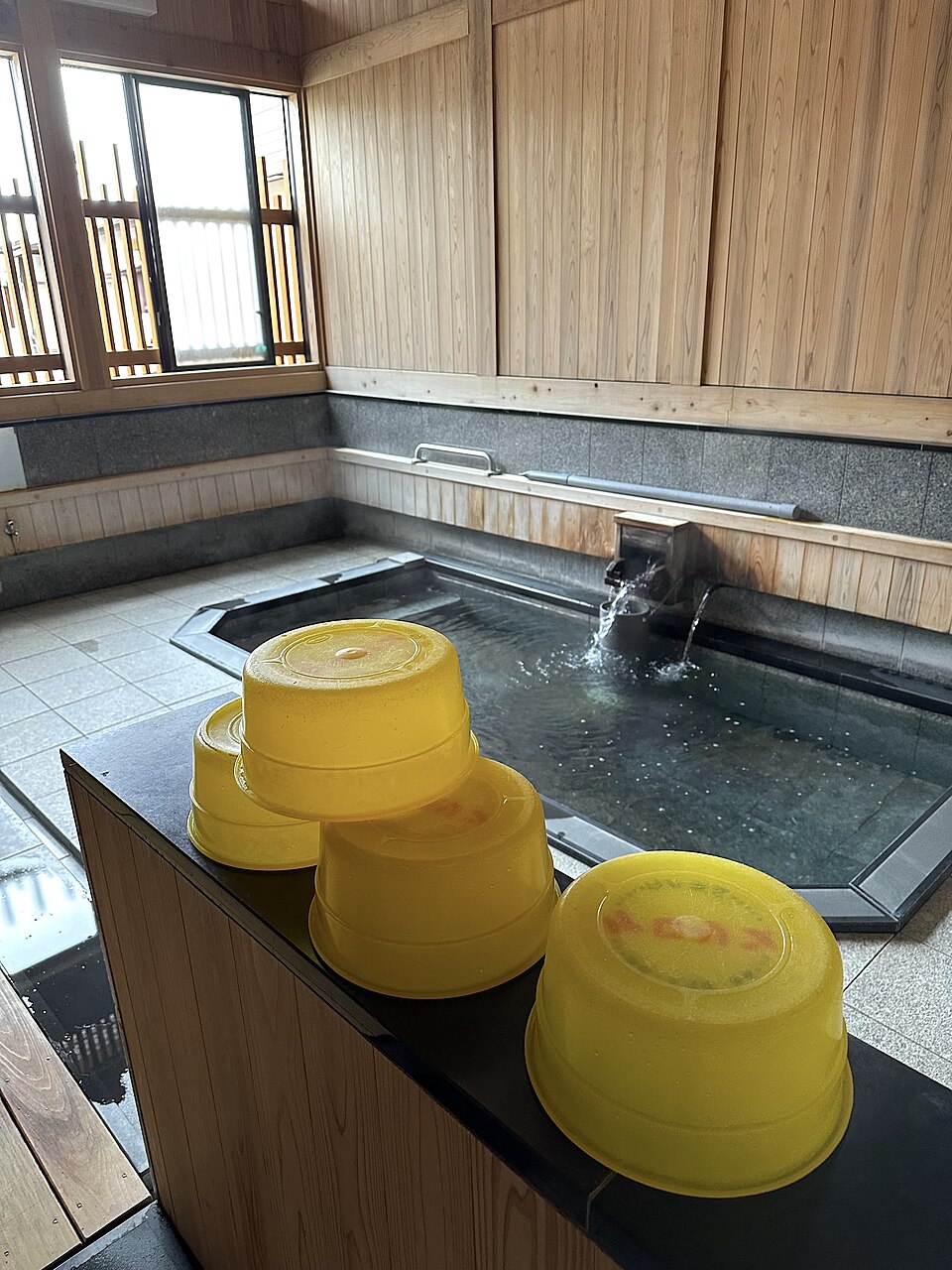
FREENozawa Onsen is a traditional village in Nagano Prefecture that maintains 13 free public bathhouses open to visitors and residents alike. These bathhouses, known as soto-yu, have been overseen by neighborhood cooperatives called yunakama for close to four centuries. The village also contains world-class ski slopes, a pairing that is genuinely uncommon anywhere in the world.
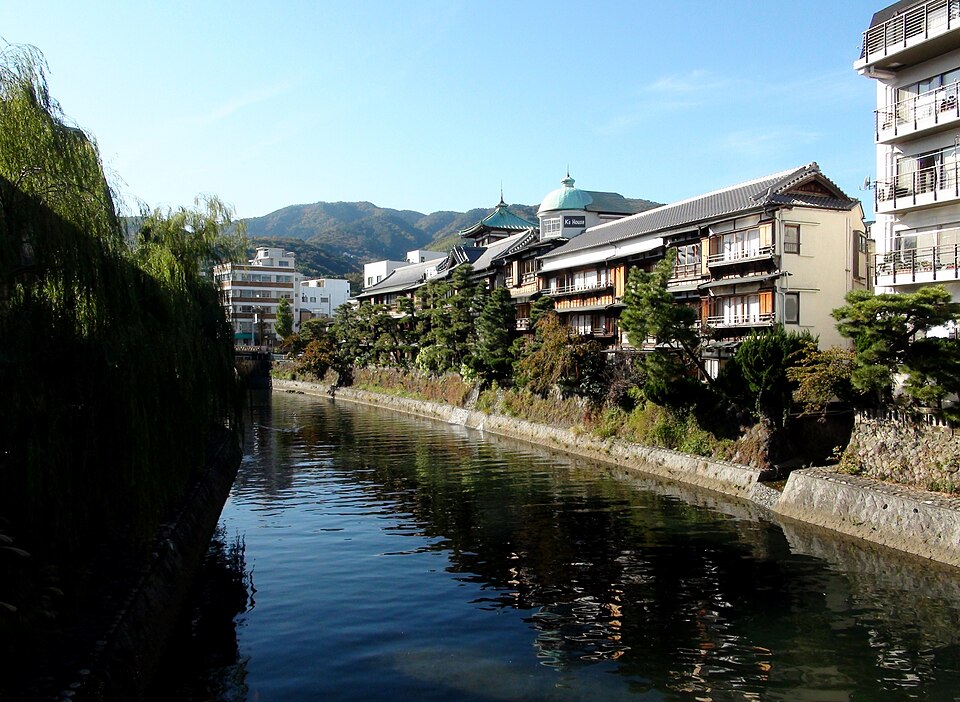
Ito sits along the eastern shore of the Izu Peninsula, facing the ocean and ranking among Japan's most productive hot spring districts by volume. More than 1,500 individual springs feed the town's supply, together pushing out around 30,000 kiloliters of water each day. Palm-lined avenues, tropical parks, and botanical gardens set the tone here, giving Ito a resort atmosphere that reads as distinctly its own compared to inland onsen destinations.
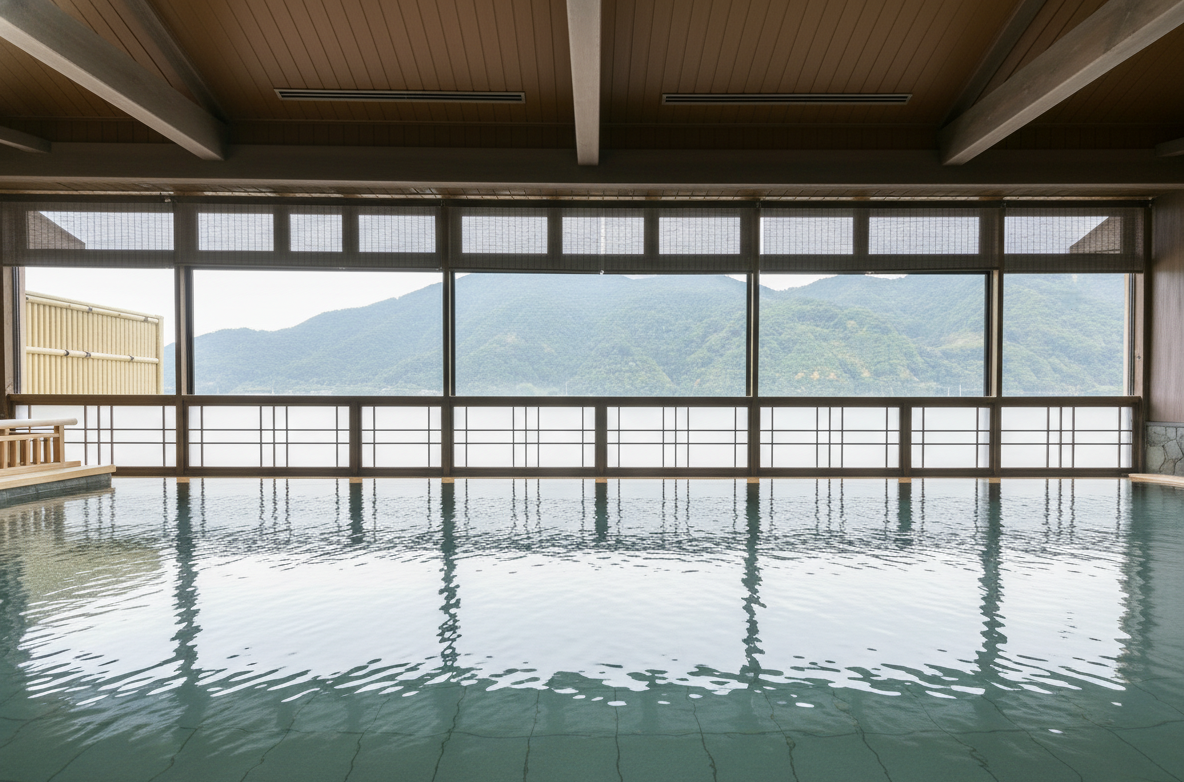
A mountain town in Niigata Prefecture famous for heavy snowfall and a unique sake-infused bath. After a day on the ski slopes, visitors soak in outdoor baths while snow falls silently around them. The town is also the setting of one of Japan's greatest novels.
Common questions
What is the water temperature at Yuwaku Onsen?▾
The water temperature at Yuwaku Onsen ranges up to 32°C (minimum around 32°C).
Is Yuwaku Onsen free to visit?▾
Yuwaku Onsen charges an entrance fee in JPY.
Is Yuwaku Onsen a public or private bath?▾
Yuwaku Onsen is a public bathing spring.
Are tattoos allowed at Yuwaku Onsen?▾
No, Yuwaku Onsen does not permit visible tattoos.