
Higashi Onsen
東温泉
4.6 · 103 reviews · via Google
Higashi Onsen
acidic · Kyushu
Hotter than 57% of Japan springs (n=122).
More acidic than 1% of Japan springs (n=121).
Mineral profile
Bar width reflects listing order, not measured concentration.
Suitability
At a glance
Crowd level
Quiet
About this spring
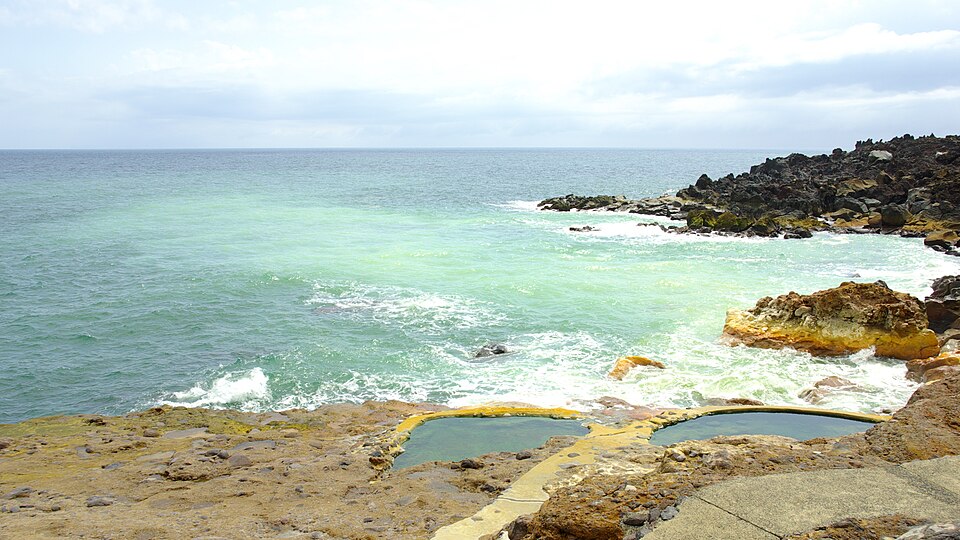
Higashi Onsen is a raw, undeveloped hot spring on Iojima, a volcanic island belonging to Mishima Village in Kagoshima Prefecture. The only way to reach it is by ferry from Kagoshima Port. Three outdoor baths have been carved into natural rock, and they remain open around the clock at no charge. The water is sharply acidic and turns a vivid green due to mineral activity in the ground. Steam rises from the volcanic heat below. There are no amenities on site beyond the baths themselves.
Highlights
History
Residents of Iojima have relied on Higashi Onsen for generations.
The island sits atop active volcanic geology, which maintains a steady flow of geothermally heated water to the spring. It was eventually named to Japan's Top 100 Hot Springs list, a recognition that has since brought outside visitors willing to make the long ferry trip to reach it.
Local guide
The ferry Mishima departs from Kagoshima Port three times a week and takes three and a half hours to cross to Iojima, which gives you time to watch the city skyline diminish and the open East China Sea expand around you. When the island comes into view, it announces itself with a pale column of volcanic gas rising from the summit of Mount Iodake, which is still actively venting sulfur above the treeline. The island has about 130 permanent residents, a small harbor, and a single paved road. Higashi Onsen is at the southern end of that road, on a shelf of black lava rock where the ocean is loud and constant.
There is no building here, no entry booth, no locker room. Three stone pools of different sizes sit directly on the lava shelf, open to the air and accessible at any hour without charge. The water that fills them comes from a highly acidic volcanic source measuring pH 1.5, which places it among the most acidic springs in Japan. The mineral content is dominated by alum and sulfur compounds, and the combination turns the water a distinctive pale green from colonies of thermophilic cyanobacteria living in the hot, acid environment. Sulfur clouds drift overhead from the mountain, and the ocean spray reaches the outermost pool when the swell is running. Soaking in water this acidic produces a clean, sharp sensation on skin, not unpleasant but distinctly chemical, and a faint white residue forms on the rocks at the pool's edge where the water evaporates.
Iojima's wildlife is unmistakable. Sea turtles come ashore on the island's beaches in summer to lay eggs, and wild peacocks, introduced when a resort was being developed in the 1970s and never contained, now roam freely across the lava fields and the village roads. Watching a peacock pick its way between the volcanic rocks toward the sea while you sit in green acid water under a sulfur cloud is an experience that does not fit into any existing category of travel writing.
Because the ferry runs only three times weekly and the island has minimal accommodation, most visitors plan a stay of at least one night. The pools are busy during the two hours after the ferry arrives and quiet at all other times. Going at dawn or late evening, when the acid water catches the light differently and the mountain above is steaming against a clear sky, is worth the disrupted schedule. Higashi Onsen appears on Japan's list of Top 100 Hot Springs, which is how most people first hear about it, and it is one of the rare entries on that list where the reality exceeds the description.
Mineral chemistry
Acidic springs (pH below 6) have natural exfoliating properties. The low pH gently dissolves dead skin cells, leaving skin noticeably smoother after a soak. Strongly acidic springs (pH below 3) also carry antimicrobial effects potent enough that they have historically been used to treat skin infections.
Limit initial soaks to 3–5 minutes until you know how your skin responds. Rinse thoroughly with fresh water afterwards to neutralise the acid. Not recommended for broken skin, active eczema flare-ups, fresh tattoos, or children under 10.
Sulfuric hot springs are among the most studied in balneology worldwide. The sulfur compounds, primarily hydrogen sulfide and thiosulfate, have documented antimicrobial and anti-inflammatory properties. Regular bathing is associated with relief from chronic skin conditions including eczema and psoriasis, as well as joint inflammation and muscle soreness. Sulfuric waters have been used therapeutically across Asia and Europe for centuries.
The distinctive rotten-egg smell dissipates quickly after leaving the bath. Avoid if you have a sulfur allergy, very sensitive skin, or respiratory conditions. Remove silver jewellery before entering — sulfur will blacken it permanently.
Similar springs
 FREE
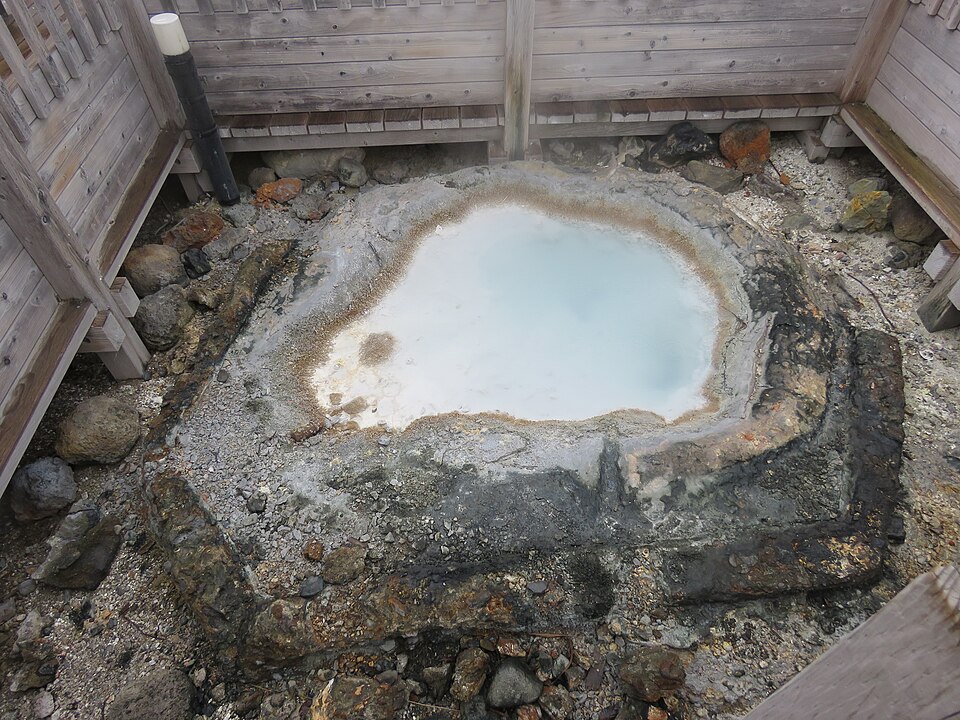
FREEThe valley occupies the center of Noboribetsu Onsen in Hokkaido. Jigokudani translates as Hell Valley. The crater covers 11 hectares and releases roughly 10,000 tonnes of hot spring water each day. Fumaroles vent steam across the floor of the valley, boiling pools bubble at the surface, and the surrounding cliffs carry heavy mineral staining. A walking path winds through the area in about 20 minutes and is open to all visitors at no cost. It ranks among the most striking landscapes accessible on foot anywhere in Japan.
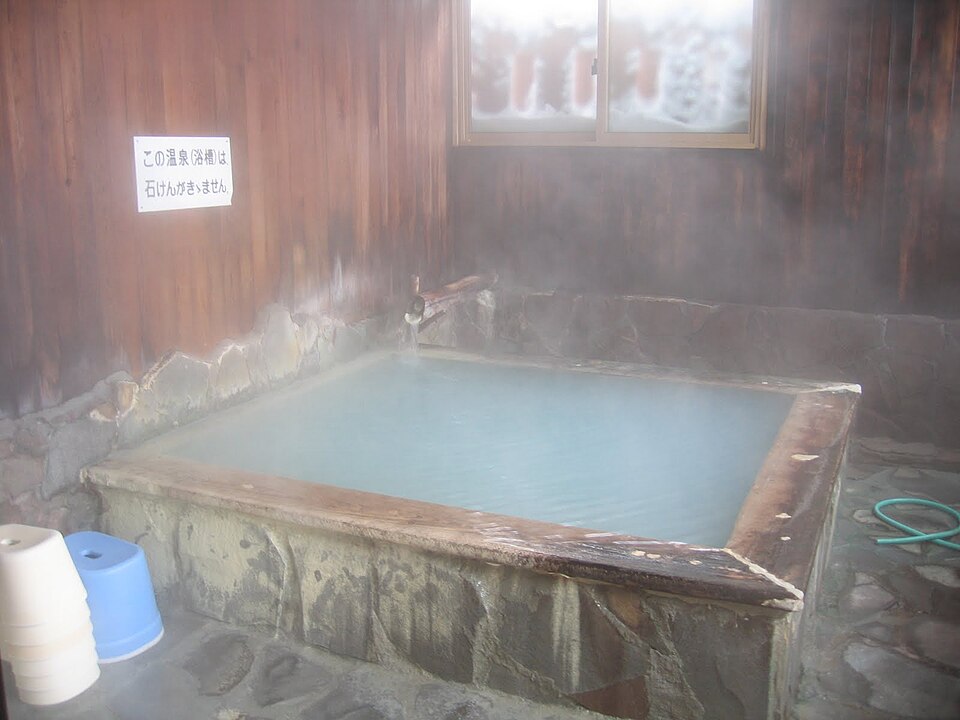
Set deep in the Hakkoda Mountains of Aomori Prefecture, Sukayu Onsen is a historic bathhouse best known for its cavernous mixed-bathing hall, the Sen-nin-buro, which translates as the Bath of a Thousand Bathers. The waters are strongly acidic, the setting is rustic and unhurried, and winter brings extraordinary snowfall to the surrounding mountains.
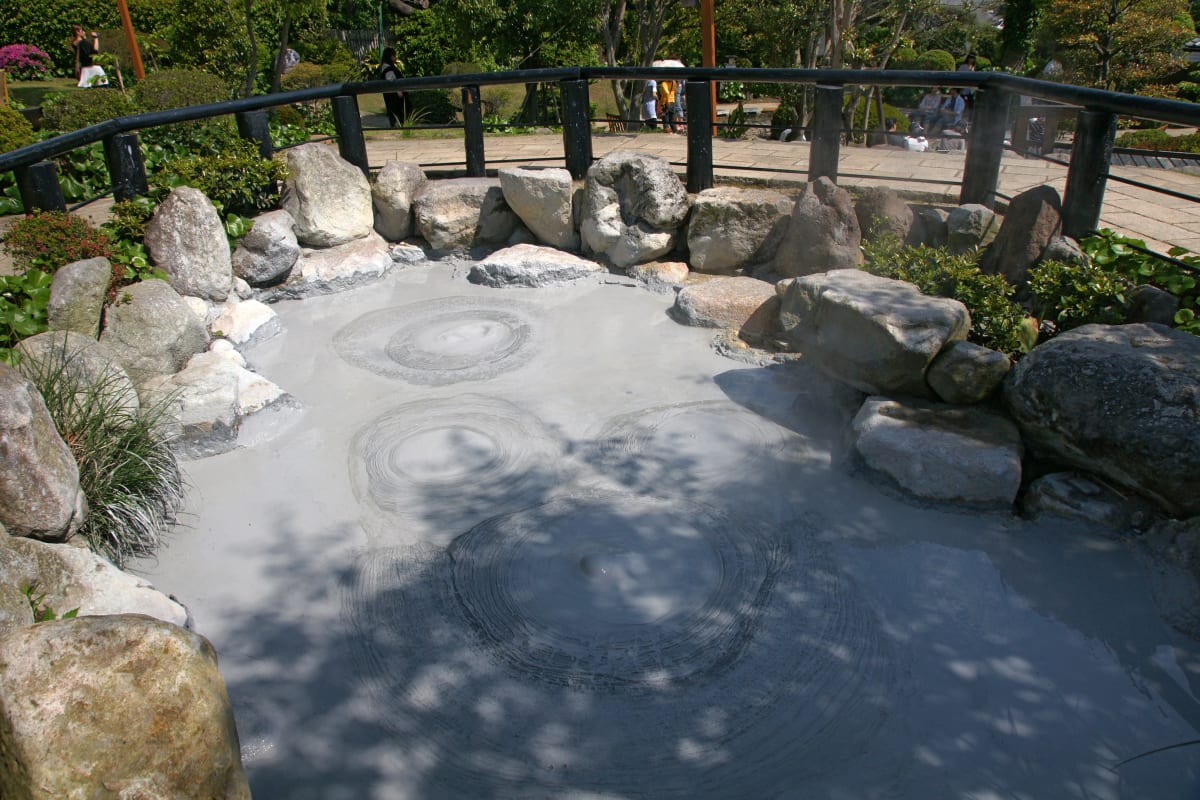
Beppu is the most geothermally active city in Japan, with more than 2,900 hot spring vents located within the city limits and eight distinct thermal spring zones collectively known as the Beppu Hatto. The variety on offer is wide, ranging from grand hotel bathhouses to modest neighborhood public facilities to the celebrated Hells, a collection of brilliantly colored boiling pools scattered across the city. The Hells run far too hot for bathing, but they draw visitors who come to walk among them and take in the spectacle.
 FREE
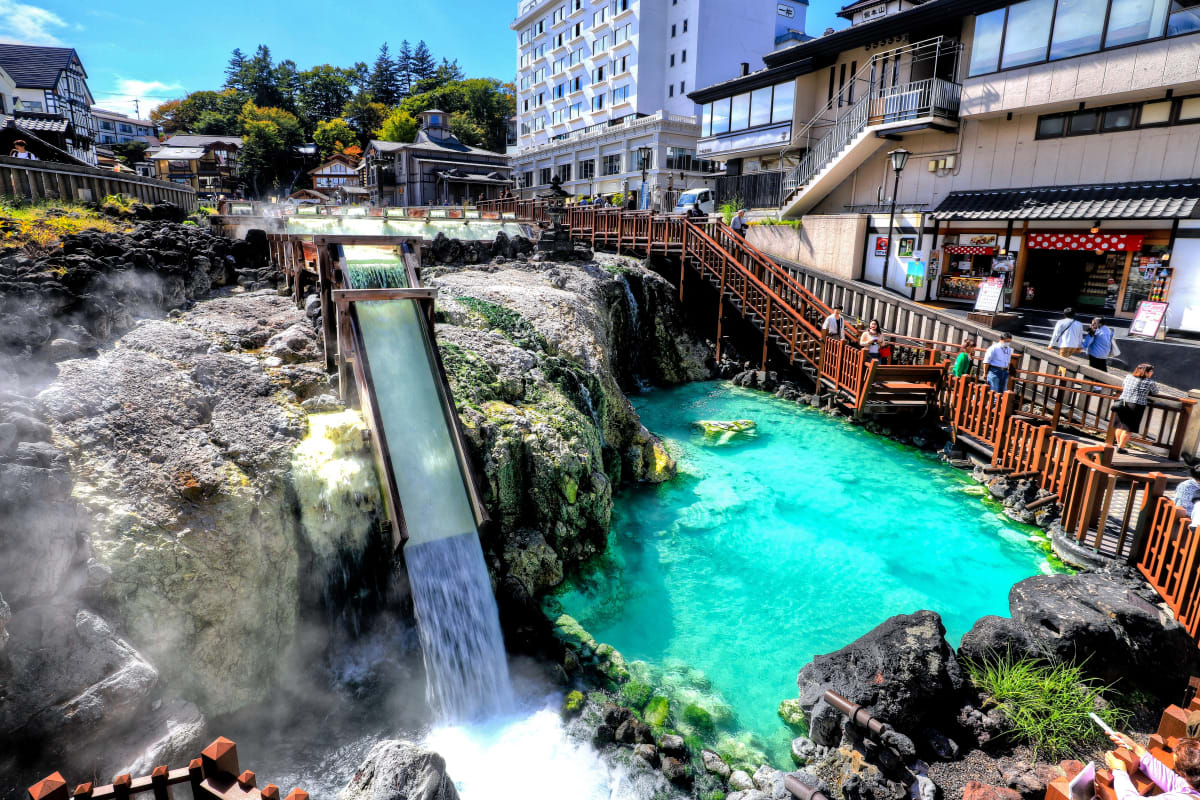
FREEKusatsu Onsen sits at 1,200 meters in the mountains of Gunma Prefecture and ranks among the most celebrated hot spring towns in Japan. The springs here produce more than 32,000 liters of water per minute, a volume unmatched anywhere else in the country. The water is strongly acidic and sulfurous, and its skin-healing properties have long made it legendary among visitors. Twice each day in the central town square, workers cool the scalding water by pulling long wooden paddles through it in unison while singing traditional songs. This practice is called yumomi.
Amenities
Getting there
The Mishima Village Ferry departs from Kagoshima Port's South Pier three times per week to Iojima, arriving about 3 hours 55 minutes later. Confirm the current schedule directly with Mishima Village as departure days change seasonally. The rocky shoreline pools are a 10-minute walk from the ferry pier.
Location & nearby
Iojima, Mishima, Kagoshima District, Kagoshima 890-0901
Make a day of it
Pair your soak with these nearby spots.
Attraction
Higashionsen
0.0km away
Attraction
IōTō (Kagoshimaken)
1.0km away
Attraction
Shunkandō
1.4km away
More springs in Kyushu
Beppu is the most geothermally active city in Japan, with more than 2,900 hot spring vents located within the city limits and eight distinct thermal spring zones collectively known as the Beppu Hatto. The variety on offer is wide, ranging from grand hotel bathhouses to modest neighborhood public facilities to the celebrated Hells, a collection of brilliantly colored boiling pools scattered across the city. The Hells run far too hot for bathing, but they draw visitors who come to walk among them and take in the spectacle.
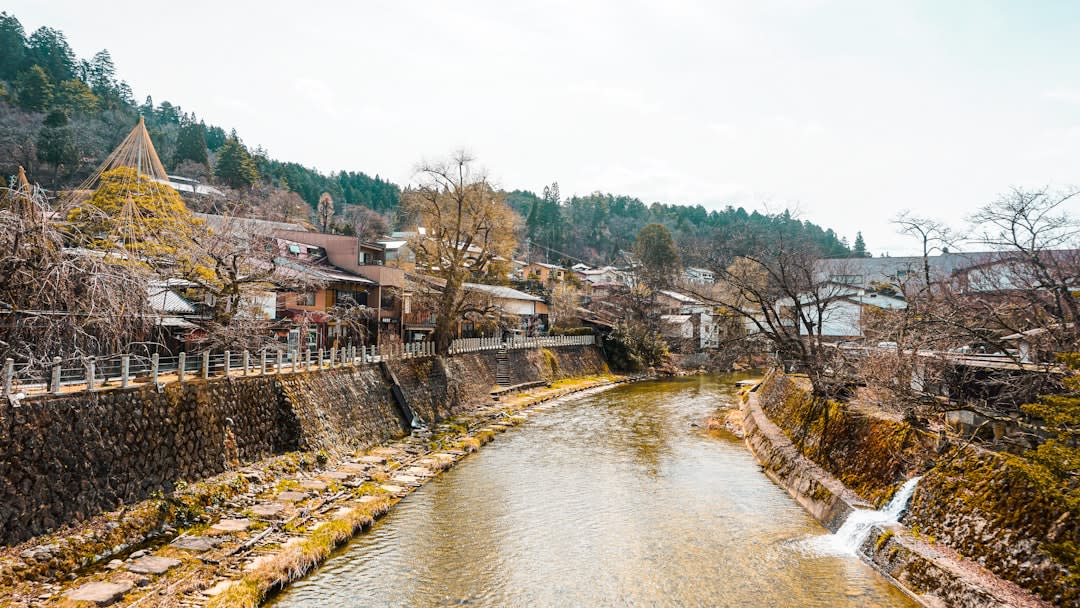
A peaceful artsy onsen town at the foot of Mt. Yufu in Oita Prefecture. The town is known for boutique galleries, craft shops, and ryokan with private outdoor baths. Lake Kinrin sits at the heart of it all. On quiet mornings, steam rises off the lake's surface in a way that seems almost designed to make you stop and stand still.
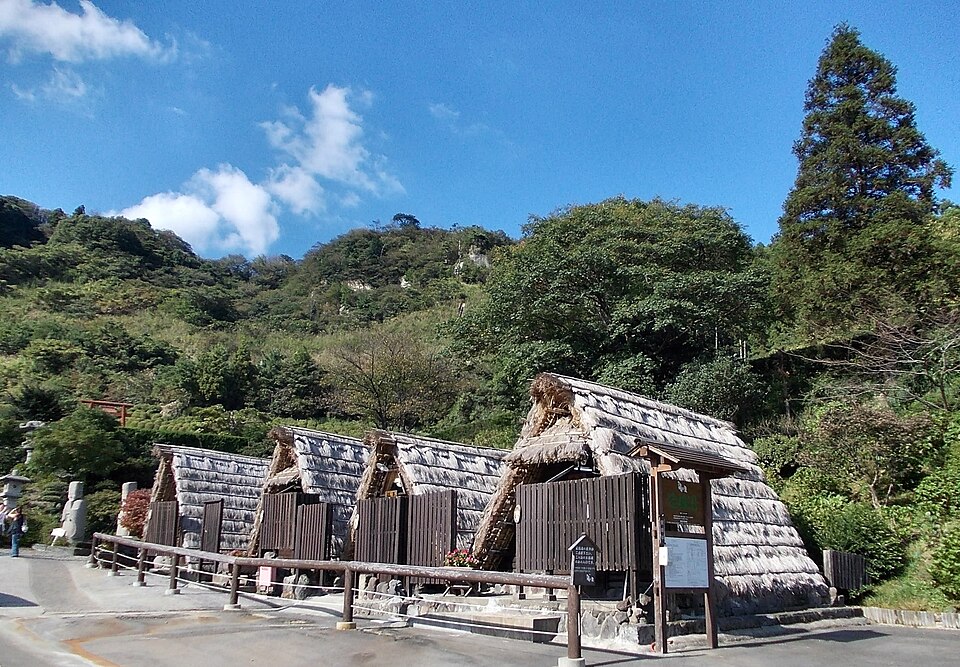
Set on a wooded slope in Beppu's Myoban district, this resort draws visitors for its yunohana, a term meaning hot spring flowers, which are white crystalline deposits that collect on surfaces where steam from the springs cools and condenses. The spring water itself is strongly sulfurous and acidic, rising at high temperatures from one of the eight volcanic source zones that make up Beppu Hatto.
Common questions
What is the water temperature at Higashi Onsen?▾
The water temperature at Higashi Onsen ranges up to 65°C (minimum around 65°C).
Is Higashi Onsen free to visit?▾
Yes, Higashi Onsen is free to visit.
Is Higashi Onsen a public or private bath?▾
Higashi Onsen is a mixed bathing spring.
Are tattoos allowed at Higashi Onsen?▾
Yes, Higashi Onsen welcomes visitors with tattoos.