
Jigokudani Onsen
地獄谷温泉
4.4 · 355 reviews · via Google
Jigokudani Onsen
sulfur · Chubu
Hotter than 93% of Japan springs (n=122).
More acidic than 41% of Japan springs (n=121).
Mineral profile
Bar width reflects listing order, not measured concentration.
Suitability
At a glance
Getting there
Moderate — a short ride from a station
Cost
High
Crowd level
Quiet
About this spring
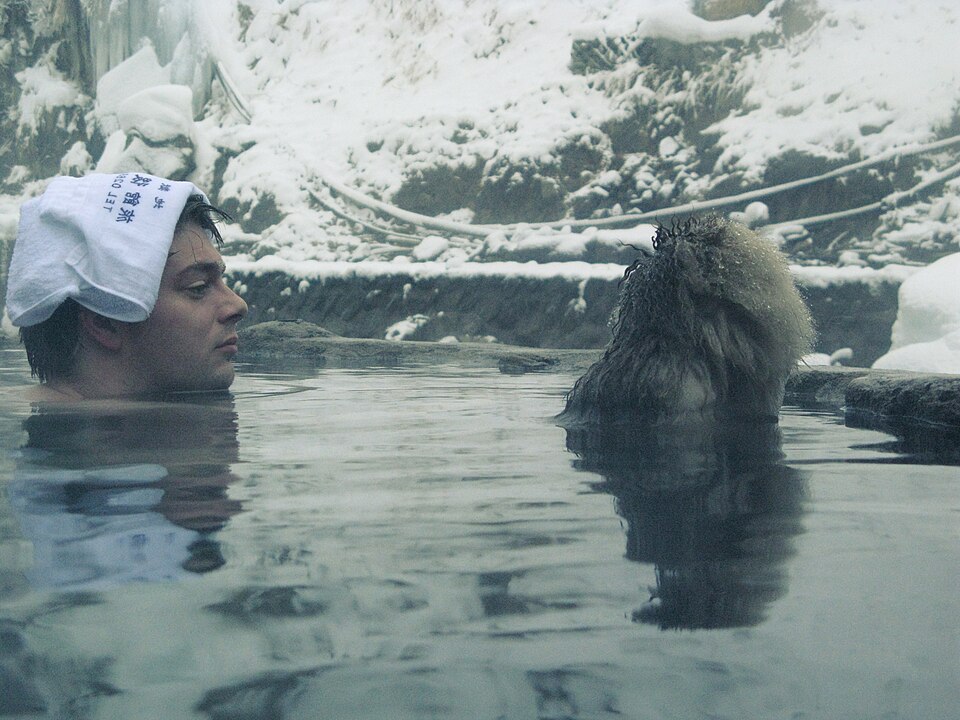
Jigokudani Onsen sits in the Shiga Kogen highlands of Nagano Prefecture, a remote mountain spring known above all for the troops of Japanese macaques that descend from the surrounding forest to bathe in the open-air pools. The Korakukan ryokan has operated at this location for more than 150 years. Visitors reach the spring on foot, following a narrow trail through beech forest for about 30 minutes.
Highlights
History
Local communities drew on this spring for centuries before it gained wider notice.
In 1963, a young macaque wandered into the outdoor bath at the Korakukan ryokan and came out uninjured. The behavior caught on and moved through the troop. A pool set aside specifically for the monkeys was established by 1964, the same period the Jigokudani Monkey Park opened its gates to visitors. The American magazine Life ran photographs of snow-covered macaques sitting in the steaming water, and that image took hold as one of the most widely reproduced pictures associated with Japan. A BBC documentary and the feature film Baraka later introduced the site to audiences around the world.
Local guide
From Nagano Station you take the Nagano Dentetsu private line for thirty-five minutes to Yudanaka Station, then a short bus to the trailhead at the edge of the Yokoyu River valley. From there you walk. The trail runs 1.6 kilometers through dense forest, and in winter the path is packed snow with ice where the springs have seeped across the ground. The trees close over you, the temperature drops, and you can hear the river below through the trees before you see it. Then the trail opens into a clearing where steam rises from cracks in the frozen ground and from the surface of a pool of pale sulfurous water, and where a group of Japanese macaques are sitting in the hot spring looking at you.
The monkeys started using the outdoor bath at Korakukan guest house in 1963, having watched the human guests soak and decided to try it themselves. The park was formally established the following year. The photograph of a macaque submerged to its chin in steaming water, snowflakes on its head, appeared in Life magazine in 1970 and traveled around the world. Korakukan itself opened in 1864, predating the monkey behavior by nearly a century, and it still operates as a twelve-room guesthouse at the end of the footpath. There are no roads in.
The spring water at Jigokudani (the name means Hell's Valley, for the steam and the boiling vents in the frozen ground) is a sulfur type, coming up at 75 to 85 degrees. The outdoor pool where the macaques bathe is cooled to bathing temperature by the time it reaches the pool's edge, and sits milky pale where the sulfur has precipitated out. The smell is moderate, not overwhelming, and the water on skin carries a slight dry feel after the sulfur has done its work, a little like skin that has been in a slightly astringent wash.
What you are here for is the winter morning when the snow is actively falling and several monkeys are in the pool, their faces dusted white, pink skin visible under wet fur. Some groom each other in the water. Young ones chase each other along the pool's edge. You stand in your coat at the railing and there is no glass between you. The steam rises, the snow keeps falling, and the Yokoyu River carries the overflow downstream through the forest. It is a strange and very specific place, and worth every minute of the journey.
Mineral chemistry
Sulfuric hot springs are among the most studied in balneology worldwide. The sulfur compounds, primarily hydrogen sulfide and thiosulfate, have documented antimicrobial and anti-inflammatory properties. Regular bathing is associated with relief from chronic skin conditions including eczema and psoriasis, as well as joint inflammation and muscle soreness. Sulfuric waters have been used therapeutically across Asia and Europe for centuries.
The distinctive rotten-egg smell dissipates quickly after leaving the bath. Avoid if you have a sulfur allergy, very sensitive skin, or respiratory conditions. Remove silver jewellery before entering — sulfur will blacken it permanently.
Similar springs
 FREE
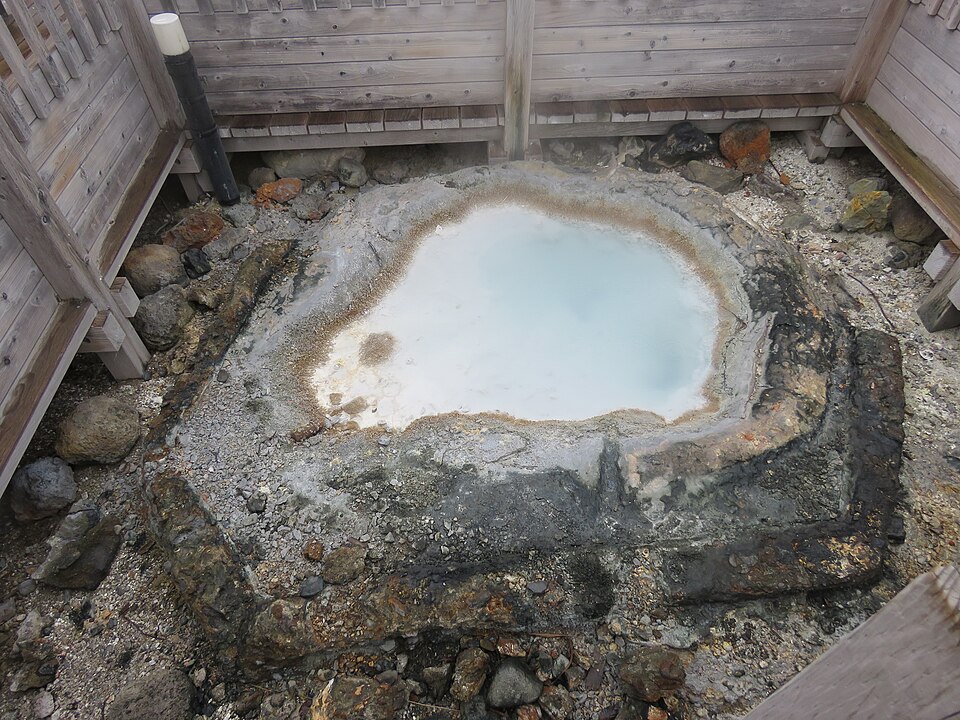
FREEThe valley occupies the center of Noboribetsu Onsen in Hokkaido. Jigokudani translates as Hell Valley. The crater covers 11 hectares and releases roughly 10,000 tonnes of hot spring water each day. Fumaroles vent steam across the floor of the valley, boiling pools bubble at the surface, and the surrounding cliffs carry heavy mineral staining. A walking path winds through the area in about 20 minutes and is open to all visitors at no cost. It ranks among the most striking landscapes accessible on foot anywhere in Japan.
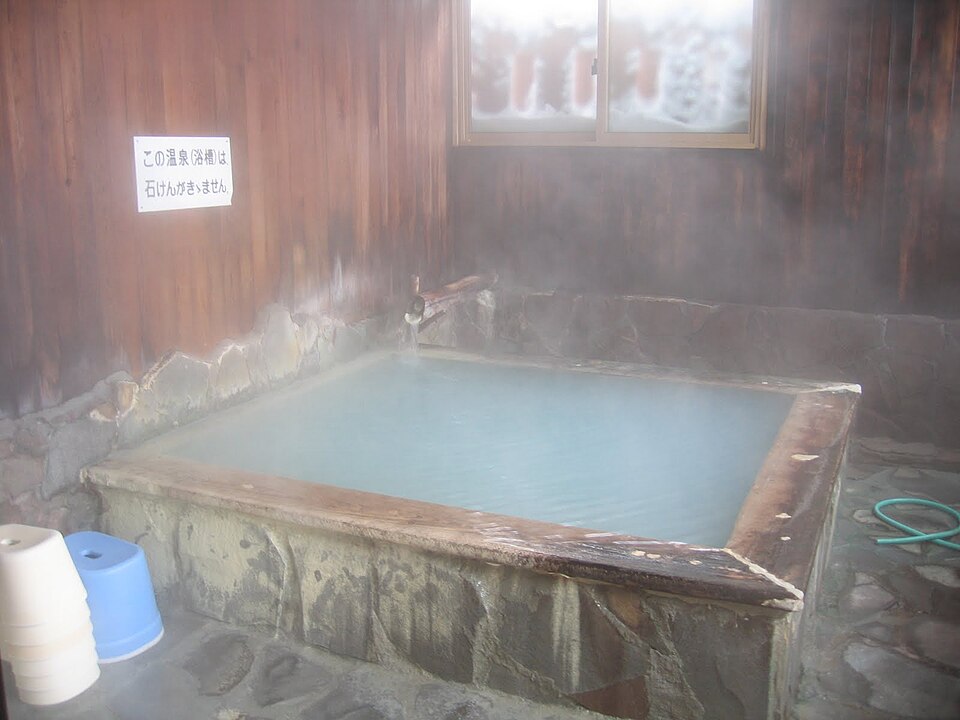
Set deep in the Hakkoda Mountains of Aomori Prefecture, Sukayu Onsen is a historic bathhouse best known for its cavernous mixed-bathing hall, the Sen-nin-buro, which translates as the Bath of a Thousand Bathers. The waters are strongly acidic, the setting is rustic and unhurried, and winter brings extraordinary snowfall to the surrounding mountains.
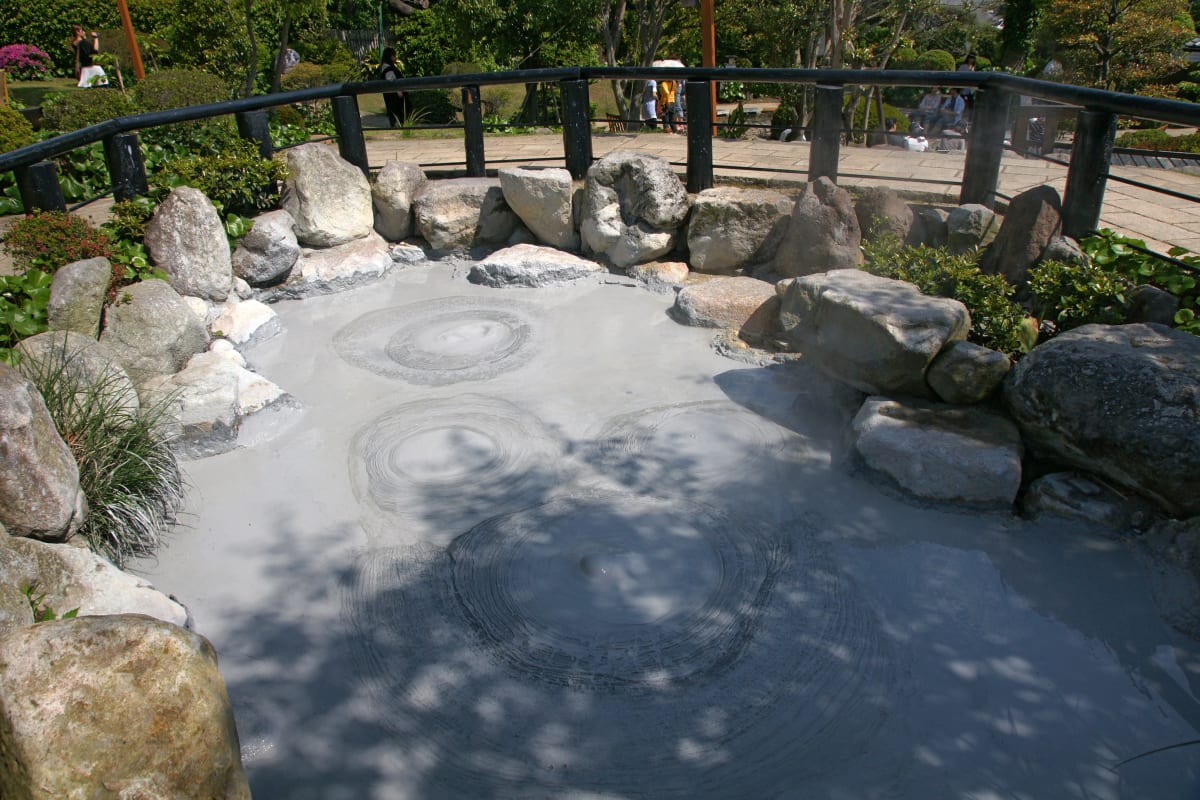
Beppu is the most geothermally active city in Japan, with more than 2,900 hot spring vents located within the city limits and eight distinct thermal spring zones collectively known as the Beppu Hatto. The variety on offer is wide, ranging from grand hotel bathhouses to modest neighborhood public facilities to the celebrated Hells, a collection of brilliantly colored boiling pools scattered across the city. The Hells run far too hot for bathing, but they draw visitors who come to walk among them and take in the spectacle.
 FREE
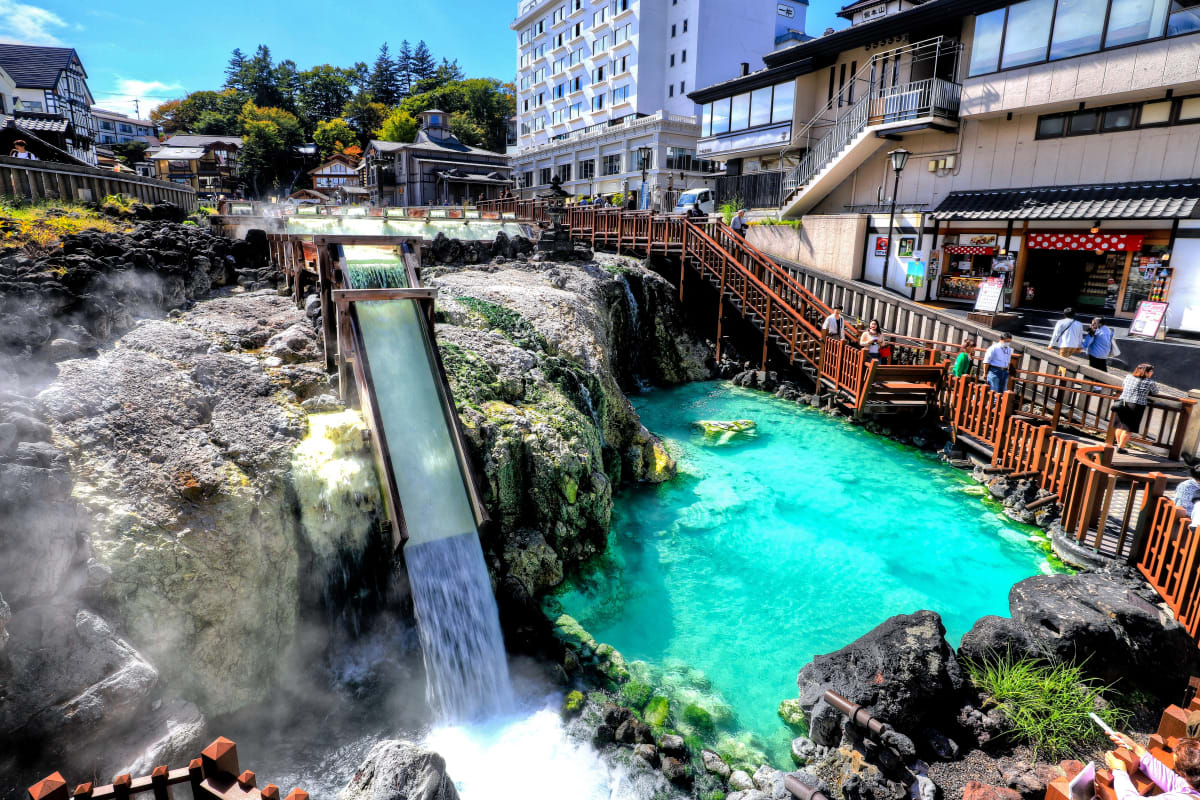
FREEKusatsu Onsen sits at 1,200 meters in the mountains of Gunma Prefecture and ranks among the most celebrated hot spring towns in Japan. The springs here produce more than 32,000 liters of water per minute, a volume unmatched anywhere else in the country. The water is strongly acidic and sulfurous, and its skin-healing properties have long made it legendary among visitors. Twice each day in the central town square, workers cool the scalding water by pulling long wooden paddles through it in unison while singing traditional songs. This practice is called yumomi.
Amenities
Getting there
Take the Nagano Dentetsu line from Nagano Station to Yudanaka Station. The journey takes about 35 minutes. From Yudanaka, take a bus or taxi to the Kanbayashi Onsen area, then walk about 30 minutes along a forest path. Snow boots are recommended in winter.
Location & nearby
6818 Hirao, Yamanouchi, Shimotakai District, Nagano 381-0401
Make a day of it
Pair your soak with these nearby spots.
Attraction
Jigokudani Hot Spring Korakukan
0.0km away
Attraction
Jigogudanionsen
0.0km away
Park
Jigokudani Yaen-koen
0.0km away
Attraction
Shibunojigogudanifunsen
0.1km away
Park
JigogudaniyaenōYakeen
0.1km away
Attraction
Snow Monkey Park
0.1km away
More springs in Chubu
 FREE
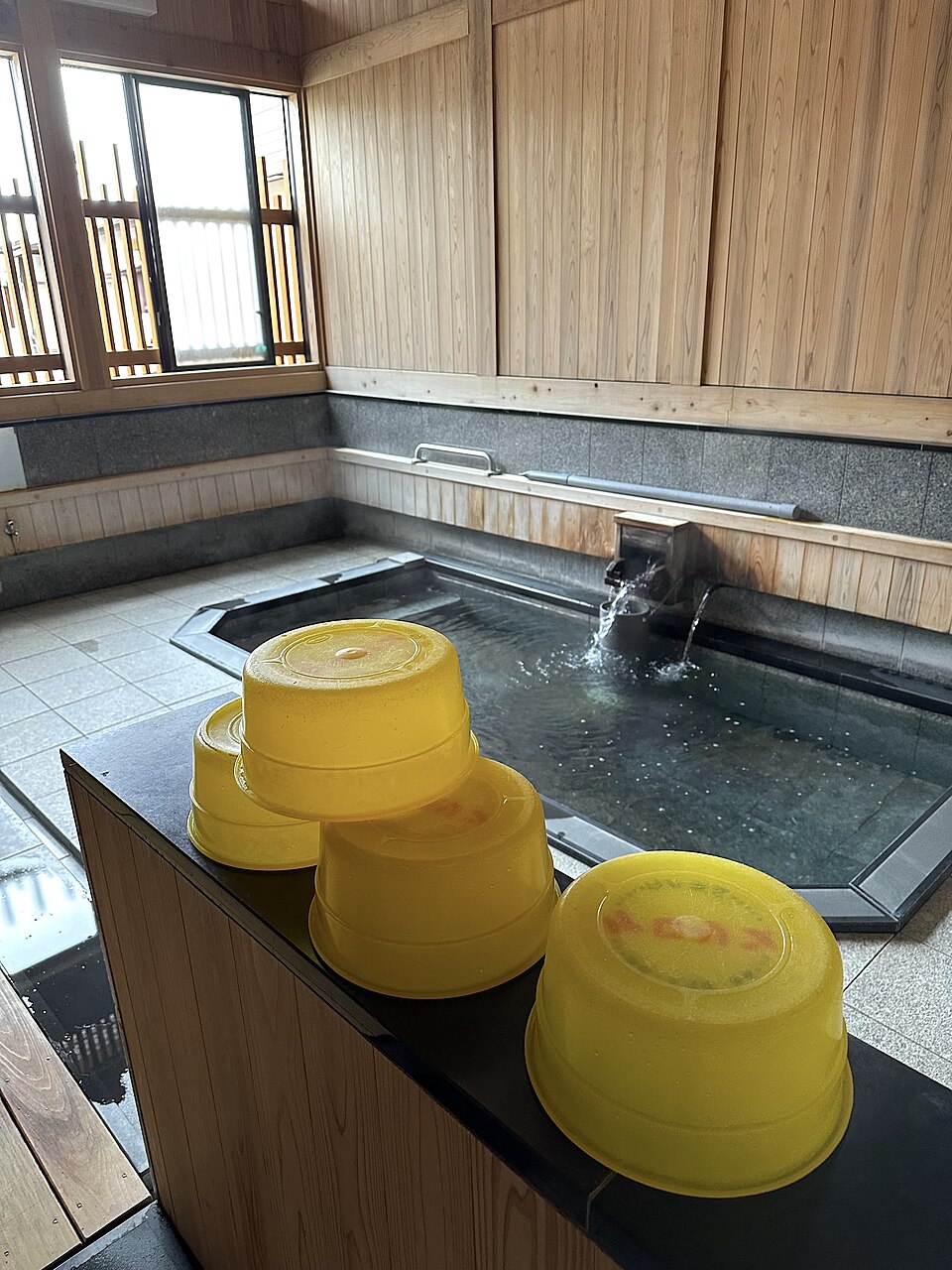
FREENozawa Onsen is a traditional village in Nagano Prefecture that maintains 13 free public bathhouses open to visitors and residents alike. These bathhouses, known as soto-yu, have been overseen by neighborhood cooperatives called yunakama for close to four centuries. The village also contains world-class ski slopes, a pairing that is genuinely uncommon anywhere in the world.
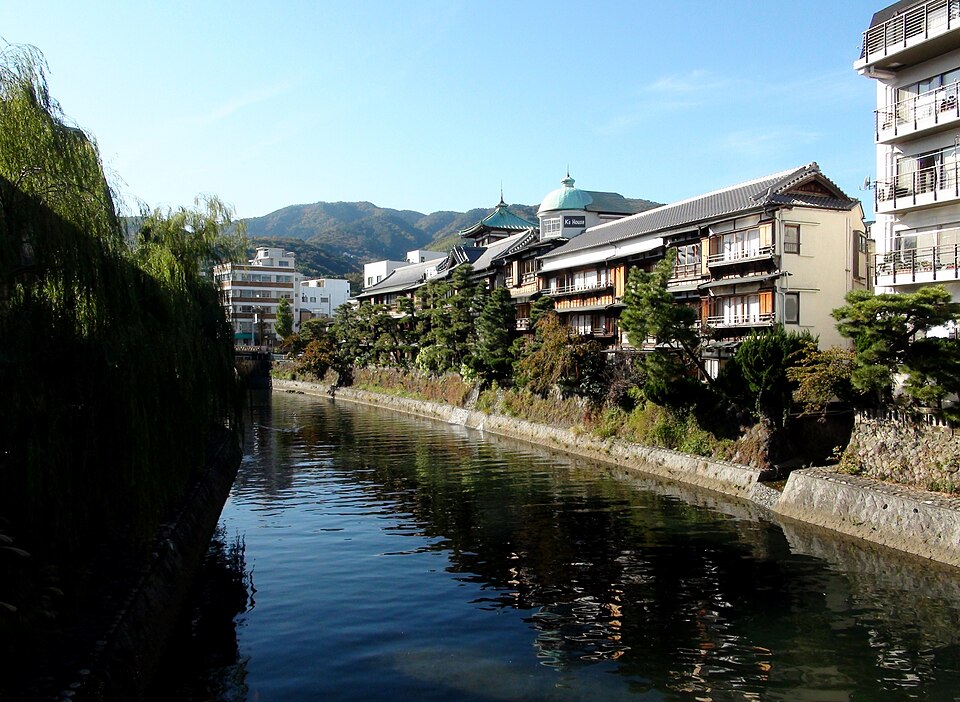
Ito sits along the eastern shore of the Izu Peninsula, facing the ocean and ranking among Japan's most productive hot spring districts by volume. More than 1,500 individual springs feed the town's supply, together pushing out around 30,000 kiloliters of water each day. Palm-lined avenues, tropical parks, and botanical gardens set the tone here, giving Ito a resort atmosphere that reads as distinctly its own compared to inland onsen destinations.
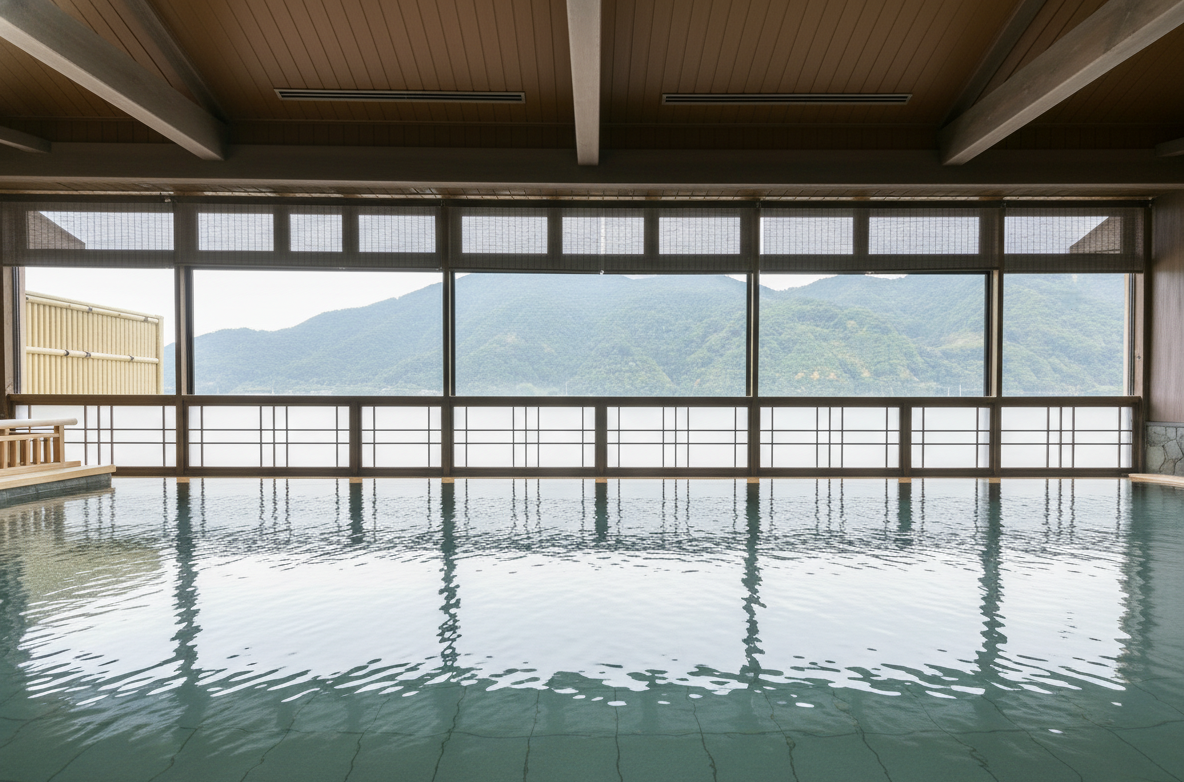
A mountain town in Niigata Prefecture famous for heavy snowfall and a unique sake-infused bath. After a day on the ski slopes, visitors soak in outdoor baths while snow falls silently around them. The town is also the setting of one of Japan's greatest novels.
Common questions
What is the water temperature at Jigokudani Onsen?▾
The water temperature at Jigokudani Onsen ranges up to 98°C (minimum around 42°C).
Is Jigokudani Onsen free to visit?▾
Jigokudani Onsen charges an entrance fee in JPY.
Is Jigokudani Onsen a public or private bath?▾
Jigokudani Onsen is a private bathing spring.
Are tattoos allowed at Jigokudani Onsen?▾
Yes, Jigokudani Onsen welcomes visitors with tattoos.
What is the nearest station to Jigokudani Onsen?▾
The nearest station to Jigokudani Onsen is Kanmandaki (Temporary Stop), about 1.3km away.