
Shimobe Onsen
下部温泉
Shimobe Onsen
simple-alkaline · Chubu
Hotter than 24% of Japan springs (n=122).
More acidic than 98% of Japan springs (n=121).
Mineral profile
Bar width reflects listing order, not measured concentration.
Suitability
At a glance
Getting there
Easy — under 1km from a station
Cost
High
About this spring
Shimobe Onsen sits along the Shimobe River in Yamanashi Prefecture, tucked against the base of the Minobu mountains and backed by more than 1,200 years of documented history, making it among the oldest hot spring destinations in Japan. The site is closely linked to the warlord Takeda Shingen, who reportedly sent soldiers here to heal their wounds following the battles of Kawanakajima. The waters are strongly alkaline, registering pH 10.
Highlights
History
Local tradition traces the original discovery of the springs to the reign of Emperor Keiko, though the written record grows more reliable in the medieval period.
The connection to Takeda Shingen gave Shimobe a lasting identity as a place of martial recovery during the Sengoku period, when the springs were valued for treating battle injuries. The resort earned a place on the official list of Japan's 100 Famous Hot Springs in the twentieth century. Facilities occupy both banks of the Shimobe River, with twelve separate baths fed by two distinct spring sources.
Local guide
From Minobu Station, the road climbs into the hills along the Fuji River tributary toward Shimobe Onsen, passing through dense forest with no large towns between. The terrain here is southern Yamanashi at its most understated, no Fuji views, no famous gates, just a narrow valley and the kind of persistent quiet that comes from being far enough from any main route that casual traffic does not come through. Shimobe has been a hot spring settlement for over 1,200 years, associated with Takeda Shingen, who reportedly used the waters to treat battle wounds during his campaigns in the sixteenth century. The village has not changed shape dramatically since.
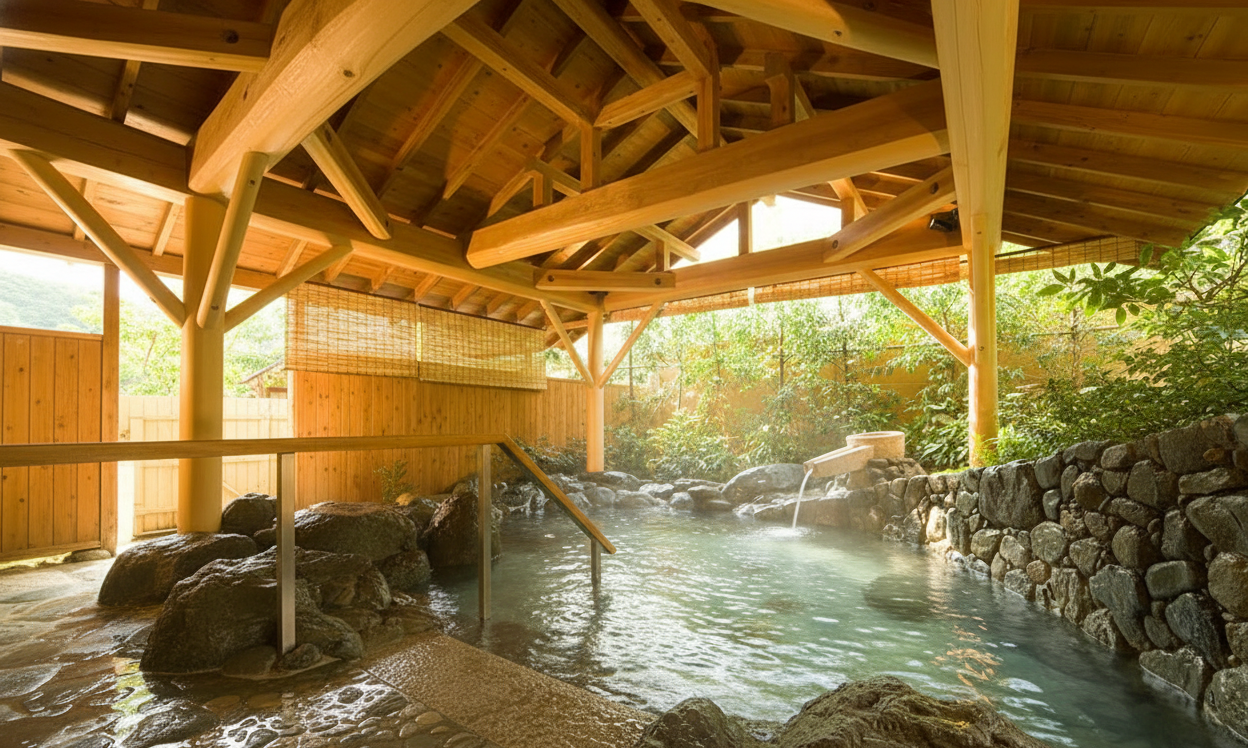
The spring water runs across two main types here, which is part of what makes Shimobe genuinely interesting to people who pay attention to water chemistry. The first is a simple alkaline sulfur spring with a pH of 10, which is strongly alkaline by any standard. In the bath, this water feels almost frictionless against the skin, the alkalinity breaking down surface oils until you feel completely clean in a way that takes a moment to identify. The second source is a simpler alkaline spring drawn from a different depth, cooler and softer. Used together across different tubs, the two types give Shimobe Hotel's twelve baths, seven of which are outdoor, a range of sensations that a single-source onsen cannot match.
Mount Minobu is the backdrop to all of this. The mountain is the location of Kuonji Temple, the head temple of Nichiren Buddhism, and it draws pilgrims from across Japan who climb its 287-step stone staircase to the main hall. Shimobe sits a short distance from that pilgrimage route, which partly explains why it has been in continuous use for so long. Pilgrims and travelers with sore legs have been stopping at these springs for the same reason for over a millennium.
The outdoor baths here are positioned in the hillside garden above the river, surrounded by cedar and maple that shift through green, orange, and bare grey depending on the season. The water at the lower temperatures, around 30 degrees in some pools, is genuinely unusual for a hot spring, cool enough to sit in for an extended time while still feeling the mineral character of the water. After spending a day on the pilgrimage road, those cooler pools are exactly what the journey built toward.
Mineral chemistry
Alkaline springs (pH above 8) are known for their skin-softening effect, sometimes called "beauty water" in bathing cultures across Asia. The high pH saponifies skin oils, producing a characteristic silky feel on the skin surface.
The slippery feeling underfoot in highly alkaline springs is normal — take care when standing and walking in the bath. Avoid prolonged soaking if you have dry or sensitive skin.
Sulfuric hot springs are among the most studied in balneology worldwide. The sulfur compounds, primarily hydrogen sulfide and thiosulfate, have documented antimicrobial and anti-inflammatory properties. Regular bathing is associated with relief from chronic skin conditions including eczema and psoriasis, as well as joint inflammation and muscle soreness. Sulfuric waters have been used therapeutically across Asia and Europe for centuries.
The distinctive rotten-egg smell dissipates quickly after leaving the bath. Avoid if you have a sulfur allergy, very sensitive skin, or respiratory conditions. Remove silver jewellery before entering — sulfur will blacken it permanently.
Similar springs
 FREE
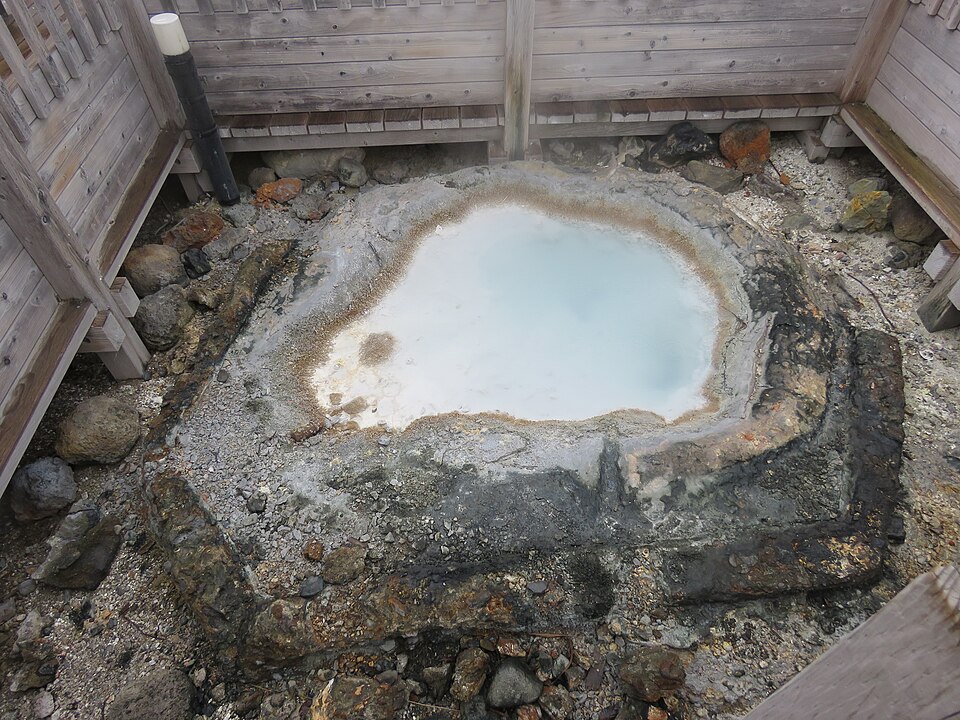
FREEThe valley occupies the center of Noboribetsu Onsen in Hokkaido. Jigokudani translates as Hell Valley. The crater covers 11 hectares and releases roughly 10,000 tonnes of hot spring water each day. Fumaroles vent steam across the floor of the valley, boiling pools bubble at the surface, and the surrounding cliffs carry heavy mineral staining. A walking path winds through the area in about 20 minutes and is open to all visitors at no cost. It ranks among the most striking landscapes accessible on foot anywhere in Japan.
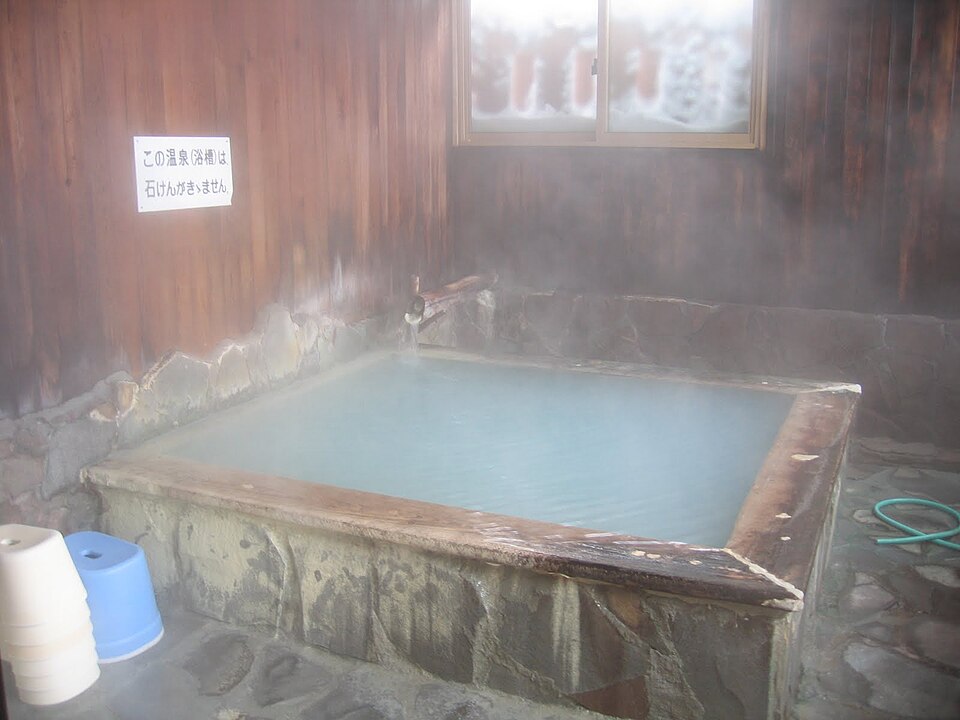
Set deep in the Hakkoda Mountains of Aomori Prefecture, Sukayu Onsen is a historic bathhouse best known for its cavernous mixed-bathing hall, the Sen-nin-buro, which translates as the Bath of a Thousand Bathers. The waters are strongly acidic, the setting is rustic and unhurried, and winter brings extraordinary snowfall to the surrounding mountains.
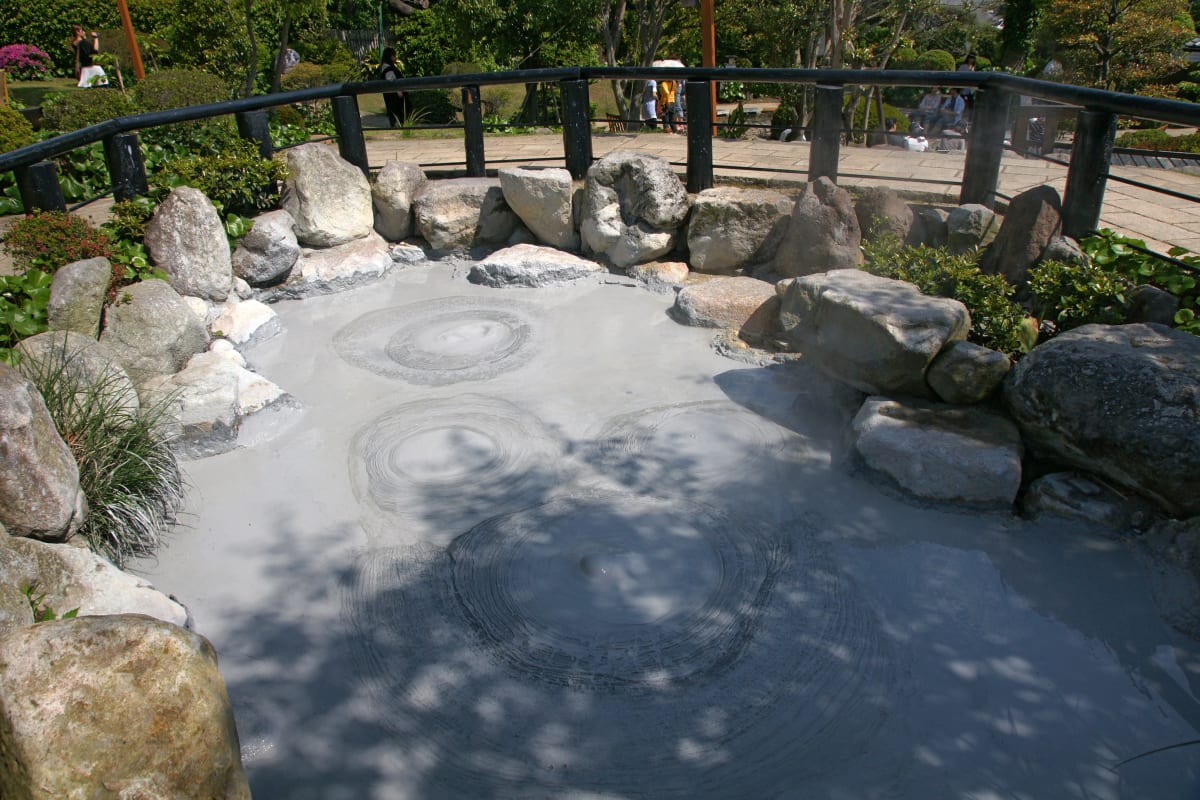
Beppu is the most geothermally active city in Japan, with more than 2,900 hot spring vents located within the city limits and eight distinct thermal spring zones collectively known as the Beppu Hatto. The variety on offer is wide, ranging from grand hotel bathhouses to modest neighborhood public facilities to the celebrated Hells, a collection of brilliantly colored boiling pools scattered across the city. The Hells run far too hot for bathing, but they draw visitors who come to walk among them and take in the spectacle.
 FREE
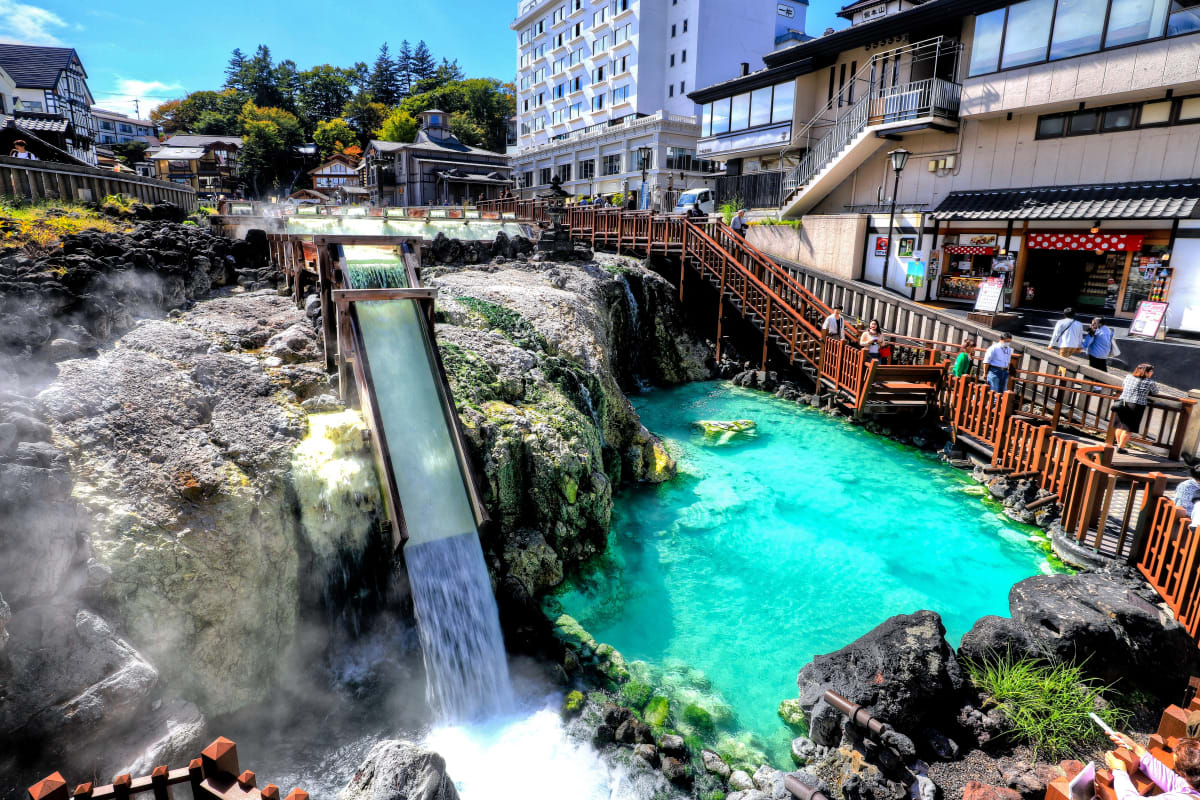
FREEKusatsu Onsen sits at 1,200 meters in the mountains of Gunma Prefecture and ranks among the most celebrated hot spring towns in Japan. The springs here produce more than 32,000 liters of water per minute, a volume unmatched anywhere else in the country. The water is strongly acidic and sulfurous, and its skin-healing properties have long made it legendary among visitors. Twice each day in the central town square, workers cool the scalding water by pulling long wooden paddles through it in unison while singing traditional songs. This practice is called yumomi.
Amenities
Getting there
Take the JR Minobu Line from Fuji Station northbound or from Kofu Station southbound. Shimobe-Onsen Station is served by all trains including the Limited Express Fujikawa. From Shinjuku, take the Fujikawa limited express to Kofu, about 90 minutes, then transfer to a southbound Minobu Line train to Shimobe-Onsen Station, about 40 minutes. The onsen town is a short walk from the station.
Location & nearby
Shimobe Onsen, Minobu, Minamikoma District, Yamanashi
Make a day of it
Pair your soak with these nearby spots.
Attraction
Gensenkan
0.1km away
Attraction
Motoyukabutohikan
0.1km away
Attraction
Shimobeonsen KabukankōKyōKai
0.1km away
Attraction
Shimobeonsenkaikan
0.3km away
Attraction
ShimobeōGonnoashiyu
0.7km away
Attraction
Kai Golden Village, Yunooku Kanayama Museum
0.8km away
More springs in Chubu
 FREE
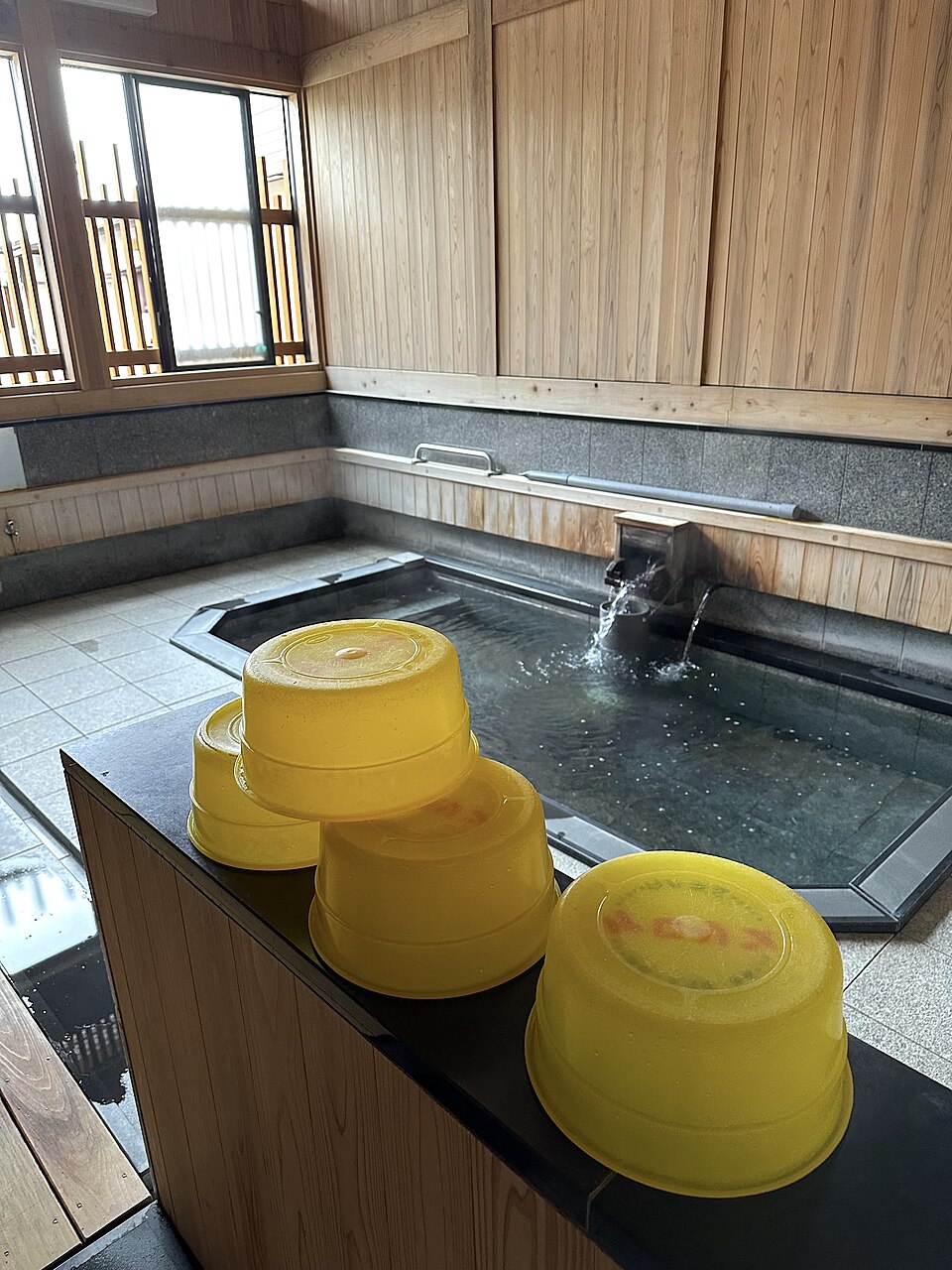
FREENozawa Onsen is a traditional village in Nagano Prefecture that maintains 13 free public bathhouses open to visitors and residents alike. These bathhouses, known as soto-yu, have been overseen by neighborhood cooperatives called yunakama for close to four centuries. The village also contains world-class ski slopes, a pairing that is genuinely uncommon anywhere in the world.
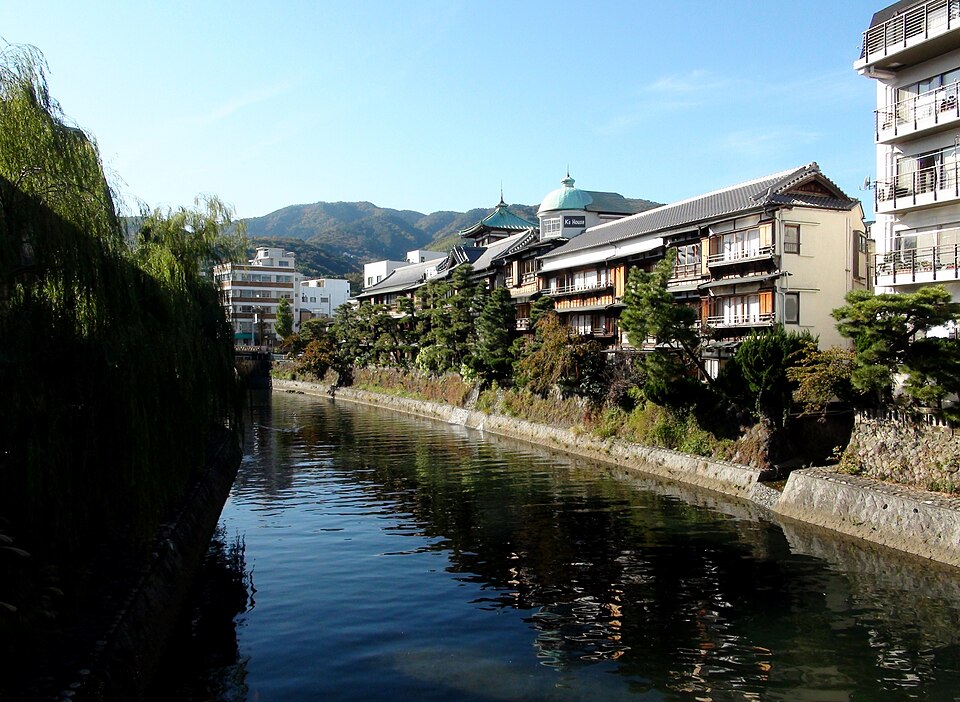
Ito sits along the eastern shore of the Izu Peninsula, facing the ocean and ranking among Japan's most productive hot spring districts by volume. More than 1,500 individual springs feed the town's supply, together pushing out around 30,000 kiloliters of water each day. Palm-lined avenues, tropical parks, and botanical gardens set the tone here, giving Ito a resort atmosphere that reads as distinctly its own compared to inland onsen destinations.
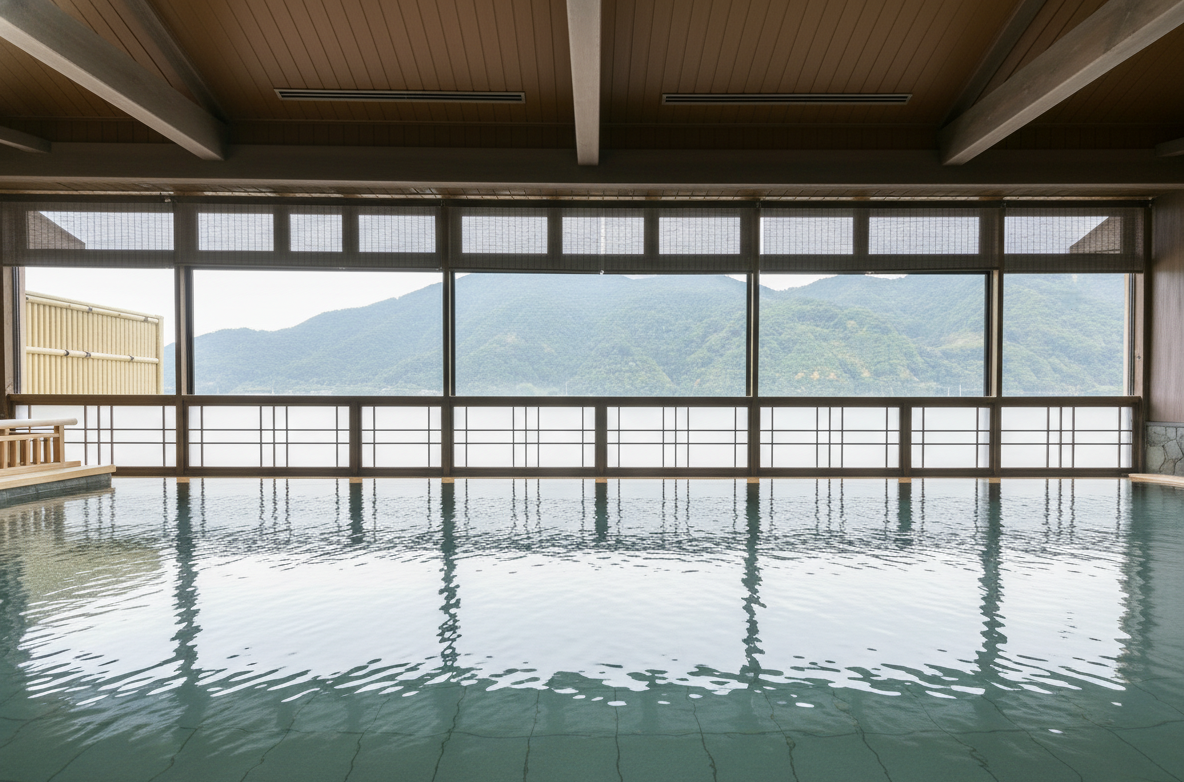
A mountain town in Niigata Prefecture famous for heavy snowfall and a unique sake-infused bath. After a day on the ski slopes, visitors soak in outdoor baths while snow falls silently around them. The town is also the setting of one of Japan's greatest novels.
Common questions
What is the water temperature at Shimobe Onsen?▾
The water temperature at Shimobe Onsen ranges up to 50°C (minimum around 30°C).
Is Shimobe Onsen free to visit?▾
Shimobe Onsen charges an entrance fee in JPY.
Is Shimobe Onsen a public or private bath?▾
Shimobe Onsen is a public bathing spring.
Are tattoos allowed at Shimobe Onsen?▾
No, Shimobe Onsen does not permit visible tattoos.
What is the nearest station to Shimobe Onsen?▾
The nearest station to Shimobe Onsen is Shimobe-Onsen Station, about 0.8km away.