Shibu Onsen
渋温泉
Shibu Onsen
sodium-chloride · Chubu
Hotter than 82% of Japan springs (n=122).
More acidic than 14% of Japan springs (n=121).
Mineral profile
Bar width reflects listing order, not measured concentration.
Suitability
At a glance
Getting there
Easy — under 1km from a station
Cost
Moderate
About this spring
A tight lane of flagstone runs through the Yamanouchi district of Nagano Prefecture, lined on both sides by dark timber ryokan with a recorded history stretching back more than 1,300 years. Nine communal bathhouses are distributed through the village, each believed to treat a different ailment, and inn guests may use all of them at no cost. Paper lanterns hang outside wooden storefronts along a streetscape that has gone largely unchanged for four centuries. Just outside town, the Jigokudani snow monkey park draws travelers who combine primate-watching with a stay at this ancient bathing village.
Highlights
History
The thermal waters are traditionally attributed to Gyoki, a Buddhist monk of the Nara period who recognized their curative properties during a journey through the Shinshu highlands.
The earliest regular visitors were pilgrims from Kyoto passing through on the road to Zenkoji Temple. In the Edo period, samurai of the Sanada clan came to the springs to recover from injury and fatigue, and some of the wooden ryokan that line the lanes today date from that same era. The nine sotoyu communal bathhouses, each designated for a specific ailment, were also established as a formal system during the Edo period. The Nagano Electric Railway opened in 1927, linking Shibu directly to Nagano city and bringing a significant expansion of the resort.
Local guide
From Nagano Station, the Nagano Dentetsu line takes you east to Yudanaka Station, and from there a local bus climbs the last stretch to Shibu Onsen in about fifteen minutes. You know you have arrived when the pavement changes to old stone and the street narrows to the width of two people walking side by side. Shibu is a compact onsen town with wooden inns built close together along a handful of cobblestone lanes, and on evenings when steam drifts across the lantern light, it looks remarkably like a place that has not changed in a long time, because in many ways it has not.
The water at Shibu comes from multiple sources across nine public bathhouses, and the chemistry varies from one to the next. The common character is a sodium chloride and sulfate combination, coming out of the ground at temperatures between fifty and ninety degrees. In the baths, the water is clear with a faint yellowish tinge in some of the older wooden tubs where minerals have stained the wood over decades. The temperature runs hot by any standard, and the sulfate content leaves your muscles genuinely soft afterward, not just warm but actually loosened. The smell is mild sulfur, noticeable when you first enter and then forgotten.
The nine public bathhouses are for ryokan guests only, accessed by a key given at check-in. The tradition is to visit all nine in a single evening, collecting a stamp at each one on a special towel. If you complete all nine and add a final stamp at Takaiyakushi Shrine at the top of the hill, you supposedly receive blessings for health and long life. In practice, the walk takes two or three hours through the stone lanes in yukata and wooden sandals, stopping to soak briefly at each bath before moving on. The sound of geta on cobblestones carries through the whole district after dark.
The broader context matters here. Jigokudani Monkey Park, where wild Japanese macaques soak in a hot spring pool, is thirty minutes up the valley on foot. The photograph of those snow monkeys bathing in winter, taken in 1970, appeared on the cover of Life magazine and introduced the area to the world. Shibu sits downstream from that same geothermal system. The monkeys found their hot spring for the same reason the town exists.
Mineral chemistry
Water character inferred from mineral type — verify on site.
Sodium chloride springs, essentially natural saltwater baths, are celebrated for their warming and moisturising effects. The salt forms a thin film on the skin that slows moisture evaporation, keeping skin hydrated longer than a freshwater bath.
Those with high blood pressure or heart conditions should consult a doctor before bathing, as the warming effect increases circulation. Avoid immersing open wounds.
Sulfate springs contain dissolved calcium, sodium, or magnesium sulfate. Calcium sulfate springs are traditionally associated with wound healing and post-surgical recovery.
Sodium sulfate springs can have a mild laxative effect in sensitive individuals — stay well hydrated.
Similar springs
 FREE
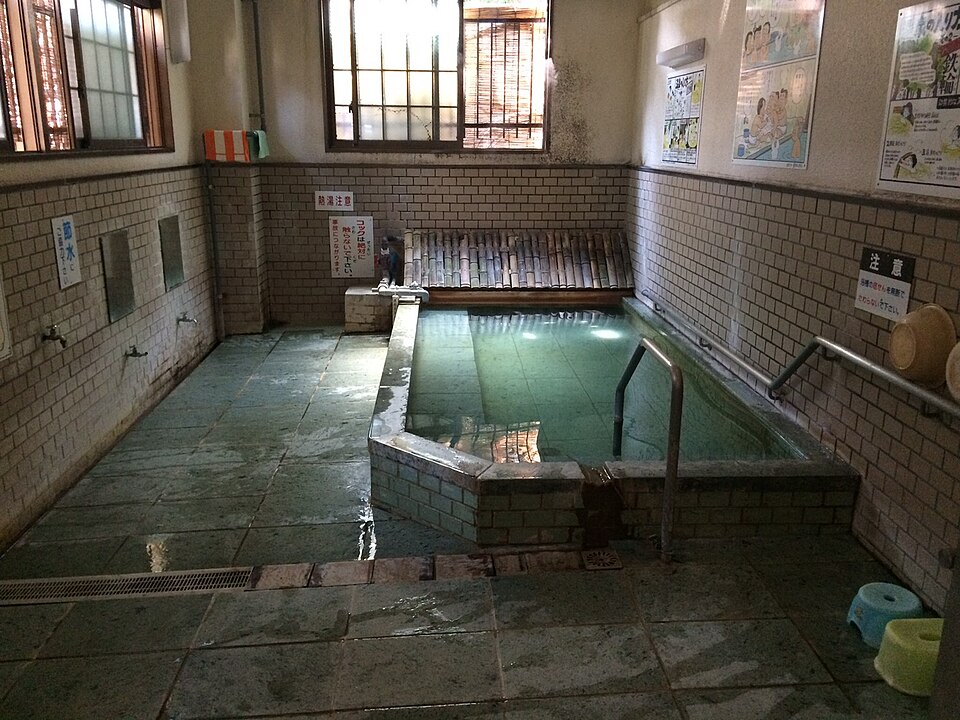
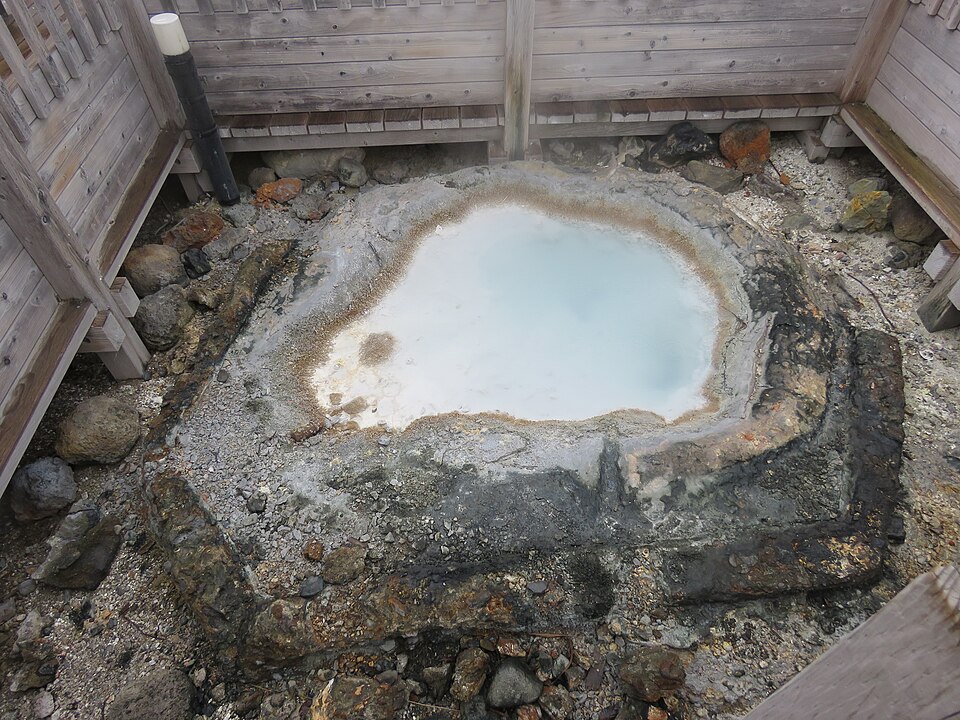
FREEThe valley occupies the center of Noboribetsu Onsen in Hokkaido. Jigokudani translates as Hell Valley. The crater covers 11 hectares and releases roughly 10,000 tonnes of hot spring water each day. Fumaroles vent steam across the floor of the valley, boiling pools bubble at the surface, and the surrounding cliffs carry heavy mineral staining. A walking path winds through the area in about 20 minutes and is open to all visitors at no cost. It ranks among the most striking landscapes accessible on foot anywhere in Japan.
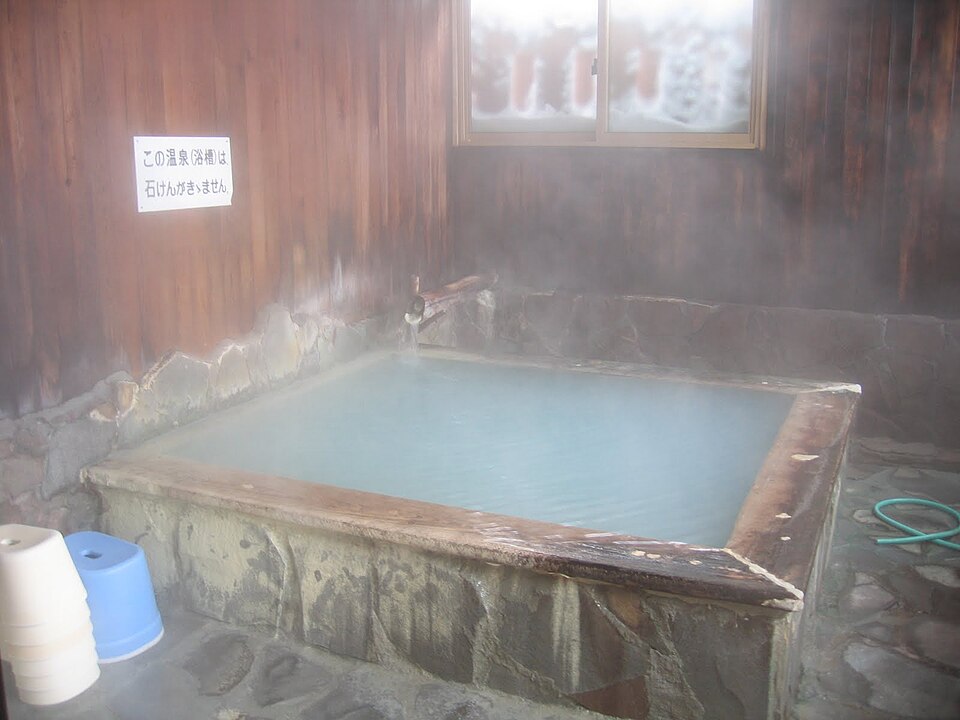
Set deep in the Hakkoda Mountains of Aomori Prefecture, Sukayu Onsen is a historic bathhouse best known for its cavernous mixed-bathing hall, the Sen-nin-buro, which translates as the Bath of a Thousand Bathers. The waters are strongly acidic, the setting is rustic and unhurried, and winter brings extraordinary snowfall to the surrounding mountains.
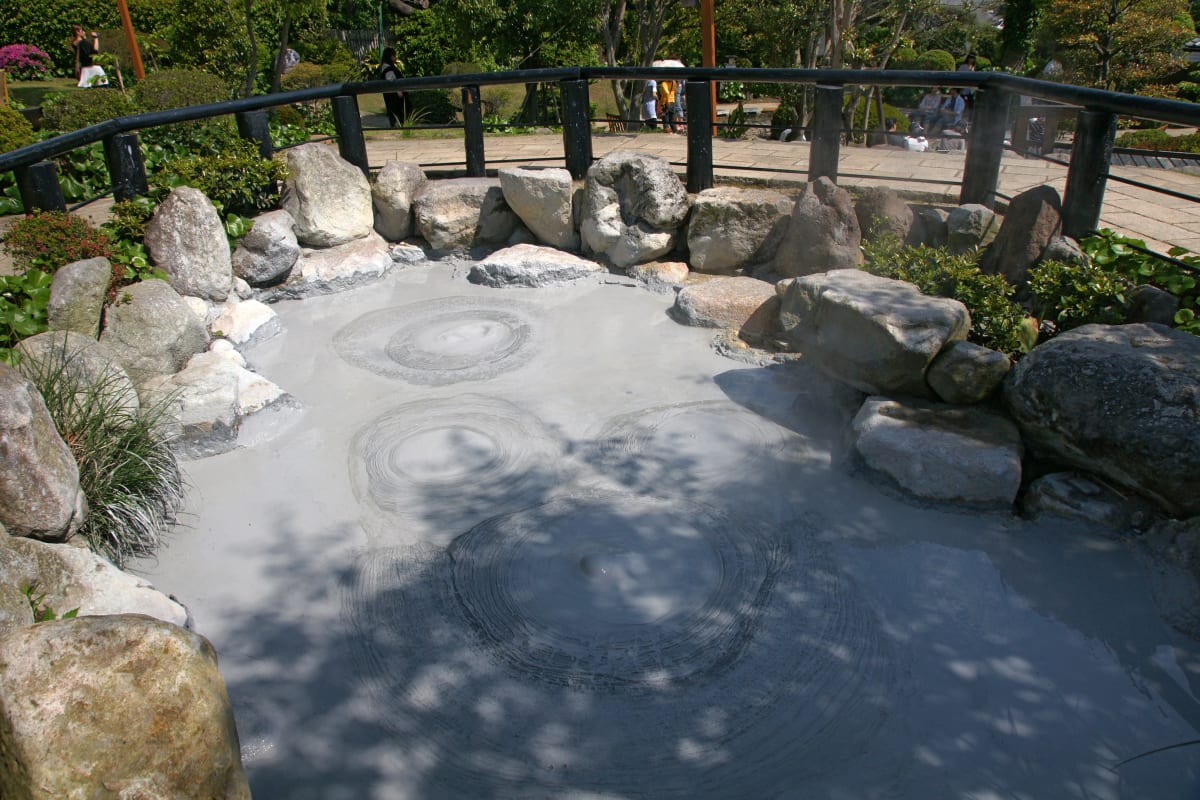
Beppu is the most geothermally active city in Japan, with more than 2,900 hot spring vents located within the city limits and eight distinct thermal spring zones collectively known as the Beppu Hatto. The variety on offer is wide, ranging from grand hotel bathhouses to modest neighborhood public facilities to the celebrated Hells, a collection of brilliantly colored boiling pools scattered across the city. The Hells run far too hot for bathing, but they draw visitors who come to walk among them and take in the spectacle.
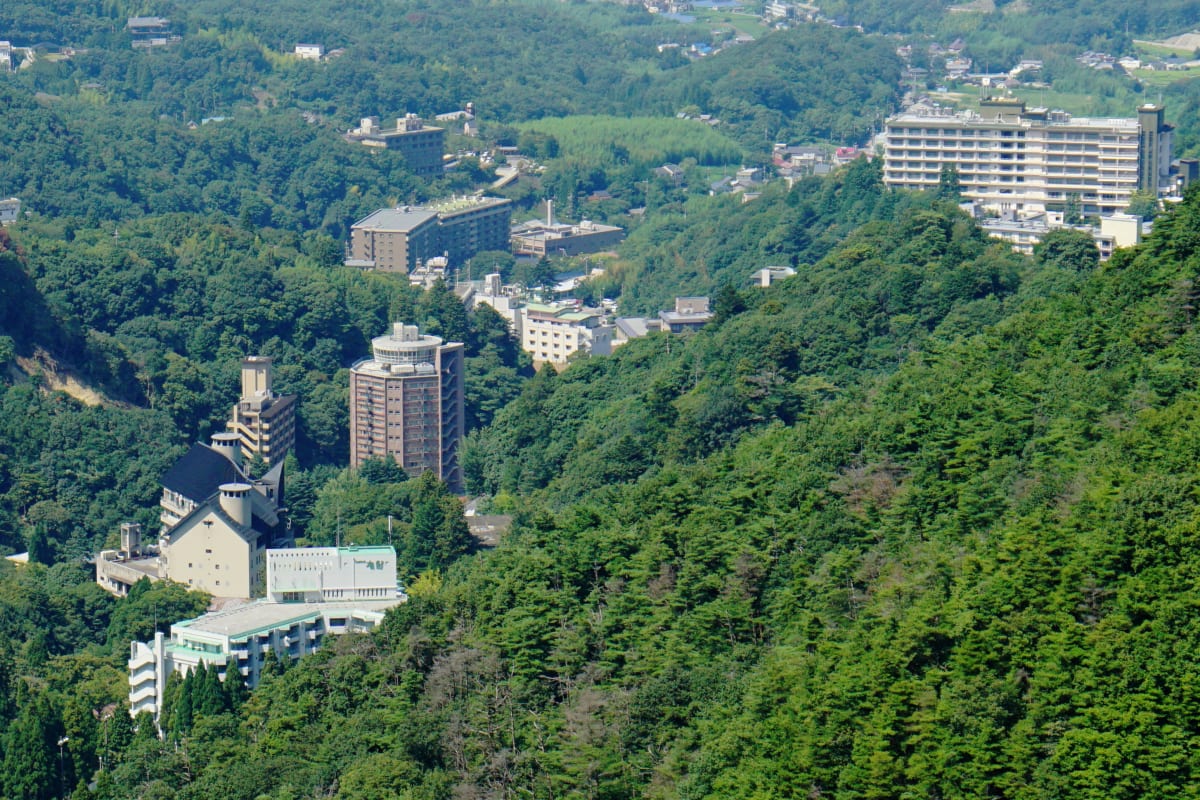
Arima Onsen sits in the hills above Kobe, close to Mount Rokko, and ranks among the oldest hot spring towns in Japan. The town draws visitors for two entirely different spring types that coexist within its compact footprint. Kinsen is the iron-rich golden water that stains surrounding rocks a rusty orange, while ginsen runs clear and carries both carbonation and mild radioactivity. Few other onsen destinations in Japan bring together two such distinct water types within a single small town.
Amenities
Getting there
Take the Shinkansen to Nagano Station, then transfer to the Nagano Dentetsu line and get off at Yudanaka Station. The journey takes about 35 minutes from Nagano. From Yudanaka, take a local bus to Shibu Onsen, about 10 minutes.
Location & nearby
Yudanakashibu Onsenkyo, Yamanouchi, Shimotakai District, Nagano
Make a day of it
Pair your soak with these nearby spots.
Attraction
Yonbanyu Takenoyu
0.0km away
Attraction
Rokubanyu Mearainoyu Shibuonsen
0.1km away
Attraction
KyūBanyushibuōYu
0.1km away
Attraction
Shibuonsen 5ban Matsunoyu
0.1km away
Attraction
ShinshūShibuonsen
0.1km away
Attraction
Shibu Onsen BAR Kadoya
0.1km away
More springs in Chubu
 FREE
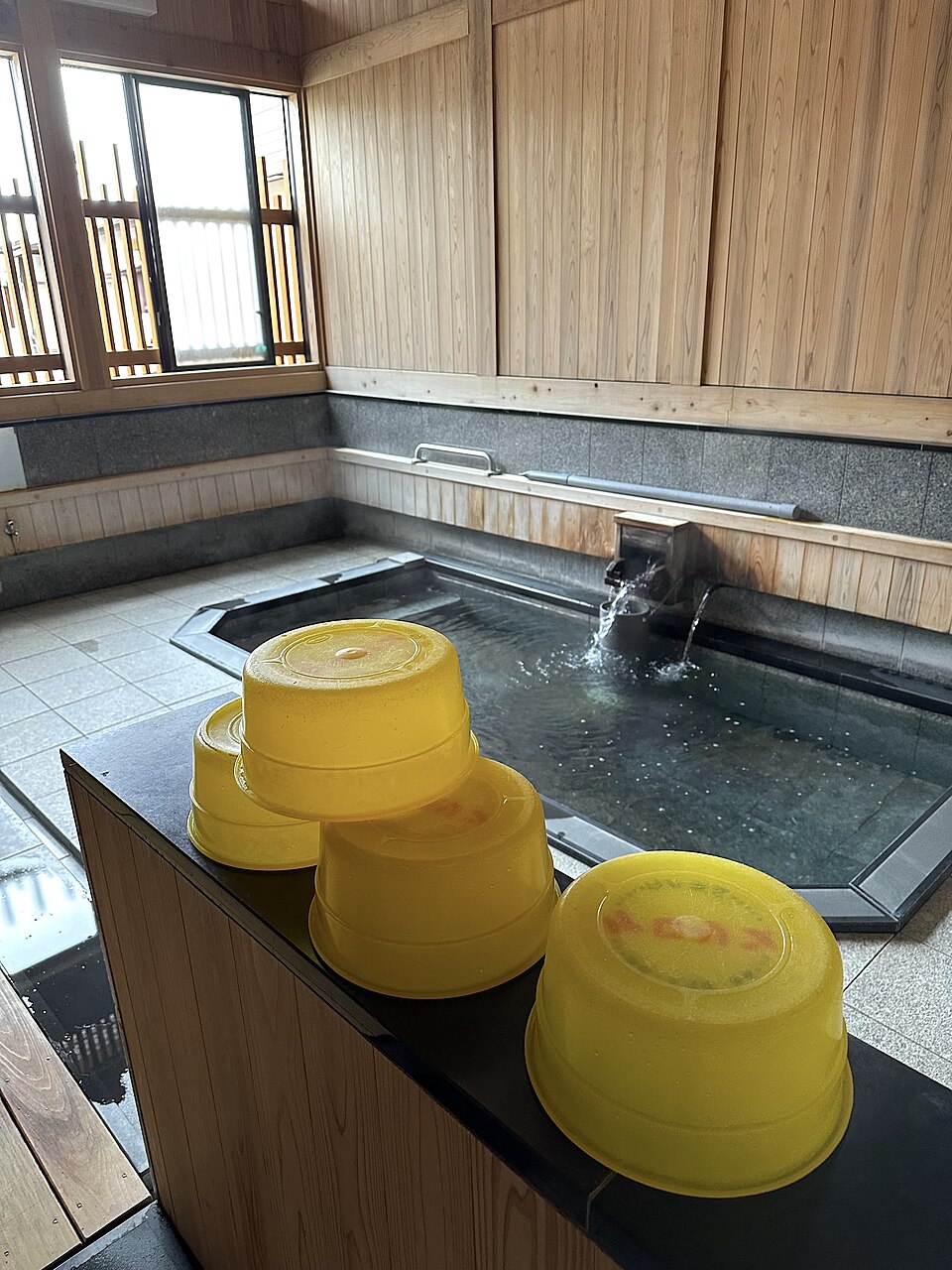
FREENozawa Onsen is a traditional village in Nagano Prefecture that maintains 13 free public bathhouses open to visitors and residents alike. These bathhouses, known as soto-yu, have been overseen by neighborhood cooperatives called yunakama for close to four centuries. The village also contains world-class ski slopes, a pairing that is genuinely uncommon anywhere in the world.
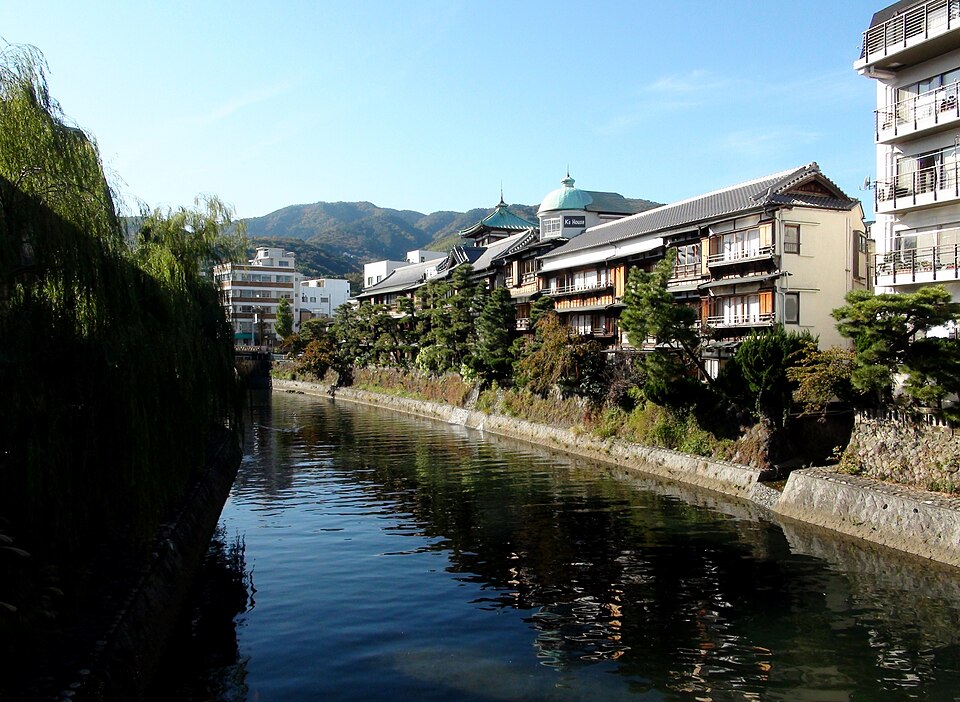
Ito sits along the eastern shore of the Izu Peninsula, facing the ocean and ranking among Japan's most productive hot spring districts by volume. More than 1,500 individual springs feed the town's supply, together pushing out around 30,000 kiloliters of water each day. Palm-lined avenues, tropical parks, and botanical gardens set the tone here, giving Ito a resort atmosphere that reads as distinctly its own compared to inland onsen destinations.
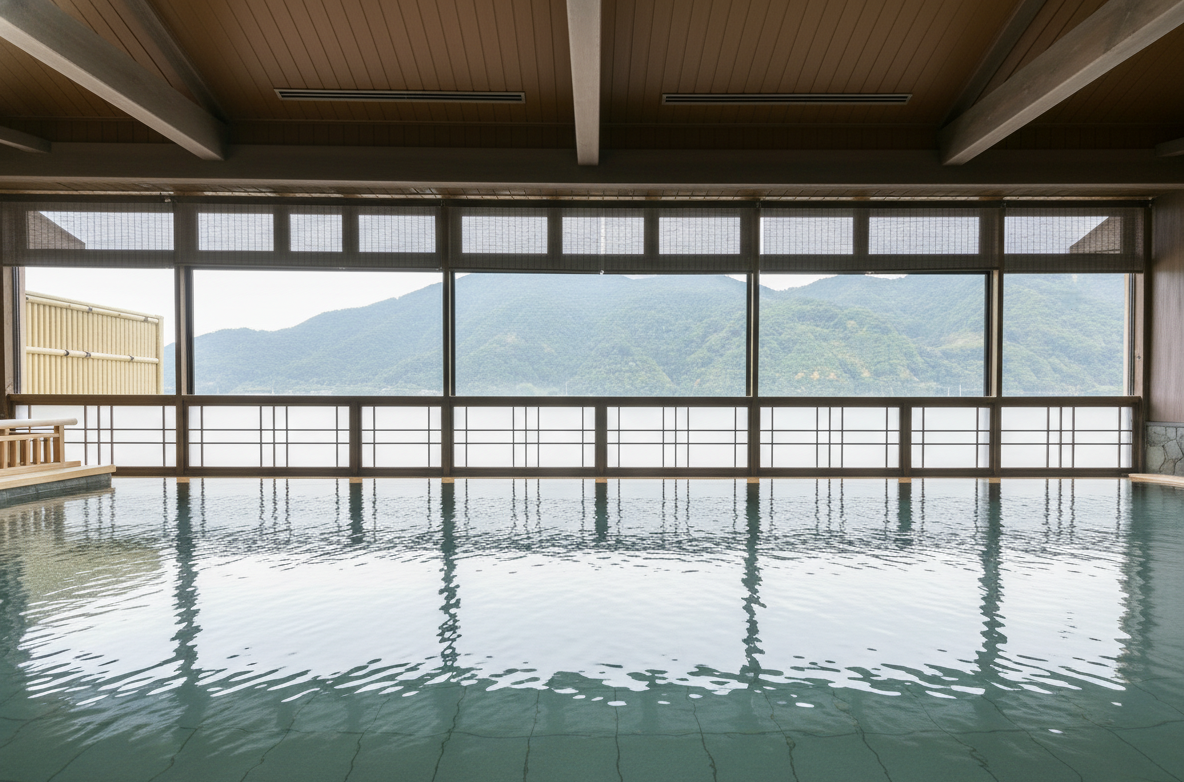
A mountain town in Niigata Prefecture famous for heavy snowfall and a unique sake-infused bath. After a day on the ski slopes, visitors soak in outdoor baths while snow falls silently around them. The town is also the setting of one of Japan's greatest novels.
Common questions
What is the water temperature at Shibu Onsen?▾
The water temperature at Shibu Onsen ranges up to 90°C (minimum around 50°C).
Is Shibu Onsen free to visit?▾
Shibu Onsen charges an entrance fee in JPY.
Is Shibu Onsen a public or private bath?▾
Shibu Onsen is a public bathing spring.
Are tattoos allowed at Shibu Onsen?▾
Tattoo policy varies at Shibu Onsen. Check ahead of your visit.
What is the nearest station to Shibu Onsen?▾
The nearest station to Shibu Onsen is Shibu Wagobashi, about 0.1km away.