
Shuzenji Onsen
修善寺温泉
Shuzenji Onsen
simple-alkaline · Chubu
Hotter than 18% of Japan springs (n=122).
More acidic than 82% of Japan springs (n=121).
Mineral profile
Bar width reflects listing order, not measured concentration.
Suitability
At a glance
Getting there
Easy — under 1km from a station
Cost
Low
About this spring
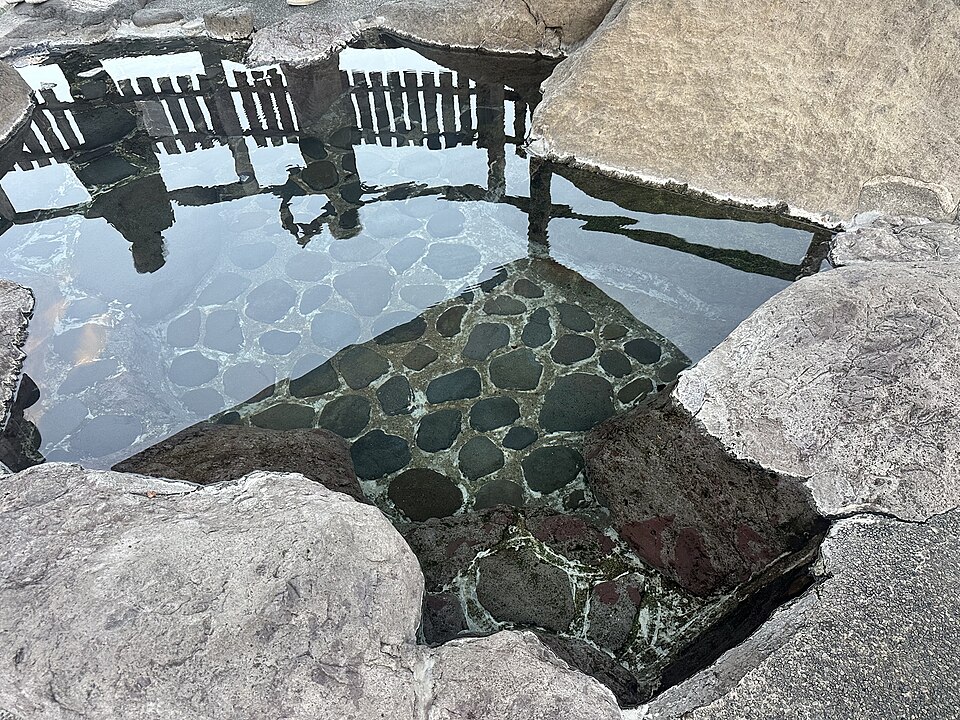
Shuzenji Onsen sits in the Izu Peninsula of Shizuoka Prefecture along the Katsura River, a small town built around its waters and known for an unhurried atmosphere. The most recognized feature is Tokko-no-yu, an outdoor bath placed directly in the river, which tradition holds was opened by the Buddhist monk Kobo Daishi in 807. The town itself offers comfortable ryokan, a relaxed tempo, and more than fourteen centuries of continuous history.
Highlights
History
According to long-standing tradition, Kobo Daishi created the springs in 807 by driving his staff into the rocks of the riverbed, drawing out water so that a sick child could bathe and recover.
The settlement that formed around the spring took the name Shuzenji. In 1180, Minamoto no Yoriie, the second Kamakura shogun, was sent into exile here and was eventually killed, leaving the town with a darker chapter in its past. The Meiji era brought a different kind of attention, as writers began making their way to the area. Natsume Soseki came to Shuzenji and in 1910 suffered a near-fatal stomach hemorrhage there, an episode he wrote about afterward.
Local guide
The Izu-Hakone Railway runs south from Mishima Station into the hills of the Izu Peninsula, and at Shuzenji Station you switch to a bus for the final ten-minute climb into the valley. What you arrive to is compact and quiet, a single town wrapped around both banks of the Katsura River, with Shuzenji Temple at the center and a bamboo grove path running along the western bank. The bamboo here is thick, the culms close together and tall enough to form a proper tunnel of green overhead, and the Katsura runs clear below the red Kaede Bridge that crosses it in the middle of the grove. The combination of the wooden bridge, the bamboo canopy, and the sound of the river is exactly the image that makes Shuzenji appear in so many travel photographs.
The spring water is a simple alkaline type with a pH of 8.5, coming out of the ground between 38 and 45 degrees. In the bath, it feels distinctly soft, the kind of water that seems to have less resistance to it than ordinary hot water. There is no sulfur smell and no color. The alkalinity acts on the surface of the skin over time, removing oils gently and leaving a smoothness that you notice when you dry off. The outdoor foot bath at Tokko-no-Yu, built directly over the spring vent in the middle of the river, is where to start. It is the oldest spring in the Izu region, and the current wooden bathhouse above it is built over the same vent where legend says Kobo Daishi struck a rock with his walking stick in the early ninth century and released the water.
The history at Shuzenji runs darker than the bamboo grove suggests. The exiled Minamoto no Yoriie, second shogun of the Kamakura period, was murdered here in 1204, on orders from his own family. His grave and a small museum nearby hold that story without dramatizing it. Natsume Soseki, one of Japan's most read modern novelists, nearly died at Shuzenji in 1910 from a severe gastric hemorrhage while on retreat here. He later wrote about the experience in an essay called Omoidasu koto nado, and it is considered one of the more honest accounts of serious illness in modern Japanese literature.
The town is organized well for a half-day visit, with the bamboo path, the temple, and the footbath all within easy walking distance of the bus terminal. For an overnight stay, the ryokan along the river bank have indoor and outdoor baths that use the same alkaline spring water, and the town empties of day visitors by early evening, leaving the bamboo grove lit softly and the river audible from most windows.
Mineral chemistry
Water character inferred from mineral type — verify on site.
Alkaline springs (pH above 8) are known for their skin-softening effect, sometimes called "beauty water" in bathing cultures across Asia. The high pH saponifies skin oils, producing a characteristic silky feel on the skin surface.
The slippery feeling underfoot in highly alkaline springs is normal — take care when standing and walking in the bath. Avoid prolonged soaking if you have dry or sensitive skin.
Similar springs
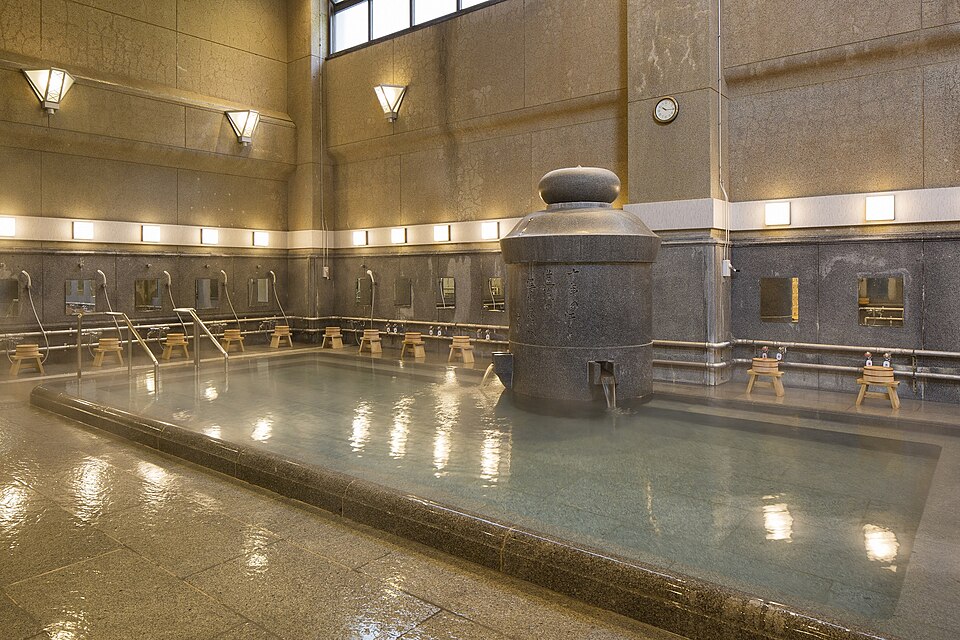
Tsubaki Onsen occupies a single large bathhouse on the Kii Peninsula in Wakayama Prefecture, surrounded by forest and roughly 2.5 hours from Osaka by train. The spring registers pH 9.9, placing it among the most alkaline waters in Japan. The facility is straightforward and well-maintained, attracting visitors from the Kumano region as well as day-trippers traveling in from the coast.
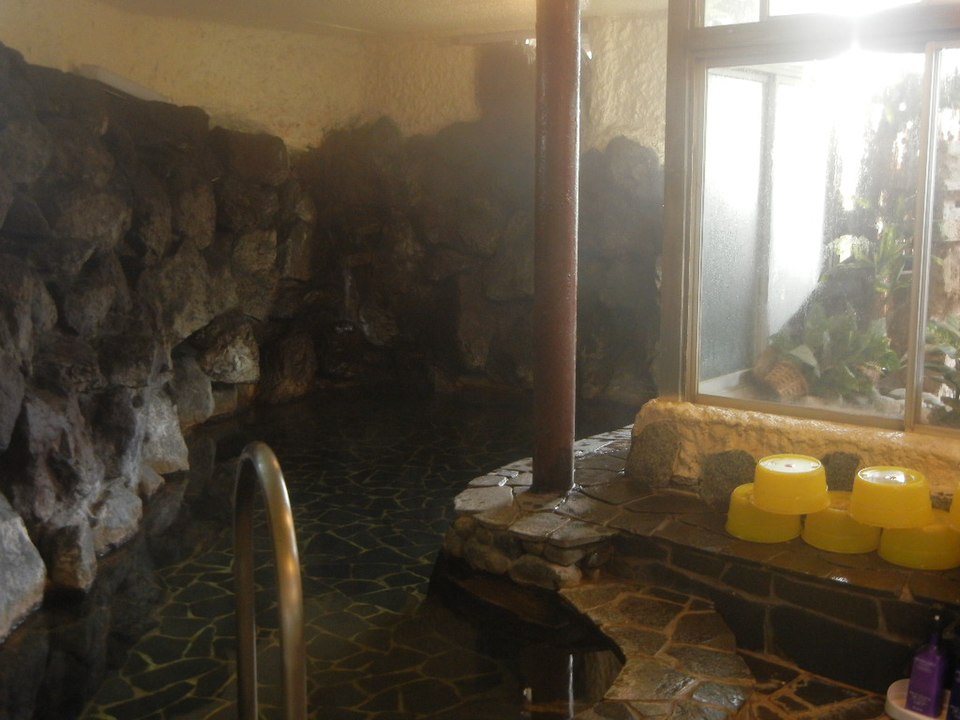
Iiyama Onsen sits in northern Nagano Prefecture near the Nozawa Onsen highlands and produces water with a pH of 11.3, placing it among the most alkaline natural hot springs anywhere in Japan. The soft, high-alkaline water has long been sought out as a beauty spring, widely praised for the way it smooths and softens the skin. The Hokuriku Shinkansen now stops at Iiyama Station, cutting travel time from Tokyo considerably.
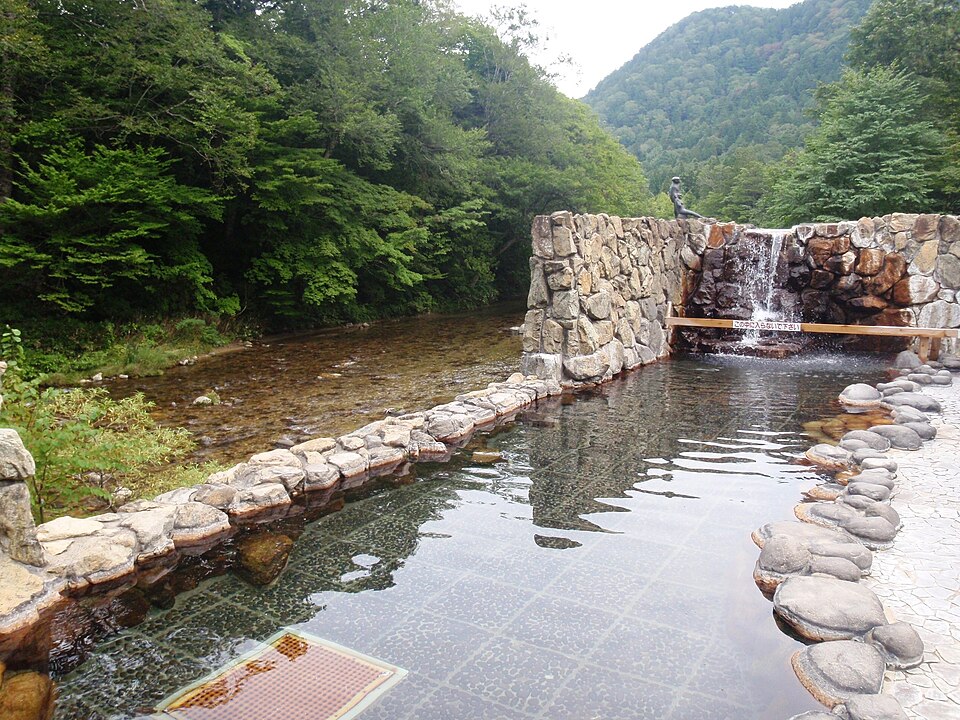 FREE
FREEKappa-no-yu is a free, open-air bathing spot tucked into Yagen Valley on the Shimokita Peninsula in Aomori Prefecture, roughly 2 kilometers up the slope from the central Yagen Onsen cluster. Two separate baths rest beside a clear mountain stream, surrounded by old-growth beech and cypress trees. The water temperature holds at 46 degrees Celsius. Visitors are not permitted to bring soap or shampoo. The baths are open from April through November and charge no entry fee.
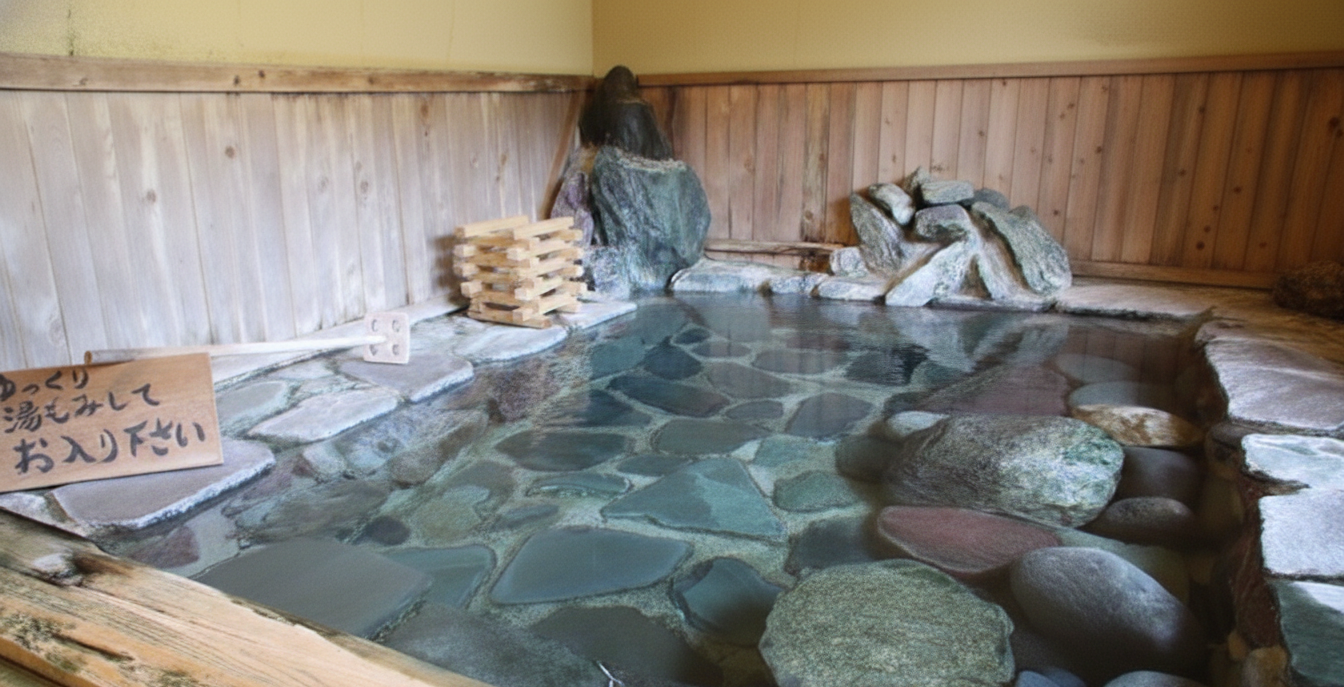
Tokigawa Onsen sits in Hiki District, Saitama Prefecture, roughly 90 minutes from central Tokyo. The water rises from Chichibu Paleozoic strata at a depth of 1,700 meters and registers pH 10, placing it firmly in the highly alkaline range. Bathers consistently note the silky feel it leaves on the skin. The facility has held onto its Showa-era bathhouse character rather than updating it.
Amenities
Getting there
Take the Izu-Hakone Railway from Mishima Station to Shuzenji Station. The journey takes about 35 minutes. From the station, take a local bus to the Shuzenji Onsen bus stop, about 10 minutes.
Location & nearby
Shuzenji Onsen, Shuzenji, Izu, Shizuoka 410-2416
Make a day of it
Pair your soak with these nearby spots.
Attraction
Jioria
0.0km away
Attraction
GEORIA -Izu Peninsula Geopark Museum
0.0km away
Attraction
Shuzenjionsen 筥Yu
0.5km away
Attraction
筥Yu
0.5km away
Attraction
Osshasorarō
0.5km away
Attraction
KōBōDaishizō
0.5km away
More springs in Chubu
 FREE
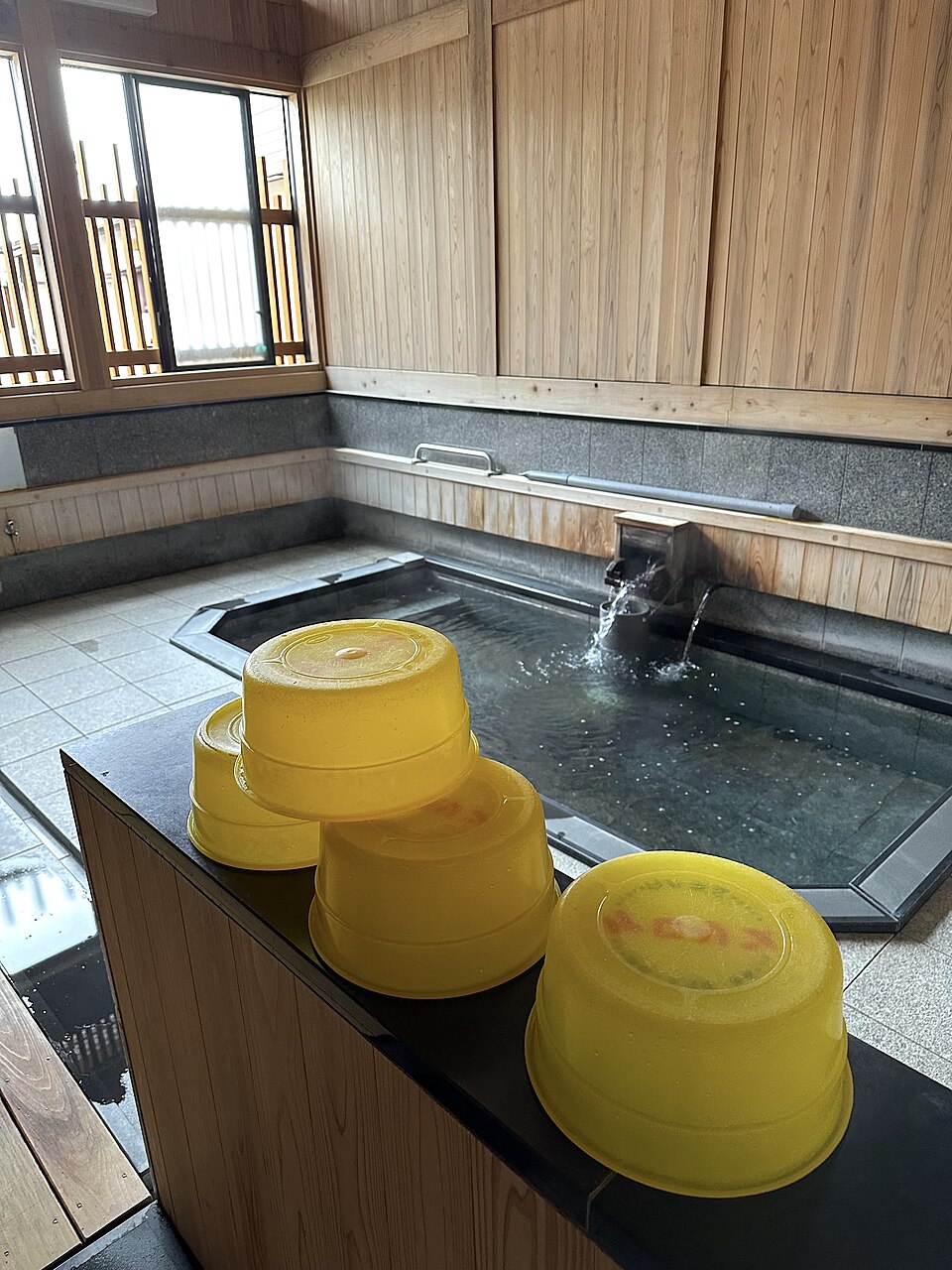
FREENozawa Onsen is a traditional village in Nagano Prefecture that maintains 13 free public bathhouses open to visitors and residents alike. These bathhouses, known as soto-yu, have been overseen by neighborhood cooperatives called yunakama for close to four centuries. The village also contains world-class ski slopes, a pairing that is genuinely uncommon anywhere in the world.
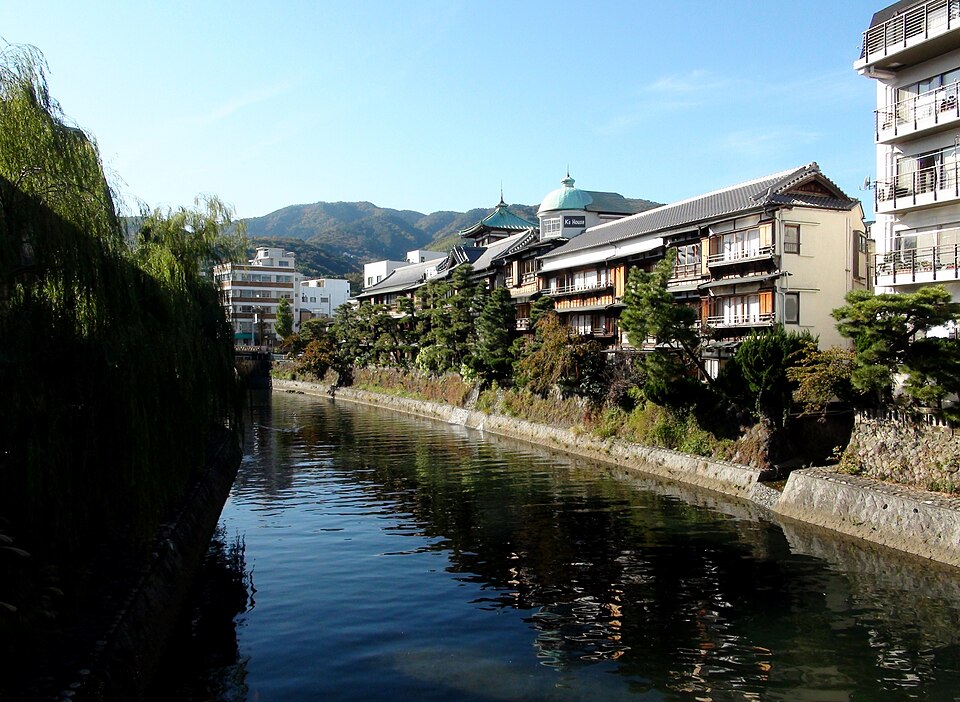
Ito sits along the eastern shore of the Izu Peninsula, facing the ocean and ranking among Japan's most productive hot spring districts by volume. More than 1,500 individual springs feed the town's supply, together pushing out around 30,000 kiloliters of water each day. Palm-lined avenues, tropical parks, and botanical gardens set the tone here, giving Ito a resort atmosphere that reads as distinctly its own compared to inland onsen destinations.
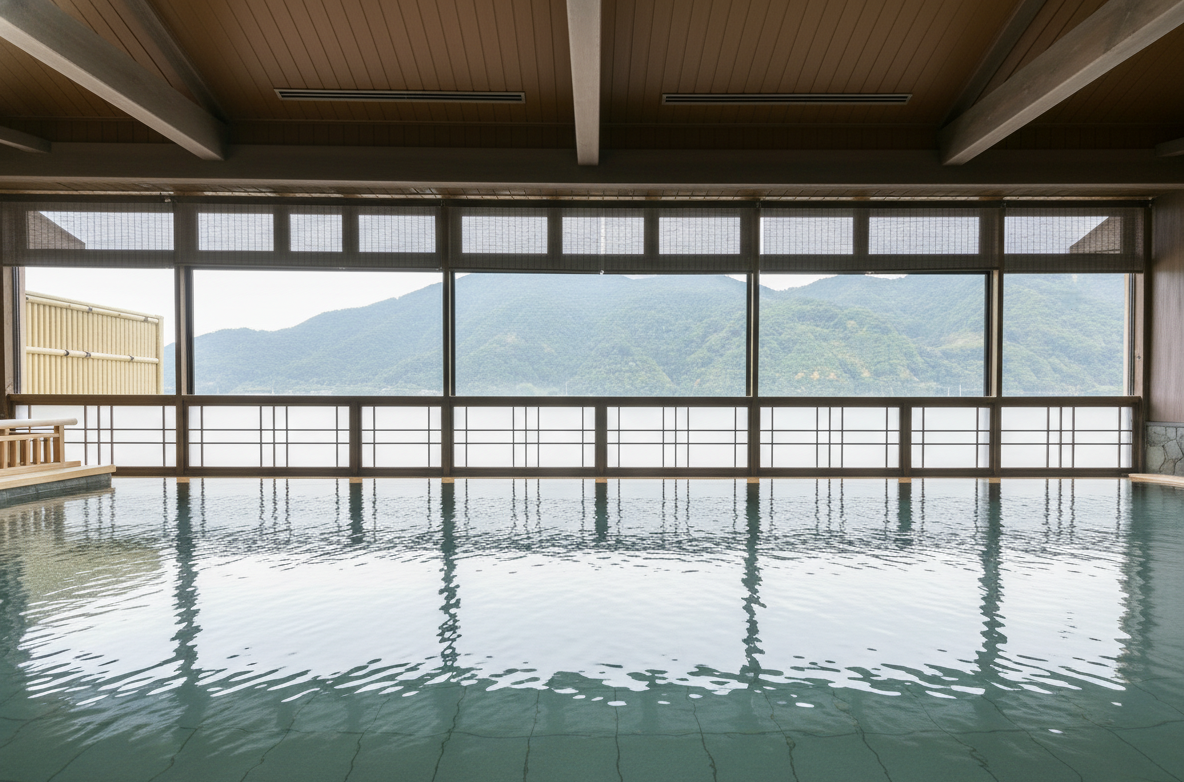
A mountain town in Niigata Prefecture famous for heavy snowfall and a unique sake-infused bath. After a day on the ski slopes, visitors soak in outdoor baths while snow falls silently around them. The town is also the setting of one of Japan's greatest novels.
Common questions
What is the water temperature at Shuzenji Onsen?▾
The water temperature at Shuzenji Onsen ranges up to 45°C (minimum around 38°C).
Is Shuzenji Onsen free to visit?▾
Shuzenji Onsen charges an entrance fee in JPY.
Is Shuzenji Onsen a public or private bath?▾
Shuzenji Onsen is a public bathing spring.
Are tattoos allowed at Shuzenji Onsen?▾
No, Shuzenji Onsen does not permit visible tattoos.
What is the nearest station to Shuzenji Onsen?▾
The nearest station to Shuzenji Onsen is Shuzenji Sogo Kaikan, about 0.1km away.