
SpringsAtlas
Search Hot Springs
All hot springs
241 springs found

The thermal water is highly saline and contains therapeutic traces of radon and calcium. The facility features a large outdoor thermal pool overlooking Sifne Bay where warm mineral water meets the Aegean Sea. It is an upscale and relaxed resort setting with lounge chairs and direct beach access. It is highly suitable for couples and leisure travelers seeking sea views. Visitors should bring sunscreen and expect a resort style environment.
 FREE
FREEOnneto Hot Falls is a geothermal waterfall located within Akan Mashu National Park in eastern Hokkaido, part of the UNESCO-listed Shiretoko wilderness. This is not a bathing site. Entering the water has been banned since 1989 to protect rare manganese-producing microorganisms that coat the rock surfaces in unusual black mineral deposits. The falls are visited as a scenic viewpoint, reached by a 20-minute walk through the surrounding forest.

Tokigawa Onsen sits in Hiki District, Saitama Prefecture, roughly 90 minutes from central Tokyo. The water rises from Chichibu Paleozoic strata at a depth of 1,700 meters and registers pH 10, placing it firmly in the highly alkaline range. Bathers consistently note the silky feel it leaves on the skin. The facility has held onto its Showa-era bathhouse character rather than updating it.

Sourced deep from the ancient metamorphic rock layers of the Central Mountain Range, these clear, neutral thermal waters offer a notably pure bathing experience. Redeveloped as the modern Vakangan Hot Spring Park, the site blends architectural elegance with green energy. The park includes family friendly pools, a restaurant, and broad views of the surrounding green peaks.
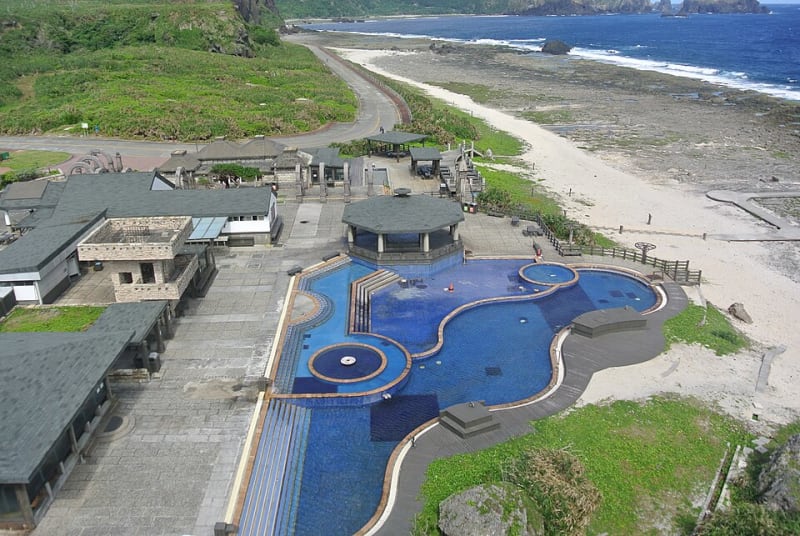
Asahi is an extremely rare seabed saltwater hot spring, one of only a handful in the world, located on the coral reef shoreline of volcanic Green Island. It features open-air concrete rings built right where the hot coral water bubbles up, allowing bathers to hear the crashing Pacific waves. The water is heavily mineralized, clear, and distinctly salty.

Guanziling features a rare, world-famous natural mud spring where dark gray mineral silt mixes directly with alkaline bicarbonate water. Soakers can apply the rich, smooth mud directly to their skin as a natural therapeutic mask that cleanses and exfoliates. The surrounding hillside area is famous for its aromatic roast barrel chicken restaurants.

Ito sits along the eastern shore of the Izu Peninsula, facing the ocean and ranking among Japan's most productive hot spring districts by volume. More than 1,500 individual springs feed the town's supply, together pushing out around 30,000 kiloliters of water each day. Palm-lined avenues, tropical parks, and botanical gardens set the tone here, giving Ito a resort atmosphere that reads as distinctly its own compared to inland onsen destinations.

Hotel Sakan sits within the Akiu Onsen resort in Miyagi Prefecture, one of Japan's three ancient imperial hot springs. The inn has remained in continuous operation under the same family line for 34 generations, a span of more than 800 years. The spring water is classified as a sodium sulfate type, and tradition holds that Emperor Kinmei once bathed here to recuperate from illness. On the property stands a sacred flame that is said to have been burning without interruption for 400 years, brought originally from Mount Koya.

An old coastal resort town where hot springs meet the Pacific. The white-sand beach and dramatic rock formations create a setting unlike most onsen destinations. The ancient outdoor baths of Saki-no-Yu sit directly above the ocean. You soak while watching the waves crash below you.

Nikko Yumoto Onsen sits at the edge of Lake Yunoko inside Nikko National Park, high in the mountains. The waters are milky and sulfurous, and travelers have been coming here for hundreds of years. The park surrounds the onsen with sacred forests and waterfalls, making a long day of hiking through them a natural prelude to a long soak.

Located alongside the wide Zhiben River canyon, this famous resort area boasts crystal-clear sodium bicarbonate water. The water is completely odorless and rich in minerals that leave the skin feeling deeply refreshed. The surrounding hillsides are blanketed in dense tropical forests filled with native birds and wild macaques.

A quiet gorge-side onsen town in Miyagi Prefecture with nine distinct spring types, the famous Naruko Gorge, and a deep tradition of kokeshi doll making. The sulfurous waters and unhurried Tohoku atmosphere make this a favourite for those who want something more authentic than the well-worn tourist circuit.

The thermal water has an incredibly high sulfur content with a strong distinctive odor and trace amounts of radon. The rustic complex has outdoor thermal pools and open air mud pits where visitors apply mineral mud to their skin. It also features a indoor pool covered by a simple dome. The facility borders Lake Koycegiz and is popular with day trippers and wellness travelers. Visitors should wear old dark swimwear as the sulfur mud can easily stain light fabrics.

Kirishima Onsen occupies the lower slopes of the Kirishima mountain range in Kagoshima Prefecture, where visitors can look out across Sakurajima and Kagoshima Bay. The region is organized around four separate hot spring towns, collectively offering dozens of spring varieties. It is widely known as the spot where the samurai leader Sakamoto Ryoma chose to honeymoon in 1866, an occasion the area recognizes as Japan's first modern honeymoon.

Nestled in a scenic mountain valley, this historic spring yields crystal clear, odorless sodium bicarbonate waters. The surrounding area is famous for vibrant springtime peach blossoms and suspended pedestrian footbridges. Visitors can combine a rejuvenating thermal soak with cultural exploration of nearby historical residences.

Sumatakyo Onsen is a secluded hot spring village tucked into the Sumata Gorge in the Southern Alps of Shizuoka Prefecture. The thermal water is a simple sulfur spring with a pH of 8.9, called bijin-no-yu locally, meaning beauty water. The village lies alongside a vivid turquoise dam reservoir and the well-known Yume no Tsuribashi suspension bridge. Reaching it depends on the historic Oigawa Railway.

This versatile destination combines commercial resort pools with natural wild thermal flows filtering through the adjacent riverbed gravel. The transparent mineral water carries a very subtle hint of sulfur and is celebrated for its skin-softening quality. Thick columns of steam rise continuously along the forested river canyon walls.
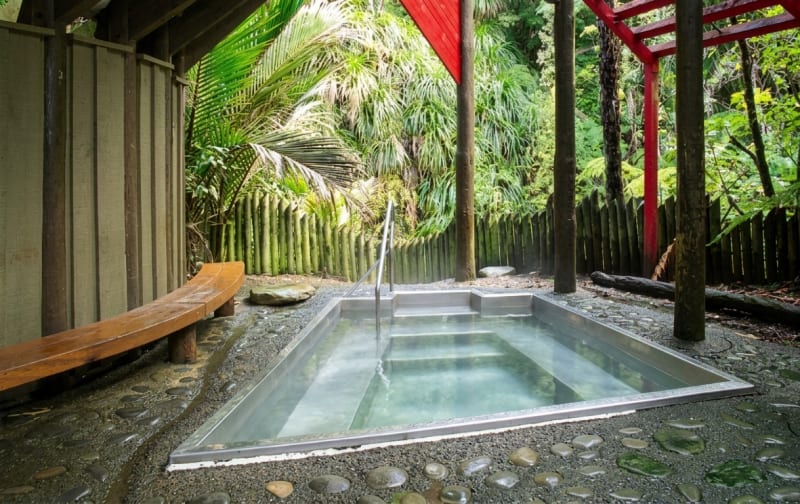
Morere Hot Springs is a rustic forest reserve destination featuring unique ancient seawater pools tucked inside a dense canopy of native Nikau palms. The clear, highly saline waters are fossilized marine waters rich in sodium chloride and iodine, known for their strong therapeutic properties. The complex features a range of outdoor concrete pools, private indoor cabins, and secluded rock pools located up a scenic rainforest walking track. The setting feels deeply isolated and primeval, with the sound of the Nuhaka River rushing nearby. Visitors can combine their soak with several well-maintained short hikes through the surrounding Department of Conservation reserve. The facilities are simple, authentic, and completely uncommercialized compared to Rotorua options.
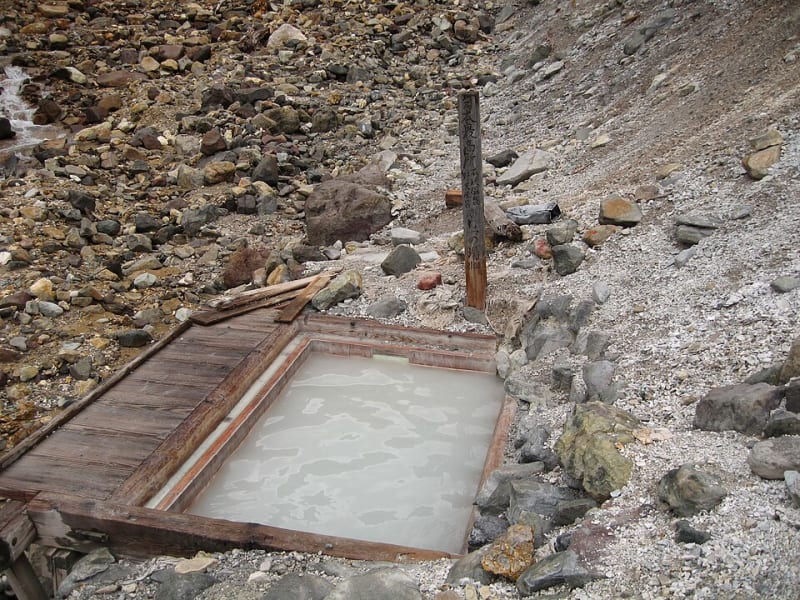
Honzawa Onsen sits within the Hakone volcanic zone of Kanagawa Prefecture, drawing from a geothermal system that has driven the formation of the Hakone caldera for more than 300,000 years. The waters carry a notable sulfurous character and are dense with dissolved minerals. The spring occupies a forested mountain valley setting.
 FREE
FREEKappa-no-yu is a free, open-air bathing spot tucked into Yagen Valley on the Shimokita Peninsula in Aomori Prefecture, roughly 2 kilometers up the slope from the central Yagen Onsen cluster. Two separate baths rest beside a clear mountain stream, surrounded by old-growth beech and cypress trees. The water temperature holds at 46 degrees Celsius. Visitors are not permitted to bring soap or shampoo. The baths are open from April through November and charge no entry fee.