
SpringsAtlas
Search Hot Springs
All hot springs
122 springs found
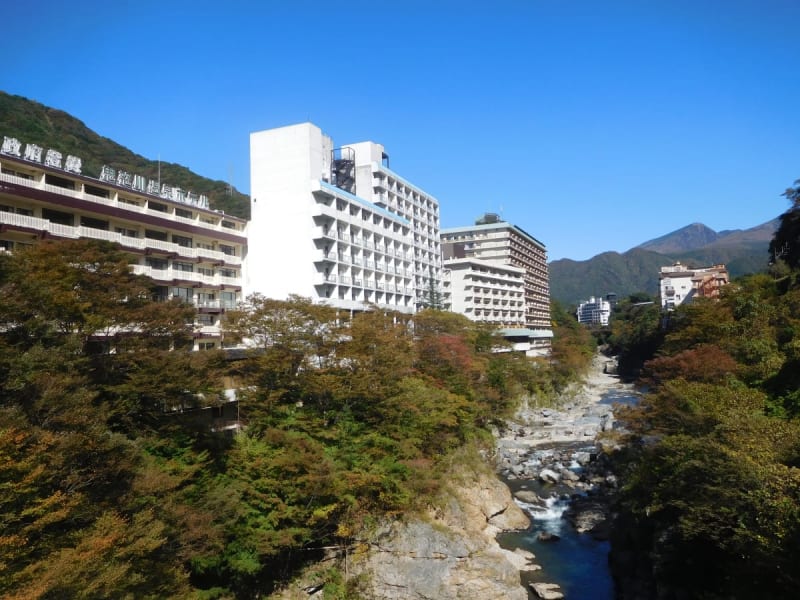
A hot spring resort town set along the Kinugawa River in Tochigi Prefecture, roughly two hours from Tokyo by express train. The river gorge puts on a striking display in autumn as the maple trees color. The town sits closer to Nikko than any other onsen destination and serves as a natural base for overnight visitors to the Toshogu shrine complex.

Nanki-Shirahama is a coastal resort town on the Kii Peninsula where hot springs have drawn emperors since the seventh century. The geography is unusual for a resort: a broad white-sand beach fronts the Pacific, and hot spring hotels fill the ground behind it. The old outdoor rock baths of Saki-no-Yu are built directly above the ocean.
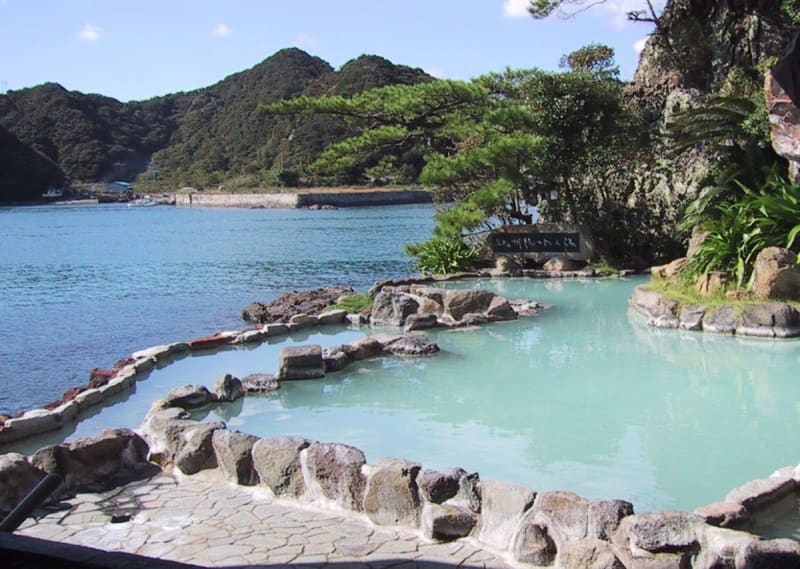
Nanki-Katsuura Onsen sits along a jagged section of the Kii Peninsula coastline in Wakayama Prefecture, within the boundaries of Yoshino-Kumano National Park. More than 100 springs surface from the cliffs and headlands bordering Katsuura Bay. Among the area's most unusual bath facilities are those carved into sea caves and others perched on small islands that visitors reach by boat from the harbor.

Obama Onsen is a compact hot spring town on the Shimabara Peninsula in Nagasaki Prefecture, sitting at the base of Mount Unzen and looking out toward the Shimabara Straits. The waters here rank among the hottest in Japan, with temperatures reaching 105 degrees Celsius. Along the seafront, a 105-meter outdoor footbath stretches the full length of what is the longest such facility in the country, and it is open to all visitors at no cost.
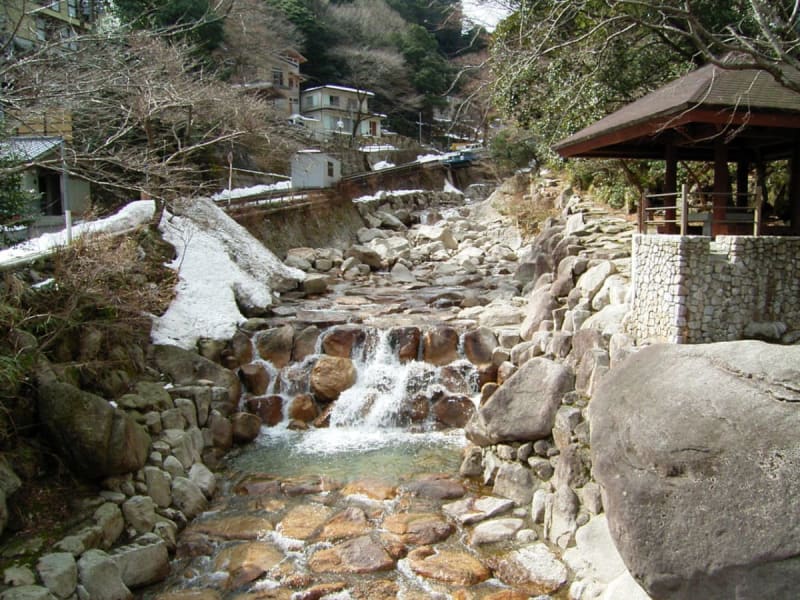
Yunoyama Onsen sits along a river at the base of Mount Gozaisho within Suzuka Quasi-National Park in Mie Prefecture. The Gozaisho Ropeway runs 2,161 meters from the onsen village up to the rocky summit plateau, placing it among the longest ropeways in Japan. The combination of mountain air, a clear river gorge, and traditional ryokan inns draws visitors across all four seasons.

Iwamuro Onsen is a traditional hot spring town in Niigata Prefecture that has served as a rest stop for travelers heading to the sacred Yahiko Shrine for centuries. The spring was discovered more than 300 years ago when a Buddhist priest named Shokai followed a wild goose that bathed its injured wings in the warm water until they healed. The waters carry a reputation for their smooth, skin-softening character. The town also sustains a living Echigo Geiko (Niigata geisha) entertainment culture.
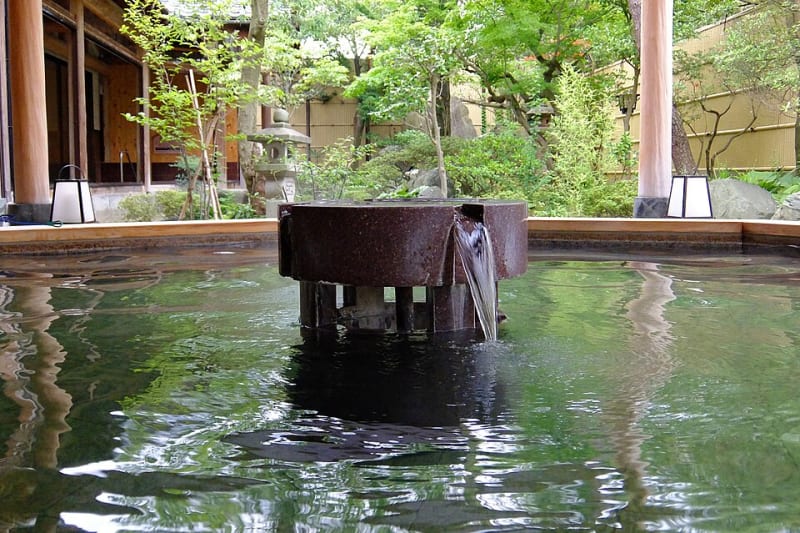
Tsukioka Onsen is a traditional hot spring town within Shibata City, Niigata Prefecture, with origins dating to 1917, when petroleum drillers tapped into geothermal water rather than oil. The spring produces an emerald-green color owing to a sulfur concentration that ranks among the highest of any hot spring in Japan. Roughly 30 geisha continue to work in the town today, and they perform at the Tsukimidai theatre each Sunday from April through November.

Kanzanji Onsen sits on the northwestern shore of Lake Hamana in Hamamatsu, Shizuoka Prefecture. The lake is a large brackish body of water where seawater mingles with fresh water, and the thermal spring beneath its bed produces a sodium-calcium chloride water with one of the highest salt concentrations found at any onsen in Japan. The outdoor baths face the lake directly, and on clear days Mount Fuji is visible in the distance, making the view the central attraction of a stay here.

Iwaki Yumoto Onsen sits in Fukushima Prefecture and holds an unusual distinction among Japanese hot spring towns: its single underground source pushes out roughly five tonnes of water per minute, a rate that places it among the most productive springs in the country. The water is classified as a sodium chloride and sulfate spring and carries a notable sulfur quality. Together with Arima and Dogo, Iwaki Yumoto is counted as one of Japan's Three Ancient Hot Springs.

Awazu Onsen is a compact hot spring resort in Komatsu, Ishikawa Prefecture, established in 718 AD by the Nara-period monk Taich, who was guided to the location by the mountain deity of Hakusan. Roughly a dozen ryokan make up the district, and each property draws water from its own dedicated well, giving it an intimacy that sets it apart from larger Hokuriku destinations. The Hoshi Ryokan, situated within the Awazu district, has been recognized by Guinness World Records as the world's oldest hotel.

Yamashiro Onsen ranks among the largest hot spring resort towns in the Hokuriku region, situated in Kaga, Ishikawa Prefecture. The town counts 31 traditional ryokan and traces its origins back more than 1,300 years. At the center of town stands Kose no Sato Yunodori, a public bathhouse that welcomes day visitors and serves as the communal gathering point of the resort.
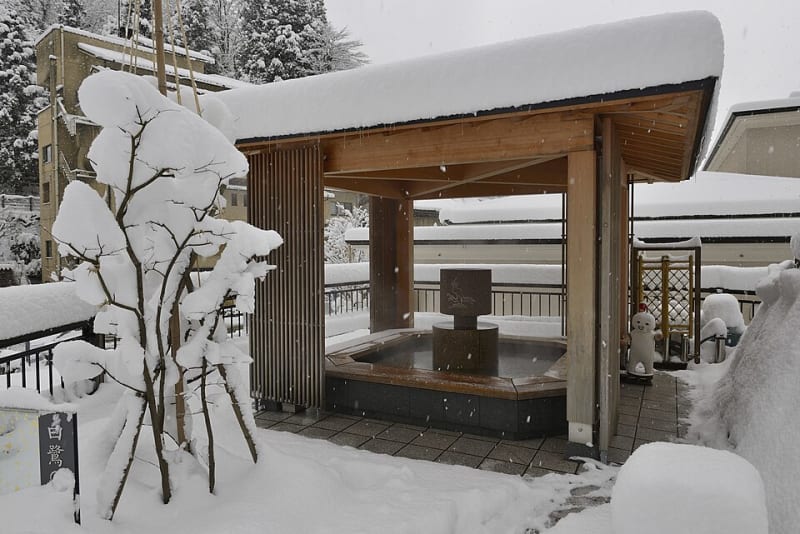
Yuwaku Onsen is a compact hot spring village nestled against the base of Mount Ioh in Kanazawa, Ishikawa Prefecture. The settlement holds nine ryokan along a wooded hillside roughly one hour from central Kanazawa. Its waters are slightly alkaline and carry a gypsum mineral composition, and the area is characterized by quiet forested slopes and subdued mountain views.

Katayamazu Onsen sits on the shore of Lake Shibayamagata in the Kaga district of Ishikawa Prefecture. The lake is known to pass through seven distinct colors at different points throughout the day. Among the four Kaga Onsen towns, Katayamazu is the youngest, though the broader region carries more than 1,300 years of bathing tradition.

Wakura Onsen sits on the shore of Nanao Bay at the base of the Noto Peninsula in Ishikawa Prefecture, an upscale resort town where the bay water is sheltered and the views stretch broadly across it. The geothermal springs here reach temperatures close to 90 degrees Celsius, so the water must be cooled down before guests can bathe. Around the small town, several public foot baths are available at no charge.

Yamanaka Onsen occupies a mountain setting in Kaga, Ishikawa Prefecture, positioned along a gorge that the Daishoji River has carved through the terrain. Canyon walls rise steeply on both sides, and footpaths run beside the water, giving the town a character that distinguishes it from the other resorts in the Kaga Onsen group. The poet Matsuo Basho passed through in 1689 and recorded his praise for the baths in the travel diary Oku no Hosomichi.
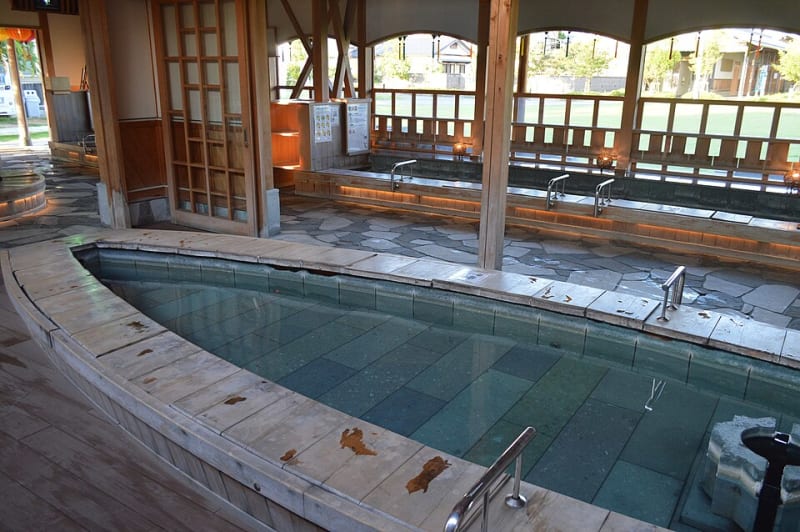
Awara is a hot spring town in Fukui Prefecture, frequently described as the entry point to the Hokuriku region. Its waters run hot and carry a pronounced saline content, and ryokan line the tree-shaded streets in close succession. The town covers a small area and lends itself well to walking, often done in a yukata borrowed from the inn.
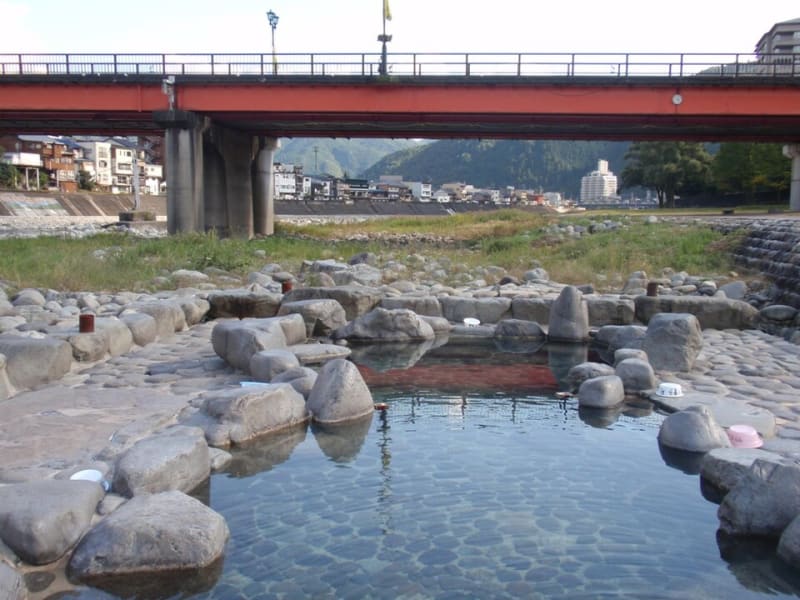
Gero Onsen sits along the Hida River in Gifu Prefecture and holds a place among Japan's three great hot springs, sharing that distinction with Arima and Kusatsu. The ranking traces back to the Muromachi-period monk Banri Shukyu, whose writings first established it, and Edo-period scholars later affirmed the designation. The spring is a sodium bicarbonate source with a pH of 9.2, and bathers commonly describe the water as smooth and silky against the skin.

Hirayu Onsen is the oldest and largest of five hot spring villages that form the Okuhida Onsen-go cluster in Gifu Prefecture, positioned at the gateway to the Japanese Alps. Across all five villages, combined output exceeds 37,000 liters of spring water per minute, placing the cluster third in Japan for total volume. Hirayu functions as the central bus hub for the Okuhida area and the adjoining national park, with routes running to Takayama, Matsumoto, and points beyond.

Nagaragawa Onsen sits on the banks of the Nagara River in Gifu City. The thermal water carries a high iron content that gives it a distinct reddish-brown color. Bathers can take in views of cormorant fishing on the river, a practice recognized as one of the oldest living fishing traditions in Japan.

Onneyu Onsen is a small hot spring village in the Rubeshibe district of eastern Hokkaido. Its name comes directly from the Ainu language, combining onne, meaning large, and yu, meaning hot spring. The village is bordered on three sides by the overlapping extents of the Akan, Daisetsuzan, and Shiretoko national parks. The waters are classified as a sodium sulfate spring and are noted for their skin-softening properties.