
SpringsAtlas
Search Hot Springs
All hot springs
122 springs found
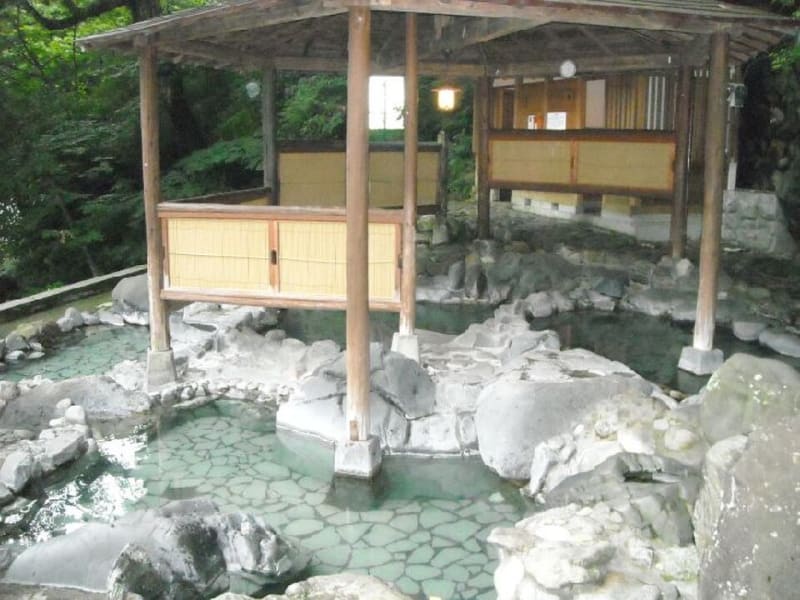
Shima Onsen is a historic hot spring town in Nakanojo, Gunma Prefecture, situated deep in the valley of the Shima River. More than 40 separate spring sources supply the town's ryokan and public bathhouses. The best-known inn, Sekizen-kan Honkan, dates to 1691 and carries designation as an Important Cultural Asset. The building is widely cited as one of the real-world references behind the bathhouse in Studio Ghibli's Spirited Away.

Kamisuwa Onsen sits on the northern shore of Lake Suwa in Nagano Prefecture, a lakeside resort built around one of the most productive thermal sources in the region. The springs here push out 26,000 liters of water per minute, the highest output of any onsen in Nagano Prefecture. The lake lies at the base of Suwa Taisha, one of the oldest Shinto shrine complexes in Japan. The surrounding area combines mountain views, a working geyser, and traces of a silk industry that once gave this valley a worldwide reputation.

Kurokawa Onsen sits in a gorge along the Chikugo River valley in the forested hills of northern Kumamoto Prefecture. Each ryokan in the village maintains its own open-air rotenburo built into the surrounding woodland. Guests can purchase the nyuto tegata, a cedar bathing pass carved at the village, which grants entry to three outdoor baths at separate properties. The village has no neon signage and no modern storefronts. Innkeepers collectively agreed on these restrictions in the 1980s, a decision that reversed the town's fortunes.

Nagayu Onsen is a compact hot spring settlement tucked into the mountains of Taketa City, in central Oita Prefecture. The springs hold the highest concentration of dissolved carbon dioxide found in any thermal spring in Japan. Bathers entering the water notice fine bubbles gathering across their skin almost immediately, and this carbonation defines the experience here more than anything else. The town maintains a sister-city partnership with Bad Krozingen in Germany, a spa community with a similarly long therapeutic tradition.

Akayu Onsen is a historic hot spring town in Nanyo City, Yamagata Prefecture, situated along the Mogami River. The thermal waters carry a sulfurous quality and are valued for their warming effect on the body. The name Akayu, which translates as red hot water, comes from a founding legend rooted in 1093, when soldiers serving Minamoto no Yoshie reportedly bathed in the spring after sustaining wounds, and their skin turned visibly red in the water.

Dake Onsen is a hot spring village sitting on the highland slopes of Mount Adatara in Nihonmatsu, Fukushima Prefecture. Its waters are strongly acidic, registering a pH of 2.5. The settlement has endured more than its share of calamity. A massive landslide in 1824 buried the original village, and the Boshin War of 1868 leveled the rebuilt town during combat that included the celebrated last stand of the Nihonmatsu Shonentai, a unit of boy samurai ranging in age from 12 to 17.

Geto Onsen sits deep inside Kurikoma Quasi-National Park in Iwate Prefecture, a mountain hot spring established in 1134 and still very much in its natural state. Seven open-air pools line a rocky riverbed with no enclosing walls, so bathers look straight out into the surrounding forest. The hot water rises directly from the riverbed and its banks. The mountain road is snowed in from mid-November through early May, and the site closes for the season during that period.
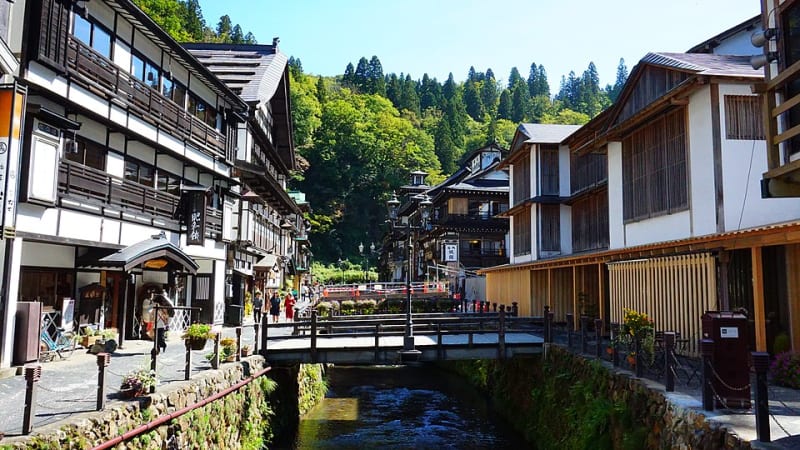
Ginzan Onsen lines the narrow banks of the Ginzan River in Obanazawa, Yamagata Prefecture, a Taisho-era hot spring town where three-storey wooden ryokan stand shoulder to shoulder on both sides of the water. After dark, gas lanterns light the facades, and not a single modern building interrupts the streetscape. At the head of the valley, the Shirogane waterfall drops 22 meters directly into the river.

Hanamaki Onsen is a hot spring district in Iwate Prefecture organized into eight separate zones spread through the hills above the Kitakami River valley. The area is the hometown of author and poet Kenji Miyazawa. A narrow-gauge line called the Hanamaki Electric Railway once ran between the spring zones, earning the nickname the matchbox train, and it is widely credited as the inspiration for the celestial train journey at the center of Miyazawa's most celebrated work, Night on the Galactic Railroad.

Iizaka Onsen sits on the banks of the Surikami River, roughly 10 kilometers northwest of Fukushima city. The resort town holds more than 40 ryokan alongside nine public baths. Its oldest communal bathhouse, Sabakoyu, has operated since at least the 1600s. The Edo-period poet Matsuo Basho stopped here and wrote of the springs.

Sakunami Onsen is a modest hot spring destination tucked into a wooded river valley along the Hirosegawa River, roughly 25 kilometers northwest of Sendai. The Senzan Line connects the city directly to the area, making access straightforward. A handful of ryokan and communal baths line the valley floor, and the surroundings are predominantly forest and river, with a calm that defines the overall character of the place.

Senami Onsen sits along the Sea of Japan coast in Murakami City, Niigata Prefecture, offering open-air baths with direct views of the water. The spring came to light in 1904, when petroleum drillers working in the coastal flats tapped into a hot water source at 95 degrees Celsius rather than the oil they were seeking. That pairing of oceanside scenery with thermal bathing, anchored by the sunsets over the Sea of Japan, has drawn visitors to the resort for more than a hundred years.

Takayu Onsen sits at high elevation on the flanks of Mount Azuma in Fukushima Prefecture, roughly 50 minutes from Fukushima city by bus. The springs rank among the most acidic in Tohoku, producing milky white water with a sharp sulfurous smell. The village is recognized as one of the Three Takayu hot springs of the Oshu region, a distinction that has drawn visitors for centuries. Around twelve ryokan are gathered near ten spring sources in surroundings that have seen little change since the Edo period.

Tsuchiyu Onsen sits in the mountains roughly 16 kilometers west of Fukushima city, where the Arakawa River runs along the foot of Mount Azuma. The spring water comes up clear and colorless, carrying only a faint hint of sulfur. The town has a well-regarded kokeshi tradition, producing dolls with proportionally smaller heads and distinctive painted details that developed out of the winter craft work particular to this isolated valley.
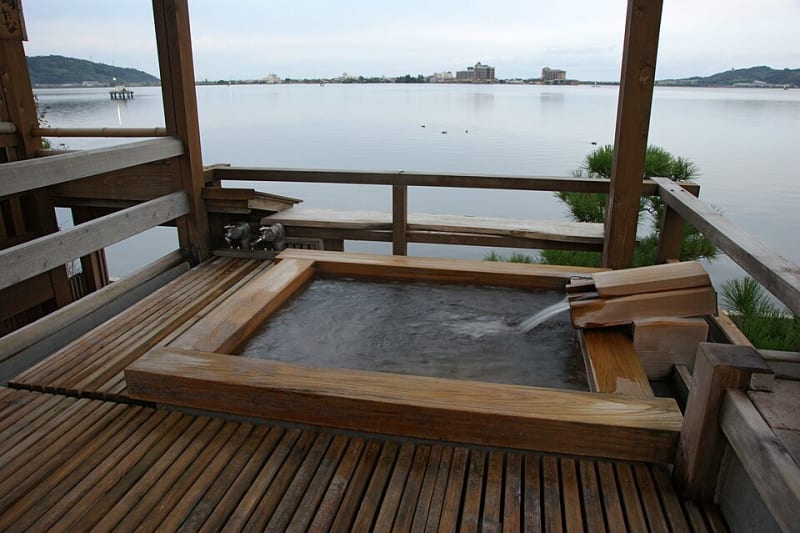
Togo Onsen sits along the edge of Lake Togo, a coastal lagoon in the town of Yurihama on the San'in coast of Tottori Prefecture. The ryokan line the shore so closely that guests can drop a fishing line directly from their room windows into the lake. The water changes hue across the course of the day as the sunlight moves, and the thermal water itself wells up from beneath the lakebed rather than from a distant source on land.

Misasa Onsen occupies a river valley at the base of Mitokusan, a sacred mountain in central Tottori Prefecture. No other hot spring in the world records higher natural concentrations of radon and radium, a fact that earned the area international scientific recognition at the Paris Exposition in the early twentieth century. Each year the town hosts a Marie Curie festival to honor the scientist credited with isolating and naming radium.

Kaike Onsen sits along the shore of Miho Bay outside Yonago in Tottori Prefecture and ranks as the largest onsen resort in the San'in region. In 1900, a local fisherman spotted bubbles rising from the seabed roughly 200 meters from shore, which led to the discovery of the springs. The water is rich in sodium chloride and calcium, and visitors have sought it out for more than a century to treat skin conditions and neuralgia.
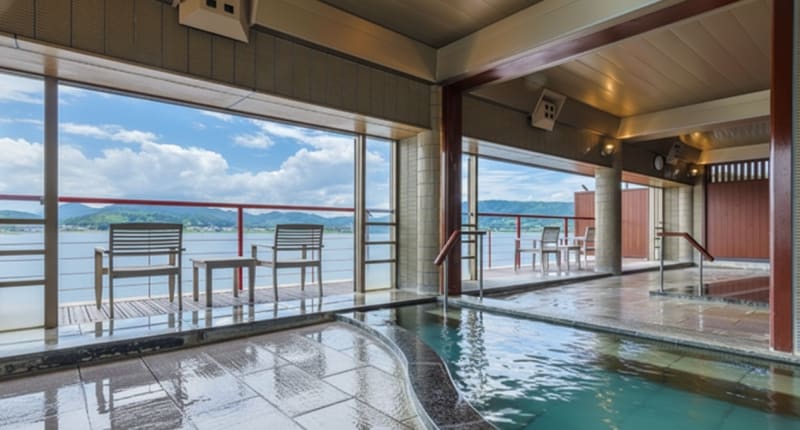
Hawai Onsen occupies the northern shore of Lake Togo in Tottori Prefecture. The ryokan here were built on land reclaimed from the lake itself, and certain rooms have windows positioned so that guests can fish directly from them into the water below. Where geothermal water seeps up through the lake floor, mist collects along the surface, and most mornings the lake takes on a hazy, otherworldly quality.

Tamatsukuri Onsen is one of Japan's oldest documented hot spring resorts, located in Shimane Prefecture along the banks of the Tamayu River. The waters are classified as a sodium and calcium sulfate spring, noted for their beneficial effects on skin and joints. Pilgrims, aristocrats, and ordinary travelers have come to this town for more than 1,300 years, with written records of the springs dating to at least 733 AD.

Yunogo Onsen is a compact hot spring town in Mimasaka, Okayama Prefecture, with a recorded history spanning roughly 1,200 years. The spring produces sodium chloride and calcium chloride water at a rate of 540 liters per minute. Local tradition ties the town's founding to a Buddhist priest named En-nin-houshi, who came across an injured heron bathing in the warm water and recovering from its wounds. A statue near the main bathhouse marks that founding story.