
SpringsAtlas
Search Hot Springs
All hot springs
241 springs found
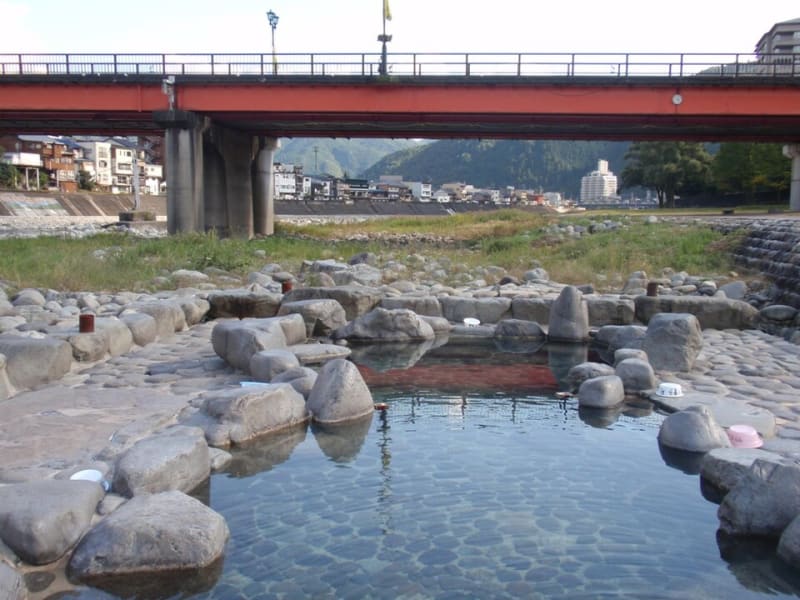
Gero Onsen sits along the Hida River in Gifu Prefecture and holds a place among Japan's three great hot springs, sharing that distinction with Arima and Kusatsu. The ranking traces back to the Muromachi-period monk Banri Shukyu, whose writings first established it, and Edo-period scholars later affirmed the designation. The spring is a sodium bicarbonate source with a pH of 9.2, and bathers commonly describe the water as smooth and silky against the skin.

Hirayu Onsen is the oldest and largest of five hot spring villages that form the Okuhida Onsen-go cluster in Gifu Prefecture, positioned at the gateway to the Japanese Alps. Across all five villages, combined output exceeds 37,000 liters of spring water per minute, placing the cluster third in Japan for total volume. Hirayu functions as the central bus hub for the Okuhida area and the adjoining national park, with routes running to Takayama, Matsumoto, and points beyond.

Nagaragawa Onsen sits on the banks of the Nagara River in Gifu City. The thermal water carries a high iron content that gives it a distinct reddish-brown color. Bathers can take in views of cormorant fishing on the river, a practice recognized as one of the oldest living fishing traditions in Japan.
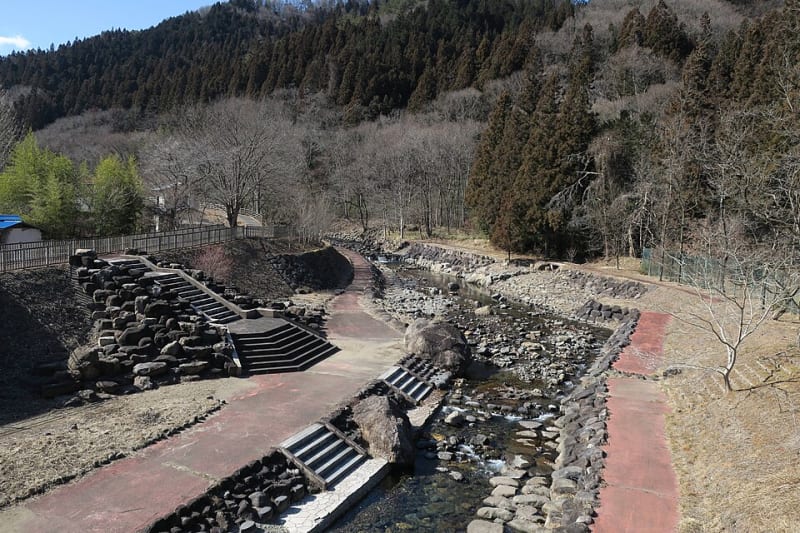
Sawatari Hot Springs is a traditional hot spring resort in Nakanojo, Gunma Prefecture, situated along the Azuma River valley. The waters are a mild alkaline calcium-sodium sulfate-chloride spring with a pH of 8.5. For eight centuries, the spring has carried the title naoshiyu of Kusatsu, meaning the hot spring that heals what Kusatsu damages. Kusatsu's waters are famously intense and acidic, and Sawatari's gentle alkaline spring was traditionally used to restore the skin after bathing there.
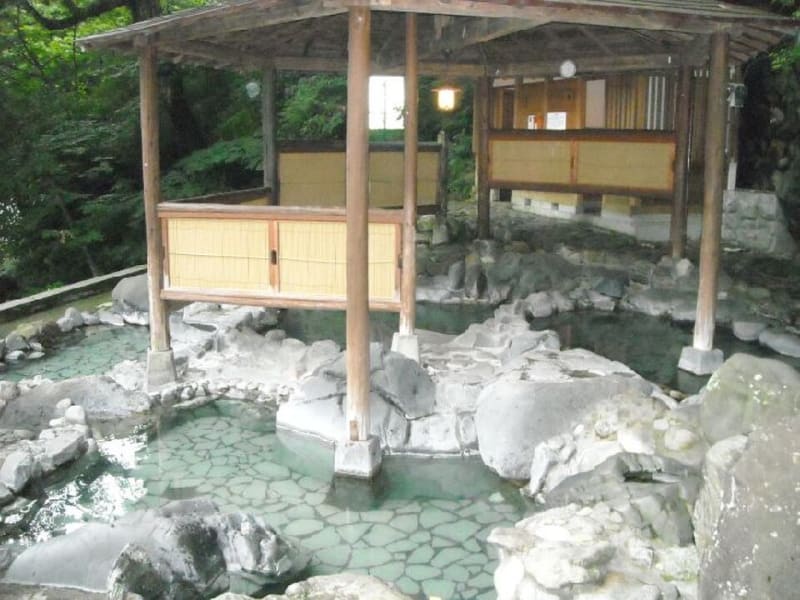
Shima Onsen is a historic hot spring town in Nakanojo, Gunma Prefecture, situated deep in the valley of the Shima River. More than 40 separate spring sources supply the town's ryokan and public bathhouses. The best-known inn, Sekizen-kan Honkan, dates to 1691 and carries designation as an Important Cultural Asset. The building is widely cited as one of the real-world references behind the bathhouse in Studio Ghibli's Spirited Away.
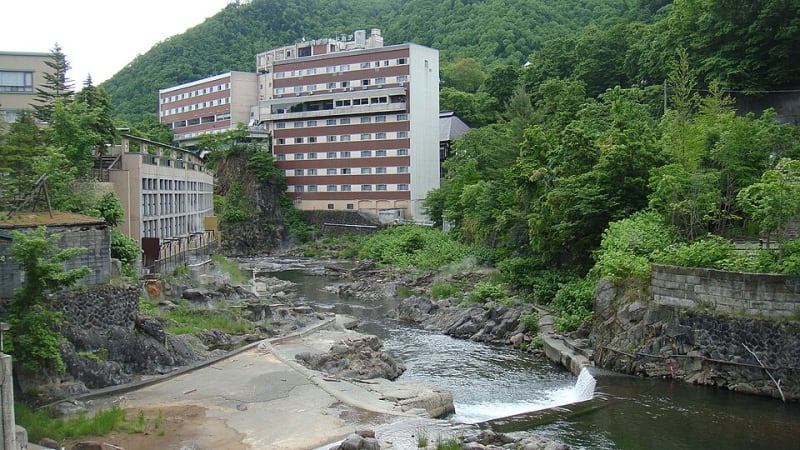
Jozankei Onsen sits in a wooded hot spring valley roughly 30 kilometers south of Sapporo, earning a reputation as the city's oasis. The valley runs through the steep gorge of the Toyohira River, and a concentration of large resort hotels alongside vivid autumn foliage draw the crowds that place this among Hokkaido's most frequented onsen destinations. The spring water is sodium chloride in composition, running clear with a warming effect on the body.

Onneyu Onsen is a small hot spring village in the Rubeshibe district of eastern Hokkaido. Its name comes directly from the Ainu language, combining onne, meaning large, and yu, meaning hot spring. The village is bordered on three sides by the overlapping extents of the Akan, Daisetsuzan, and Shiretoko national parks. The waters are classified as a sodium sulfate spring and are noted for their skin-softening properties.
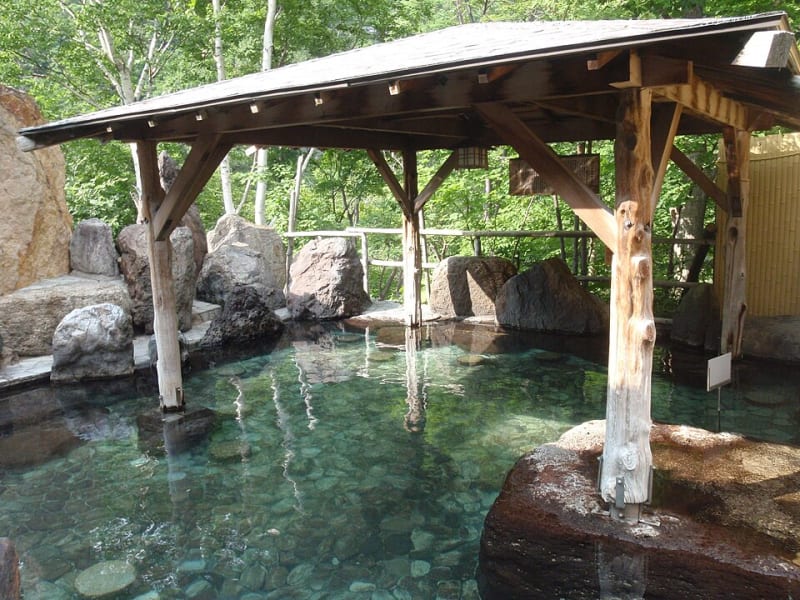
Sounkyo Onsen sits at the bottom of one of Hokkaido's most striking gorges, hemmed in by columnar basalt walls that climb up to 150 meters above the Ishikari River. Daisetsuzan National Park wraps around the town on every side. A walking path through the gorge ranks among the best hikes on the island. Each February, ice sculptures cover the valley floor for a seasonal festival. Come autumn, the cliff faces shift to deep golds and reds.

The onsen occupies a narrow mountain gorge in the southern portion of Daisetsuzan National Park, Hokkaido. Hagoromo Falls drops 270 meters into the canyon above the bath site, making it the tallest waterfall in Hokkaido. Walls of columnar basalt rise on both sides of the gorge and hold their drama through every season, though the effect is sharpest in autumn, when birch and maple fill the canyon with gold and red.

Toyako Onsen is a hot spring resort town on the shore of Lake Toya in Hokkaido, situated within an ancient volcanic caldera. Active volcano Mount Usu rises above the town and has erupted four times since the resort came into being, in 1944 to 1945, 1977 to 1978, 2000, and once more in recent years. The area affected by the 2000 eruption has been left undisturbed and serves as an open-air volcanic museum. The resort drew global attention in 2008 when it hosted the G8 Summit.
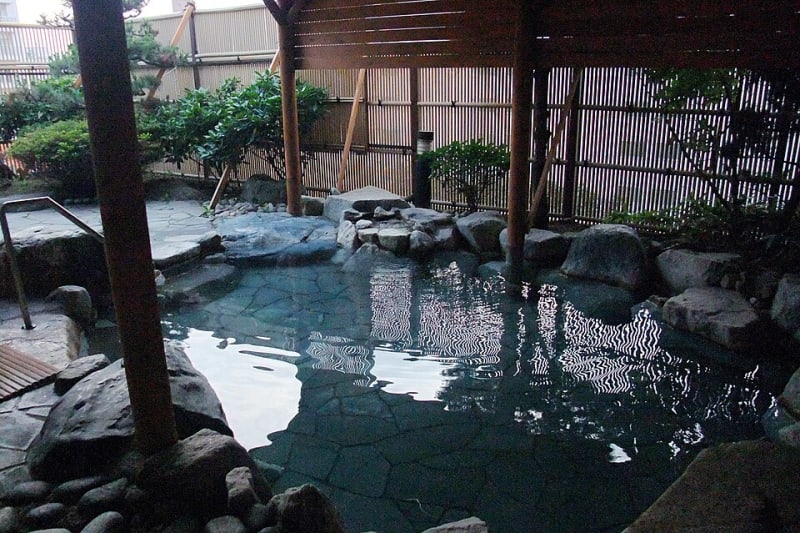
Yunokawa Onsen occupies the southeastern shore of Hakodate Bay in Hokkaido, close to both Hakodate city center and the international airport. Trams from central Hakodate reach the onsen terminus in roughly 30 minutes, making Yunokawa the most accessible of Hokkaido's major hot spring destinations. A free foot bath near the tram stop offers a first taste of the waters on arrival. The area's tropical botanical gardens, located close to the main hotel strip, are home to hamanatsu monkeys that bathe year-round in outdoor spring pools.
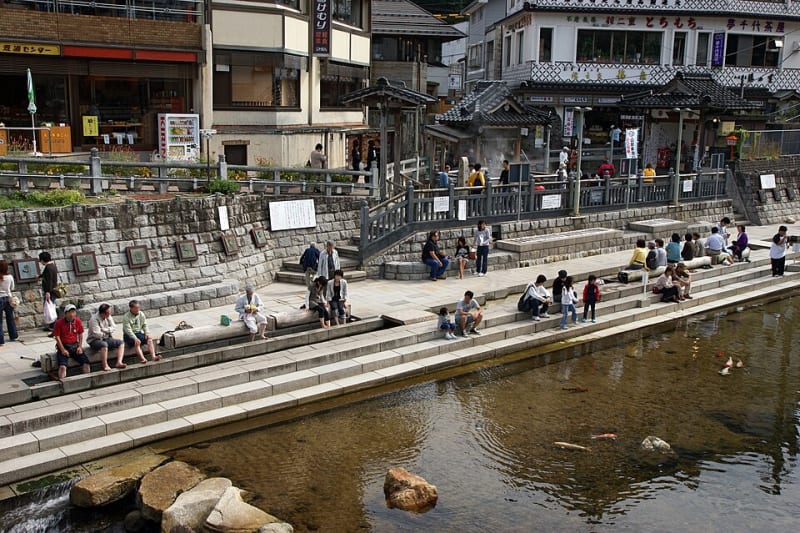
Yumura Onsen is a small hot spring village in Shin'onsen, Hyogo Prefecture, fed by 63 spring sources that produce water reaching 98 degrees Celsius. The extreme heat makes the water useful for cooking, and residents have long gathered at the Arayu spring near the river to boil eggs, vegetables, and other ingredients for meals, a practice known as yugaki culture that has carried on for centuries. Few places in Japan give visitors a chance to see hot spring water serving as a working kitchen.

Hanamaki Onsen is a hot spring district in Iwate Prefecture organized into eight separate zones spread through the hills above the Kitakami River valley. The area is the hometown of author and poet Kenji Miyazawa. A narrow-gauge line called the Hanamaki Electric Railway once ran between the spring zones, earning the nickname the matchbox train, and it is widely credited as the inspiration for the celestial train journey at the center of Miyazawa's most celebrated work, Night on the Galactic Railroad.
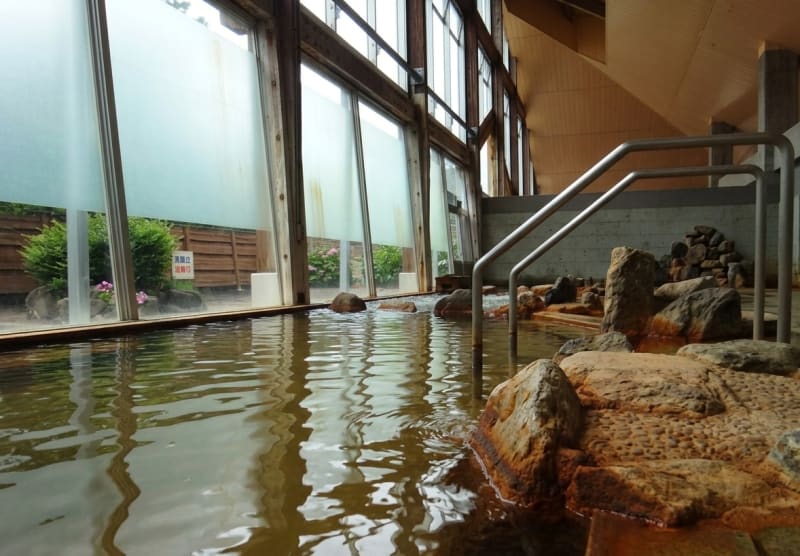
Seven ryokan line the banks of the Mabechi River in Ninohe, Iwate Prefecture, forming the compact resort area of Kindaichi Onsen. The alkaline waters carry a National Public Health Spa designation from the Ministry of the Environment. The settlement is unhurried and small, with a quiet character shaped by the traditional hospitality of the Tohoku region.

Tsurumaki Onsen is a compact hot spring resort in Hadano, Kanagawa Prefecture, roughly 70 minutes by train from Shinjuku. Its waters rank among the most calcium-rich of any hot spring on earth, with concentrations measured at approximately 2,650 mg per kilogram. The Motoyu Jinya inn has operated on the grounds of the former Mitsui family estate since 1917 and remains open today. The resort's size and proximity to central Tokyo make it a practical choice for a half-day excursion.
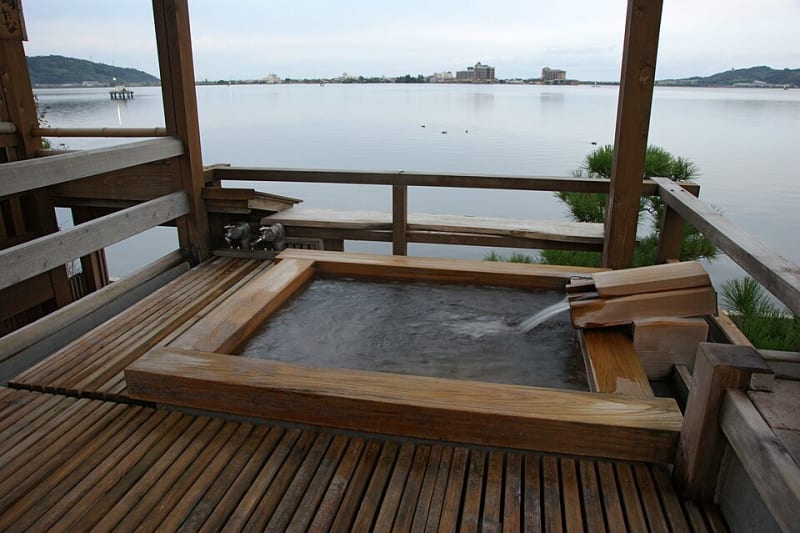
Togo Onsen sits along the edge of Lake Togo, a coastal lagoon in the town of Yurihama on the San'in coast of Tottori Prefecture. The ryokan line the shore so closely that guests can drop a fishing line directly from their room windows into the lake. The water changes hue across the course of the day as the sunlight moves, and the thermal water itself wells up from beneath the lakebed rather than from a distant source on land.

Misasa Onsen occupies a river valley at the base of Mitokusan, a sacred mountain in central Tottori Prefecture. No other hot spring in the world records higher natural concentrations of radon and radium, a fact that earned the area international scientific recognition at the Paris Exposition in the early twentieth century. Each year the town hosts a Marie Curie festival to honor the scientist credited with isolating and naming radium.

Kaike Onsen sits along the shore of Miho Bay outside Yonago in Tottori Prefecture and ranks as the largest onsen resort in the San'in region. In 1900, a local fisherman spotted bubbles rising from the seabed roughly 200 meters from shore, which led to the discovery of the springs. The water is rich in sodium chloride and calcium, and visitors have sought it out for more than a century to treat skin conditions and neuralgia.
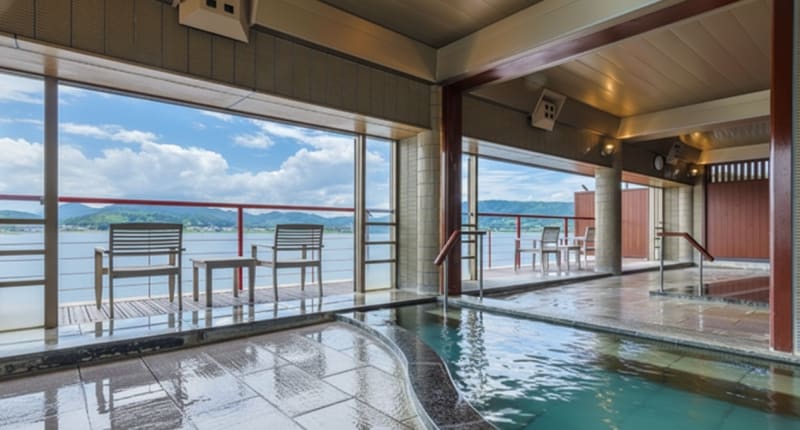
Hawai Onsen occupies the northern shore of Lake Togo in Tottori Prefecture. The ryokan here were built on land reclaimed from the lake itself, and certain rooms have windows positioned so that guests can fish directly from them into the water below. Where geothermal water seeps up through the lake floor, mist collects along the surface, and most mornings the lake takes on a hazy, otherworldly quality.

Tamatsukuri Onsen is one of Japan's oldest documented hot spring resorts, located in Shimane Prefecture along the banks of the Tamayu River. The waters are classified as a sodium and calcium sulfate spring, noted for their beneficial effects on skin and joints. Pilgrims, aristocrats, and ordinary travelers have come to this town for more than 1,300 years, with written records of the springs dating to at least 733 AD.